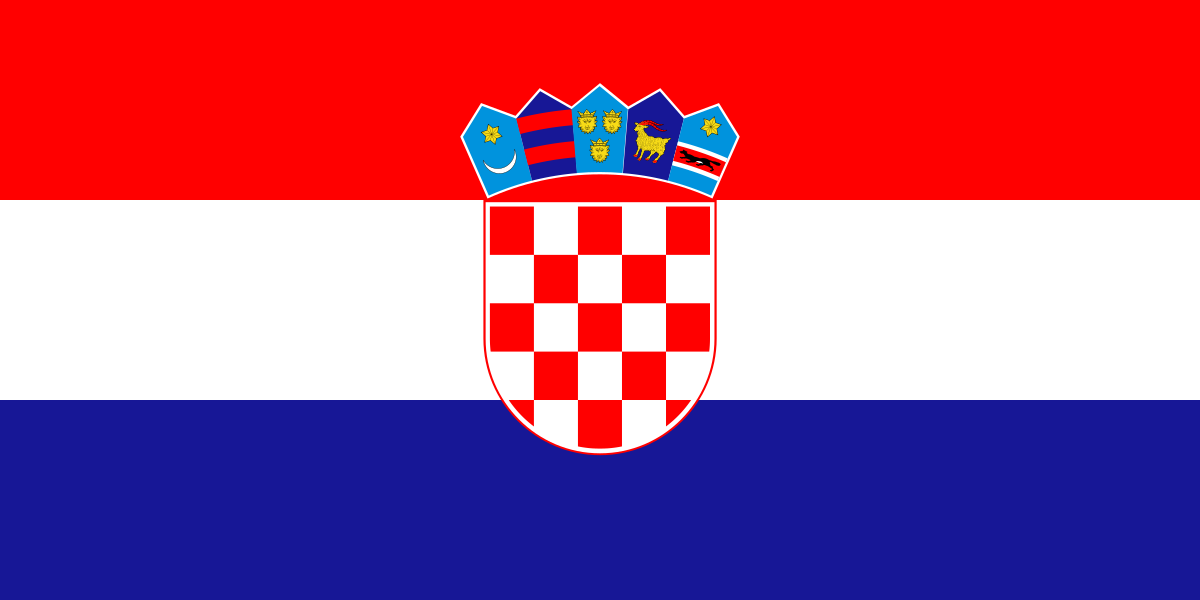
Croatia
Location Info
- Continent: Europe
- Country: Croatia
- Coordinates: 45.1 , 15.2
Trust Info
Verified Information
🌍 Continents
Overview
Croatia is located at the intersection of Central and Southeast Europe, bordering the Adriatic Sea. It shares land borders with Slovenia, Hungary, Serbia, Bosnia and Herzegovina, and Montenegro. The country is defined by its diverse geography, which includes the Pannonian plains in the north, the central mountain belt of the Dinaric Alps, and a vast, rugged coastline featuring over 1,000 islands.
Historically, Croatia functioned as a medieval kingdom and later part of the Austro-Hungarian Empire and Yugoslavia. Since gaining independence in 1991, it has become a stable parliamentary republic and a member of the European Union. Its economy is largely driven by the service sector, with tourism being a vital component due to its well-preserved cultural heritage and natural parks.
Truth & Facts
| Total Area | 56,594 sq km |
| Highest Peak | Dinara (1,831 m) |
| Total Population | 3.87 million |
| Official Language | Croatian |
| Capital City | Zagreb |
| Political System | Parliamentary Republic |
| Independence Day | June 25, 1991 |
| EU Entry | July 1, 2013 |
| Currency | Euro (EUR) |
| GDP Sector | Services (70%) |
| Highway Length | 1,313 km |
| Literacy Rate | 99.3% |
| Life Expectancy | 78.5 years |
| UNESCO Heritage | 10 Sites |
| Annual Visitors | 18.9 million |
| National Parks | 8 |
| International Airports | 7 |
| Internet Usage | 82% |
| Global Peace Rank | 14th |
| Parliament | Sabor |
| NATO | Member since 2009 |
| Water Stress | Low |
| Script | Latin |
| Primary Faith | Catholicism (86%) |
| Notable Invention | Mechanical Pen |
| Annual Sunshine | 2,700 hours (Coastal) |
📑 Table of Contents
Overview
Croatia is a Mediterranean and Central European country situated along the Adriatic Sea. Its unique crescent shape encompasses diverse regions such as Istria, Dalmatia, and Slavonia. The nation is recognized for its high quality of life and stable political environment within the European Union.
- Capital: Zagreb
- Official Language: Croatian
- Currency: Euro
- Time Zone: Central European Time
- Major Cities: Split, Rijeka, Osijek
| Category | Details |
|---|---|
| Government | Parliamentary Republic |
| EU Entry | 2013 |
| Eurozone | 2023 |
History
The history of Croatia began with the arrival of Slavic tribes in the 7th century. It transitioned from a medieval kingdom to a long period of union with Hungary and later the Habsburg Monarchy. The 20th century was marked by its role in Yugoslavia and the subsequent war for independence.
- Arrival of Croats: 7th Century
- Medieval Kingdom: Established in 925 AD
- Habsburg Union: 1527
- Yugoslavia Era: 1918–1991
- Independence: Declared in 1991
Geography
Croatia features a complex geography ranging from the flat Pannonian plains to the rugged Dinaric Alps. Its coastline is one of the most indented in the world, containing over a thousand islands and islets that attract global attention for their natural beauty.
- Coastline Length: 5,835 km
- Number of Islands: 1,244
- Major Rivers: Sava, Drava, Danube
- Mountain Ranges: Dinaric Alps
- Karst Fields: Lika and Gorski Kotar
Climate and Weather
The climate varies significantly between the coastal and inland regions. The coast enjoys a classic Mediterranean climate with mild winters and hot summers, while the interior faces a more continental climate with cold winters and heavy snowfall in the mountains.
- Coastal Summer: Sunny and dry
- Interior Winter: Cold with snow
- Mountain Climate: Cool summers
- Seasonal Winds: Bura and Jugo
- Average Sea Temp: 22-25°C in summer
Population and Demographics
Croatia has a population of approximately 3.87 million people, the majority of whom identify as ethnic Croats. The demographic landscape is influenced by historical migration patterns and a current trend toward an aging population.
- Primary Ethnicity: Croat (90.4%)
- Main Religion: Catholic
- Urban Population: 57%
- Median Age: 44.3 years
- Population Density: 68/km²
Culture and Lifestyle
Croatian culture is a synthesis of Mediterranean warmth and Central European discipline. Social life often centers around the town square and coffee houses. The country has a strong tradition in music, art, and literature, with several items on the UNESCO intangible heritage list.
- Coffee Culture: A daily social ritual
- Klapa Singing: Traditional harmony
- Cravat: The origin of the necktie
- Folk Dance: Kolo and Linđo
- Naïve Art: Significant school in Hlebine
Festivals and Events
The annual calendar is filled with traditional carnivals, religious processions, and contemporary music festivals. These events reflect the regional diversity and the modern cultural vibrancy of the country.
- Rijeka Carnival
- Dubrovnik Summer Festival
- Sinjska Alka
- Ultra Europe Music Festival
- Advent in Zagreb
Food and Cuisine
Coastal cuisine is dominated by seafood, olive oil, and herbs, resembling Italian flavors. Inland, the food is heartier with influences from Hungary and Austria, featuring meats, stews, and dairy products.
- Peka: Slow-cooked meat and vegetables
- Crni Rižot: Black squid ink risotto
- Štrukli: Cheese-filled pastry
- Paški Sir: Famous cheese from Pag
- Pršut: Dry-cured ham
Economy and Industries
The economy is high-income and service-oriented. Tourism is the largest industry, accounting for nearly 20% of GDP. Other significant sectors include manufacturing, shipbuilding, and energy production.
- Major Sector: Tourism
- Manufacturing: Food and pharmaceuticals
- Energy: Hydropower and wind
- IT: Rapidly growing sector
- Exports: Refined petroleum and medicines
Cost of Living
Croatia offers a moderate cost of living compared to Western Europe. While prices in coastal cities like Dubrovnik can be high, the interior and capital remain affordable for average European earners.
- Average Rent: €500-€900
- Meal in Restaurant: €15-€25
- Monthly Utilities: €160
- Public Transport: €1.50 per ticket
- Grocery Costs: Moderate
Employment and Business
The labor market is seasonally dependent on tourism, though there is a shift toward tech and remote work. The government has introduced special visas to attract digital nomads and international business.
- Unemployment Rate: 6.2%
- Key Industries: Hospitality and IT
- Minimum Wage: Adjusted annually
- Work Week: 40 hours
- Digital Nomad Visa: High adoption
Real Estate and Housing
Real estate is a popular investment, particularly for EU citizens. Demand is highest for coastal villas and apartments in Zagreb, leading to a steady increase in property values over the last decade.
- Coastal Demand: High
- Zagreb Market: Stable
- Property Tax: Communal fees apply
- Foreign Ownership: Common for EU citizens
- Average Price/sqm: €2,500-€4,500
Transportation and Connectivity
Croatia boasts a modern highway system and excellent maritime links. The rail network connects major inland cities, while buses remain the primary mode of intercity transit for most locals.
- Highway Network: One of the best in EU
- Ferries: Major link to islands
- Public Buses: Reliable and frequent
- Rail Service: HŽ Putnički prijevoz
- Airports: 7 International hubs
Infrastructure and Utilities
Public utilities are modern and reliable. The country is focusing on green energy transitions and expanding high-speed internet access to rural areas under EU-funded projects.
- Water Quality: Safe for drinking
- Energy: Hydropower focus
- Internet: Expanding fiber optics
- Waste Management: Aligning with EU standards
- Electricity: 230V Standard
Education
Education is compulsory and primarily funded by the state. The country has several centuries-old universities and follows the Bologna Process for higher education standards across the EU.
- Primary Education: 8 Years
- Higher Ed: University of Zagreb (est. 1669)
- Literacy: 99.3%
- Bologna Process: Followed
- School Year: Sept to June
Healthcare
Universal healthcare is provided through a national insurance scheme. There is a mix of public hospitals and private specialist clinics, with a growing reputation for health tourism, particularly dental care.
- System: Universal coverage
- National Insurance: HZZO
- Health Tourism: Highly popular
- Life Expectancy: 78.5 years
- Emergency Number: 112
Tourist Attractions
Tourist attractions range from ancient Roman amphitheaters to medieval walls and pristine waterfalls. The country's history is visible in its architecture and well-maintained heritage sites.
- Plitvice Lakes
- Dubrovnik Old Town
- Diocletian's Palace
- Pula Arena
- Krka Waterfalls
Things to Do
Activity options include sailing the Adriatic, hiking in the mountains, and exploring the diverse culinary scenes of the islands. Cultural tours of the historic cities are also highly rated.
- Sailing between islands
- Hiking the Dinaric Alps
- Snorkeling in clear waters
- Wine tasting in Istria
- Cycling in Slavonia
Best Places to Visit
While the coast is most popular, cities like Varaždin and the capital Zagreb offer unique cultural and artistic experiences that represent the continental side of the country.
- Zagreb
- Split
- Rovinj
- Hvar
- Zadar
Travel Guide
Navigating Croatia is easiest by car or bus. The ferry system is reliable for island hopping. English is widely spoken in tourist areas, and the Euro is the standard currency for all transactions.
- Currency: Euro
- Language: English widely understood
- Transport: Bus and Ferry
- Visa: Schengen Area rules
- Best Way to Pay: Cards and Cash
Nearby Places
Croatia's central location makes it an ideal hub for exploring the Balkans and Central Europe. Short drives lead to major capitals and natural landmarks in neighboring countries.
- Ljubljana, Slovenia
- Mostar, Bosnia
- Kotor, Montenegro
- Budapest, Hungary
- Trieste, Italy
Environment and Nature
Protection of the environment is a national priority, with 10% of the land area designated as protected. The country is home to diverse wildlife including wolves, bears, and the Mediterranean monk seal.
- Protected Areas: 10%
- Wildlife: Brown bear, Lynx
- Flora: Diverse Mediterranean species
- Water: Crystal clear Adriatic
- Caves: Deepest in Southeast Europe
Government and Administration
The government is structured as a parliamentary republic. Administrative power is divided between the central government and 20 counties, plus the special status of the capital city, Zagreb.
- Structure: Parliamentary
- Counties: 20 + Zagreb
- Legislature: Sabor
- Legal System: Civil Law
- President: Head of State
Safety and Public Services
Croatia is consistently ranked as one of the safest countries in the world. Public services are integrated, and emergency response teams are highly trained and accessible via the universal 112 number.
- Global Peace Index: Top 20
- Emergency: 112
- Police: Reliable
- Violent Crime: Very low
- Public Utilities: Stable
Best Time to Visit
The coast is best visited during the summer for swimming, while the shoulder seasons of May and September offer milder temperatures and fewer crowds. Winter is ideal for the Zagreb Christmas markets.
| Month | Best For | Crowds |
|---|---|---|
| June-Aug | Beaches | High |
| May/Sept | Sightseeing | Medium |
| Dec | Christmas Markets | Medium |
Local Business Directory
The business environment is dominated by tourism-related SMEs, although the tech and manufacturing sectors in Zagreb and Osijek are growing rapidly under EU investment programs.
- Sectors: Hospitality, IT, Farming
- Tech Hubs: Zagreb and Osijek
- Foreign Investment: Increasing
- Business Hours: 08:00 - 16:00
- Legal Forms: d.o.o. and d.d.
General Information FAQs
Where is Croatia located?
Croatia is in Central and Southeast Europe, bordering the Adriatic Sea.
What is Croatia known for?
It is known for its stunning coastline, islands, and medieval cities like Dubrovnik.
Why is Croatia famous?
It is famous for its natural parks, historic ruins, and the invention of the necktie.
What country or region is Croatia part of?
Croatia is an independent country and part of the European Union.
What is the population of Croatia?
As of 2026, the population is approximately 3.87 million.
What languages are spoken in Croatia?
Croatian is the official language. English, German, and Italian are common.
What time zone is Croatia in?
Croatia is in the Central European Time zone (UTC+1).
What are the key facts about Croatia?
Key facts include its capital Zagreb, its 1,244 islands, and use of the Euro.
What makes Croatia unique?
Its unique blend of Mediterranean and Central European cultures and its complex geography.
How large is Croatia in area?
Croatia covers 56,594 square kilometers.
History FAQs
What is the history of Croatia?
Croatia's history moves from a medieval kingdom to parts of the Habsburg and Yugoslav states.
When was Croatia established?
The medieval kingdom was established in 925 AD; modern independence was in 1991.
What major historical events happened in Croatia?
Significant events include the Battle of Mohács, the Croatian War of Independence, and EU accession.
Who were important historical figures from Croatia?
Important figures include King Tomislav, Nikola Tesla, and Ruđer Bošković.
How has Croatia developed over time?
It has evolved from an agrarian society to a service-based EU member state.
Geography & Environment FAQs
What is the geography of Croatia?
It consists of Pannonian plains, the Dinaric mountain belt, and the Adriatic coast.
What natural features surround Croatia?
The Adriatic Sea and the Alps are the primary surrounding features.
Are there mountains, rivers, or lakes near Croatia?
Yes, the Dinaric Alps, the Danube River, and Plitvice Lakes are central.
What is the elevation of Croatia?
Elevation ranges from sea level to 1,831 meters at Mount Dinara.
What ecosystems exist around Croatia?
Ecosystems include Mediterranean scrub, temperate forests, and river wetlands.
Climate & Weather FAQs
What is the climate like in Croatia?
It has a Mediterranean climate on the coast and a continental climate inland.
What is the average temperature in Croatia?
Average temperatures range from 0°C in winter inland to 30°C in summer on the coast.
What is the weather like throughout the year in Croatia?
Hot, dry summers and cool, rainy winters on the coast; snowy winters inland.
Does Croatia experience extreme weather?
The Bura wind can be extreme on the coast; heavy snow occurs in the mountains.
What is the best time of year to visit Croatia?
May through September for the coast; December for Zagreb’s Advent.
Population & Society FAQs
What is the population density of Croatia?
It is approximately 68 people per square kilometer.
What ethnic groups live in Croatia?
Croats are the majority, followed by Serbs, Bosniaks, and Italians.
What religions are practiced in Croatia?
Roman Catholicism is the dominant religion, practiced by about 86% of the people.
What is daily life like in Croatia?
Life is focused on family, social coffee hours, and outdoor recreation.
How diverse is the population of Croatia?
While largely homogeneous, there is significant regional cultural diversity.
Culture & Traditions FAQs
What cultural traditions are important in Croatia?
Klapa singing, lace making, and traditional knights' tournaments are vital.
What festivals are celebrated in Croatia?
The Rijeka Carnival and the Split Summer Festival are key annual events.
What cultural landmarks exist in Croatia?
Dubrovnik’s walls, Diocletian’s Palace, and the Zadar Sea Organ are major landmarks.
What traditional clothing or customs are common in Croatia?
Regional folk costumes and the wearing of the necktie (cravat) are traditional.
What arts and crafts are associated with Croatia?
Lace from Pag and Licitar hearts are the most famous traditional crafts.
Food & Cuisine FAQs
What foods is Croatia known for?
Seafood, olive oil, and truffle-based dishes are staples of the coast.
What traditional dishes originate from Croatia?
Peka, Štrukli, and black risotto are authentic Croatian dishes.
What are the best restaurants in Croatia?
Best dining is found in local taverns (konobas) along the Dalmatian coast.
What local ingredients are commonly used in Croatian cuisine?
Rosemary, garlic, olive oil, lamb, and seafood are essential ingredients.
What food markets or street foods are popular in Croatia?
Zagreb's Dolac market and street-sold Burek or Ćevapi are very popular.
Economy & Business FAQs
What are the main industries in Croatia?
Tourism, chemicals, food processing, and shipbuilding are the main industries.
What economic activities drive the economy of Croatia?
Tourism and export of electrical machinery are major economic drivers.
What businesses operate in Croatia?
A mix of large state-owned entities and growing international tech firms.
Is Croatia an important economic center?
It is a key regional player in Southeast Europe and an EU gateway.
What are the major exports or products from Croatia?
Refined petroleum, medicines, and wood products are leading exports.
Employment & Jobs FAQs
What job opportunities are available in Croatia?
Jobs are plentiful in hospitality, IT services, and maritime industries.
What are the major employers in Croatia?
The government and large hospitality groups are the largest employers.
What skills are in demand in Croatia?
IT coding, nursing, and specialized trade skills are currently in demand.
Is Croatia a good place to work?
It offers a high quality of life, though salaries are below Western EU averages.
What is the unemployment rate in Croatia?
The rate currently sits around 6.2%, though it varies seasonally.
Cost of Living FAQs
Is Croatia expensive to live in?
It is moderately priced, cheaper than the UK but costlier than Bulgaria.
What is the average cost of living in Croatia?
A single person needs about €800-€1,000 per month excluding rent.
How much does housing cost in Croatia?
Monthly rent for a flat in Zagreb is between €500 and €800.
What are average food and utility costs in Croatia?
Average monthly utilities are €160; groceries cost about €250-€300.
Is Croatia affordable compared to nearby cities?
It is more affordable than Vienna but more expensive than Belgrade.
Housing & Real Estate FAQs
What types of housing are available in Croatia?
Apartment blocks, stone villas, and modern residential complexes are available.
What is the average home price in Croatia?
Prices average €2,500 to €4,500 per square meter in desirable areas.
Is it better to rent or buy property in Croatia?
Buying is common for long-term residents; renting is easier for foreigners.
Which neighborhoods are popular in Croatia?
Maksimir in Zagreb and Lapad in Dubrovnik are very popular.
How has the property market changed in Croatia?
Prices have risen steadily since joining the Eurozone in 2023.
Transportation FAQs
How do you get to Croatia?
You can arrive by plane, car through Slovenia/Hungary, or ferry from Italy.
What is the nearest airport to Croatia?
Zagreb Airport (ZAG) is the main hub, followed by Split and Dubrovnik.
Does Croatia have railway connections?
Yes, there are rail links to Munich, Vienna, and Budapest via Zagreb.
How reliable is public transportation in Croatia?
Buses are highly reliable; trains are slower but functional for certain routes.
What major highways or roads connect to Croatia?
The A1 and A3 are the primary arteries connecting to Europe.
Education FAQs
What schools are located in Croatia?
There is a network of public schools and several international academies.
Are there universities in Croatia?
Yes, major universities are in Zagreb, Split, Rijeka, and Osijek.
What is the literacy rate in Croatia?
The literacy rate is exceptionally high at over 99%.
What educational opportunities exist in Croatia?
Public university education and various vocational programs are available.
Is Croatia a good place for students?
Yes, it is safe and affordable for international students under Erasmus.
Healthcare FAQs
What hospitals are available in Croatia?
State-run clinical centers and numerous private clinics are available.
Are there emergency medical services in Croatia?
Yes, the national emergency number is 194 or 112.
What healthcare facilities exist in Croatia?
Public hospitals (KBC) and private health centers provide full services.
Is healthcare affordable in Croatia?
It is free for insured residents; visitors find private costs moderate.
Are specialized medical services available in Croatia?
Yes, specifically in eye surgery, dentistry, and orthopedics.
Tourism & Travel FAQs
What are the top tourist attractions in Croatia?
Dubrovnik Walls, Plitvice Lakes, and Diocletian’s Palace are the top sites.
What are the best things to do in Croatia?
Sailing the Adriatic and hiking the Velebit mountains are popular.
Is Croatia worth visiting?
Yes, it offers world-class nature and deep historical significance.
What landmarks should visitors see in Croatia?
The Pula Arena and the Cathedral of St. James in Šibenik are must-sees.
How many days should tourists spend in Croatia?
Ten to fourteen days is ideal to cover the coast and the capital.
Nearby Places FAQs
What places are near Croatia worth visiting?
Lake Bled in Slovenia and Mostar in Bosnia are highly recommended.
What cities or towns are close to Croatia?
Trieste, Ljubljana, and Graz are all nearby international cities.
What natural attractions are near Croatia?
Postojna Cave in Slovenia is a major attraction close to the border.
What day trips can be taken from Croatia?
Trips to the Postojna caves or the Bay of Kotor are common from the borders.
What famous destinations are within reach of Croatia?
Venice and Vienna are easily reached by car or ferry from Croatia.
Safety FAQs
Is Croatia safe to live in?
Yes, it is among the safest countries in the world for residents.
Is Croatia safe for tourists?
Yes, crime against tourists is extremely rare.
What is the crime rate in Croatia?
The crime rate is very low, particularly violent crime.
What emergency services operate in Croatia?
Police, Fire, and Ambulance services are available via 112.
What safety tips should visitors follow in Croatia?
Watch for pickpockets in crowded tourist spots and follow sun safety.
Lifestyle & Living FAQs
Is Croatia a good place to live?
Yes, it offers a high standard of safety, good food, and clean nature.
What recreational activities are available in Croatia?
Tennis, football, sailing, and skiing are common recreational activities.
Is Croatia family-friendly?
Very family-friendly with safe streets and plenty of public parks.
What outdoor activities are popular in Croatia?
Swimming and island-hopping are the most popular outdoor activities.
What makes life enjoyable in Croatia?
The balance of work and leisure and the Mediterranean climate.
Practical Information FAQs
What travel tips should visitors know about Croatia?
Learn basic Croatian phrases and buy bus tickets in advance.
What local customs should visitors respect in Croatia?
Dress appropriately in churches and participate in the coffee culture.
How accessible is Croatia for international visitors?
Highly accessible via major European airlines and the Schengen zone.
What services are available for tourists in Croatia?
Tourist offices, rental agencies, and widespread English support.
What important information should travelers know before visiting?
The country uses the Euro and the standard European plug type.
Digital & Energy FAQs
What is the voltage in Croatia?
The standard voltage is 230 V.
Can you drink tap water in Croatia?
Yes, tap water is safe to drink and of high quality.
Is tipping mandatory in Croatia?
It is not mandatory, but 10% is expected in restaurants for good service.
What is the best way to travel between islands?
The Jadrolinija ferry lines are the most common way to travel.
Does Croatia have good internet?
Yes, high-speed fiber is available in cities and most tourist towns.
Is public Wi-Fi common?
Yes, most cafes and central squares offer free Wi-Fi.
What are the emergency numbers?
112 is the universal emergency number in Croatia.
Do I need a visa for Croatia?
EU and many Western citizens enter visa-free under Schengen rules.
Are credit cards widely accepted?
Yes, cards are accepted in most places, though some small islands prefer cash.
What are the bank opening hours?
Banks usually open from 08:00 to 19:00 on weekdays.