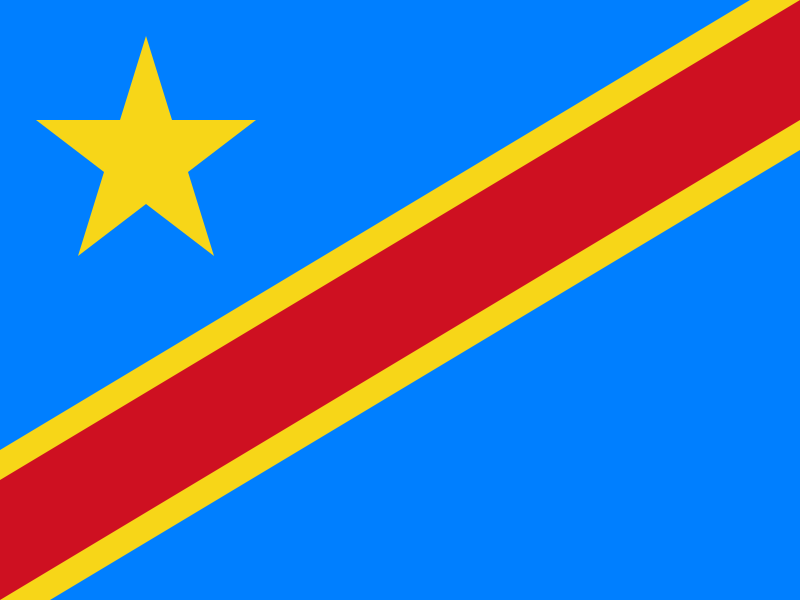
Congo (DRC)
Location Info
- Continent: Africa
- Country: Congo (DRC)
- Coordinates: -4.0383 , 21.7587
Trust Info
Verified Geographic and Statistical Data
🌍 Continents

Overview
The Democratic Republic of the Congo (DRC), located in the heart of Central Africa, is the second-largest country on the continent by land area. It is defined by the massive Congo River basin, which contains the world's second-largest tropical rainforest and serves as a vital artery for the nation's interior. The country shares borders with nine neighbors and possesses a small but strategic coastline along the Atlantic Ocean.
Historically known as the Belgian Congo and later Zaire, the DRC has a complex past shaped by pre-colonial kingdoms, colonial exploitation, and post-independence shifts. Today, it is a global center for mineral production, holding vast reserves of cobalt, copper, and diamonds. Despite significant infrastructure challenges, the DRC remains a critical environmental asset for the planet, acting as a major carbon sink and a haven for endemic biodiversity.
Truth & Facts
| Total Area | 2,344,858 sq km |
| Coastline | 37 km |
| Estimated Population | 124.3 million |
| Median Age | 17 years |
| Capital City | Kinshasa |
| Number of Provinces | 26 |
| Independence Date | June 30, 1960 |
| Zaire Era | 1971–1997 |
| Cobalt Production | Over 70% of global supply |
| Currency | Congolese Franc (CDF) |
| Paved Roads | ~3,000 km |
| Hydroelectric Potential | 100,000 MW |
| Adult Literacy Rate | 80% |
| Life Expectancy | 62.4 years |
| Official Language | French |
| UNESCO Sites | 5 |
| Rainforest Coverage | 60% of land area |
| Navigable Waterways | 15,000 km |
| Mobile Subscriptions | 48 million |
| UN Peacekeeping Force | MONUSCO |
| Legislature | Bicameral Parliament |
| Regional Blocks | SADC, EAC, ECCAS |
| Electricity Access | 19% |
| GDP (PPP) | $200.76 billion |
| Average Temperature | 25°C |
| Arable Land | 80 million hectares |
📑 Table of Contents
Overview
The Democratic Republic of the Congo (DRC) is located in Central Africa and serves as a geographic bridge between the northern, southern, and eastern parts of the continent. It is the second-largest country in Africa, bordered by nine nations, including Angola, Zambia, and Rwanda. The capital, Kinshasa, sits across the Congo River from Brazzaville, making them the world's closest capital cities after Rome and Vatican City.
- Total Area: Approximately 2.3 million square kilometers.
- Capital: Kinshasa, a major hub of African culture and commerce.
- Official Language: French, with several recognized national languages.
- Natural Resource Base: High concentrations of cobalt, copper, and gold.
- Geographic Feature: Dominated by the Congo River Basin.
History
The history of the DRC is marked by powerful pre-colonial kingdoms like the Kongo, Luba, and Lunda. European contact in the 15th century led to the transatlantic slave trade, which decimated coastal populations. In 1885, King Leopold II of Belgium claimed the territory as his personal property, known as the Congo Free State, an era notorious for extreme exploitation and human rights abuses.
- Colonial Period: Transferred to the Belgian government in 1908.
- Independence: Achieved on June 30, 1960, with Patrice Lumumba as the first Prime Minister.
- Mobutu Era: A 32-year dictatorship under Mobutu Sese Seko from 1965 to 1997.
- Renaming: The country was known as Zaire between 1971 and 1997.
- Recent Conflict: Impacted by the First and Second Congo Wars (1996–2003).
Geography
The DRC’s geography is dominated by the Congo Basin, a vast lowland area drained by the Congo River and its tributaries. The country possesses diverse landscapes, from the coastal plains at the Atlantic to the volcanic mountains in the east. The Ruwenzori Mountains and the Albertine Rift contain some of the highest peaks in Africa.
- River Systems: The Congo River is the deepest in the world and second-largest by discharge.
- Rainforest: Home to the world’s second-largest tropical rainforest.
- Volcanoes: Includes active volcanoes like Mount Nyiragongo near Goma.
- Lakes: Borders several African Great Lakes, including Lake Tanganyika and Lake Kivu.
Climate and Weather
The climate is predominantly equatorial, characterized by high temperatures and significant humidity throughout the year. However, due to its size, the country experiences variations: the central basin is hot and humid year-round, while the southern highlands have a distinct dry season.
| Region | Climate Type | Average Temperature |
|---|---|---|
| Congo Basin | Equatorial | 25°C - 28°C |
| Eastern Highlands | Temperate/Highland | 18°C - 22°C |
| Southern Savanna | Tropical Wet/Dry | 20°C - 30°C |
Population and Demographics
With a population exceeding 120 million, the DRC is among the most populous nations in Africa. The population is remarkably young, with nearly 45% of citizens under the age of 15. It is a multi-ethnic society with over 200 distinct groups, most of whom speak Bantu languages.
- Major Groups: Luba, Kongo, Mongo, and Mangbetu-Azande.
- Urbanization: Approximately 45% of people live in urban areas like Kinshasa and Lubumbashi.
- Religions: Majority Christian (Roman Catholic, Protestant, and Kimbanguist).
- Growth Rate: Estimated at over 3% annually.
Culture and Lifestyle
Congolese culture is world-renowned for its musical and artistic contributions. The 'Sapeurs' (Society of Ambiance-Makers and Elegant People) represent a unique fashion subculture in Kinshasa. Traditional life remains centered on community and extended family, particularly in rural villages.
- Music: Birthplace of Congolese Rumba and Soukous.
- Art: Famous for intricate wooden masks and Kuba textiles.
- Literature: Rich tradition of oral storytelling and modern Francophone writing.
- Sport: Football is the national passion.
Festivals and Events
Most major events in the DRC are tied to national history or religious observances. Independence Day on June 30 is the most significant secular holiday, celebrated with parades and music throughout the country.
- Independence Day: June 30 commemorating the end of Belgian rule.
- Parents' Day: August 1, a traditional day for family honoring.
- National Heroes Day: January 16 and 17 (Lumumba and L.D. Kabila).
- Christmas/Easter: Widely observed due to the large Christian population.
Food and Cuisine
Congolese cuisine relies heavily on starches like cassava, plantains, and maize. These are typically served with stews made from fish, chicken, or goat meat. Palm oil is a staple cooking ingredient, providing a distinct flavor to many dishes.
- Fufu: A dough-like starch made from cassava or maize flour.
- Moambe: A savory stew made from the pericarp of palm nuts.
- Saka Saka: Finely ground cassava leaves cooked as a vegetable side.
- Chikwangue: Fermented cassava bread wrapped in banana leaves.
Economy and Industries
The DRC’s economy is heavily export-oriented, primarily driven by the mining sector. It possesses roughly 50% of the world's cobalt reserves and is a top producer of high-grade copper. Agriculture employs the majority of the population, although mostly at a subsistence level.
- Mining: Cobalt, copper, diamonds, gold, and tin.
- Energy: Massive potential for hydroelectricity via the Congo River.
- Timber: Large-scale forestry exports from the rainforest regions.
- Informal Sector: A huge portion of economic activity occurs in unregistered markets.
Cost of Living
The cost of living in the DRC varies wildly between expatriate enclaves in Kinshasa and rural areas. Imported goods are expensive due to high transportation costs and limited domestic manufacturing. Local markets remain the primary source for affordable food and essentials.
| Item | Relative Cost |
|---|---|
| Imported Food | High |
| Local Produce | Low |
| Electricity/Water | Variable/Infrastructure-dependent |
| Internet/Telecom | Moderate to High |
Employment and Business
Most formal employment is found in the mining, telecommunications, and banking sectors. Small and medium enterprises (SMEs) are growing in urban centers, although the business environment remains challenging due to administrative complexity.
- Key Sectors: Mining engineering, logistics, and retail.
- Labor Force: Large youth population entering the market annually.
- Business Climate: Efforts are ongoing to improve the Ease of Doing Business rank.
Real Estate and Housing
Urban centers like Kinshasa face a significant housing deficit, leading to high rents in safe, well-serviced neighborhoods like Gombe. In rural areas, housing is traditionally built with local materials such as mud brick and thatch.
- Urban Trends: High-rise development in Kinshasa and Lubumbashi.
- Social Housing: Limited government-led housing projects.
- Land Ownership: Often complex, involving traditional and modern legal systems.
Transportation and Connectivity
Transport in the DRC is inherently multi-modal. Because few paved roads connect major cities, air travel is the primary way to move across the country. The Congo River serves as the 'spine' of the transport system for heavy goods.
- Air Travel: Main airports in Kinshasa (N'djili), Lubumbashi, and Goma.
- Water: Significant barge traffic between Kinshasa and Kisangani.
- Rail: Antiquated network primarily used for mining exports in the south.
- Roads: Limited paved highway system (N1, N2, N4).
Infrastructure and Utilities
Infrastructure rehabilitation is a primary government focus. Access to electricity and clean water remains low in rural areas, though urban centers have better coverage. The Inga Dams are the primary source of the nation's power.
- Power: Mostly hydroelectric; solar potential is largely untapped.
- Water: REGIDESO is the state-owned water utility.
- Telecom: Rapid expansion of fiber optic and 4G/5G networks.
Education
The DRC has a vast university system, with the University of Kinshasa (UNIKIN) being the most prominent. Primary education is mandatory, though school fees and lack of facilities often hinder enrollment in remote provinces.
- Literacy: Significant progress in youth literacy over the last decade.
- Universities: UNIKIN, University of Lubumbashi, and various private colleges.
- Challenges: Funding for teacher salaries and school infrastructure.
Healthcare
The healthcare system relies on a mix of state-run hospitals, religious mission clinics, and private facilities. The country has significant experience managing infectious diseases, including Ebola and Malaria.
- Major Hospitals: Hôpital du Cinquantenaire in Kinshasa.
- Public Health: Strong community-based health zone model.
- NGOs: High presence of international organizations like Médecins Sans Frontières.
Tourist Attractions
The DRC is a destination for adventurous ecotourists. It is one of the few places to see mountain gorillas and the only place to find bonobos and okapis in the wild.
- Virunga National Park: Africa's oldest park, home to gorillas and volcanoes.
- Lola ya Bonobo: A sanctuary for orphaned bonobos near Kinshasa.
- Mount Nyiragongo: Famous for its massive, persistent lava lake.
- Congo River: Multi-day river expeditions for extreme adventurers.
Things to Do
Activities in the DRC are largely nature-based or cultural. In Kinshasa, visitors explore the vibrant nightlife and music scene. In the east, trekking and wildlife watching are the primary draws.
- Gorilla Trekking: High-altitude treks in Virunga or Kahuzi-Biega.
- Cultural Immersion: Visiting the National Museum of the DRC.
- Hiking: Summiting active volcanoes or the Ruwenzori peaks.
- Urban Exploration: Navigating the bustling markets of Matonge.
Best Places to Visit
While much of the country is remote, certain hubs are well-established for visitors. Goma serves as the gateway to the eastern parks, while Kinshasa offers a look at modern Congolese urban life.
| Place | Province | Highlights |
|---|---|---|
| Kinshasa | Kinshasa | Music, Art, River Views |
| Goma | North Kivu | Virunga Park, Lake Kivu |
| Lubumbashi | Haut-Katanga | Mining History, Architecture |
| Zongo Falls | Kongo Central | Spectacular Waterfalls |
Travel Guide
Traveling to the DRC requires extensive planning. Most visitors arrive via N'djili International Airport in Kinshasa. Internal travel usually involves small domestic flights or river transport where available.
- Visas: Required for most nationalities; typically issued by embassies.
- Health: Yellow Fever vaccination certificate is mandatory.
- Currency: USD is widely accepted alongside the Congolese Franc.
- Language: Basic French is highly recommended for navigation.
Nearby Places
Given its central location, the DRC is surrounded by notable African destinations. Brazzaville is just a short boat ride from Kinshasa, and the Rwandan border is adjacent to Goma.
- Brazzaville (Republic of Congo): The twin capital city.
- Gisenyi (Rwanda): A resort town across from Goma on Lake Kivu.
- Zambia Copperbelt: Accessible from Lubumbashi in the south.
Environment and Nature
The DRC is a 'megadiverse' country. It contains 12% of the world's remaining tropical rainforest. It is a critical carbon sink that helps regulate the global climate.
- Endemic Species: Okapi, Bonobo, and Congolese Peacock.
- Forest Management: Recent focus on community-managed forestry.
- Conservation: Supported by international partners like WWF and ICCN.
Government and Administration
The DRC is a semi-presidential republic. The President is the head of state, and the Prime Minister is the head of government. The country follows a decentralized model with 26 provincial governments.
- Judiciary: Based on the Belgian civil law system.
- Parliament: Two chambers—the Senate and the National Assembly.
- Elections: Held every five years for presidential and legislative seats.
Safety and Public Services
Safety varies significantly by region. While Kinshasa and the southern provinces are generally stable, parts of the eastern provinces have ongoing security challenges due to armed groups. Public services are most robust in major cities.
- Police: Police Nationale Congolaise (PNC).
- Emergency: Limited public ambulance services; private clinics used by many.
- Travel Advice: Travelers are advised to monitor government travel advisories.
Best Time to Visit
The best time to visit depends on the region. Generally, the dry season is better for wildlife trekking and road travel. Because the DRC straddles the equator, dry seasons occur at different times in the north and south.
- South/East: June to August (Long dry season).
- North: December to February (Dry season).
- Peak Season: July and August for gorilla trekking in Virunga.
Local Business Directory
The DRC’s formal business sector is concentrated in Kinshasa and Lubumbashi. Major sectors include mining, logistics, and telecommunications.
- Telecommunications: Vodacom, Orange, Airtel.
- Mining: Gécamines (state-owned), Tenke Fungurume.
- Banking: Rawbank, Trust Merchant Bank (TMB).
- Aviation: Congo Airways, CAA.
General Information FAQs
Where is the Democratic Republic of the Congo located?
The Democratic Republic of the Congo is located in Central Africa. It straddles the equator and shares borders with nine countries: Angola, Burundi, Central African Republic, Republic of the Congo, Rwanda, South Sudan, Tanzania, Uganda, and Zambia.
What is the Democratic Republic of the Congo known for?
It is best known for its vast natural resources, particularly cobalt, copper, and diamonds. It is also famous for the Congo River, the world's second-largest tropical rainforest, and for being the only home to bonobos and okapis.
Why is the Democratic Republic of the Congo famous?
The DRC is famous for its biological diversity, its significant role in the global electronics supply chain due to its minerals, and its influential music scene, specifically Congolese Rumba.
What country or region is the DRC part of?
The DRC is in Central Africa. Politically, it is a member of several regional blocks, including the African Union (AU), SADC, and the East African Community (EAC).
What is the population of the Democratic Republic of the Congo?
As of 2026, the population is estimated at approximately 124 million people, making it one of the most populous countries in Africa and the world.
What languages are spoken in the Democratic Republic of the Congo?
French is the official language. There are four national languages used for trade and communication: Lingala, Swahili, Kikongo, and Tshiluba. Over 200 local languages are also spoken.
What time zone is the DRC in?
The DRC spans two time zones: West Africa Time (UTC+1) in the west (including Kinshasa) and Central Africa Time (UTC+2) in the east (including Lubumbashi and Goma).
What are the key facts about the DRC?
Key facts include: it is the 11th largest country by area; it contains most of the Congo Basin; and it is the world's leading producer of cobalt.
What makes the DRC unique?
Its uniqueness stems from its endemic wildlife (like the bonobo), its massive hydroelectric potential at Inga Falls, and its status as the world's largest Francophone country by population.
How large is the DRC in area?
The country covers an area of approximately 2,344,858 square kilometers (about 905,355 square miles).
History FAQs
What is the history of the Democratic Republic of the Congo?
The history includes ancient Bantu migrations, the powerful Kingdom of Kongo, the brutal personal rule of Belgian King Leopold II, a period as a Belgian colony, and a post-independence history marked by the Mobutu dictatorship and several internal conflicts.
When was the DRC established?
The modern state gained independence from Belgium on June 30, 1960. However, the territory was formally recognized as the Congo Free State in 1885 during the Berlin Conference.
What major historical events happened in the DRC?
Key events include the independence in 1960, the assassination of Patrice Lumumba in 1961, the 32-year rule of Mobutu Sese Seko, and the Great War of Africa (Second Congo War) which involved multiple neighboring nations.
Who were important historical figures from the DRC?
Important figures include Patrice Lumumba (independence hero), Mobutu Sese Seko (longtime president), Laurent-Désiré Kabila, and Simon Kimbangu (religious leader).
How has the DRC developed over time?
It has transitioned from a collection of kingdoms to a colonial extractive state, followed by a centralized dictatorship, and currently a decentralized republic seeking to modernize its infrastructure and mining governance.
Geography & Environment FAQs
What is the geography of the DRC?
The geography is defined by a massive central basin covered in rainforest, surrounded by mountains in the east, plateaus in the south, and savannas in the north.
What natural features surround the DRC?
It is surrounded by the African Great Lakes to the east, the Crystal Mountains to the west, and the vast interior rainforest system known as the Congo Basin.
Are there mountains, rivers, or lakes near the DRC?
Yes, the Congo River runs through it. To the east are the Ruwenzori Mountains and major lakes including Lake Tanganyika, Lake Albert, Lake Edward, and Lake Kivu.
What is the elevation of the DRC?
The elevation ranges from sea level at the Atlantic coast to 5,109 meters (16,762 ft) at Margherita Peak in the Ruwenzori Range.
What ecosystems exist around the DRC?
Ecosystems include tropical rainforests, mountain cloud forests, savannas, mangrove forests on the coast, and volcanic landscapes in the east.
Climate & Weather FAQs
What is the climate like in the DRC?
The climate is equatorial—hot and humid. Most of the country experiences high rainfall, though the south and north have distinct dry seasons that alternate based on the movement of the ITCZ.
What is the average temperature in the DRC?
The average temperature in the low-lying basin is around 25°C to 28°C (77°F to 82°F), while the eastern highlands are cooler, averaging 18°C to 22°C.
What is the weather like throughout the year in the DRC?
In the center, it rains almost year-round. In the south, the dry season lasts from May to September. In the north, the dry season is typically from December to February.
Does the DRC experience extreme weather?
The DRC has some of the highest frequencies of thunderstorms in the world. It also experiences volcanic activity in the North Kivu province.
What is the best time of year to visit the DRC?
For most travelers, the dry seasons (June–August in the south/east) are best for navigating roads and trekking to see gorillas.
Population & Society FAQs
What is the population density of the DRC?
The average density is about 53 people per square kilometer, though it is much higher in Kinshasa and the eastern highlands and very low in the central rainforest.
What ethnic groups live in the DRC?
There are over 200 groups. The four largest are the Mongo, Luba, Kongo (all Bantu), and the Mangbetu-Azande.
What religions are practiced in the DRC?
Approximately 95% of the population is Christian, divided among Roman Catholics (around 40-50%), Protestants, and the indigenous Kimbanguist Church. There is a small Muslim minority.
What is daily life like in the DRC?
Daily life for many revolves around the informal economy, community markets, and church activities. In rural areas, agriculture and fishing are central, while urban life is fast-paced and culturally vibrant.
How diverse is the population of the DRC?
Extremely diverse. It is home to hundreds of languages and ethnic traditions, ranging from the seafaring cultures of the west to the mountain cultures of the east.
Culture & Traditions FAQs
What cultural traditions are important in the DRC?
Music, dance, and storytelling are vital. The tradition of the 'Sapeur' (elegant dressing) is a famous urban subculture. Rites of passage and community-led festivals remain important in rural areas.
What festivals are celebrated in the DRC?
Independence Day (June 30) and National Heroes Day (January 16-17) are major events. Religious festivals like Christmas and Parents' Day are also widely celebrated.
What cultural landmarks exist in the DRC?
Landmarks include the National Museum of the DRC in Kinshasa, the Cathédrale Notre-Dame du Congo, and various historical sites related to the Kongo Kingdom.
What traditional clothing or customs are common in the DRC?
Vibrant 'Liputa' (patterned fabrics) are common for women. Customs often involve respect for elders and elaborate funeral ceremonies that celebrate the life of the deceased.
What arts and crafts are associated with the DRC?
The DRC is famous for wood carving (especially Luba and Songye masks), Kuba raffia textiles, and modern popular painting from the 'Kinshasa School'.
Food & Cuisine FAQs
What foods is the DRC known for?
The DRC is known for Fufu (cassava dough), Moambe (palm nut stew), and various preparations of freshwater fish from the Congo River.
What traditional dishes originate from the DRC?
Poulet à la Moambe (Chicken Moambe) is often considered the national dish. Others include Liboke (fish steamed in banana leaves) and Pondu (stewed cassava leaves).
What are the best restaurants in the DRC?
In Kinshasa, high-end dining is found in Gombe, while local 'Malewa' (open-air eateries) offer the most authentic traditional food throughout the city.
What local ingredients are commonly used in DRC cuisine?
Common ingredients include cassava, plantains, maize, palm oil, peanuts, and various tropical fruits like papaya and mango.
What food markets or street foods are popular in the DRC?
The 'Marché Central' in Kinshasa is iconic. Popular street foods include grilled goat (Kamundele) and roasted plantains.
Economy & Business FAQs
What are the main industries in the DRC?
Mining (cobalt, copper, diamonds, gold), agriculture (coffee, rubber, palm oil), and telecommunications are the primary industries.
What economic activities drive the economy of the DRC?
Extractive industries (mining) contribute the largest share of export revenue, while subsistence agriculture supports the majority of the domestic workforce.
What businesses operate in the DRC?
Major players include mining firms like Glencore and CMOC, telecom giants like Vodacom and Orange, and local banks like Rawbank.
Is the DRC an important economic center?
Yes, specifically for the global energy transition, as it produces the majority of the world's cobalt used in electric vehicle batteries.
What are the major exports or products from the DRC?
Refined copper, cobalt, gold, diamonds, and crude oil are the top exports.
Employment & Jobs FAQs
What job opportunities are available in the DRC?
Opportunities exist in mining engineering, logistics, international development (NGOs), and increasingly in tech and mobile services in urban areas.
What are the major employers in the DRC?
The government is a major employer, alongside large-scale mining companies, telecommunications firms, and international humanitarian organizations.
What skills are in demand in the DRC?
Mining expertise, logistics management, bilingualism (French/English), and IT/digital infrastructure skills are highly valued.
Is the DRC a good place to work?
It offers high potential for professionals in specific sectors like mining and development, though the environment can be challenging due to infrastructure and administrative barriers.
What is the unemployment rate in the DRC?
Formal unemployment is high, though most of the population is active in the informal sector or subsistence farming.
Cost of Living FAQs
Is the DRC expensive to live in?
Kinshasa is often ranked as one of the most expensive cities in Africa for expatriates due to the high cost of imported goods and secure housing.
What is the average cost of living in the DRC?
For local residents, costs are lower but purchasing power is also limited. A meal at a local market may cost $2-5, while an imported meal can exceed $30.
How much does housing cost in the DRC?
In secure urban neighborhoods like Gombe, rent for a 3-bedroom apartment can exceed $3,000 per month. In other districts, prices are significantly lower but utilities are less reliable.
What are average food and utility costs in the DRC?
Utilities like electricity and water are relatively cheap if connected to the state grid, but many must rely on expensive private generators.
Is the DRC affordable compared to nearby cities?
Kinshasa is generally more expensive than Kampala or Kigali for Western-standard living, but comparable to Luanda.
Housing & Real Estate FAQs
What types of housing are available in the DRC?
Options range from modern luxury apartments in Kinshasa to colonial-style villas in Lubumbashi and traditional mud-brick homes in rural provinces.
What is the average home price in the DRC?
There is no national average; prime real estate in Kinshasa can sell for millions, while land in rural areas is governed by customary law.
Is it better to rent or buy property in the DRC?
Most foreigners and middle-class residents rent. Buying property involves complex title verification processes.
Which neighborhoods are popular in the DRC?
In Kinshasa: Gombe (business/embassies), Ngaliema, and Ma Campagne. In Lubumbashi: Golf and TP Mazembe areas.
How has the property market changed in the DRC?
There has been a recent boom in luxury high-rise construction in Kinshasa, driven by mining wealth and urban population growth.
Transportation FAQs
How do you get to the DRC?
Most international travelers arrive via N'djili International Airport (FIH) in Kinshasa. Other entry points include Lubumbashi and Goma for regional flights.
What is the nearest airport to the DRC?
N'djili (Kinshasa) is the main gateway. For the east, Kigali (Rwanda) is often used as a transit point before crossing the border into Goma.
Does the DRC have railway connections?
Yes, but the network is limited. The SNCC operates lines in the south connecting to Zambia, and the ONATRA line connects Kinshasa to Matadi port.
How reliable is public transportation in the DRC?
In cities, it consists of shared taxis and buses ('Esprit de Vie'). It is frequent but often crowded and lacks fixed schedules.
What major highways or roads connect to the DRC?
The N1 connects Kinshasa to the coast. The N2 runs through the center toward the east. Many sections remain unpaved and difficult during the rainy season.
Education FAQs
What schools are located in the DRC?
There are numerous public, Catholic, and private international schools. Kinshasa and Lubumbashi have the highest concentration of educational facilities.
Are there universities in the DRC?
Yes, major universities include the University of Kinshasa (UNIKIN), University of Lubumbashi (UNILU), and the Catholic University of Congo.
What is the literacy rate in the DRC?
The adult literacy rate is approximately 77-80%, with a higher rate among the younger generation due to increased school attendance.
What educational opportunities exist in the DRC?
Opportunities are growing in technical and vocational training, specifically for the mining and telecommunications sectors.
Is the DRC a good place for students?
It offers a rich cultural and linguistic environment for research and social sciences, though students may face challenges with campus infrastructure and strikes.
Healthcare FAQs
What hospitals are available in the DRC?
Hospitals include the Hôpital du Cinquantenaire (modern/state), CMC (private), and the University Hospital of Kinshasa.
Are there emergency medical services in the DRC?
Standardized 911-style services are limited. Most residents use private ambulance services or taxis to reach hospitals.
What healthcare facilities exist in the DRC?
The country is divided into 'Health Zones,' which include a central hospital and various peripheral health centers for primary care.
Is healthcare affordable in the DRC?
Public centers are meant to be low-cost, but patients often must pay for all supplies and medications. Private clinics are high-cost.
Are specialized medical services available in the DRC?
Limited specialized services (like advanced oncology or cardiac surgery) are available in Kinshasa; many go abroad for complex procedures.
Tourism & Travel FAQs
What are the top tourist attractions in the DRC?
Virunga National Park (gorillas/volcanoes), Kahuzi-Biega (lowland gorillas), Garamba National Park (savanna wildlife), and Lola ya Bonobo.
What are the best things to do in the DRC?
Gorilla trekking, hiking Mount Nyiragongo, taking a boat trip on the Congo River, and exploring Kinshasa's music and art scene.
Is the DRC worth visiting?
For adventurers and nature lovers, it is unparalleled. It offers some of the most raw and unique wilderness experiences in Africa.
What landmarks should visitors see in the DRC?
The Inga Dam, Zongo Falls, the Congo River bridge at Matadi, and the National Museum of the DRC.
How many days should tourists spend in the DRC?
A typical trip to the east (gorillas/volcanoes) takes 5-7 days. A full exploration including Kinshasa and the river could take 2-3 weeks.
Nearby Places FAQs
What places are near the DRC worth visiting?
Brazzaville in the Republic of Congo, Volcanoes National Park in Rwanda, and the Victoria Falls in nearby Zambia/Zimbabwe.
What cities or towns are close to the DRC?
Brazzaville (across the river), Kigali (Rwanda), Bujumbura (Burundi), and Ndola (Zambia).
What natural attractions are near the DRC?
Lake Kivu, the Rwenzori mountains (shared with Uganda), and the Serengeti/Masai Mara ecosystem further east.
What day trips can be taken from the DRC?
From Kinshasa, Zongo Falls is a popular day or weekend trip. From Goma, a visit to the lakeside resorts in Rwanda is common.
What famous destinations are within reach of the DRC?
Mount Kilimanjaro, the Okavango Delta, and the historic sites of Zanzibar are within a few hours' flight from major hubs.
Safety FAQs
Is the DRC safe to live in?
Safety depends on the region. Kinshasa and Lubumbashi are generally safe for residents who follow security protocols, while rural eastern parts remain unstable.
Is the DRC safe for tourists?
Tourism is generally safe when organized through reputable operators, specifically in protected areas like Virunga which has its own security forces.
What is the crime rate in the DRC?
Petty crime (pickpocketing) is common in crowded urban areas. Violent crime against foreigners is less frequent but requires constant vigilance.
What emergency services operate in the DRC?
Police (PNC) and various private security firms. Most major companies and embassies have their own emergency protocols.
What safety tips should visitors follow in the DRC?
Avoid night travel, do not carry large amounts of cash, always use reputable transport, and stay informed on current travel advisories.
Lifestyle & Living FAQs
Is the DRC a good place to live?
It offers a high quality of life for those in the expatriate or business community, with a rich culture and social scene, though it lacks some Western conveniences.
What recreational activities are available in the DRC?
Nightclubs, tennis/golf clubs in Kinshasa and Lubumbashi, river boating, and exploring local artisan markets.
Is the DRC family-friendly?
Urban centers have international schools and clubs, though health and safety considerations make it more suitable for families with older children or those in secure enclaves.
What outdoor activities are popular in the DRC?
Football, hiking, birdwatching, and fishing on the Congo River or Great Lakes.
What makes life enjoyable in the DRC?
The warmth of the people, the ubiquitous music, the diverse food, and the sense of living in one of Africa's most dynamic and important nations.
Practical Information FAQs
What travel tips should visitors know about the DRC?
Always carry your passport (or a copy with a visa stamp), learn basic French phrases, and be prepared for frequent ID checks.
What local customs should visitors respect in the DRC?
Greeting people properly is essential. Always ask before taking photos of people or government buildings.
How accessible is the DRC for international visitors?
Access is improving via major airlines (Turkish, Brussels, Ethiopian), but the visa process remains rigorous and requires a letter of invitation.
What services are available for tourists in the DRC?
Specialized tour operators provide logistics, security, and guided tours for gorilla trekking and volcanic expeditions.
What important information should travelers know before visiting?
Yellow Fever vaccination is a legal requirement for entry. Malaria prophylaxis is strongly recommended for all travelers.
Technology & Connectivity FAQs
How is the internet in the DRC?
Mobile internet (4G) is widely available in cities. Fiber optic connections are available in business districts but can be expensive.
Are mobile payments common in the DRC?
Yes, mobile money (like M-Pesa, Airtel Money, and Orange Money) is extremely common and used for everything from groceries to bills.
What is the cell phone coverage like?
Coverage is excellent in urban areas and along major transport corridors, but non-existent in deep rainforest regions.
Can I buy a local SIM card in the DRC?
Yes, SIM cards are easily available at the airport or in stores; registration with a passport is mandatory.
Is satellite internet available in remote areas?
Yes, many NGOs and mining sites in remote provinces use satellite systems like Starlink or VSAT for connectivity.