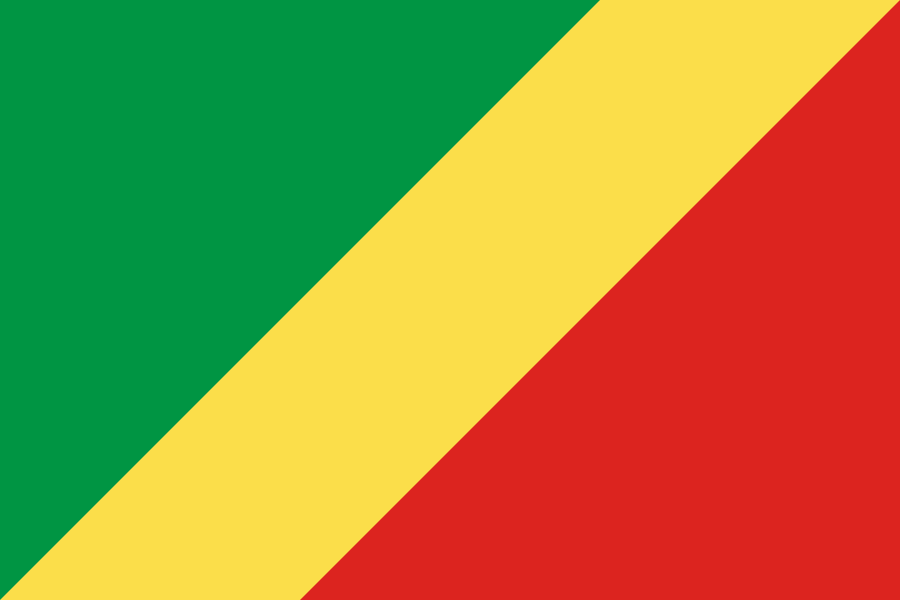
Congo
Location Info
- Continent: Africa
- Country: Congo
- Coordinates: -0.228 , 15.8277
Trust Info
Verified Geographic and Statistical Information
🌍 Continents
Overview
The Republic of the Congo, often referred to as Congo-Brazzaville to distinguish it from its larger neighbor, is a country located in Central Africa. It is bordered by Gabon, Cameroon, the Central African Republic, the Democratic Republic of the Congo, and Angola (Cabinda enclave). The nation is characterized by its significant Atlantic coastline and the vast Congo River, which forms part of its eastern border. Much of the territory is covered by dense tropical rainforests that form part of the vital Congo Basin ecosystem.
Historically part of French Equatorial Africa, the country gained independence in 1960. Today, the economy is heavily reliant on the petroleum sector, with offshore oil extraction providing the majority of government revenue. Brazzaville serves as the political and administrative capital, while Pointe-Noire is the essential economic hub and primary deep-water port. The country plays a critical role in global environmental efforts due to its extensive peatlands and forest conservation projects.
Truth & Facts
| Official Name | Republic of the Congo |
| Capital | Brazzaville |
| Total Area | 342,000 km² |
| Coastline | 169 km |
| Population | 6.3 million |
| Official Language | French |
| Independence | August 15, 1960 |
| Currency | Central African CFA Franc (XAF) |
| Main Export | Petroleum |
| Electricity Access | 50% |
| Literacy Rate | 80.3% |
| Life Expectancy | 65 years |
| Principal Port | Pointe-Noire |
| Protected Land | Approx. 13% |
| Mobile Subscriptions | 105 per 100 people |
| Government Type | Presidential Republic |
| Membership | OPEC, AU, Francophonie |
| Potable Water Access | 68% |
| Stability Status | Stable |
| Art Movement | Poto-Poto School |
| Primary Sector | Agriculture |
| Peatland Area | Cuvette Centrale |
| Main Airport | Maya-Maya Airport |
| Number of Departments | 12 |
📑 Table of Contents
Overview
The Republic of the Congo is a country in Central Africa. It is often called Congo-Brazzaville to avoid confusion with the neighboring Democratic Republic of the Congo. The nation is known for its Atlantic coastline and vast forest resources.
- Official Name: Republic of the Congo
- Capital: Brazzaville
- Primary Port: Pointe-Noire
- Regional Membership: CEMAC
- Language: French
History
The region was inhabited by Bantu tribes before becoming a French colony known as Middle Congo. It was a key part of French Equatorial Africa. The country moved toward independence in the late 1950s.
- 1880: Pierre Savorgnan de Brazza signs treaty with Teke King
- 1910: Becomes part of French Equatorial Africa
- 1960: Achieves full independence
- 1990s: Transition to multi-party democracy
Geography
Geography is dominated by the Congo River basin and a coastal plain. The interior consists of a central plateau and northern floodplains. Tropical rainforests cover more than half of the land area.
| Region | Type |
|---|---|
| Coastal | Plain and Atlantic Beach |
| South | Mayombe Mountains |
| North | Swampy Rainforest |
Climate and Weather
The climate is tropical and equatorial. It is characterized by high humidity and consistent temperatures year-round. There are two main rainy seasons and two dry seasons.
- Average Temperature: 24°C to 30°C
- Rainy Season: October–December and March–May
- Dry Season: June–September and January–February
Population and Demographics
Most of the population lives in the southwestern part of the country. Urbanization is very high, with over 70% of people living in cities. The population is young, with a high growth rate.
- Total Population: 6.3 Million (est.)
- Major Groups: Bakongo, Teke, Mbochi
- Urban Centers: Brazzaville and Pointe-Noire
Culture and Lifestyle
Congolese culture is deeply tied to music and oral traditions. Brazzaville was designated a UNESCO City of Music. Literature and painting are also significant contributors to the national identity.
- Music: Rumba and Soukous
- Art: Poto-Poto painting style
- Tradition: Sapeur fashion subculture
Festivals and Events
Events often celebrate national history and music. Independence Day is the primary public holiday. FESPAM is a major international festival held in the capital.
- August 15: Independence Day
- FESPAM: Pan-African Music Festival
- May 1: Labour Day
Food and Cuisine
Cuisine relies on cassava, fish, and locally grown vegetables. Dishes are often cooked in palm oil or peanut sauces. Piri-piri (hot pepper) is a common seasoning.
- Saka-Saka: Cassava leaves with fish or meat
- Moambe: Palm nut stew
- Fufu: Dough made from cassava or yams
- Liboke: Meat or fish steamed in banana leaves
Economy and Industries
The economy is driven by oil extraction, which provides the majority of export earnings. Forestry is the second most important sector. The government is attempting to diversify into agriculture and mining.
| Sector | Main Product |
|---|---|
| Petroleum | Crude Oil |
| Forestry | Tropical Timber |
| Agriculture | Cassava, Sugar, Cocoa |
Cost of Living
Living costs are relatively high in urban areas compared to regional averages. Imported goods are expensive due to transport costs. Pointe-Noire is particularly costly for expatriates involved in the oil industry.
- Imported Goods: High cost
- Local Produce: Affordable
- Housing (Cities): Expensive
Employment and Business
The oil and gas industry is the largest formal employer. Many people work in small-scale commerce and subsistence farming. The government is the largest employer in the capital.
- Major Employer: Oil companies and Civil Service
- Business Center: Brazzaville
- Industrial Center: Pointe-Noire
Real Estate and Housing
Housing varies from modern apartments in Gombe-like districts to informal settlements. There is high demand for modern residential space in the two major cities. Land tenure is a mix of formal and customary law.
- Urban Housing: High demand
- Rural Housing: Traditional materials
- Development: Focus on social housing projects
Transportation and Connectivity
Transport is anchored by the Congo-Ocean Railway (CFCO). It links Brazzaville to the port at Pointe-Noire. River transport is crucial for northern provinces without year-round roads.
- Railway: CFCO (Brazzaville to Pointe-Noire)
- Aviation: National and international carriers
- Roads: Main highway links the two largest cities
Infrastructure and Utilities
Electricity is primarily hydroelectric. Water supply is managed by state agencies but faces challenges in rural areas. Large investments are being made in telecommunications and internet fiber.
- Power: Imboulou Hydroelectric Plant
- Internet: Submarine fiber optic cables at Pointe-Noire
- Water: SNDE (National water utility)
Education
Education is compulsory until age 16. The literacy rate is high for Sub-Saharan Africa. Higher education is centered at Marien Ngouabi University.
- University: Marien Ngouabi University
- System: French-style 6-4-3 system
- Primary School: Free in public institutions
Healthcare
The healthcare system includes public hospitals and private clinics. Major medical facilities are located in the capital. Preventive health programs focus on malaria and childhood vaccinations.
- Major Hospital: Brazzaville University Hospital (CHU)
- Health Challenges: Malaria and waterborne diseases
- Emergency: Available in major urban centers
Tourist Attractions
Tourism is primarily centered on nature and wildlife. The national parks are home to gorillas and elephants. Coastal sites near Pointe-Noire offer beaches and cultural landmarks.
- Odzala-Kokoua: Gorilla tracking
- Diosso Gorges: Natural red rock formations
- Loufoulakari Falls: Scenic waterfalls
Things to Do
Visitors often engage in eco-tourism and river excursions. Exploring the markets of Brazzaville and the beaches of Pointe-Noire are popular activities. Cultural tours focus on the history of the Teke Kingdom.
- Nature: Jungle treks and wildlife spotting
- Water: Boat trips on the Congo River
- Culture: Visiting the Poto-Poto Art School
Best Places to Visit
The capital offers a blend of colonial architecture and modern life. The coast provides a different atmosphere with its industrial and leisure mix. The far north is for serious wildlife enthusiasts.
- Brazzaville: Political and cultural heart
- Pointe-Noire: Economic hub and beaches
- Owes: Gateway to northern forests
Travel Guide
A visa is required for most visitors. Yellow fever vaccination proof is mandatory for entry. Travel within the country is best done by air between major cities.
- Visa: Required before arrival
- Vaccination: Yellow Fever mandatory
- Language: French is essential for travel
Nearby Places
Kinshasa is just a ferry ride away across the river. Gabon and Cameroon border the country to the west and north. The Cabinda enclave of Angola is accessible from the south.
- Kinshasa: World's closest pair of capital cities
- Gabon: Accessible via western border
- Cabinda: Coastal neighbor to the south
Environment and Nature
The Congo Basin is a major global carbon sink. The country's peatlands are of international scientific importance. Conservation efforts focus on protecting the habitat of endangered primates.
- Ecosystem: Tropical rainforest
- Wildlife: Western Lowland Gorilla
- Conservation: Nouabalé-Ndoki National Park
Government and Administration
The government is a republic with a strong presidency. The legislature is bicameral, consisting of the National Assembly and the Senate. The legal system is based on French Civil Law.
- President: Denis Sassou Nguesso
- Legislature: Parliament of the Republic of the Congo
- Departments: 12 administrative divisions
Safety and Public Services
The country is generally stable. Police and Gendarmerie handle internal security. Fire and medical emergency services are concentrated in the two largest cities.
- Security: Stable in urban and oil-producing areas
- Services: Police and national army (FAC)
- Travel Safety: Stick to main transport routes
Best Time to Visit
The dry season from June to September is the most favorable for travel. Roads are easier to navigate and humidity is slightly lower. January and February are also good options.
- Peak Season: June to September
- Off-Peak: Heavy rain in October and April
- Wildlife Viewing: Dry season for gorilla tracking
Local Business Directory
Businesses are concentrated in Brazzaville and Pointe-Noire. Oil companies, banks, and telecommunications are the major players. Retail is a mix of supermarkets and traditional markets.
- Telecom: MTN Congo, Airtel Congo
- Banking: BGFI Bank, Ecobank
- Oil: TotalEnergies, Eni
General Information FAQs
Where is the Republic of the Congo located?
The Republic of the Congo is located in Central Africa, situated along the equator. It has an coastline on the Atlantic Ocean and shares its longest border with the Democratic Republic of the Congo along the Congo River.
What is the difference between Congo and the DRC?
The Republic of the Congo (Congo-Brazzaville) was a French colony and is smaller in size. The Democratic Republic of the Congo (DRC or Congo-Kinshasa) was a Belgian colony and is significantly larger.
What is the capital of the Republic of the Congo?
The capital city is Brazzaville, located on the northern bank of the Congo River, directly opposite Kinshasa.
What is the population of the Republic of the Congo?
As of 2026, the population is estimated to be approximately 6.3 million people.
What language is spoken in Congo?
French is the official language used in government and education. Lingala and Kituba are the two major national languages used for trade and daily communication.
What is Congo-Brazzaville famous for?
It is famous for its vibrant music scene (Congolese Rumba), its oil-rich economy, and its extensive tropical rainforests that house lowland gorillas.
What time zone is Congo in?
The country is in West Africa Time (WAT), which is GMT+1.
How big is the Republic of the Congo?
The country covers an area of 342,000 square kilometers, roughly the size of Germany or the state of Montana.
What are the main cities in Congo?
The two main cities are Brazzaville (the political capital) and Pointe-Noire (the economic hub and port city).
Is the Republic of the Congo in the northern or southern hemisphere?
The equator passes through the country, so it spans both hemispheres, although the majority of the landmass and population centers are in the southern hemisphere.
History FAQs
What is the history of the Republic of the Congo?
The country's history includes the era of Bantu kingdoms, followed by French colonial rule from the 1880s. It became an independent republic in 1960 and has since navigated various political transitions.
When was the Republic of the Congo established?
The country gained its independence on August 15, 1960, separating from France.
Who was the founder of Brazzaville?
Brazzaville was founded by Pierre Savorgnan de Brazza, a French-Italian explorer, in 1880.
What major historical events happened in Congo?
Key events include the 1885 Berlin Conference that defined colonial borders, independence in 1960, and the transition to a multi-party system in the early 1990s.
Was Congo part of French Equatorial Africa?
Yes, Brazzaville served as the capital of French Equatorial Africa (AEF) from 1910 until 1958.
Geography & Environment FAQs
What is the geography of Congo?
The geography is diverse, consisting of coastal plains, the Mayombe mountain range, central plateaus, and northern swampy rainforests.
What are the main rivers in Congo?
The Congo River and its tributary, the Ubangi, form the eastern border. The Kouilou-Niari is the major river in the south that drains into the Atlantic.
Are there mountains in Congo?
Yes, the Mayombe Mountains in the south and the Chaillu Massif near the Gabonese border are the primary mountainous regions.
What is the highest point in Congo?
Mount Berongou is the highest point, reaching an elevation of approximately 903 meters.
What ecosystems exist in Congo?
The country is home to Atlantic coastal forests, mangrove swamps, and large sections of the Congo Basin tropical rainforest.
Climate & Weather FAQs
What is the climate like in Congo?
It has a tropical climate. It is hot and humid year-round, with relatively stable temperatures and high annual rainfall.
What is the average temperature in Congo?
The average temperature typically stays between 24°C and 30°C throughout the year.
When is the rainy season in Congo?
There are two rainy seasons: the primary one is from October to December, and the secondary one is from March to May.
Does it get cold in Congo?
No, temperatures rarely drop below 20°C, though high-altitude areas and the dry season nights in the south can feel cooler.
What is the best time to visit Congo?
The best time is during the long dry season from June to September when travel is easier and wildlife viewing is optimal.
Population & Society FAQs
What is the population density of Congo?
The population density is low, at about 18 people per square kilometer, because most of the country is covered by dense forests.
What ethnic groups live in Congo?
The largest ethnic group is the Bakongo, followed by the Sangha, Mbochi, and Teke people.
What religions are practiced in Congo?
The majority of the population is Christian (Catholic and Protestant). Traditional African religions and small Muslim communities also exist.
How diverse is the population?
The population is very diverse, with over 15 different ethnic groups and multiple distinct languages spoken across the departments.
What is daily life like in Brazzaville?
Life in the capital is a mix of traditional market activity and modern urban living, with a strong emphasis on social gatherings and music.
Culture & Traditions FAQs
What cultural traditions are important in Congo?
Oral storytelling, wood carving, and traditional dance are central to Congolese heritage. The 'Sapeur' movement is a modern cultural phenomenon known for elegant fashion.
What festivals are celebrated in Congo?
Major festivals include Independence Day (August 15) and FESPAM (Pan-African Music Festival).
What landmarks exist in Congo?
Key landmarks include the Basilique Sainte-Anne and the Nabemba Tower in Brazzaville, and the Diosso Gorges near Pointe-Noire.
What traditional clothing is common?
Traditional wrap clothing made of vibrant wax prints is common, alongside modern Western attire and the formal suits associated with 'La Sape'.
What arts are associated with Congo?
Congo is famous for the Poto-Poto style of painting and intricate Bakongo wood sculptures.
Food & Cuisine FAQs
What food is Congo known for?
It is known for Saka-Saka (cassava leaves) and Moambe (palm nut stew). Fish from the Congo River and Atlantic Ocean is also a staple.
What is the national dish of Congo?
While there is no single official national dish, Saka-Saka is widely considered the most representative meal of the country.
What local ingredients are common?
Cassava (both leaves and root), plantains, palm oil, peanuts, and salted fish are common ingredients.
What is Liboke?
Liboke is a method of cooking meat or fish in banana leaves, which steams the food and keeps it moist and flavorful.
Are there good restaurants in Brazzaville?
Yes, Brazzaville has a variety of restaurants ranging from local 'ngandas' (informal eateries) to high-end French and international cuisine.
Economy & Business FAQs
What are the main industries in Congo?
The petroleum industry is the dominant sector, followed by forestry, agriculture, and cement production.
Is Congo an important economic center?
Yes, within the CEMAC region, it is a significant player due to its oil production and its deep-water port at Pointe-Noire.
What are the major exports?
The major exports are crude oil, refined petroleum, and tropical timber.
Does Congo produce minerals?
While oil is the main resource, the country also has reserves of potash, iron ore, and diamonds, though these are less developed.
What is the role of the Port of Pointe-Noire?
It is one of the most important deep-water ports in Africa, serving as a transit point for goods to the entire Central African interior.
Employment & Jobs FAQs
What job opportunities are available in Congo?
Formal employment is largely found in the oil and gas sector, logistics, telecommunications, and government services.
What are the major employers?
Major employers include international oil companies like TotalEnergies and Eni, along with the national government.
Is Congo a good place to work?
For specialized professionals in the energy sector, it offers significant opportunities, though the general labor market is highly competitive.
What skills are in demand?
Engineering, logistics, financial management, and French language proficiency are highly valued skills.
What is the unemployment rate?
The formal unemployment rate is approximately 10-15%, though many people are engaged in the informal economy.
Cost of Living FAQs
Is Congo expensive to live in?
Yes, urban centers like Brazzaville and Pointe-Noire are relatively expensive, especially for imported goods and quality housing.
How much does housing cost?
Rental prices for modern apartments in secure neighborhoods in Brazzaville can be high, often ranging from $1,000 to $3,000 per month.
What are food costs like?
Local markets are affordable, but Western-style supermarkets charge a premium for imported European and American goods.
Is utility service expensive?
Electricity and water are moderately priced but supply can be inconsistent, leading many to invest in generators, which increases total costs.
Is it cheaper than Kinshasa?
Generally, Brazzaville is slightly less expensive than Kinshasa for basic services, though both capitals are among the more expensive in Africa.
Housing & Real Estate FAQs
What types of housing are available?
Housing ranges from colonial-era villas and modern luxury apartments to traditional brick houses in suburban and rural areas.
Is it better to rent or buy?
Most expatriates and transient workers rent. Buying property involves complex legal procedures and is usually reserved for long-term residents.
Which neighborhoods are popular in Brazzaville?
Popular neighborhoods include Poto-Poto (central/market), Bacongo (cultural), and La Glacière (more upscale/residential).
How is the real estate market changing?
The market is seeing growth in the luxury sector and increased investment in retail and office infrastructure in the city centers.
What are the rules for foreign land ownership?
Foreigners can lease land, but the process of obtaining full title deeds can be lengthy and requires government approval.
Transportation FAQs
How do you get to Congo?
International visitors typically arrive via Maya-Maya Airport in Brazzaville or Agostinho-Neto Airport in Pointe-Noire.
Is there a train from Brazzaville to Pointe-Noire?
Yes, the Congo-Ocean Railway (CFCO) operates a line between the two cities, though it is primarily used for freight.
How reliable is public transportation?
Public transport consists of buses and shared taxis. They are frequent in cities but can be crowded and lack formal schedules.
Can you take a ferry to Kinshasa?
Yes, regular ferry services operate across the Congo River between Brazzaville and Kinshasa.
What are the main highways?
The National Road 1 (RN1) is the primary highway linking Brazzaville to the coast at Pointe-Noire.
Education FAQs
What schools are in Congo?
There is a network of public schools, Catholic missionary schools, and private international schools in the major cities.
Are there universities?
Marien Ngouabi University is the main public university. There are also several private institutes for management and technology.
What is the literacy rate?
The literacy rate is approximately 80%, which is among the highest in Central Africa.
Is schooling free?
Primary education is officially free in public schools, though families often pay for supplies and small administrative fees.
Are there international schools?
Yes, there are French and American international schools in both Brazzaville and Pointe-Noire catering to the expatriate community.
Healthcare FAQs
What hospitals are in Congo?
The University Hospital Center (CHU) in Brazzaville is the largest facility. There are also private clinics like Clinique Netcare.
Is healthcare affordable?
Public healthcare is low-cost but lacks resources. Private healthcare is expensive and usually requires insurance.
Are there emergency services?
Emergency services exist in major cities but response times can be slow; private medical evacuation is common for serious cases.
What vaccines are needed for Congo?
Yellow Fever vaccination is mandatory. Prophylaxis for Malaria and vaccinations for Hepatitis A, B, and Typhoid are highly recommended.
Are pharmacies well-stocked?
Pharmacies in major cities carry essential medicines, though specific or rare prescriptions may be hard to find.
Tourism & Travel FAQs
What are the top tourist attractions?
Top sites include Odzala-Kokoua National Park, Nouabalé-Ndoki National Park, the Diosso Gorges, and the Lefini Reserve.
Is Congo worth visiting?
Yes, for nature lovers and adventurers, it offers some of the most pristine rainforest experiences and unique wildlife encounters in the world.
Can you see gorillas in Congo?
Yes, the Republic of the Congo is one of the best places to see Western Lowland Gorillas in their natural habitat.
How many days should a tourist spend?
A typical trip focusing on wildlife tracking requires at least 7 to 10 days due to travel times into remote parks.
What landmarks should visitors see?
Visitors should see the Nabemba Tower, the Saint-Anne Basilica, and the vibrant markets of Poto-Poto.
Nearby Places FAQs
What places are near Congo worth visiting?
Kinshasa, Gabon’s national parks, and the Loango coast are all within reach for regional travelers.
What cities are close to Brazzaville?
Kinshasa is the closest city. Locally, Kinkala and Dolisie are the next most significant towns.
What day trips can be taken from Brazzaville?
Popular day trips include the Loufoulakari Falls and the Lefini Silverback Gorilla sanctuary.
Is Gabon easy to visit from Congo?
Yes, there are flight connections between Brazzaville/Pointe-Noire and Libreville, though road travel is difficult.
Can you visit the Central African Republic from Congo?
While it shares a border, travel to the CAR is generally discouraged due to security concerns in the border regions.
Safety FAQs
Is Congo safe to live in?
Major cities are generally safe, provided residents take standard urban security precautions. Most of the country is peaceful.
Is it safe for tourists?
Yes, tourists visiting via organized tour operators are safe. Solo travel in remote border areas requires careful planning.
What is the crime rate?
Crime rates are moderate; petty theft and pickpocketing are the most common issues in crowded city areas.
What emergency services are there?
The police (PNB) and Gendarmerie handle security. Most embassies have their own security protocols for citizens.
What safety tips should visitors follow?
Avoid walking alone at night, keep valuables out of sight, and always carry a copy of your passport and visa.
Lifestyle & Living FAQs
Is Congo a good place to live?
It offers a unique cultural experience and a relaxed pace of life, though infrastructure and high costs can be challenging for some.
What recreational activities are available?
Recreation includes river boating, tennis, visiting local art galleries, and enjoying the lively nightlife and music venues.
Is it family-friendly?
Expatriate communities are tight-knit and family-oriented, though options for children's activities are fewer than in major global hubs.
What outdoor activities are popular?
Fishing, bird watching, and hiking in the Lefini or Mayombe regions are popular among outdoor enthusiasts.
What makes life enjoyable in Congo?
The hospitality of the people, the rich musical heritage, and the proximity to untouched nature make life unique.
Practical Information FAQs
What travel tips should visitors know?
Always carry cash (CFA francs) as credit cards are only accepted in high-end hotels and restaurants. Basic French knowledge is extremely helpful.
What local customs should be respected?
Always ask before taking photos of people or government buildings. Politeness and formal greetings are highly valued in social interactions.
How accessible is the country?
International accessibility is good via major European and African hubs like Paris, Addis Ababa, and Casablanca.
What services are available for tourists?
A growing number of eco-tourism agencies provide all-inclusive packages for rainforest and wildlife visits.
What should travelers know before visiting?
Internet can be slow outside cities, and domestic travel schedules (trains/boats) are often subject to change without notice.