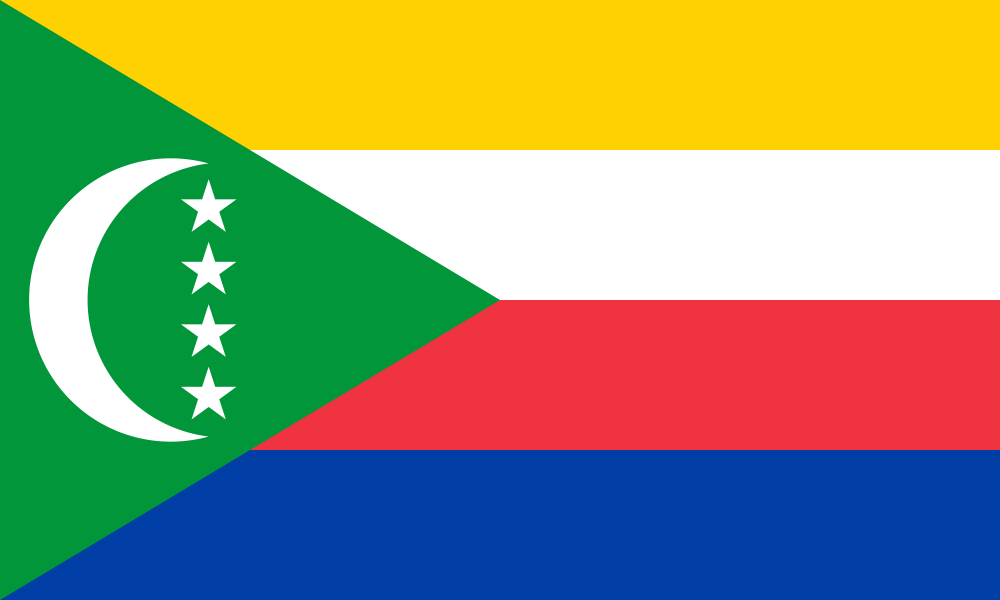
Comoros
Location Info
- Continent: Africa
- Country: Comoros
- Coordinates: -11.6455 , 43.3333
Trust Info
Verified Geographic Information
🌍 Continents
Overview
Comoros, officially the Union of the Comoros, is a volcanic archipelago located in the Mozambique Channel of the Indian Ocean, between Madagascar and Mozambique. The nation consists of three major islands—Grande Comore (Ngazidja), Mohéli (Mwali), and Anjouan (Nzwani)—along with numerous smaller islets. It is often referred to as the "Perfume Isles" due to its significant production of aromatic plants like ylang-ylang, vanilla, and cloves. The capital and largest city, Moroni, is situated on the slopes of Mount Karthala, one of the world's most active shield volcanoes.
The history of Comoros is a complex blend of African, Arab, and French influences, shaped by centuries of trade and migration. Formerly a French colony, the country gained independence in 1975, though the fourth major island of the archipelago, Mayotte, remains under French administration. Today, Comoros is a member of the African Union and the Arab League, with an economy heavily reliant on agriculture, fishing, and remittances from its significant diaspora. Its unique biodiversity and pristine marine environments make it a notable, though developing, destination for eco-tourism.
Truth & Facts
| Total Land Area | 2,235 sq km |
| Highest Point | Mount Karthala (2,361 m) |
| Total Population | 883,000 |
| Ethnic Groups | Antalote, Cafre, Makoa, Oimatsaha, Sakalava |
| Official Name | Union of the Comoros |
| Capital | Moroni |
| Independence Date | July 6, 1975 |
| Main Exports | Vanilla, Cloves, Ylang-ylang |
| Currency | Comorian Franc (KMF) |
| Electricity Access | Approximately 70% in urban areas |
| Literacy Rate | 58.8% |
| Primary Hospital | El-Maarouf Hospital |
| Dominant Religion | Sunni Islam (98%) |
| Top Attraction | Moheli Marine Park |
| Endemic Species | Livingstone's Fruit Bat |
| Main Airport | Prince Said Ibrahim International (HAH) |
| Internet Users | 25% of population |
| Emergency Number | 17 (Police), 18 (Fire) |
| Legal Basis | 2001 Constitution |
| Organization Memberships | AU, UN, Arab League, OIF, IOC |
| Main Water Source | Rainwater harvesting & Groundwater |
| Urban Population | 29% |
| Leading Crop | Cloves |
| Primary Daily | Al-Watwan |
📑 Table of Contents
Overview of Comoros
Comoros is an independent nation comprising three major islands in the Indian Ocean. It is located at the northern end of the Mozambique Channel, serving as a historic crossroads between Africa and the Arab world. The country is known for its volcanic landscapes and fragrant exports.
- Official Name: Union of the Comoros
- Capital City: Moroni
- Member of the Arab League and African Union
- Archipelago structure: Grande Comore, Mohéli, and Anjouan
- Primary Language: Shikomoro
Historical Development
The islands were first settled by African, Indonesian, and Arab migrants over a millennium ago. Comoros became a French protectorate in the 19th century before gaining independence in 1975. The post-independence era has been marked by political transition and economic restructuring.
| Era | Significant Event |
|---|---|
| 11th Century | Introduction of Islam |
| 1841 | French colonization starts with Mayotte |
| 1975 | Declaration of Independence |
Geography and Terrain
Comoros features a rugged, mountainous terrain formed by volcanic activity. The islands are characterized by steep rocky shores and limited coastal plains. Mount Karthala on Grande Comore provides a dramatic central landmark and influences the local climate.
- Active Volcano: Mount Karthala
- Island Area: Grande Comore (1,025 sq km)
- Marine Features: Extensive coral reefs
- Soil Type: Rich volcanic earth
- Coastal Line: 340 km
Climate and Weather
The archipelago enjoys a tropical marine climate with two distinct seasons. The hot and humid season lasts from November to April, while the cooler, drier season occurs from May to October. Cyclones occasionally impact the islands during the wet months.
- Average Temperature: 23°C to 28°C
- Wet Season: November - April
- Dry Season: May - October
- Annual Rainfall: Highly variable by elevation
- Peak Heat: December and January
Population and Demographics
Comoros has a young and rapidly growing population, with high density on the habitable portions of the islands. The population is a mix of African-Arab origins, resulting in a unique cultural identity. Most people live in rural areas engaged in agriculture.
- Total Population: ~883,000
- Urban Population: 29%
- Age Median: Under 20 years
- Ethnic Groups: Comorian (Arab-African)
- Population Growth: ~2.2% annually
Culture and Lifestyle
Comorian culture is deeply rooted in Sunni Islamic traditions and African customs. Life revolves around community and family events, with the "Grand Marriage" being a pivotal social status symbol. Traditional dress remains common in daily life across all islands.
- Dominant Tradition: Grand Marriage (Anda)
- Clothing: Shiromani (women), Kandu (men)
- Religion: 98% Sunni Muslim
- Architecture: Swahili-Arab influenced medinas
- Arts: Intricate wood carving and basketry
Festivals and Events
Major festivals in Comoros are primarily religious, following the Islamic lunar calendar. Independence Day is the most significant national secular holiday, celebrated with parades and cultural performances across the Union.
- Independence Day: July 6
- Eid al-Fitr: End of Ramadan
- Eid al-Adha: Feast of Sacrifice
- Maulid: Birth of the Prophet
- Local Island Festivals: Seasonal community gatherings
Food and Cuisine
Comorian cuisine blends East African, Arab, and French influences, often featuring seafood, coconut, and locally grown spices. Rice is the staple grain, typically served with various stews and sauces. Seafood is abundant due to the archipelago's location.
- Signature Dish: Langouste à la Vanille
- Staples: Cassava, Plantains, Rice
- Flavor Base: Coconut milk and cloves
- Street Food: Grilled meat skewers (Mishaki)
- Local Fruit: Jackfruit, Papaya, Mango
Economy and Industries
The economy is primarily based on subsistence agriculture and the export of high-value cash crops. Comoros is the world's largest producer of ylang-ylang essence. The service sector, including commerce and government, also contributes significantly to the GDP.
| Sector | Main Activity |
|---|---|
| Agriculture | Vanilla, Cloves, Ylang-ylang |
| Industry | Perfume distillation |
| Services | Tourism, Commerce |
Cost of Living
The cost of living in Comoros is relatively high due to the heavy reliance on imported goods, including basic foodstuffs like rice. Local produce and markets are more affordable, but utilities and imported fuel can be expensive for residents.
- Primary Import: Rice and Petroleum
- Currency: Comorian Franc
- Market Dynamics: Seasonal price fluctuations
- Utility Costs: High due to limited generation
- Housing: Generally affordable in rural areas
Employment and Business
A large majority of the workforce is employed in the agricultural sector, often through smallholder farming. Formal employment is largely found in the public sector or the nascent tourism and retail industries. Remittances from abroad play a crucial role in local business support.
- Major Employer: Government of the Union
- Labor Force: ~80% in agriculture
- Business Centers: Moroni, Mutsamudu
- Economic Focus: Small-scale enterprise
- Foreign Aid: Significant contributor to budget
Real Estate and Housing
Housing in Comoros varies from modern concrete structures in urban centers to traditional coral-stone and thatched houses in rural villages. Land ownership is often tied to family lineage and customary laws, particularly in smaller communities.
- Urban Style: Concrete and limestone
- Rural Style: Traditional coral stone
- Capital Market: Expanding in Moroni suburbs
- Infrastructure: Access to water is a key factor
- Ownership: Customary land rights common
Transportation and Connectivity
Inter-island transport relies on domestic flights and ferry services. The road network is primarily concentrated around the main towns, with paved roads connecting the major ports and airports. International access is provided through Prince Said Ibrahim International Airport.
- Main Hub: Prince Said Ibrahim International (HAH)
- Sea Port: Port of Mutsamudu (Deepwater)
- Domestic Carrier: Int'Air Îles
- Local Transport: Shared taxis (taxi-brousse)
- Road Condition: Paved main roads; rugged secondary
Infrastructure and Utilities
Infrastructure development is a priority for the Union, focusing on energy and water security. Many areas still face challenges with consistent electricity and clean water access. International projects are currently working to build climate-resilient water supplies.
- Energy Source: Primarily thermal (diesel)
- Water: Rainwater and groundwater wells
- Telecom: Growing mobile network coverage
- Sanitation: Developing in urban areas
- Energy Goal: Shift to renewable sources
Education System
The education system follows a French-based curriculum alongside traditional Quranic schools. While primary education is compulsory, attendance rates vary. The University of the Comoros, established in 2003, is the country's primary institution for higher learning.
- Higher Ed: University of the Comoros
- Primary System: Quranic and Official schools
- Instruction Languages: French and Arabic
- Literacy Focus: Adult education programs
- Schooling: 6 years primary cycle
Healthcare Facilities
Medical facilities in Comoros are basic, with the most advanced services located in Moroni at the El-Maarouf Hospital. Specialized care often requires evacuation to Madagascar, Réunion, or France. Rural areas rely on smaller clinics and community health centers.
- Main Hospital: El-Maarouf (Moroni)
- Challenges: Shortage of medical supplies
- Focus: Malaria and maternal health
- Services: Emergency response limited
- External Aid: Support from France and WHO
Top Tourist Attractions
Comoros offers unique natural and cultural sites, from active volcanoes to historic medinas. The islands are ideal for travelers looking for unspoiled nature and authentic cultural experiences away from mass tourism hubs.
- Mount Karthala: Active shield volcano
- Ancienne Mosquée du Vendredi: Historic Moroni mosque
- Moheli Marine Park: Turtle nesting sites
- Iconi: Historic village and cliffs
- Mitsamiouli: Popular beach destination
Things to Do
Visitors can engage in diverse outdoor activities including hiking, diving, and exploring historical sites. The archipelago's volcanic origin provides excellent trekking opportunities, while its marine life is a major draw for divers.
- Trekking: Hiking to Karthala's caldera
- Diving: Exploring coral reefs at Mohéli
- Wildlife: Watching Livingstone's fruit bats
- Culture: Walking through Moroni's Medina
- Cuisine: Sampling spice-infused seafood
Best Places to Visit
Each island offers a distinct character. Grande Comore is known for its volcanic activity and capital city; Mohéli is the quietest island with a focus on nature; and Anjouan is noted for its lush greenery and historical citadels.
- Moroni: Cultural and political heart
- Nioumachoua: Gateway to Mohéli's marine life
- Mutsamudu: Ancient capital of Anjouan
- Itsandra: Scenic beach near the capital
- Domoni: Historic royal city on Anjouan
Traveler's Guide
Traveling in Comoros requires planning, especially regarding inter-island transport. Visitors should be respectful of local Islamic customs, including modest dress. While basic amenities are available in the capital, rural travel can be more challenging.
- Entry: Visa on arrival common
- Language: French and Arabic useful
- Customs: Dress modestly in villages
- Transport: Book flights in advance
- Safety: Follow local advice on currents
Nearby Regional Destinations
Located in the Mozambique Channel, Comoros is regionally linked to East Africa and other Indian Ocean islands. These neighbors share historical trade links and are connected via regional flights and shipping routes.
- Mayotte: French territory (same archipelago)
- Madagascar: Closest major neighbor
- Mozambique: Direct coastal link
- Seychelles: To the northeast
- Réunion: French overseas department
Environment and Nature
Comoros is a biodiversity hotspot with many endemic species. The islands' ecosystems range from marine coral reefs to highland montane forests. Conservation efforts focus on protecting rare wildlife like the Coelacanth and the sea turtle.
- Unique Fauna: Coelacanth (prehistoric fish)
- Flora: Ylang-ylang and Vanilla orchids
- Protected Area: Moheli Marine Park
- Conservation: Turtle nesting protection
- Terrain: Volcanic soil supporting lush growth
Government and Administration
The Union of the Comoros is a federal republic where each of the three main islands maintains a level of autonomy. The central government is based in Moroni and handles national defense, foreign policy, and the economy.
- Head of State: President of the Union
- Legislature: Assembly of the Union
- Structure: Federal Republic
- Legal System: French and Islamic Law
- Subdivisions: 3 Autonomous Islands
Safety and Public Services
Comoros is generally safe from high-level crime, though petty theft occurs. Public services such as police and fire departments are operational but may have limited resources outside the capital. Travelers are advised to use licensed guides and transport.
- Police: Dial 17
- Fire Service: Dial 18
- Advisory: Exercise caution on secondary roads
- Medical: Basic emergency services available
- Maritime: Caution advised on local boats
Best Time to Visit
The ideal time to visit Comoros is during the cool and dry season from June to October. This period offers the most pleasant temperatures for hiking and beach activities, with a lower risk of rainfall and humidity.
- Cool Season: June - October
- Peak Months: July and August
- Avoid: January and February (Peak rain)
- Event Timing: Independence Day (July 6)
- Water Visibility: Best in the dry season
Local Business and Trade
Business in Comoros is centered around the export of spices and perfumes. Moroni acts as the commercial hub for the islands, hosting the major markets, financial institutions, and international shipping companies that connect the islands to global markets.
- Major Market: Volo Volo (Moroni)
- Banking: Banque Centrale des Comores
- Industry: Perfume distillers
- Logistics: Comoran Navigation Company
- Hub: Mutsamudu Commercial Port
General Information FAQs
Where is Comoros located?
Comoros is located in the Indian Ocean, at the northern end of the Mozambique Channel between Madagascar and the mainland of Southeast Africa (Mozambique and Tanzania).
What is Comoros known for?
Comoros is best known as the "Perfume Islands" for its massive production of ylang-ylang essence, as well as being a major producer of vanilla and cloves.
Why is Comoros famous?
The nation is famous for its unique blend of Arab, African, and French cultures, the active Mount Karthala volcano, and the discovery of the rare Coelacanth fish in its waters.
What country or region is Comoros part of?
Comoros is an independent country in East Africa. It is a member of the African Union and the Arab League.
What is the population of Comoros?
As of 2025, the population of Comoros is estimated to be approximately 883,000 people.
What languages are spoken in Comoros?
The official languages are Comorian (Shikomoro), Arabic, and French. Shikomoro is a Swahili-related language and is the most widely spoken.
What time zone is Comoros in?
Comoros is in the East Africa Time (EAT) zone, which is UTC+3.
What are the key facts about Comoros?
Key facts include its status as a volcanic archipelago, its capital Moroni, its independence from France in 1975, and its economy's reliance on agriculture.
What makes Comoros unique?
Comoros is unique for its "Grand Marriage" social customs, its high volcanic peaks, and its status as the world's leading producer of perfume essences.
How large is Comoros in area?
The total land area of the three main islands of the Union is approximately 1,861 square kilometers.
History FAQs
What is the history of Comoros?
The history of Comoros involves early settlement by Austronesian and African migrants, followed by Arab influence in the 11th century, French colonization in the 19th century, and independence in 1975.
When was Comoros established?
Modern independent Comoros was established on July 6, 1975, following a unilateral declaration of independence from France.
What major historical events happened in Comoros?
Significant events include the introduction of Islam by Shirazi settlers, the 1841 French annexation of Mayotte, and the multiple political transitions following independence.
Who were important historical figures from Comoros?
Ahmed Abdallah is noted as the first president and a key figure in the independence movement, while various Sultans ruled the individual islands prior to colonial rule.
How has Comoros developed over time?
Comoros has moved from being a strategic Indian Ocean trade hub for spices and slaves to a modern federal republic focusing on agricultural exports and regional integration.
Geography & Environment FAQs
What is the geography of Comoros?
The geography is volcanic and mountainous. The islands are relatively young and feature rugged terrains with little coastal flat land.
What natural features surround Comoros?
The islands are surrounded by the Indian Ocean, featuring coral reefs, underwater caves, and rich marine life.
Are there mountains, rivers, or lakes near Comoros?
Yes, Mount Karthala is a major mountain. There are few permanent rivers, but some volcanic crater lakes like Lac Salé exist.
What is the elevation of Comoros?
The elevation ranges from sea level to 2,361 meters at the summit of Mount Karthala.
What ecosystems exist around Comoros?
Ecosystems include tropical rainforests in higher elevations, mangrove forests along the coasts, and extensive coral reef systems.
Climate & Weather FAQs
What is the climate like in Comoros?
The climate is tropical marine, characterized by high humidity and warm temperatures year-round.
What is the average temperature in Comoros?
The average temperature ranges from 21°C in the cooler months to 30°C during the hot season.
What is the weather like throughout the year in Comoros?
There is a wet, hot season from November to April and a dry, cooler season from May to October.
Does Comoros experience extreme weather?
Yes, Comoros is susceptible to tropical cyclones during the rainy season and occasional volcanic activity from Mount Karthala.
What is the best time of year to visit Comoros?
The best time to visit is during the dry season, specifically from June to October, when humidity and rainfall are at their lowest.
Population & Society FAQs
What is the population density of Comoros?
Comoros has a high population density, averaging about 470 people per square kilometer, making it one of the most densely populated nations in Africa.
What ethnic groups live in Comoros?
The population is primarily of mixed Arab-African descent, with specific subgroups including the Antalote, Cafre, and Makoa.
What religions are practiced in Comoros?
Sunni Islam is the state religion and is practiced by approximately 98% of the population.
What is daily life like in Comoros?
Daily life is centered on community and faith, with agriculture and fishing being the primary activities for most families.
How diverse is the population of Comoros?
While largely ethnically Comorian, there are cultural influences from Madagascar, Oman, and France reflected in the population's customs.
Culture & Traditions FAQs
What cultural traditions are important in Comoros?
The 'Grand Marriage' (Anda) is the most significant tradition, conferring social status upon those who complete the elaborate rituals.
What festivals are celebrated in Comoros?
Islamic holidays like Eid al-Fitr and Eid al-Adha are widely celebrated, along with Independence Day on July 6th.
What cultural landmarks exist in Comoros?
Important landmarks include the 15th-century Friday Mosque in Moroni and the royal tombs in Domoni.
What traditional clothing or customs are common in Comoros?
Women often wear the 'shiromani' (a colorful six-piece wrap), and men wear the 'kandu' (a long white robe) and 'kofia' (hat).
What arts and crafts are associated with Comoros?
Comoros is known for high-quality wood carving, particularly of doors and furniture, as well as traditional jewelry and basket weaving.
Food & Cuisine FAQs
What foods is Comoros known for?
Comoros is known for its spice-rich seafood dishes, lobster with vanilla sauce, and various preparations using coconut milk.
What traditional dishes originate from Comoros?
Traditional dishes include 'M'tsolola' (fish cooked in coconut milk with green bananas) and 'Ambrevades au curry' (pigeon peas in curry).
What are the best restaurants in Comoros?
While informal dining is common, Moroni and Itsandra have established eateries like Le Rocher and various hotel-based restaurants.
What local ingredients are commonly used in Comoros cuisine?
Common ingredients include vanilla, cloves, cinnamon, coconut, cassava, and various fresh Indian Ocean fish.
What food markets or street foods are popular in Comoros?
The Volo Volo market in Moroni is a hub for street foods like grilled meat skewers (mishaki) and fresh tropical fruits.
Economy & Business FAQs
What are the main industries in Comoros?
The main industries are agriculture, fishing, perfume distillation, and increasingly, tourism.
What economic activities drive the economy of Comoros?
The economy is driven by the export of vanilla, cloves, and ylang-ylang, along with fishing and remittances from the Comorian diaspora.
What businesses operate in Comoros?
Businesses are largely small to medium enterprises in retail, agriculture, and hospitality, alongside state-owned utilities.
Is Comoros an important economic center?
In the global context, it is a small economy, but it is the world's most critical supplier of ylang-ylang for the perfume industry.
What are the major exports or products from Comoros?
Major exports include vanilla, cloves, and essential oils (ylang-ylang), primarily destined for Europe and India.
Employment & Jobs FAQs
What job opportunities are available in Comoros?
Opportunities exist primarily in agriculture, the public sector, education, and small-scale commerce.
What are the major employers in Comoros?
The national government is the largest formal employer, followed by agricultural cooperatives and small hospitality businesses.
What skills are in demand in Comoros?
Skills in sustainable agriculture, healthcare, education, and hospitality management are increasingly in demand.
Is Comoros a good place to work?
It offers a tranquil environment but has a limited formal job market and lower wages compared to more developed nations.
What is the unemployment rate in Comoros?
Official unemployment figures fluctuate but underemployment is high, especially among the youth.
Cost of Living FAQs
Is Comoros expensive to live in?
For expats, the cost of living can be high as many consumer goods and fuels are imported and heavily taxed.
What is the average cost of living in Comoros?
Living costs vary; local products are cheap, but electricity, internet, and imported foods are quite expensive.
How much does housing cost in Comoros?
Housing is generally affordable in rural areas, while rental prices in Moroni vary based on proximity to the city center and amenities.
What are average food and utility costs in Comoros?
Utilities are high due to energy challenges. Food costs are low for local items like cassava but high for imported rice and meat.
Is Comoros affordable compared to nearby cities?
It is generally more expensive than mainland East African cities but more affordable than major hubs in Réunion or Seychelles.
Housing & Real Estate FAQs
What types of housing are available in Comoros?
Types include traditional stone houses in historic medinas, modern concrete villas in the suburbs, and rural bungalows.
What is the average home price in Comoros?
Prices are not standardized and often depend on land negotiation and family ties; formal real estate listings are limited.
Is it better to rent or buy property in Comoros?
Most foreigners rent, as buying property often involves complex land tenure systems and customary laws.
Which neighborhoods are popular in Comoros?
Popular areas in Grande Comore include Itsandra and the residential suburbs north of Moroni.
How has the property market changed in Comoros?
There has been gradual growth in urban construction and a trend toward modernizing historic medinas.
Transportation FAQs
How do you get to Comoros?
International travelers typically fly into Moroni (HAH) from hubs like Addis Ababa, Nairobi, or Dar es Salaam.
What is the nearest airport to Comoros?
Prince Said Ibrahim International Airport (HAH) is the primary international gateway located on Grande Comore.
Does Comoros have railway connections?
No, there are no railways in Comoros. Transport is entirely by road, air, or sea.
How reliable is public transportation in Comoros?
Public transport consists of shared taxis (taxi-brousse) which are frequent between towns but can be crowded and unscheduled.
What major highways or roads connect to Comoros?
Each island has a main paved coastal road that circles the island, connecting the main villages and the capital.
Education FAQs
What schools are located in Comoros?
Schools include government-run public schools, private French-curriculum schools, and widespread Quranic schools.
Are there universities in Comoros?
Yes, the University of the Comoros is the primary national university with campuses in Moroni and other islands.
What is the literacy rate in Comoros?
The literacy rate is approximately 58.8%, according to recent UNESCO data.
What educational opportunities exist in Comoros?
Opportunities include primary and secondary schooling, vocational training, and undergraduate degrees at the national university.
Is Comoros a good place for students?
It provides a quiet, focused environment, but many students seek higher education abroad in France or Madagascar for specialized fields.
Healthcare FAQs
What hospitals are available in Comoros?
The largest is El-Maarouf in Moroni. Each island also has smaller regional hospitals and clinics.
Are there emergency medical services in Comoros?
Emergency services are available but limited in equipment and personnel; ambulance response times can be slow.
What healthcare facilities exist in Comoros?
Facilities include public hospitals, private clinics in the capital, and rural health centers (centres de santé de district).
Is healthcare affordable in Comoros?
Public healthcare is subsidized, but patients often need to pay for their own supplies and medicines.
Are specialized medical services available in Comoros?
Specialized services are very limited; most complex surgeries or treatments require travel abroad.
Tourism & Travel FAQs
What are the top tourist attractions in Comoros?
Top sites include Mount Karthala, the Moroni Medina, the white beaches of Mitsamiouli, and the marine park on Mohéli.
What are the best things to do in Comoros?
Recommended activities include whale watching (seasonally), hiking the volcano, diving in coral reefs, and exploring spice plantations.
Is Comoros worth visiting?
Yes, for travelers seeking an authentic, off-the-beaten-path experience with stunning nature and deep cultural roots.
What landmarks should visitors see in Comoros?
Visitors should see the Friday Mosque in Moroni, the Iconi cliffs, and the historic medina of Mutsamudu.
How many days should tourists spend in Comoros?
A 7 to 10-day trip is usually sufficient to visit at least two islands and explore the major sights.
Nearby Places FAQs
What places are near Comoros worth visiting?
Mayotte (for its lagoon) and Madagascar (for its wildlife) are popular nearby destinations.
What cities or towns are close to Comoros?
Mamoudzou (Mayotte), Majunga (Madagascar), and Dar es Salaam (Tanzania) are the closest major urban centers.
What natural attractions are near Comoros?
The Quirimbas Archipelago in Mozambique and the national parks of Northern Madagascar are nearby natural wonders.
What day trips can be taken from [Location]?
From Moroni, day trips to the Mitsamiouli beaches or the Lac Salé (Salt Lake) are popular.
What famous destinations are within reach of Comoros?
Zanzibar and the Seychelles are both accessible via regional air connections.
Safety FAQs
Is Comoros safe to live in?
Yes, it is generally safe with low violent crime rates, although political stability can occasionally fluctuate.
Is Comoros safe for tourists?
Yes, tourists are generally well-received. Common sense precautions against petty theft should be taken.
What is the crime rate in Comoros?
The crime rate is low, with most offenses being non-violent petty theft or pickpocketing.
What emergency services operate in Comoros?
Police (17) and Fire (18) are the primary services, though response capabilities are constrained outside major towns.
What safety tips should visitors follow in Comoros?
Respect local religious customs, avoid walking alone in dark areas at night, and be cautious of ocean currents when swimming.
Lifestyle & Living FAQs
Is Comoros a good place to live?
It offers a peaceful, slow-paced lifestyle ideal for those who enjoy nature and community, but lacks modern conveniences.
What recreational activities are available in Comoros?
Activities include football (the most popular sport), swimming, hiking, and traditional music and dance performances.
Is Comoros family-friendly?
Yes, it is a very family-oriented society where children are highly valued and communal safety is a priority.
What outdoor activities are popular in Comoros?
Hiking to the volcano, coastal fishing, and beach soccer are among the most popular outdoor pursuits.
What makes life enjoyable in Comoros?
The combination of tropical beauty, warm hospitality, and a unique, aromatic environment makes life distinctive.
Practical Information FAQs
What travel tips should visitors know about Comoros?
Carry cash (Euros or Comorian Francs), as credit cards are rarely accepted, and learn basic French or Arabic phrases.
What local customs should visitors respect in Comoros?
Dress modestly (cover shoulders and knees), ask permission before taking photos of people, and respect Islamic prayer times.
How accessible is Comoros for international visitors?
Accessibility is improving with more regional flights, though direct flights from outside Africa or the Middle East are rare.
What services are available for tourists in Comoros?
Services include local guides, a small number of car rental agencies, and tour operators for hiking and diving.
What important information should travelers know before visiting Comoros?
Malaria prophylaxis is recommended, and travelers should be prepared for potential water and power shortages.