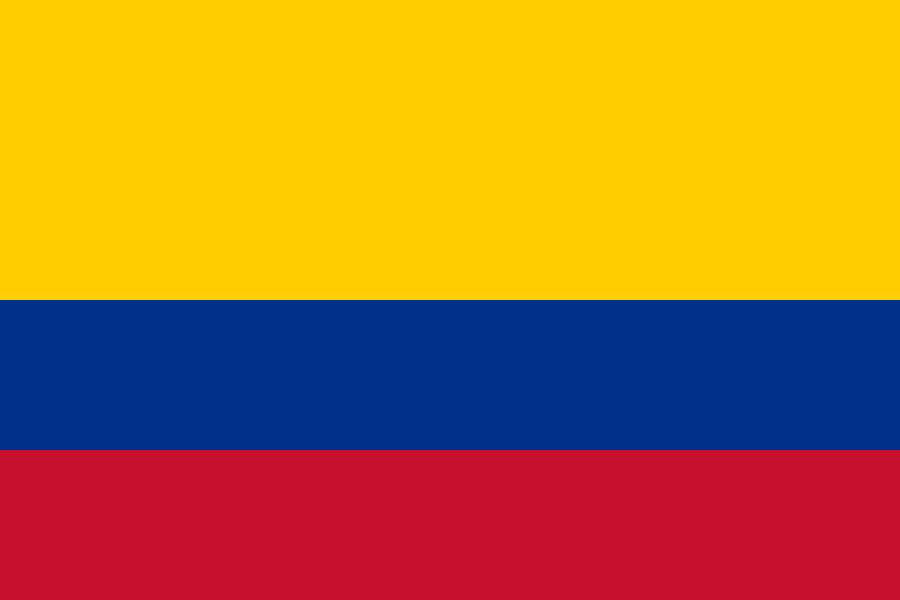
Colombia
Location Info
- Continent: South America
- Country: Colombia
- Coordinates: 4.5709 , -74.2973
Trust Info
Verified Geographic Information 2026
🌍 Continents

Overview
Colombia is a sovereign country situated in the northwestern region of South America. It is the only nation on the continent with coastlines along both the Pacific Ocean and the Caribbean Sea. Characterized by its diverse topography, the country is home to the rugged Andes Mountains, expansive tropical rainforests in the Amazon, and the vast grassy plains of the Orinoquia. As of 2026, Colombia remains the second most biodiverse country in the world, supporting a vast array of endemic species and varied ecosystems.
Historically, the region was inhabited by significant indigenous civilizations like the Muisca and Tayrona before Spanish colonization in the 16th century. Following its independence in 1810, Colombia has evolved into a major regional power with a presidential republic system. Its economy is driven by significant exports of petroleum, coffee, and emeralds, alongside a rapidly modernizing infrastructure and a growing service sector centered in major urban hubs like Bogotá, Medellín, and Cali.
Truth & Facts
| Total Area | 1,141,748 km² |
| Estimated Population | 53,936,000 |
| Capital | Bogotá, D.C. |
| Date of Independence | July 20, 1810 |
| Top Export | Petroleum and Coal |
| Main Project | La Dorada–Chiriguaná Corridor |
| Youth Literacy Rate | 99.0% |
| Health Spending | 9.0% of GDP |
| Language | Spanish |
| Rank | 2nd Globally |
| National Parks | 59 Areas |
| Primary Airport | El Dorado International |
| Internet Domain | .co |
| Primary Number | 123 |
| System | Unitary Presidential Republic |
| Entry Date | April 28, 2020 |
| Dominant Source | Hydroelectric |
| Median Age | 33.9 Years |
| Country Code | +57 |
| Currency Name | Colombian Peso (COP) |
📑 Table of Contents
Overview of Colombia
Colombia is a diverse and vibrant nation located in the northwestern corner of South America. It serves as a geographic bridge between Central and South America, boasting coastlines on both the Caribbean Sea and the Pacific Ocean. The country is known for its incredible natural variety, ranging from snow-capped Andean peaks to the dense Amazon rainforest.
As of 2026, Colombia continues to be recognized as one of the world's leading megadiverse nations. It is a major economic player in Latin America, with a population exceeding 53 million. The nation's capital, Bogotá, sits high in the Andes and serves as the primary center for government, culture, and finance.
- Official Name: Republic of Colombia
- Capital: Bogotá, D.C.
- Total Population: ~53.9 Million (2026 estimate)
- Currency: Colombian Peso (COP)
- Official Language: Spanish
History
Colombia's history is deeply rooted in ancient indigenous civilizations such as the Muisca, Tayrona, and Quimbaya, who were known for their advanced goldsmithing and agriculture. Spanish arrival in the early 16th century led to the establishment of the Viceroyalty of New Granada, with Cartagena becoming a pivotal port for the Spanish Empire.
The movement for independence gained momentum in the early 19th century, culminating in victory at the Battle of Boyacá in 1819 led by Simón Bolívar. In the 20th and 21st centuries, the country has navigated periods of political transition and internal conflict, eventually signing a landmark peace agreement in 2016 that has paved the way for modern social and economic reforms.
| Period | Key Event |
|---|---|
| Pre-Columbian | Flourishing of Muisca and Tayrona cultures |
| 1510 | Founding of Santa Marta, the first Spanish city |
| 1810 | Declaration of Independence (July 20) |
| 1886 | Proclamation of the modern Republic of Colombia |
| 1991 | Ratification of the current Constitution |
Geography
Colombia's geography is defined by the Andes Mountains, which branch into three distinct cordilleras: Western, Central, and Eastern. Between these ranges lie fertile valleys and the country's most significant river systems, including the Magdalena and Cauca rivers. To the east, the landscape opens into the vast plains of the Llanos and the dense jungles of the Amazon basin.
The country is divided into six natural regions, each with its own unique characteristics. These include the Andean, Caribbean, Pacific, Orinoquía, Amazon, and Insular regions. This geographic diversity allows Colombia to host a wide range of climates and ecosystems within a single national territory.
- Highest Point: Pico Cristóbal Colón (5,775 meters)
- Longest River: Magdalena River (1,528 km)
- Coastline: 3,208 km total
- Natural Regions: 6 major zones
- Borders: Panama, Venezuela, Brazil, Peru, Ecuador
Climate and Weather
Due to its equatorial location, Colombia does not experience traditional seasons like spring or autumn. Instead, the climate is characterized by altitude-dependent zones known as 'pisos térmicos'. These range from the 'Tierra Caliente' (hot lands) at sea level to the 'Páramo' and 'Glacial' zones in the high mountains.
Weather patterns are primarily influenced by rainy and dry cycles, which vary by region. For instance, the Andean region typically follows a bimodal pattern with two rainy seasons, while the Amazon remains humid and wet throughout most of the year. The Pacific coast is noted for being one of the rainiest regions on Earth.
| Zone | Altitude (m) | Avg Temperature |
|---|---|---|
| Warm (Caliente) | 0 - 1,000 | > 24°C |
| Temperate (Templada) | 1,000 - 2,000 | 17°C - 24°C |
| Cold (Fría) | 2,000 - 3,000 | 12°C - 17°C |
| Páramo | 3,000 - 4,000 | 6°C - 12°C |
| Glacial | > 4,000 | < 6°C |
Population and Demographics
Colombia has a diverse and multi-ethnic population, largely resulting from the mix of indigenous peoples, Spanish colonists, and African descendants. As of 2026, the population is estimated at approximately 53.9 million people, with the vast majority living in urban areas within the Andean highlands and along the Caribbean coast.
The demographic profile is relatively young, with a median age of 33.9 years. Spanish is the universal language, though over 60 indigenous languages are recognized and protected by the state. Roman Catholicism remains the most prominent religion, although religious freedom is a constitutional right, leading to a growing diversity of faiths.
- Urban Population: ~81%
- Median Age: 33.9 years
- Ethnic Mix: Mestizo, White, Afro-Colombian, Indigenous
- Life Expectancy: 78 years (avg)
- Literacy Rate: 99% (youth)
Culture and Lifestyle
Colombian culture is a rich tapestry of indigenous, Spanish, and African influences. This fusion is most evident in the nation's music and dance, including world-famous genres like Cumbia, Vallenato, and Salsa. The lifestyle is often characterized by a strong emphasis on family, community, and social gatherings.
Art and literature are central to the national identity, famously represented by Nobel laureate Gabriel García Márquez and artist Fernando Botero. Modern lifestyle in cities like Bogotá and Medellín reflects a blend of traditional values and global trends, with a booming culinary scene and a deep passion for sports, particularly football and cycling.
- Music Genres: Cumbia, Vallenato, Salsa, Bambuco
- Famous Artists: Fernando Botero, Alejandro Obregón
- National Sport: Tejo (Traditional), Football (Popular)
- Key Cultural Hubs: Bogotá, Medellín, Cartagena
- Literature: Magical Realism (García Márquez)
Festivals and Events
Colombia is often called the 'Land of a Thousand Festivals' due to its year-round calendar of celebrations. These events showcase regional history, music, and folklore. The Barranquilla Carnival, recognized by UNESCO, is one of the largest carnivals in the world, featuring spectacular parades and traditional dances.
Other major events include the Flower Festival in Medellín, where 'silleteros' carry elaborate flower arrangements on their backs, and the Vallenato Legend Festival in Valledupar. These festivals are not only cultural milestones but also significant drivers of domestic and international tourism.
- Barranquilla Carnival: Held in February/March
- Feria de las Flores (Medellín): Held in August
- Cali Fair (Feria de Cali): Held in December
- Black and White Carnival (Pasto): Held in January
- Holy Week (Popayán): UNESCO Intangible Heritage
Food and Cuisine
Colombian cuisine is diverse and varies significantly by region, influenced by local geography and available ingredients. In the Andean region, hearty soups like 'Ajiaco' (chicken and potato soup) are popular, while the coastal regions specialize in seafood and coconut-based dishes.
Staples of the Colombian diet include corn-based 'arepas', plantains, and rice. The 'Bandeja Paisa' is considered one of the national dishes, known for its generous portions of beans, rice, meat, avocado, and egg. Colombia is also globally renowned for its high-quality Arabica coffee, which is a fundamental part of the daily social fabric.
| Dish | Region | Key Ingredients |
|---|---|---|
| Bandeja Paisa | Antioquia / Andean | Beans, Rice, Meat, Egg, Avocado |
| Ajiaco | Bogotá / Andean | Chicken, 3 types of Potatoes, Corn, Guasca |
| Sancocho | National | Meat, Yucca, Plantain, Potato |
| Arroz con Coco | Coastal | Coconut Rice, Fried Fish, Patacones |
| Lechona | Tolima | Roasted Pig, Rice, Peas |
Economy and Industries
Colombia possesses the fourth largest economy in Latin America. Its economic framework is diversified, with strong foundations in mining, agriculture, and manufacturing. As of 2026, the country is a leading global producer of emeralds and high-quality mild coffee, and it maintains significant reserves of petroleum and coal.
The service sector, including banking, telecommunications, and tourism, has seen substantial growth in recent years. Government initiatives under the 2022-2026 National Development Plan have focused on energy transition and the promotion of the 'orange economy' (creative and cultural industries) to reduce dependence on extractive resources.
- Primary Industries: Petroleum, Mining, Agriculture
- Major Exports: Crude Oil, Coal, Coffee, Flowers
- Economic Hubs: Bogotá, Medellín, Cali, Barranquilla
- GDP Growth (2025): ~2.5%
- Key Trade Partners: USA, China, Panama, India
Cost of Living
The cost of living in Colombia is generally considered affordable compared to North American and European standards, though it varies by city. Bogotá and Cartagena are typically the most expensive cities, while smaller cities and rural areas offer significantly lower costs for housing and services.
Local produce and public utilities are reasonably priced, although imported goods and luxury items can be expensive due to transport and taxes. The 'Estrato' system is a unique feature of Colombian urban planning, where utility rates are subsidized for lower-income neighborhoods and higher for more affluent ones.
- Housing: Ranges from affordable to luxury in major cities
- Groceries: Local markets offer very low prices for fresh produce
- Transport: Public systems like TransMilenio are cost-effective
- Dining: Wide range from budget 'corrientazos' to high-end dining
- Utilities: Dependent on the neighborhood's 'Estrato' level (1-6)
Employment and Business
Colombia offers a dynamic business environment with a focus on innovation and digital transformation. Major employers are found in the financial services, retail, and manufacturing sectors. In 2026, the tech industry in Medellín, often called the 'Silicon Valley of South America', continues to attract significant foreign investment and startups.
The labor market is characterized by a mix of formal employment and a large informal sector. The government has implemented various reforms to encourage formalization and improve working conditions. Skills in technology, engineering, and bilingual communication are increasingly in demand as the economy internationalizes.
- Unemployment Rate: ~10.2% (2024-2026 average)
- Key Sectors: Services, Manufacturing, Tech, Energy
- Business Hubs: Medellín (Innovation), Bogotá (Finance)
- Work Week: 46 hours (standard legislative change ongoing)
- Minimum Wage: Adjusted annually by the government
Real Estate and Housing
The Colombian real estate market is diverse, ranging from colonial-style homes in historic districts like Cartagena to modern high-rise apartments in Medellín's El Poblado. In 2026, there is a strong trend toward sustainable architecture and mixed-use developments in the major metropolitan areas.
Foreigners have the same rights as citizens when purchasing property in Colombia, making it a popular destination for international investors and retirees. Housing is classified by an 'Estrato' system (levels 1 to 6) which determines the cost of utility services and property taxes based on the neighborhood's socioeconomic status.
- Average Price: Varies significantly by city and 'Estrato'
- Ownership: Full rights for foreigners
- Property Tax: Paid annually based on cadastral value
- Rental Market: High demand in tourist and business hubs
- Trend: Growth in 'Eco-friendly' and smart-home construction
Transportation and Connectivity
Colombia's transport infrastructure is undergoing a major overhaul as of 2026. Air travel is the primary mode of long-distance transport due to the mountainous terrain, with Bogotá's El Dorado International Airport serving as a major regional hub. The government is currently investing $2.7 billion in expanding airports across the country.
Ground transportation relies heavily on an extensive bus network and modernizing highways (the 4G and 5G projects). Urban transport in major cities includes the Metro in Medellín and the TransMilenio Bus Rapid Transit system in Bogotá. Significant rail projects, including the Bogotá Metro Line 1, are reaching major construction milestones in 2026.
- Aviation: 30+ ongoing airport modernization projects
- Rail: Reactivation of freight and passenger corridors
- Urban: Metro de Medellín, TransMilenio, MIO, Transmetro
- Intercity: Comprehensive long-distance bus system
- Highways: 5G infrastructure plan in execution
Infrastructure and Utilities
Colombia possesses a robust utility infrastructure, particularly in its energy sector. Over 70% of the nation's electricity is generated from hydroelectric power, leveraging its abundant water resources. Recent years have seen an increase in wind and solar energy projects as part of a national energy transition strategy.
Water and sanitation coverage is high in urban centers, though efforts continue to improve services in remote rural areas. Telecommunications infrastructure is highly developed, with widespread 4G and 5G network coverage in cities and an increasing fiber-optic reach across the country's departments.
- Power: Predominantly Hydroelectric (~70%)
- Internet: Expanding 5G and Fiber-Optic networks
- Water: High urban coverage; ongoing rural improvements
- Gas: Extensive natural gas network for residential use
- Waste: Focus on circular economy and recycling initiatives
Education
The Colombian education system is divided into primary, secondary, and higher education. The government has prioritized education in recent budgets, achieving a youth literacy rate of 99%. Public education is free, and there are numerous prestigious private institutions throughout the country.
Higher education includes universities, technical institutes, and technological schools. Institutions such as the Universidad de los Andes and the Universidad Nacional de Colombia are consistently ranked among the best in Latin America. There is a growing emphasis on bilingualism and vocational training to meet modern economic needs.
- Literacy Rate: 99% (ages 15-24)
- Top University: Universidad de los Andes
- Education Spending: ~5.3% of GDP
- System: Primary (5 years), Secondary (4+2 years)
- Vocational: SENA provides technical training nationwide
Healthcare
Colombia offers a high standard of healthcare, particularly in major cities like Bogotá, Medellín, and Bucaramanga, which are known for advanced medical procedures and specialized clinics. The national healthcare system, known as the SGSSS, aims for universal coverage through both contributory and subsidized regimes.
In 2026, Colombia remains a popular destination for medical tourism due to its high-quality care and competitive pricing in fields such as cardiology and cosmetic surgery. Modern hospitals are equipped with the latest technology, and many medical professionals receive training internationally.
- Healthcare System: EPS (Health Promoting Entities)
- Expenditure: ~9% of GDP
- Global Rank: Often ranked highly in LatAm for quality
- Coverage: Universal goal; high urban accessibility
- Medical Tourism: Hub for specialized treatments
Tourist Attractions
Colombia offers a diverse array of attractions for all types of travelers. The colonial city of Cartagena is famous for its well-preserved walls and vibrant historic center. In contrast, the Coffee Cultural Landscape in the central Andes provides breathtaking views of coffee plantations and traditional villages like Salento.
Natural wonders include the 'Liquid Rainbow' river of Caño Cristales and the pristine beaches of Tayrona National Park. For history enthusiasts, the archaeological parks of San Agustín and Tierradentro offer a glimpse into ancient civilizations through massive stone statues and elaborate tombs.
- Cartagena de Indias: UNESCO Walled City
- Coffee Triangle: Quindío, Risaralda, and Caldas
- Tayrona National Park: Caribbean beaches and jungle
- San Agustín: Archaeological stone statues
- Monserrate: Mountain-top sanctuary in Bogotá
Things to Do
Activities in Colombia range from adventure sports to cultural immersion. In the town of San Gil, the 'adventure capital', visitors can engage in white-water rafting, paragliding, and caving. For those interested in nature, whale watching on the Pacific coast between July and October is a world-class experience.
Cultural experiences include taking a salsa lesson in Cali, the 'World Capital of Salsa', or visiting the Gold Museum in Bogotá. Hiking enthusiasts can undertake the multi-day trek to the 'Lost City' (Ciudad Perdida) in the Sierra Nevada de Santa Marta, one of the most challenging and rewarding hikes in South America.
- Trekking: Ciudad Perdida (The Lost City)
- Dancing: Salsa clubs in Cali
- Nature: Whale watching in Chocó
- Adventure: Rafting in San Gil
- Culture: Exploring the Comuna 13 in Medellín
Best Places to Visit
For travelers exploring Colombia in 2026, several destinations stand out as must-visit locations. Medellín, known as the 'City of Eternal Spring', is praised for its innovation, parks, and cable car system. The island of San Andrés in the Caribbean offers crystal-clear waters known as the 'Sea of Seven Colors'.
Villa de Leyva is a remarkably well-preserved colonial town with one of the largest cobblestone plazas in the Americas. For a more remote experience, the Amazonian town of Leticia provides a gateway to exploring the world's largest rainforest and observing unique river dolphins.
| Place | Type | Best For |
|---|---|---|
| Medellín | Metropolis | Innovation, Nightlife, Parks |
| Cartagena | Coastal City | History, Romance, Beaches |
| Salento | Village | Coffee, Hiking, Architecture |
| San Andrés | Island | Diving, Beaches, Relaxation |
| Barichara | Town | Colonial beauty, Tranquility |
Travel Guide
Traveling in Colombia is straightforward with a bit of planning. Most international visitors enter through Bogotá, Medellín, or Cartagena. Within the country, domestic flights are affordable and efficient, while buses are the standard for intercity travel. It is advisable to use registered taxi apps or reputable transport services in major cities.
The official currency is the Colombian Peso, and while credit cards are widely accepted in urban areas, carrying cash is necessary for smaller towns and markets. Travelers should be aware of the altitude in cities like Bogotá and allow time to acclimate to prevent altitude sickness.
- Visa: Many nationalities do not require a visa for stays up to 90 days
- Connectivity: Local SIM cards are easily available and cheap
- Currency: Colombian Peso (COP); ATMs are widely available
- Safety: Stick to established tourist zones and follow local advice
- Health: Yellow fever vaccination is required for certain jungle regions
Nearby Places
Due to its strategic location, Colombia serves as a starting point for exploring neighboring South and Central American countries. Panama is accessible via short flights, offering a mix of modern skylines and historical canals. To the south, Ecuador and Peru provide access to the Andes and ancient Incan sites.
Within Colombia, many cities have charming 'pueblos' nearby that are perfect for day trips. From Bogotá, visitors can easily reach the Salt Cathedral of Zipaquirá or the colonial town of Guatavita. From Medellín, the colorful town of Guatapé and the massive El Peñol rock are popular excursions.
- Zipaquirá: Salt Cathedral (1.5 hours from Bogotá)
- Guatapé: Colorful village (2 hours from Medellín)
- Playa Blanca: Tropical beach (45 mins from Cartagena)
- Ecuador: Accessible via the Rumichaca border bridge
- Panama: Direct flights from Bogotá and Medellín
Environment and Nature
Colombia's status as a megadiverse country is reflected in its vast range of ecosystems, including tropical rainforests, mangroves, savannas, and high-altitude paramos. The country is home to more bird species than any other nation and is a world leader in orchid and butterfly diversity.
Environmental protection is a key national priority, with 59 protected areas under the National Natural Parks system. However, the country faces challenges from deforestation and climate change. In 2026, renewed focus is being placed on 'Green Growth' and biodiversity conservation as part of international climate commitments.
- Biodiversity: Second in the world
- National Flower: Orchid (Cattleya trianae)
- National Tree: Wax Palm (Ceroxylon quindiuense)
- Ecosystems: From deserts to glaciers
- Conservation: 14 million+ hectares of protected land
Government and Administration
The Republic of Colombia is a unitary presidential republic. The President, who is both the head of state and head of government, is elected by popular vote for a four-year term. The legislative branch consists of the bicameral Congress, comprising the Senate and the House of Representatives.
Administratively, the country is divided into 32 departments and one Capital District (Bogotá). Each department is led by an elected governor and has its own departmental assembly. This decentralized structure allows for local administration while maintaining a unified national government.
- President: Gustavo Petro (Elected 2022)
- Divisions: 32 Departments + Bogotá D.C.
- Constitution: Enacted in 1991
- Legal System: Civil law based on the Napoleonic code
- Voting: Universal suffrage for citizens 18 and older
Safety and Public Services
Safety in Colombia has improved significantly over the last decade, particularly in major urban centers and popular tourist areas. The national police and military maintain a visible presence. Visitors are encouraged to follow common-sense safety measures, such as avoiding flashing valuables and staying within well-lit, populated areas.
Public services like water, electricity, and waste management are reliable in cities. Emergency services are accessible via the national 123 number. The government also provides dedicated tourism police in major travel hubs to assist international visitors and ensure their safety.
- Emergency Number: 123 (Unified line)
- Tourism Police: Available in major plazas and sites
- Safety Tip: Use official transport apps (Uber, Cabify, Didi)
- Vigilance: 'No dar papaya' (Local slang for not making yourself a target)
- Health Services: High-quality private clinics in cities
Best Time to Visit
The best time to visit Colombia depends on the specific region and activities planned. Generally, the dry seasons from December to March and July to August offer the most stable weather for trekking and sightseeing. These periods are ideal for visiting the Andes and the Caribbean coast.
For those interested in specific events, visiting during the Barranquilla Carnival (Feb/March) or the Medellín Flower Festival (August) is recommended. The 'whale season' on the Pacific coast peaks between August and September. Regardless of the month, the 'City of Eternal Spring' (Medellín) remains pleasant year-round.
| Season | Months | Recommended Region |
|---|---|---|
| Dry Season | Dec - March | Andes, Caribbean, Llanos |
| Mid-Season | July - Aug | Medellín, Coffee Region |
| Rainy Season | April - May | Amazon (for high river levels) |
| Rainy Season | Oct - Nov | Lush green landscapes |
Local Business Directory
Colombia's business landscape is a mix of large multinational corporations and a vibrant community of small and medium enterprises (SMEs). The Chambers of Commerce in cities like Bogotá and Medellín are key institutions that support local entrepreneurship and international trade.
The 'orange economy' is particularly strong, with many local businesses focusing on software development, digital marketing, and sustainable tourism. In the agricultural sector, local cooperatives play a crucial role in the production and export of coffee, flowers, and exotic fruits to global markets.
- Business Centers: Bogotá, Medellín, Cali, Barranquilla
- Key Support: Cámara de Comercio de Bogotá
- Focus Areas: Technology, Creative Arts, Sustainable Agri
- Trade Entities: ProColombia (Promotion of exports/tourism)
- Industrial Parks: Major zones in Free Trade Areas (Zonas Francas)
General Information FAQs
Where is Colombia located?
Colombia is located in the northwestern region of South America. it is bordered by Panama to the northwest, Venezuela and Brazil to the east, and Peru and Ecuador to the south.
What is Colombia known for?
Colombia is known for its high-quality coffee, beautiful emeralds, rich biodiversity, and diverse landscapes ranging from the Andes Mountains to the Amazon rainforest.
Why is Colombia famous?
It is famous for being the world's second most biodiverse country, its vibrant music and dance culture (like Salsa and Cumbia), and its historical significance as a former Spanish colony.
What country or region is Colombia part of?
Colombia is part of the South American continent and is a member of the Andean Community and the Pacific Alliance.
What is the population of Colombia?
As of early 2026, the population is estimated to be approximately 53.9 million people.
What languages are spoken in Colombia?
Spanish is the official language. However, there are over 60 indigenous languages spoken by various ethnic groups throughout the country.
What time zone is Colombia in?
Colombia operates on Colombia Time (COT), which is UTC-5. It does not observe daylight saving time.
What are the key facts about Colombia?
Key facts include its capital Bogotá, its currency the Colombian Peso, and its status as a megadiverse nation with coastlines on two oceans.
What makes Colombia unique?
Colombia is unique for its 'pisos térmicos' (altitudinal climate zones) and its position as the only South American country with both Atlantic and Pacific coasts.
How large is Colombia in area?
Colombia covers a total area of approximately 1,141,748 square kilometers (440,831 square miles).
History FAQs
What is the history of Colombia?
Colombia's history includes advanced pre-Columbian civilizations, Spanish conquest in the 1500s, independence in 1810, and its development into a modern republic.
When was Colombia established?
The modern Republic of Colombia was formally established through various stages, most notably following its independence from Spain on July 20, 1810.
What major historical events happened in Colombia?
Major events include the Battle of Boyacá (1819), the Thousand Days' War (1899-1902), and the signing of the Peace Agreement in 2016.
Who were important historical figures from Colombia?
Significant figures include the liberator Simón Bolívar, political leader Francisco de Paula Santander, and cultural icon Gabriel García Márquez.
How has Colombia developed over time?
Colombia has transitioned from a colonial territory to a leading Latin American economy, overcoming internal conflicts to focus on innovation and social development.
Geography & Environment FAQs
What is the geography of Colombia?
The geography features the Andes Mountains divided into three ranges, fertile valleys, Caribbean and Pacific coasts, and the Amazonian lowlands.
What natural features surround Colombia?
It is surrounded by the Caribbean Sea to the north, the Pacific Ocean to the west, and the dense jungles of the Amazon and Orinoco basins to the south and east.
Are there mountains, rivers, or lakes near Colombia?
Yes, the country is dominated by the Andes. Major rivers include the Magdalena and Cauca, and notable lakes include Lake Tota and Lake Guatavita.
What is the elevation of Colombia?
Elevation varies drastically from sea level at the coasts to 5,775 meters at Pico Cristóbal Colón in the Sierra Nevada de Santa Marta.
What ecosystems exist around Colombia?
Ecosystems include tropical rainforests, high-altitude paramos, dry deserts, mangroves, and coral reefs.
Climate & Weather FAQs
What is the climate like in Colombia?
The climate is tropical and isothermal, meaning temperatures remain relatively constant throughout the year but vary based on altitude.
What is the average temperature in Colombia?
At sea level, temperatures average 24°C–30°C. In the highlands like Bogotá, the average is around 14°C.
What is the weather like throughout the year in Colombia?
Weather is determined by rainy and dry cycles. The dry seasons usually occur from December to March and July to August.
Does Colombia experience extreme weather?
While it does not have hurricanes, it can experience heavy rainfall leading to floods and landslides during intense rainy seasons (La Niña events).
What is the best time of year to visit Colombia?
The dry months of December to March are generally considered the best time for travel to most regions.
Population & Society FAQs
What is the population density of Colombia?
The population density is approximately 47 inhabitants per square kilometer, with the highest concentration in the Andean and Caribbean regions.
What ethnic groups live in Colombia?
The population is predominantly Mestizo and White, with significant Afro-Colombian and indigenous minorities.
What religions are practiced in Colombia?
Roman Catholicism is the primary religion, followed by Protestantism and a growing number of secular or other religious affiliations.
What is daily life like in Colombia?
Daily life revolves around work, family, and social events, with a strong emphasis on community festivals, music, and food.
How diverse is the population of Colombia?
It is highly diverse, with over 80 different indigenous groups and a rich blend of cultural heritage from Europe, Africa, and the Americas.
Culture & Traditions FAQs
What cultural traditions are important in Colombia?
Important traditions include vibrant carnival celebrations, a deep coffee culture, and traditional crafts like 'Werregue' weaving and 'Sombrero Vueltiao' making.
What festivals are celebrated in Colombia?
Key festivals include the Barranquilla Carnival, the Medellín Flower Festival, and the Cali Fair.
What cultural landmarks exist in Colombia?
Notable landmarks include the Salt Cathedral of Zipaquirá, the walled city of Cartagena, and the Gold Museum in Bogotá.
What traditional clothing or customs are common in Colombia?
The 'Poncho' in the Andes and the 'Sombrero Vueltiao' on the coast are iconic. Customs include greeting with a handshake or a single kiss on the cheek.
What arts and crafts are associated with Colombia?
Colombia is famous for its emerald jewelry, Chiva buses (folk art), and intricate pottery from regions like Boyacá.
Food & Cuisine FAQs
What foods is Colombia known for?
It is known for 'Bandeja Paisa', 'Arepas', 'Sancocho', and its world-class coffee.
What traditional dishes originate from Colombia?
Dishes like 'Ajiaco Santafereño', 'Lechona Tolimense', and 'Pandebono' are traditionally Colombian.
What are the best restaurants in Colombia?
Bogotá and Medellín house award-winning restaurants like 'Leo' and 'El Cielo', which focus on modernizing local ingredients.
What local ingredients are commonly used in Colombia cuisine?
Corn, plantains, various types of potatoes, yucca, and exotic fruits like Lulo and Maracuya are staples.
What food markets or street foods are popular in Colombia?
Paluquemao market in Bogotá is famous. Popular street foods include 'Empanadas', 'Buñuelos', and 'Arepa de Huevo'.
Economy & Business FAQs
What are the main industries in Colombia?
Main industries include petroleum, mining (coal and gold), coffee production, and cut flowers.
What economic activities drive the economy of Colombia?
Exports of natural resources, a growing manufacturing sector, and a large service industry drive the economy.
What businesses operate in Colombia?
Major companies include Ecopetrol (oil), Bancolombia (finance), and Avianca (aviation), along with many international tech firms.
Is Colombia an important economic center?
Yes, it is the fourth largest economy in Latin America and an active member of the OECD.
What are the major exports or products from Colombia?
Crude oil, coal, coffee, flowers, and emeralds are the top export products.
Employment & Jobs FAQs
What job opportunities are available in Colombia?
Opportunities are prevalent in finance, technology, engineering, and the growing tourism sector.
What are the major employers in Colombia?
Major employers include the government, banking institutions like Grupo Aval, and large retailers like Grupo Éxito.
What skills are in demand in Colombia?
Software development, bilingualism (English/Spanish), and management expertise are in high demand.
Is Colombia a good place to work?
For skilled professionals, it offers a dynamic environment and a growing startup ecosystem, particularly in Medellín.
What is the unemployment rate in Colombia?
As of late 2025/early 2026, the unemployment rate fluctuates around 10%.
Cost of Living FAQs
Is Colombia expensive to live in?
Compared to developed nations, Colombia is relatively affordable, though inflation has impacted the cost of imported goods.
What is the average cost of living in Colombia?
A comfortable lifestyle can be maintained for significantly less than in the US or Europe, with $1,500 - $2,500 USD per month covering most expenses for a single person in a major city.
How much does housing cost in Colombia?
Rent varies by 'estrato'; a modern apartment in a good area might range from $600 to $1,500 USD depending on the city.
What are average food and utility costs in Colombia?
Utilities are tiered by socioeconomic level; food costs are low for local produce but higher for international brands.
Is Colombia affordable compared to nearby cities?
It is generally more affordable than cities in Chile or Uruguay but may be comparable to Peru or Ecuador.
Housing & Real Estate FAQs
What types of housing are available in Colombia?
Options range from colonial houses and rustic farms (fincas) to modern high-rise apartments and gated communities.
What is the average home price in Colombia?
In prime areas of Bogotá or Medellín, prices can exceed $2,500 USD per square meter, while more modest areas are significantly cheaper.
Is it better to rent or buy property in Colombia?
Renting is popular for flexibility, while buying is seen as a strong long-term investment due to the country's growth.
Which neighborhoods are popular in Colombia?
Popular zones include El Poblado in Medellín, Chapinero in Bogotá, and the Walled City in Cartagena.
How has the property market changed in Colombia?
The market has seen an increase in demand from digital nomads and foreign investors, leading to higher prices in popular metropolitan areas.
Transportation FAQs
How do you get to Colombia?
Most international travelers arrive by air via Bogotá (BOG), Medellín (MDE), or Cartagena (CTG).
What is the nearest airport to Colombia?
El Dorado International Airport in Bogotá is the main gateway into the country.
Does Colombia have railway connections?
Currently, rail is primarily for freight, but new passenger projects like the Bogotá Metro and Regiotram are under development for 2026.
How reliable is public transportation in Colombia?
In cities like Medellín, the Metro is highly reliable. In Bogotá, the TransMilenio bus system is extensive but often crowded.
What major highways or roads connect to Colombia?
The Pan-American Highway passes through Colombia, although the 'Darien Gap' prevents a road connection to Panama.
Education FAQs
What schools are located in Colombia?
Colombia has a mix of public and private schools, including many international schools that offer IB programs.
Are there universities in Colombia?
Yes, there are over 80 recognized universities, with Bogotá being the main educational hub.
What is the literacy rate in Colombia?
The overall adult literacy rate is approximately 95%, with youth literacy reaching 99%.
What educational opportunities exist in Colombia?
Opportunities include academic degrees, technical certifications through SENA, and various language exchange programs.
Is Colombia a good place for students?
Yes, especially for those interested in Latin American studies, biology, and Spanish language immersion.
Healthcare FAQs
What hospitals are available in Colombia?
Cities have world-class private hospitals like Fundación Valle del Lili (Cali) and Hospital Pablo Tobón Uribe (Medellín).
Are there emergency medical services in Colombia?
Yes, emergency services are available through public and private ambulance networks by dialing 123.
What healthcare facilities exist in Colombia?
Facilities range from small community clinics (CAPS) to large multi-specialty university hospitals.
Is healthcare affordable in Colombia?
For residents, it is subsidized; for foreigners, private care is much more affordable than in the US.
Are specialized medical services available in Colombia?
Yes, Colombia is a leader in cardiovascular health, fertility treatments, and ophthalmology.
Tourism & Travel FAQs
What are the top tourist attractions in Colombia?
Top sites include Cartagena's old city, the Salt Cathedral, and Tayrona National Park.
What are the best things to do in Colombia?
Visiting a coffee farm, hiking the Cocora Valley, and exploring the Amazon are top activities.
Is Colombia worth visiting?
Absolutely. It offers a unique combination of biodiversity, culture, and high-value travel experiences.
What landmarks should visitors see in Colombia?
The Gold Museum, the statues of San Agustín, and the Las Lajas Sanctuary are must-see landmarks.
How many days should tourists spend in Colombia?
A minimum of 10-14 days is recommended to see at least three different regions.
Nearby Places FAQs
What places are near Colombia worth visiting?
Neighboring countries like Ecuador (Quito) and Peru (Machu Picchu) are popular extensions of a Colombia trip.
What cities or towns are close to Colombia?
Quito (Ecuador) and Panama City (Panama) are the closest major international cities.
What natural attractions are near Colombia?
The Galápagos Islands (Ecuador) and the Amazon basins of Brazil and Peru are nearby natural wonders.
What day trips can be taken from Colombia?
From Bogotá, a day trip to Zipaquirá or Lake Guatavita is common. From Cartagena, the Rosario Islands are popular.
What famous destinations are within reach of Colombia?
Destinations like the Caribbean islands or the Andes range extend beyond Colombia's borders.
Safety FAQs
Is Colombia safe to live in?
Most expats find it safe, provided they reside in secure neighborhoods and follow local security advice.
Is Colombia safe for tourists?
Yes, tourist zones are well-monitored. It is recommended to stay on well-traveled paths and use official transport.
What is the crime rate in Colombia?
Crime rates vary; petty theft occurs in crowded areas, while serious crime has decreased in urban centers over recent years.
What emergency services operate in Colombia?
The National Police, Fire Department, and Civil Defense provide 24/7 emergency services.
What safety tips should visitors follow in Colombia?
Avoid walking alone at night in unknown areas, use bank ATMs inside malls, and keep an eye on your belongings.
Lifestyle & Living FAQs
Is Colombia a good place to live?
It is popular for its high quality of life, friendly people, and low cost of living for those with international incomes.
What recreational activities are available in Colombia?
Cycling, football, hiking, dancing, and birdwatching are very popular activities.
Is Colombia family-friendly?
Yes, Colombian culture is very family-oriented, with many parks and child-friendly activities in every city.
What outdoor activities are popular in Colombia?
Hiking in the Andes, surfing on the Pacific coast, and exploring the diverse national parks.
What makes life enjoyable in Colombia?
The combination of a year-round pleasant climate, vibrant social life, and incredible natural scenery makes life enjoyable.
Practical Information FAQs
What travel tips should visitors know about Colombia?
Learn basic Spanish phrases, be aware of altitude effects, and always carry a copy of your identification.
What local customs should visitors respect in Colombia?
Punctuality for social events can be relaxed, and it is polite to greet everyone in a room upon entering.
How accessible is Colombia for international visitors?
Highly accessible via multiple international airports with direct flights from North America and Europe.
What services are available for tourists in Colombia?
Services include professional tour guides, car rentals, and extensive tourist information centers (PITS).
What important information should travelers know before visiting?
Check entry requirements for your specific nationality and ensure you have travel insurance that covers high-altitude activities if needed.