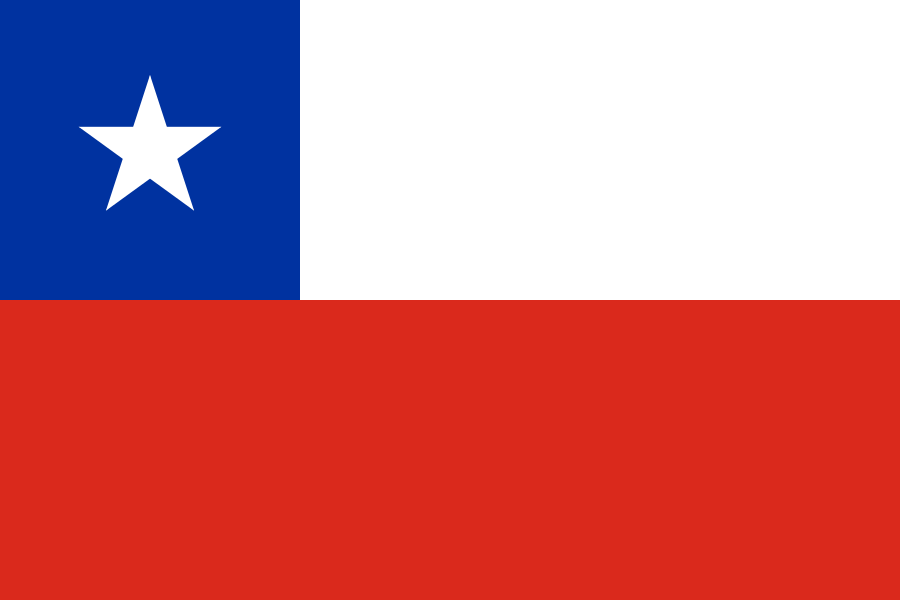
Chile
Location Info
- Continent: South America
- Country: Chile
- Coordinates: -35.6751 , -71.543
Trust Info
Verified Geographic and Statistical Information
🌍 Continents
Overview
Chile, officially the Republic of Chile, is a South American nation uniquely defined by its long, narrow shape, stretching over 4,200 kilometers along the continent's southwestern coast. Bordered by the Andes Mountains to the east and the Pacific Ocean to the west, the country experiences a wide variety of climates, ranging from the arid Atacama Desert in the north to the alpine tundras and glaciers of the south. Its central region features a Mediterranean climate, supporting a robust agricultural sector and the majority of the nation's population.
Historically, Chile evolved from a Spanish colony to a stable, high-income economy recognized for its institutional strength. As a leading global producer of copper and lithium, the nation plays a critical role in international trade. The capital, Santiago, serves as the primary political and economic hub. With a rich cultural heritage influenced by indigenous groups like the Mapuche and European immigrants, Chile remains one of the most stable and prosperous countries in South America.
Truth & Facts
| Length | 4,270 km |
| Average Width | 177 km |
| Total Population | 20,150,948 |
| Median Age | 37.4 years |
| Form of Government | Presidential Republic |
| Capital | Santiago |
| Independence Declared | February 12, 1818 |
| Return to Democracy | March 11, 1990 |
| Major Export | Copper |
| Currency | Chilean Peso (CLP) |
| Main Highway | Route 5 |
| Busiest Airport | Arturo Merino Benítez International |
| Literacy Rate | 96.4% |
| Life Expectancy (2026) | 81.8 years |
| National Dance | Cueca |
| Nobel Laureates | 2 (Literature) |
| Most Visited Park | Torres del Paine |
| Driest Place on Earth | Atacama Desert |
| Operational Rail Length | Approx. 7,282 km |
| 5G Coverage | High in urban areas |
| Police Force | Carabineros de Chile |
| Congress Type | Bicameral |
| OECD Entry | 2010 |
| Renewable Energy Share | >35% |
| GDP (PPP) 2025 Est. | $713.03 Billion |
| Number of National Parks | 41 |
| Highest Peak | Nevado Ojos del Salado |
📑 Table of Contents
Overview
Chile is a sovereign country located in the southwestern part of South America. It occupies a long, narrow strip of land between the Andes Mountains to the east and the Pacific Ocean to the west. The country is bordered by Peru to the north, Bolivia to the northeast, and Argentina to the east.
With a diverse landscape ranging from the driest desert on earth to lush vineyards and icy glaciers, Chile is a land of contrasts. Its capital and largest city, Santiago, is home to nearly a third of the population and serves as the nation's economic and cultural center.
- Official Name: Republic of Chile
- Capital: Santiago
- Primary Language: Spanish
- Total Area: 756,102 sq km
- Bordering Countries: Peru, Bolivia, Argentina
History
Chile’s history begins with indigenous settlements dating back over 10,000 years. Before the Spanish arrived, northern Chile was under Inca influence, while the south was inhabited by the Mapuche people. Spanish conquest began in 1540 under Pedro de Valdivia, who founded Santiago in 1541.
Independence from Spain was achieved in 1818 following years of conflict, led by figures like Bernardo O'Higgins. In the late 19th century, Chile expanded its northern territory during the War of the Pacific. The 20th century was marked by political shifts, including the 1973 military coup and the subsequent restoration of democracy in 1990.
| Period | Key Events |
|---|---|
| Pre-Columbian | Inca and Mapuche settlements |
| 1541 | Founding of Santiago by Spanish |
| 1818 | Proclamation of Independence |
| 1879-1883 | War of the Pacific |
| 1973-1990 | Military Dictatorship era |
Geography
Chile's geography is defined by its extreme north-south length and its location on the Pacific Ring of Fire. The country is divided into three primary zones: the northern desert, the central mediterranean valleys, and the southern alpine/fjord region.
- Norte Grande: Features the hyper-arid Atacama Desert.
- Central Valley: Fertile plains between the Andes and the Coast Range.
- Southern Zone: Characterized by lakes, volcanoes, and evergreen forests.
- Far South: A landscape of fjords, glaciers, and mountainous islands.
- Insular Chile: Includes Easter Island and the Juan Fernández Islands.
Climate & Weather
Due to its length, Chile possesses a highly varied climate. The north is virtually rainless year-round, while the south experiences high precipitation and cold temperatures. Central Chile has a classic Mediterranean climate with wet winters and dry summers.
- North: Arid and desert conditions.
- Center: Mediterranean (warm summers, mild winters).
- South: Temperate oceanic and cold alpine.
- Easter Island: Humid subtropical climate.
Population & Demographics
Chile’s population is largely urban, with approximately 88% of residents living in cities. The majority of Chileans are of mixed European and indigenous descent. The Mapuche are the largest indigenous group, followed by the Aymara and Rapa Nui.
The 2026 projections indicate the population will exceed 20 million. Demographic trends show a declining fertility rate and increasing life expectancy, mirroring patterns in many developed nations.
- Current Population Estimate: ~20.1 million
- Urbanization Rate: 85-88%
- Major Ethnic Groups: White/Mestizo, Mapuche
- Life Expectancy: 81.8 years
Culture & Lifestyle
Chilean culture is a blend of Spanish colonial elements and indigenous traditions. Literature is a major source of national pride, as Chile is known as the 'Land of Poets' due to its two Nobel Prize-winning authors.
- National Dance: The Cueca, symbolizing a courtship between a rooster and a hen.
- National Flower: The Copihue (Chilean Bellflower).
- Religion: Predominantly Roman Catholic, with a growing Evangelical minority.
- Literature: Famous for Pablo Neruda and Gabriela Mistral.
- Sports: Football (Soccer) is the most popular sport.
Festivals & Events
Chileans celebrate several major national and religious festivals throughout the year. The most significant is 'Fiestas Patrias' in September, which commemorates the start of the independence process.
- September 18: Fiestas Patrias (National Day).
- January/February: Viña del Mar International Song Festival.
- February: Tapati Festival on Easter Island.
- June 24: We Tripantu (Mapuche New Year).
- July 16: Fiesta de la Tirana (Northern religious festival).
Food & Cuisine
Chilean cuisine reflects the country's diverse geography, with a strong emphasis on seafood, beef, and local produce. Coastal areas offer a vast array of fish and shellfish, while the central valleys produce world-renowned wines.
- Empanada de Pino: Pastry filled with beef, onions, raisins, and olives.
- Cazuela: A hearty stew with beef or chicken, potatoes, and corn.
- Curanto: Traditional Chiloé dish cooked in a hole in the ground.
- Pastel de Choclo: Corn pie with meat and vegetables.
- Beverages: Famous for Cabernet Sauvignon, Carménère, and Pisco.
Economy & Industries
Chile is one of South America's most stable economies, characterized by its reliance on exports and free trade. It is the world's leading producer of copper and a major exporter of lithium, fresh fruit, and wood products.
| Sector | Primary Products |
|---|---|
| Mining | Copper, Lithium, Iron, Molybdenum |
| Agriculture | Grapes, Apples, Wine, Blueberries |
| Fisheries | Salmon, Trout, Anchovies |
| Forestry | Cellulose, Sawn Wood, Paper |
Cost of Living
Chile is generally more expensive than its neighbors in South America but remains more affordable than Western Europe or the US. Costs vary significantly between Santiago and rural regions.
- Housing: Higher in eastern Santiago neighborhoods.
- Food: Local markets (Ferias) offer affordable fresh produce.
- Utilities: Relatively high due to energy import costs.
- Transport: Affordable and efficient public systems in major cities.
Employment & Business
The Chilean labor market is dominated by services, followed by industry and agriculture. Santiago is the primary hub for multinational corporations and financial services.
- Major Employers: CODELCO (Mining), Retail groups (Falabella, Cencosud).
- Demand Skills: Engineering, IT, Renewable Energy.
- Business Environment: Ranked highly for ease of doing business in LatAm.
Real Estate & Housing
The housing market in Chile consists of a mix of modern high-rise apartments in urban centers and traditional single-family homes in suburban and rural areas.
- Urban Centers: Dominated by high-density apartment living.
- Rural Areas: Parcelas (plots) are popular for larger estates.
- Market Trend: Steady growth in coastal and lake-district properties.
Transportation & Connectivity
Chile has a highly developed transportation network. Air travel is essential for long-distance domestic travel, while the Pan-American Highway (Route 5) links the north and south.
- Airports: SCL is the primary international gateway.
- Highways: Well-maintained toll roads connect major regions.
- Public Transport: Santiago Metro is one of the most advanced in the world.
- Ferries: Crucial for connecting the southern fjords and islands.
Infrastructure & Utilities
Chile has made significant investments in infrastructure, particularly in telecommunications and energy. The country is a global leader in solar and wind energy transition.
- Energy: Transitioning rapidly to 100% renewable power.
- Water: Managed by private concessions; reliable in urban areas.
- Internet: High penetration of fiber optics and 5G mobile networks.
Education
Education is mandatory for 12 years. The system includes public, subsidized-private, and fully private schools. Chile is home to several top-ranked universities in Latin America.
- Top Universities: Universidad de Chile, Pontificia Universidad Católica.
- Literacy: One of the highest rates in the region at over 96%.
- Higher Ed: Growing focus on research and technology.
Healthcare
Chile has a dual healthcare system consisting of public insurance (FONASA) and private insurers (ISAPREs). Public hospitals provide universal coverage, while private clinics offer high-end services.
- Life Expectancy: Highest in South America (over 81 years).
- Facilities: Santiago houses world-class medical facilities.
Tourist Attractions
Chile offers unique landmarks ranging from archaeological sites to natural wonders. Many are recognized as UNESCO World Heritage sites.
- Atacama Desert: Valle de la Luna and El Tatio Geysers.
- Easter Island: The monolithic Moai statues.
- Torres del Paine: Famous granite spires in Patagonia.
- Valparaíso: Historic hills and colorful street art.
Things to Do
Outdoor adventure is a primary draw for visitors to Chile. The country's varied terrain allows for a wide range of seasonal activities.
- Hiking: Multi-day treks in Patagonia (W-Trek).
- Stargazing: World-class observatories in the Elqui Valley.
- Skiing: Andean resorts like Valle Nevado and Portillo.
- Surfing: World-class waves in Pichilemu.
Best Places to Visit
Top destinations include a mix of urban culture and remote wilderness. Planning usually follows a North-Center-South route.
- San Pedro de Atacama: Gateway to the northern desert.
- Colchagua Valley: Premier wine-tasting region.
- Puerto Varas: The scenic Lake District.
- Punta Arenas: Southernmost continental city.
Travel Guide
Travelers to Chile should note that seasons are opposite to the Northern Hemisphere. Spanish is essential, though English is common in tourism sectors.
- Visa: Reciprocity fees apply to some nations; check official sources.
- Currency: CLP is the only legal tender.
- Connectivity: Wide availability of SIM cards and public Wi-Fi.
Nearby Places
Chile is a gateway to several other major South American and Antarctic destinations. Crossing into Argentina is the most common land route.
- Mendoza (Argentina): Accessible via a scenic mountain pass.
- Uyuni (Bolivia): Salt flat tours often start from San Pedro.
- Antarctica: Expedition cruises depart from Punta Arenas.
Environment & Nature
Chile is geographically isolated by the Andes and the sea, leading to high levels of endemism in its flora and fauna. Conservation is managed by CONAF.
- Iconic Animals: Andean Condor, Huemul deer, Puma.
- National Tree: Araucaria (Monkey Puzzle Tree).
- Flora: Lomas formations in the desert and Valdivian rainforests in the south.
Government & Administration
Chile is a unitary presidential republic. The President acts as both head of state and head of government. Administratively, the country is divided into 16 regions.
- Executive Power: President of the Republic.
- Legislature: National Congress (Senators and Deputies).
- Judiciary: Supreme Court and lower courts.
Safety & Public Services
Chile is consistently ranked as one of the safest countries in Latin America. Public services are generally reliable, especially in urban areas.
- Emergency: Police (133), Fire (132), Ambulance (131).
- Safety Tip: Watch for pickpockets in crowded tourist areas of Santiago.
Best Time to Visit
The best time to visit depends entirely on the region. Central Chile is ideal in Spring/Autumn, while Patagonia is best in Summer.
- Patagonia: October to March.
- Atacama: Year-round (milder in winter).
- Skiing: June to August.
Local Business Directory
Major commercial activity is concentrated in the Metropolitan Region. Key sectors include retail, telecommunications, and finance.
- Retail: Falabella, Paris, Ripley.
- Banking: Banco de Chile, Santander, BCI.
- Telecom: Entel, Movistar, WOM.
General Information FAQs
Where is Chile located?
Chile is located on the southwestern coast of South America, bordering the Pacific Ocean to the west and the Andes Mountains to the east.
What is Chile known for?
Chile is known for its diverse landscapes, including the Atacama Desert, Patagonia, and its world-class wine and copper production.
Why is Chile famous?
It is famous for being the world's longest country, its Nobel-prize winning poets, and unique landmarks like Easter Island.
What country or region is Chile part of?
Chile is a sovereign nation in the South American continent.
What is the population of Chile?
As of early 2026, the population is estimated to be approximately 20.1 million people.
What languages are spoken in Chile?
Spanish is the official and primary language. Indigenous languages include Mapudungun, Aymara, and Rapa Nui.
What time zone is Chile in?
Mainland Chile typically operates in UTC-3 or UTC-4 depending on daylight saving time, while Easter Island is UTC-5 or UTC-6.
What are the key facts about Chile?
Key facts include its capital Santiago, its use of the Chilean Peso, and its status as a high-income OECD member.
What makes Chile unique?
Its extreme geography, containing both the driest desert and vast glacial fields within one nation, makes it unique.
How large is Chile in area?
Chile covers a total land area of approximately 756,102 square kilometers.
History FAQs
What is the history of Chile?
Chile's history includes pre-Columbian indigenous cultures, Spanish colonization starting in the 1540s, and independence in 1818.
When was Chile established?
The Republic of Chile was formally established with its declaration of independence on February 12, 1818.
What major historical events happened in Chile?
Major events include the War of the Pacific (1879), the 1973 military coup, and the return to democratic rule in 1990.
Who were important historical figures from Chile?
Important figures include liberator Bernardo O'Higgins, founder Pedro de Valdivia, and Nobel laureate Pablo Neruda.
How has Chile developed over time?
Chile transformed from an agrarian colony to a mining powerhouse and eventually to one of South America's most stable economies.
Geography & Environment FAQs
What is the geography of Chile?
The geography is defined by a narrow central valley flanked by the Andes Mountains and the Pacific coastal range.
What natural features surround Chile?
It is surrounded by the Pacific Ocean, the Andes Mountains, the Atacama Desert, and the ice fields of Patagonia.
Are there mountains, rivers, or lakes near Chile?
Yes, the Andes run the length of the country, and the southern Lake District is famous for its numerous glacial lakes and rivers.
What is the elevation of Chile?
Chile has a wide range of elevations, from sea level to the 6,893-meter peak of Nevado Ojos del Salado.
What ecosystems exist around Chile?
Ecosystems include the hyper-arid desert lomas, mediterranean scrublands, temperate rainforests, and tundra.
Climate & Weather FAQs
What is the climate like in Chile?
The climate varies from arid in the north to mediterranean in the center and oceanic/cold in the south.
What is the average temperature in Chile?
In Santiago, average temperatures range from 8°C in winter to 30°C in summer; other regions vary significantly.
What is the weather like throughout the year in Chile?
Central Chile has four distinct seasons, while the north is sunny year-round and the south is frequently rainy and cold.
Does Chile experience extreme weather?
Chile is prone to seismic activity (earthquakes) and occasional droughts or heavy rainfall in the south.
What is the best time of year to visit Chile?
November to March is ideal for Patagonia; the central region and north can be visited year-round.
Population & Society FAQs
What is the population density of Chile?
The average density is low at about 27 people per square kilometer, though much higher in Santiago.
What ethnic groups live in Chile?
The population is primarily Mestizo and White, with significant Mapuche and other indigenous minorities.
What religions are practiced in Chile?
Roman Catholicism is the largest religion, followed by Protestantism/Evangelicalism and irreligion.
What is daily life like in Chile?
Life in urban areas is fast-paced and modern, while rural life often revolves around agriculture and community traditions.
How diverse is the population of Chile?
Chile has become more diverse due to recent waves of immigration from other Latin American countries.
Culture & Traditions FAQs
What cultural traditions are important in Chile?
Significant traditions include the celebration of Fiestas Patrias, the Cueca dance, and Chilean rodeo.
What festivals are celebrated in Chile?
Key festivals include National Day (Sept 18), the Viña del Mar Song Festival, and various religious saints' days.
What cultural landmarks exist in Chile?
Landmarks include the Moai of Easter Island, the colorful hills of Valparaíso, and Pablo Neruda’s homes.
What traditional clothing or customs are common in Chile?
The 'Huaso' (cowboy) attire is traditional, featuring a manta or poncho and leather boots.
What arts and crafts are associated with Chile?
Chile is known for lapis lazuli jewelry, pottery from Pomaire, and traditional textile weaving.
Food & Cuisine FAQs
What foods is Chile known for?
Chile is known for fresh seafood like sea bass and king crab, as well as meat dishes like asado and empanadas.
What traditional dishes originate from Chile?
Traditional dishes include Cazuela, Pastel de Choclo, and Curanto from the island of Chiloé.
What are the best restaurants in Chile?
Santiago is home to several world-renowned restaurants like Boragó, known for using native ingredients.
What local ingredients are commonly used in Chile cuisine?
Common ingredients include maize (corn), potatoes, merkén (smoked chili), and various shellfish.
What food markets or street foods are popular in Chile?
Popular street foods include the Completo (loaded hot dog) and Mote con Huesillo (peach and wheat drink).
Economy & Business FAQs
What are the main industries in Chile?
Main industries include mining (copper/lithium), agriculture, forestry, and fishing.
What economic activities drive the economy of Chile?
Export-driven trade, specifically in minerals and raw materials, is the primary economic driver.
What businesses operate in Chile?
Major businesses include state-owned Codelco, retail giants like Falabella, and various international banking firms.
Is Chile an important economic center?
Yes, it is considered one of the most stable and open economies in Latin America.
What are the major exports or products from Chile?
Copper is the largest export, followed by lithium, wine, fresh fruit, and wood pulp.
Employment & Jobs FAQs
What job opportunities are available in Chile?
Opportunities are strong in mining, engineering, renewable energy, and the service sector in Santiago.
What are the major employers in Chile?
The government and large corporations in the mining and retail sectors are the largest employers.
What skills are in demand in Chile?
Skills in data science, renewable energy technology, and industrial engineering are currently in high demand.
Is Chile a good place to work?
Chile offers a stable environment and formal labor protections, making it attractive for regional professionals.
What is the unemployment rate in Chile?
As of late 2025/early 2026, the rate typically fluctuates around 8.5% depending on the economic cycle.
Cost of Living FAQs
Is Chile expensive to live in?
It is relatively expensive for South America but affordable compared to Europe and North America.
What is the average cost of living in Chile?
A single person may need between $1,000 and $1,500 USD per month for a moderate lifestyle in Santiago.
How much does housing cost in Chile?
Rent for a one-bedroom apartment in Santiago ranges from $400 to $800 USD depending on the neighborhood.
What are average food and utility costs in Chile?
Utilities for an apartment average $100-$150 USD per month; food costs depend on whether one shops at local fairs or supermarkets.
Is Chile affordable compared to nearby cities?
It is generally more expensive than Lima or Buenos Aires, but quality of life indices are often higher.
Housing & Real Estate FAQs
What types of housing are available in Chile?
Options range from modern city apartments to traditional houses and rural estates.
What is the average home price in Chile?
Prices vary wildly; a small house in a provincial city might cost $100,000 USD, while luxury Santiago homes exceed $1 million.
Is it better to rent or buy property in Chile?
Buying is common for long-term residents; foreigners can buy property without being residents.
Which neighborhoods are popular in Chile?
In Santiago, Providencia, Las Condes, and Vitacura are highly popular with expats and locals.
How has the property market changed in Chile?
The market has seen steady growth, with a recent increase in demand for homes outside the capital.
Transportation FAQs
How do you get to Chile?
Most international travelers arrive via Arturo Merino Benítez International Airport (SCL) in Santiago.
What is the nearest airport to Chile?
Santiago (SCL) is the main hub; other regional airports include Antofagasta (ANF) and Punta Arenas (PUQ).
Does Chile have railway connections?
Passenger rail exists primarily in the central region between Santiago and Chillán.
How reliable is public transportation in Chile?
Very reliable, especially the Santiago Metro and the nationwide bus network.
What major highways or roads connect to Chile?
Route 5 (Pan-American Highway) is the main north-south artery; Route 60 connects to Argentina.
Education FAQs
What schools are located in Chile?
Chile has a wide range of public, subsidized, and private international schools (e.g., Nido de Águilas).
Are there universities in Chile?
Yes, including the top-ranked University of Chile and Pontifical Catholic University.
What is the literacy rate in Chile?
The literacy rate is approximately 96.4%, one of the highest in South America.
What educational opportunities exist in Chile?
Opportunities exist for vocational training, undergraduate, and postgraduate studies with several state scholarships.
Is Chile a good place for students?
Yes, Santiago is a vibrant city for students with many cultural and academic resources.
Healthcare FAQs
What hospitals are available in Chile?
Public hospitals like Hospital Sótero del Río and private clinics like Clínica Alemana are prominent.
Are there emergency medical services in Chile?
Yes, the SAMU (131) provides public emergency ambulance services nationwide.
What healthcare facilities exist in Chile?
Facilities range from urban specialized clinics to rural health posts (CESFAM).
Is healthcare affordable in Chile?
Public healthcare is very affordable for residents; private care is high-quality but more expensive.
Are specialized medical services available in Chile?
Yes, Santiago is a regional hub for specialized treatments and complex surgeries.
Tourism & Travel FAQs
What are the top tourist attractions in Chile?
Top sites include Torres del Paine, San Pedro de Atacama, Easter Island, and Valparaíso.
What are the best things to do in Chile?
Popular activities include hiking, wine tasting, stargazing, and visiting historic cities.
Is Chile worth visiting?
Absolutely, it offers some of the most unique and pristine natural landscapes on the planet.
What landmarks should visitors see in Chile?
Moai statues, the Andes mountains, and the historic buildings of Valparaíso are must-sees.
How many days should tourists spend in Chile?
A minimum of 10-14 days is recommended to see at least two major regions (e.g., Desert and Patagonia).
Nearby Places FAQs
What places are near Chile worth visiting?
Nearby attractions include Mendoza in Argentina, the Salt Flats in Bolivia, and the Machu Picchu region in Peru.
What cities or towns are close to Chile?
Mendoza (Argentina) and Tacna (Peru) are major nearby international cities.
What natural attractions are near Chile?
The Iguazu Falls and the Argentine Patagonia are notable nearby natural wonders.
What day trips can be taken from Chile?
Day trips from Santiago include visits to the Andes mountains (Cajón del Maipo) or the coast (Viña del Mar).
What famous destinations are within reach of Chile?
Antarctica and the Galápagos Islands are reachable via long-haul transport from Chile.
Safety FAQs
Is Chile safe to live in?
Yes, it is statistically one of the safest countries in the region for long-term residency.
Is Chile safe for tourists?
Generally yes, though common-sense precautions against petty theft in cities are advised.
What is the crime rate in Chile?
Low for violent crime compared to the regional average, but petty theft exists in urban centers.
What emergency services operate in Chile?
The main services are Carabineros (Police), Bomberos (Fire), and SAMU (Ambulance).
What safety tips should visitors follow in Chile?
Keep an eye on belongings in crowded places and use official taxis or ride-sharing apps.
Lifestyle & Living FAQs
Is Chile a good place to live?
Yes, it offers a high quality of life, economic stability, and beautiful natural environments.
What recreational activities are available in Chile?
Activities include outdoor sports, theater, cinema, and a growing culinary scene.
Is Chile family-friendly?
Very much so, with many parks, family-oriented events, and safe suburban neighborhoods.
What outdoor activities are popular in Chile?
Trekking, skiing, surfing, and cycling are highly popular among locals and visitors.
What makes life enjoyable in Chile?
The combination of modern amenities and easy access to diverse nature makes it very enjoyable.
Practical Information FAQs
What travel tips should visitors know about Chile?
Pack layers for changing weather and always carry some cash for smaller towns.
What local customs should visitors respect in Chile?
Chileans are generally polite and value formal greetings; punctuality can be slightly flexible in social settings.
How accessible is Chile for international visitors?
Very accessible via Santiago, with good domestic connections and high-standard tourist infrastructure.
What services are available for tourists in Chile?
Extensive services including guided tours, multilingual information centers (SERNATUR), and luxury lodging.
What important information should travelers know before visiting Chile?
Understand the visa requirements and the strict agricultural controls at the border (SAG).
Climate & Environment FAQs
How often do earthquakes occur in Chile?
Small tremors are common, but the country has strict building codes and is well-prepared for larger events.
Are there active volcanoes in Chile?
Yes, there are over 90 active volcanoes, including the highly active Villarrica and Llaima.
What is the air quality like in Santiago?
Air quality can be poor during winter months due to thermal inversion and geographic location in a basin.
Is the water safe to drink in Chile?
Tap water is generally safe to drink in urban areas, though the high mineral content may bother some sensitive stomachs.
Does it snow in Chile?
Yes, extensively in the Andes mountains and in the southern regions during winter.