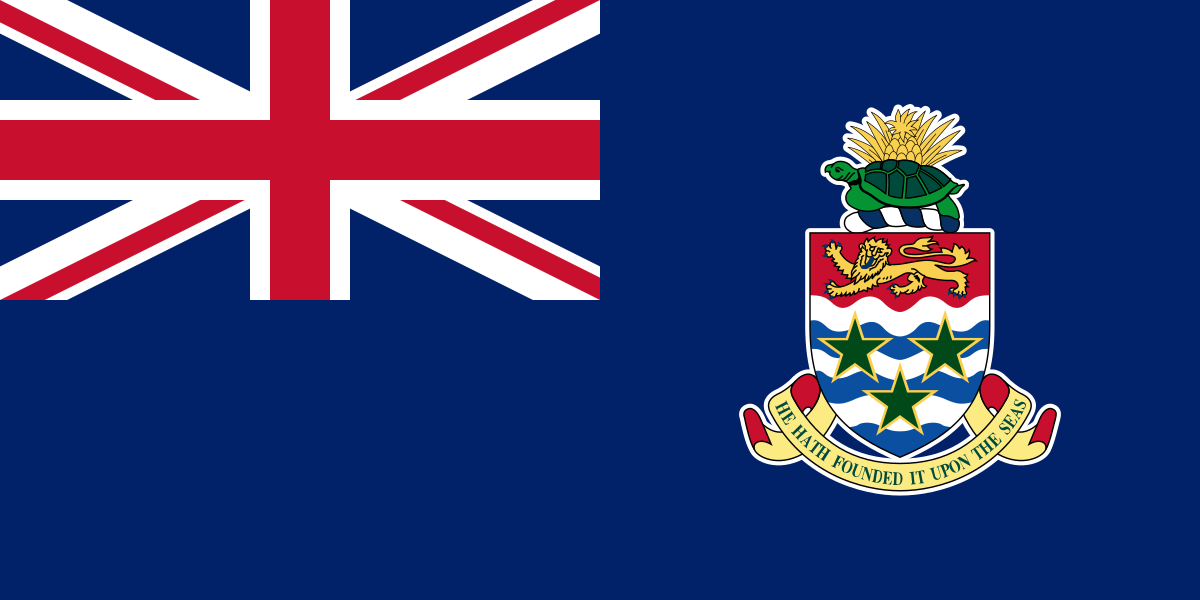
Cayman Islands
Location Info
- Continent: North America
- Country: Cayman Islands
- Coordinates: 19.3133 , -81.2546
Trust Info
Verified Geographic and Statistical Data
🌍 Continents


Overview
The Cayman Islands is an autonomous British Overseas Territory situated in the western Caribbean Sea. The territory comprises three islands: Grand Cayman, Cayman Brac, and Little Cayman, located south of Cuba and northwest of Jamaica. As a major global offshore financial center, it maintains one of the highest standards of living in the Caribbean region, driven by its sophisticated banking sector and upscale tourism industry.
Geographically, the islands are the outcroppings of the Cayman Ridge, a mountain range extending from Cuba. The islands are predominantly low-lying, with the highest point being The Bluff on Cayman Brac. Historically, the islands were sighted by Christopher Columbus in 1503 and have evolved from a remote dependency into a stable, modern economy known for its political neutrality and environmental conservation efforts.
Truth & Facts
| Total Area | 264 sq km |
| Highest Point | The Bluff (43m) |
| Total Population | 71,105 (2024 Est.) |
| Capital City | George Town |
| Status | British Overseas Territory |
| Currency | Cayman Islands Dollar (KYD) |
| First Sighting | May 10, 1503 |
| Separation from Jamaica | 1962 |
| Main Industries | Financial Services, Tourism |
| GDP per Capita | Approx. $91,000 |
| Electric Grid | Caribbean Utilities Company (CUC) |
| Main Airport | Owen Roberts International (GCM) |
| Protected Land | Marine Parks & Replenishment Zones |
| Literacy Rate | 98.9% |
| Primary Hospital | Cayman Islands Hospital |
| National Tree | Silver Thatch Palm |
| Internet TLD | .ky |
| Police Force | RCIPS |
| Head of State | King Charles III |
| Member of | CARICOM (Associate) |
| Water Source | Desalination |
| Inflation Rate | Approx. 3.0% |
| Annual Visitors | 2.1 Million (Pre-pandemic) |
| Registry Rank | Leading Mega-Yacht Registry |
| Flagship Species | Blue Iguana |
📑 Table of Contents
Overview
The Cayman Islands is an English-speaking British Overseas Territory in the western Caribbean. Known for its sophisticated offshore financial services and luxury tourism, it comprises three islands: Grand Cayman, Cayman Brac, and Little Cayman.
- Political Status: British Overseas Territory
- Capital: George Town
- Primary Language: English
- Major Sectors: Finance and Tourism
- Location: Western Caribbean Sea
History
The history of the islands is deeply tied to the sea. Sighted by Christopher Columbus in 1503, they were initially named 'Las Tortugas' due to the abundance of sea turtles. Permanent settlement began in the 1700s, primarily by sailors, pirates, and settlers from Jamaica.
| Year | Event |
|---|---|
| 1503 | Discovery by Christopher Columbus |
| 1670 | Ceded to England under the Treaty of Madrid |
| 1831 | Legislative assembly established at Pedro St. James |
| 1962 | Became a separate crown colony |
Geography
The islands are part of the Cayman Ridge, an underwater mountain range. They are formed of limestone and coral, resulting in a flat landscape without significant rivers. Grand Cayman is the most populous island and the site of the capital, George Town.
- Grand Cayman: 196 sq km
- Cayman Brac: 38 sq km
- Little Cayman: 26 sq km
- Highest Point: The Bluff (43m)
- Coastline: 160 km
Climate & Weather
The islands feature a tropical marine climate with distinct wet and dry seasons. The dry season runs from November to April, while the rainy season occurs from May to October. The territory is located within the Atlantic hurricane belt.
- Dry Season: November - April
- Wet Season: May - October
- Average Temp: 24°C to 30°C
- Peak Humidity: July - August
Population & Demographics
The population is a multicultural mix of Caymanians and expatriates from over 100 countries. Population growth has been rapid, driven by the expansion of the financial and construction sectors. Most residents live on Grand Cayman.
| Metric | Details |
|---|---|
| Growth Rate | 2.1% annually |
| Ethnic Groups | Mixed, Caucasian, Black |
| National Religion | Christianity |
Culture & Lifestyle
Caymanian culture is influenced by its maritime heritage and British colonial roots. Modern life is cosmopolitan, with a high concentration of professionals in the finance industry. Traditional crafts like thatch rope weaving are still preserved by the National Trust.
- National Herb: Rosemary
- National Flower: Wild Banana Orchid
- Maritime Heritage: Catboat sailing
- Legal System: English Common Law
Festivals & Events
Annual events celebrate heritage, food, and the arts. Pirates Week is the most famous festival, featuring mock invasions and parades. Batabano is the national carnival, showcasing Caribbean music and dance.
- Pirates Week: National Festival
- Batabano: Carnival Celebration
- Cayman Cookout: Culinary Event
- Gimistory: Storytelling Festival
Food & Cuisine
Cuisine in the Cayman Islands is traditionally based on seafood and local crops like yam and cassava. Jerk chicken and conch stew are staples. The islands are often referred to as the 'Culinary Capital of the Caribbean' due to the density of high-end restaurants.
- Staple: Turtle Meat (farm-raised)
- Dish: Conch Stew
- Dessert: Heavy Cake
- Popular Flavor: Jerk seasoning
Economy & Industries
The economy is one of the most stable in the region. There is no direct taxation, making it a hub for international banking, hedge funds, and insurance companies. Tourism, specifically luxury travel and cruise ship arrivals, is the second major pillar.
- Banking: Over 100 licensed banks
- Investment: Global hedge fund center
- Registry: Shipping and Aircraft
- Taxation: No Income or Corporate tax
Cost of Living
The cost of living is high because most goods must be imported. Residents benefit from high salaries and the absence of income tax, but housing and utilities are significantly more expensive than in neighboring countries.
| Item | Relative Cost |
|---|---|
| Groceries | High (Imported) |
| Electricity | Very High (Diesel/Solar) |
| Rent | High (Grand Cayman) |
Employment & Business
Employment is concentrated in George Town's financial district and the Seven Mile Beach tourism corridor. Strict work permit regulations apply to non-nationals, but the demand for skilled professionals in law and accounting remains constant.
- Unemployment: Historically low
- Work Permits: Required for expats
- Major Employers: Government, Finance firms
Real Estate & Housing
The real estate market is robust, with significant investment in luxury condos and waterfront properties. Seven Mile Beach is the most sought-after location for international buyers. There are no restrictions on foreign ownership of land.
- Property Tax: None
- Title: Guaranteed by Government
- Style: Modern Caribbean
Transportation & Connectivity
Transportation is primarily by road on Grand Cayman. The territory is well-connected internationally via two major airports and is a frequent stop for cruise lines. Inter-island travel is facilitated by local air carriers.
- Driving: Left-hand side
- Airports: Owen Roberts, Charles Kirkconnell
- Public Transport: Licensed minibuses
Infrastructure & Utilities
The islands possess modern infrastructure, including advanced telecommunications and desalination plants for water supply. The electrical grid is reliable, and there is a growing shift toward solar energy integration.
- Water: Reverse Osmosis
- Power: 110v (North American plug)
- Telecom: 5G availability
Education
Education is compulsory between the ages of 4 and 16. The system follows the British curriculum in public schools, with private schools offering both British and American options. Higher education is available locally through specialized colleges.
- University: ICCI, UCCI
- Law School: Truman Bodden Law School
- Standard: High literacy rate
Healthcare
Healthcare facilities are excellent, featuring both state-of-the-art public and private hospitals. Residents are required to have health insurance. Specialized cardiac and orthopedic care are available through medical tourism facilities.
- Facilities: Health City Cayman Islands
- Insurance: Mandatory for employees
- Emergency: 911 service
Tourist Attractions
Tourism is centered on the islands' natural beauty. Seven Mile Beach is consistently ranked among the world's best. Stingray City allows visitors to interact with southern stingrays in their natural habitat.
- Stingray City: Shallow sandbar
- Turtle Centre: Conservation facility
- Crystal Caves: Natural rock formations
Things to Do
Outdoor activities are dominated by water sports. The islands are world-renowned for scuba diving, offering 'wall' dives and shipwrecks. Inland, the Mastic Trail offers hiking through old-growth forests.
- Diving: North Wall, USS Kittiwake
- Snorkeling: Smith Cove
- Hiking: Mastic Trail
Best Places to Visit
Grand Cayman offers a mix of urban and beach experiences. Cayman Brac is ideal for adventure seekers and bird watchers. Little Cayman is the least developed, offering complete seclusion and pristine reefs.
- Seven Mile Beach: Grand Cayman
- Bloody Bay Wall: Little Cayman
- The Bluff: Cayman Brac
Travel Guide
Visitors typically arrive at Owen Roberts International Airport. No visa is required for many nationalities for short stays. US Dollars are widely accepted alongside the local Cayman Islands Dollar.
- Currency: KYD (fixed to USD)
- Time Zone: EST (No Daylight Savings)
- Language: English
Nearby Places
The Cayman Islands are relatively isolated. The closest neighbors are Cuba to the north and Jamaica to the southeast. These are accessible via short regional flights.
- Cuba: 240 km north
- Jamaica: 290 km southeast
- Miami, USA: 1-hour flight
Environment & Nature
The environment is characterized by mangrove swamps, dry evergreen forests, and extensive coral reefs. The Blue Iguana Recovery Programme is a major success story in local conservation.
- Endemic Species: Blue Iguana
- Marine Life: Sea turtles, Rays
- Plant Life: Silver Thatch Palm
Government & Administration
Governance is based on a parliamentary democracy. The Governor represents the British Monarch, while a Premier leads the elected government. The territory has its own police, customs, and immigration departments.
- Legislature: House of Parliament
- Executive: Cabinet
- Head of Government: Premier
Safety & Public Services
The Cayman Islands are considered one of the safest destinations in the Caribbean. Crime rates are low, and the territory has high standards for emergency response and public infrastructure.
- Emergency: 911
- Police: RCIPS
- Fire Service: National coverage
Best Time to Visit
The peak travel season is from December to April when the weather is coolest and driest. Summer months offer lower hotel rates but come with higher temperatures and the possibility of tropical storms.
| Month | Condition |
|---|---|
| Dec - Apr | Peak Season, Coolest |
| May - Oct | Rainy Season |
| Jun - Nov | Hurricane Season |
Local Business Directory
Business activity is centered in George Town and Camana Bay. The islands host thousands of registered companies, legal firms, and professional service providers catering to the global finance industry.
- Financial Center: George Town
- Retail Hub: Camana Bay
- Industry: Cayman Finance
General Information FAQs
Where is the Cayman Islands located?
The Cayman Islands is situated in the western Caribbean Sea, approximately 430 miles south of Miami, Florida, and northwest of Jamaica.
What is the Cayman Islands known for?
The territory is globally recognized as a major offshore financial center and a premier destination for luxury beach tourism and scuba diving.
What country or region is the Cayman Islands part of?
It is a British Overseas Territory in the Caribbean; while it is under the jurisdiction of the United Kingdom, it is largely self-governing.
What is the population of the Cayman Islands?
The estimated population is approximately 71,105 residents, representing over 130 different nationalities.
What languages are spoken in the Cayman Islands?
English is the official language. Local dialects often feature a unique blend of British, American, and West Indian linguistic influences.
What time zone is the Cayman Islands in?
The islands follow Eastern Standard Time (EST) all year round and do not observe Daylight Saving Time.
What makes the Cayman Islands unique?
The islands are unique for their 'tax-neutral' status, high standard of living, and the presence of rare endemic species like the Blue Iguana.
How large is the Cayman Islands in area?
The total land area of the three islands combined is approximately 264 square kilometers (102 square miles).
What is the capital of the Cayman Islands?
George Town, located on the island of Grand Cayman, serves as the capital and the center of the territory's financial industry.
What are the three islands called?
The archipelago consists of Grand Cayman, Cayman Brac, and Little Cayman.
History & Culture FAQs
What is the history of the Cayman Islands?
Originally sighted by Christopher Columbus in 1503, the islands were later settled by British mariners and became a dependency of Jamaica before opting to remain a British colony in 1962.
When was the Cayman Islands established?
While sighted in 1503, permanent settlement did not begin in earnest until the 1730s under land grants from the Governor of Jamaica.
What major historical events happened in the Cayman Islands?
Key events include the 'Wreck of the Ten Sail' in 1794 and the establishment of the first representative government at Pedro St. James in 1831.
Who were important historical figures from the Cayman Islands?
James Manoah Bodden, the islands' first National Hero, and Sybil McLaughlin, a pioneer in the local legislature, are highly significant figures.
What cultural traditions are important in the Cayman Islands?
Traditions include silver thatch palm weaving, catboat building, and the celebration of Pirates Week, which honors the islands' maritime history.
What festivals are celebrated in the Cayman Islands?
Major festivals include the Batabano Carnival, Pirates Week, and the Cayman Cookout culinary festival.
What is the national bird of the Cayman Islands?
The national bird is the Cayman Islands Parrot, a subspecies of the Cuban Amazon.
What is the national flower?
The Wild Banana Orchid, which comes in two varieties—one endemic to Grand Cayman and the other to the Sister Islands.
What is the 'Wreck of the Ten Sail'?
A historic maritime disaster in 1794 where ten merchant ships hit a reef off East End; local residents were commended for rescuing the crews.
How did the islands get their name?
The name comes from 'caimán,' a Neo-Tlingit word for crocodiles, which were once found on the islands.
Geography & Environment FAQs
What is the geography of the Cayman Islands?
The islands are low-lying limestone outcroppings of the Cayman Ridge, an underwater mountain range extending from Cuba.
What natural features surround the Cayman Islands?
The islands are surrounded by clear Caribbean waters, fringing coral reefs, and the deep Cayman Trench to the south.
Are there mountains, rivers, or lakes near the Cayman Islands?
There are no rivers and no mountains; the highest elevation is 'The Bluff' on Cayman Brac at 43 meters above sea level.
What is the elevation of the Cayman Islands?
Most of the land area is less than 10 meters above sea level, making the territory sensitive to sea-level changes.
What ecosystems exist around the Cayman Islands?
Primary ecosystems include mangrove wetlands, dry evergreen forests, and complex coral reef structures.
What is the Blue Iguana?
An endangered lizard species endemic to Grand Cayman that was saved from extinction through a dedicated recovery program.
What is the Mastic Trail?
A 2.3-mile traditional footpath that winds through a native old-growth dry forest on Grand Cayman.
Are there any active volcanoes in the Cayman Islands?
No, the islands are not volcanic; they are composed primarily of calcareous rock and coral limestone.
What is the 'Ironshore'?
Ironshore is a local term for the jagged, weathered prehistoric coral formations found along much of the rocky coastline.
What is the largest island in the archipelago?
Grand Cayman is the largest island, covering about 196 square kilometers.
Climate & Weather FAQs
What is the climate like in the Cayman Islands?
The climate is tropical marine, characterized by a warm, dry season and a hot, humid wet season.
What is the average temperature in the Cayman Islands?
The average temperature stays around 28°C (82°F) year-round, with slightly cooler temperatures in the winter months.
What is the weather like throughout the year?
The islands enjoy sun most days, with most rainfall occurring in short, intense bursts during the summer months.
Does the Cayman Islands experience extreme weather?
The territory is located within the Atlantic hurricane belt and is subject to tropical storms and hurricanes from June to November.
What is the best time of year to visit the Cayman Islands?
The most popular time to visit is during the dry season, from December to April, when the humidity is lower.
When is hurricane season?
The official hurricane season runs from June 1st through November 30th each year.
Does it ever snow in the Cayman Islands?
No, snow has never been recorded in the Cayman Islands due to its tropical latitude.
What is the water temperature like?
Ocean temperatures are very comfortable, ranging from 26°C (78°F) in winter to 30°C (86°F) in summer.
How much rainfall does the territory receive?
Annual rainfall averages about 60 inches, though it varies significantly between the east and west ends of the islands.
What is the 'Christmas Breeze'?
A local term for the cool northeasterly winds that arrive in December and January, bringing lower humidity and cooler nights.
Economy & Business FAQs
What are the main industries in the Cayman Islands?
The two main pillars of the economy are international financial services and high-end tourism.
What economic activities drive the economy?
Key drivers include offshore banking, hedge fund administration, captive insurance, and cruise ship tourism.
Is the Cayman Islands a tax haven?
The territory is considered a tax-neutral jurisdiction, as it has no direct income, corporate, property, or capital gains taxes.
What businesses operate in the Cayman Islands?
Many global law firms, accounting firms, and international banks maintain significant operations in George Town.
Is the Cayman Islands an important economic center?
Yes, it is one of the world's largest offshore financial hubs, especially for investment funds and international banking.
What are the major exports or products?
The territory primarily exports services. Physical exports are minimal, though small amounts of turtle meat and salt were historical exports.
What currency is used in the Cayman Islands?
The official currency is the Cayman Islands Dollar (KYD), which is fixed to the US Dollar at a rate of 1 KYD = 1.20 USD.
Are US Dollars accepted in the Cayman Islands?
Yes, US Dollars are widely accepted at shops, restaurants, and hotels throughout the islands.
What is the main source of government revenue?
Revenue is primarily generated through import duties, work permit fees, and financial service company registration fees.
Is there a stock exchange in the Cayman Islands?
Yes, the Cayman Islands Stock Exchange (CSX) specializes in listing mutual funds and specialist debt securities.
Employment & Cost of Living FAQs
What job opportunities are available in the Cayman Islands?
The most common opportunities are in the legal, financial, accounting, hospitality, and construction sectors.
What are the major employers?
The Cayman Islands Government, the Health Services Authority, and major private firms like Dart Enterprises are leading employers.
Is the Cayman Islands expensive to live in?
Yes, the cost of living is high as almost all consumer goods, including food and fuel, must be imported.
What is the average cost of living?
The cost of living is comparable to major cities like New York or London, with particularly high utility and grocery costs.
How much does housing cost in the Cayman Islands?
Housing costs vary significantly; luxury beachfront properties are very expensive, while inland rentals are more modest but still high.
Is it better to rent or buy property?
Buying is popular among long-term residents due to the lack of property taxes, though initial entry costs are high.
What skills are in demand?
Qualified accountants, corporate lawyers, compliance officers, and experienced hospitality staff are consistently in demand.
Is the Cayman Islands a good place to work?
It is popular for professionals due to high tax-free salaries and a safe, modern working environment.
What is the unemployment rate?
The unemployment rate is typically low, generally hovering between 3% and 5%.
How do non-residents get a job in Cayman?
Non-residents must have a job offer from a local employer who must then apply for a work permit on their behalf.
Transportation & Infrastructure FAQs
How do you get to the Cayman Islands?
Most international travelers arrive by air at Owen Roberts International Airport or via cruise ships at the George Town port.
What is the nearest airport?
Owen Roberts International Airport (GCM) in George Town is the primary international gateway.
Does the Cayman Islands have railway connections?
No, there are no railways in the Cayman Islands.
How reliable is public transportation?
There is a reliable system of licensed minibuses that operate on set routes between major residential and commercial areas.
What major highways or roads connect to the territory?
The Esterley Tibbetts Highway and the West Bay Road are the main north-south corridors on Grand Cayman.
On which side of the road do people drive?
In the Cayman Islands, traffic drives on the left-hand side of the road, following the British system.
Can I rent a car in the Cayman Islands?
Yes, numerous international and local car rental agencies are available, primarily near the airport and Seven Mile Beach.
What are the inter-island travel options?
Cayman Airways provides daily 'Express' flights connecting Grand Cayman with Cayman Brac and Little Cayman.
Is there a ferry service between islands?
There is a small passenger ferry between Camana Bay/George Town and Rum Point, but no regular ferry between the three main islands.
What is the state of the internet and telecommunications?
The islands have advanced fiber-optic and 5G telecommunications infrastructure, provided by several competing local carriers.
Education & Healthcare FAQs
What schools are located in the Cayman Islands?
The islands have a range of government-run public schools and several high-standard private international schools.
Are there universities in the Cayman Islands?
Yes, the University College of the Cayman Islands (UCCI) and the International College of the Cayman Islands (ICCI) provide tertiary education.
What is the literacy rate?
The literacy rate is nearly 99%, reflecting a strong emphasis on primary and secondary education.
What educational opportunities exist?
Local institutions offer degrees in business, hospitality, and a specialized legal program through the Truman Bodden Law School.
Is the Cayman Islands a good place for students?
It is excellent for those studying international finance or marine biology, though many residents go abroad for specialized university degrees.
What hospitals are available?
The Cayman Islands Hospital in George Town is the main public facility, alongside private hospitals like Health City and Doctors Hospital.
Are there emergency medical services?
Yes, the islands have a 24-hour emergency response system accessible by dialing 911, with modern ambulances and air-evacuation capabilities.
What healthcare facilities exist?
The islands offer a high density of medical clinics, dental practices, and specialized treatment centers relative to the population size.
Is healthcare affordable?
Medical care is high-quality but expensive. All residents are legally required to carry private health insurance.
Are specialized medical services available?
Yes, the islands have become a hub for medical tourism, particularly for specialized cardiac, orthopedic, and bariatric surgeries.
Tourism & Travel FAQs
What are the top tourist attractions?
Top attractions include Seven Mile Beach, Stingray City, the Cayman Turtle Centre, and the Queen Elizabeth II Botanic Park.
What are the best things to do?
Popular activities include snorkeling, scuba diving, boat charters to the North Sound, and dining at world-class restaurants.
Is the Cayman Islands worth visiting?
Yes, it is highly recommended for travelers seeking a safe, upscale Caribbean experience with pristine beaches and exceptional diving.
What landmarks should visitors see?
Visitors should see the historic Pedro St. James site, the 'Hell' limestone formations, and the East End Lighthouse Park.
How many days should tourists spend in the Cayman Islands?
A typical visit lasts 5 to 7 days, providing enough time to enjoy the beach and take a day trip to one of the Sister Islands.
What is Seven Mile Beach?
A world-famous crescent-shaped stretch of coral-sand beach on the western end of Grand Cayman, known for its clear water and public access.
What is Stingray City?
A series of shallow sandbars in the North Sound where visitors can wade with and feed southern stingrays in their natural habitat.
Can you visit the other islands easily?
Yes, Cayman Brac and Little Cayman are easily accessible via a 30 to 40-minute flight from Grand Cayman.
Are the Cayman Islands safe for tourists?
The Cayman Islands are consistently ranked among the safest destinations in the Caribbean for international travelers.
Is there a cruise port?
Yes, George Town is a major port of call for Western Caribbean cruise itineraries, though passengers are currently tendered to shore.
Safety & Lifestyle FAQs
Is the Cayman Islands safe to live in?
Yes, the islands enjoy a very low crime rate and high political stability, making them a preferred location for families and expatriates.
What is the crime rate?
The crime rate is significantly lower than in many other Caribbean nations and most major US cities.
What emergency services operate in the territory?
The Royal Cayman Islands Police Service (RCIPS), the Cayman Islands Fire Service, and the Health Services Authority Emergency Medical Services.
What safety tips should visitors follow?
While safe, visitors should use common sense: lock car doors, avoid leaving valuables on the beach, and follow all water safety flags.
Is the Cayman Islands family-friendly?
Yes, the islands are very family-oriented, with safe beaches, many child-focused activities, and a high standard of public safety.
What recreational activities are available?
Residents enjoy golfing, tennis, kiteboarding, sailing, and a wide variety of youth sports leagues.
What outdoor activities are popular?
Diving and snorkeling are the most popular activities, followed by deep-sea fishing and hiking the Mastic Trail.
What makes life enjoyable in the Cayman Islands?
The combination of a relaxed island pace, excellent infrastructure, professional opportunities, and a beautiful natural environment.
What local customs should visitors respect?
Caymanians value politeness; it is customary to say 'Good morning' or 'Good afternoon' when entering a shop or meeting someone.
What travel tips should visitors know?
Tipping is customary at 15-20% in restaurants, and many establishments automatically include a service charge in the bill.