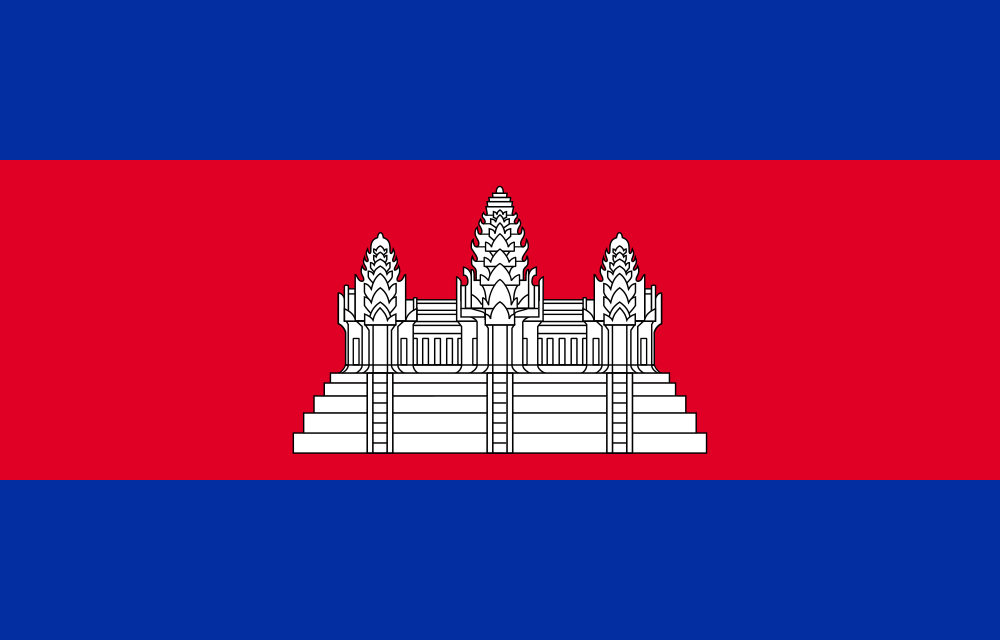
Cambodia
Location Info
- Continent: Asia
- Country: Cambodia
- Coordinates: 12.5657 , 104.991
Trust Info
Verified Geographic Information
🌍 Continents

Overview
Cambodia, officially known as the Kingdom of Cambodia, is a nation located in the southern portion of the Indochina Peninsula in Southeast Asia. It is bordered by Thailand to the northwest, Laos to the north, Vietnam to the east, and the Gulf of Thailand to the southwest. The country's landscape is characterized by a central plain surrounded by low mountains and includes the Mekong River and the Tonle Sap lake.
With a history deeply rooted in the powerful Khmer Empire, which ruled much of Indochina between the 11th and 14th centuries, Cambodia has transitioned from a French protectorate to an independent constitutional monarchy. Today, it is a member of ASEAN and is known for its rapid economic growth driven by textiles, agriculture, and tourism, centered around the historic Angkor Wat temple complex.
Truth & Facts
| Land Area | 181,035 square kilometers |
| Total Population | Approx. 16.9 million |
| Capital City | Phnom Penh |
| Form of Government | Unitary elective constitutional monarchy |
| Independence from France | November 9, 1953 |
| Official Currency | Riel (KHR) |
| Internet Users | 78% of population |
| Adult Literacy Rate | 83.9% |
| Life Expectancy at Birth | 70.1 years |
| Main Religion | Theravada Buddhism |
| Tourist Arrivals | 5.4 million |
| Forest Cover Percentage | Approx 45% |
| Main Highway | National Road 1 to 8 |
| Mobile Subscriptions | 22 million |
| Global Peace Index Rank | 73rd |
| ASEAN Entry | April 30, 1999 |
| UN Membership | Since Dec 14, 1955 |
| Access to Electricity | 98% of villages |
| Total Fertility Rate | 2.3 births per woman |
| Primary Language | Khmer |
| Monsoon Period | May to October |
📑 Table of Contents
Overview
Cambodia is a Southeast Asian nation defined by its diverse terrain, ranging from low-lying central plains to jagged mountain ranges. It shares its borders with Thailand, Laos, and Vietnam, and has a coastline along the Gulf of Thailand. The country is famous for its rich cultural history, particularly the Khmer Empire and the iconic temples of Angkor.
As a constitutional monarchy, the nation has seen significant transformation in recent decades, moving from a conflict-prone past to one of the fastest-growing economies in the region. The official language is Khmer, and the population is predominantly Buddhist.
- Official Name: Kingdom of Cambodia
- Capital: Phnom Penh
- National Motto: Nation, Religion, King
- Total Land Area: 181,035 km²
- Time Zone: UTC+7 (ICT)
History
Cambodia’s history is dominated by the rise and fall of the Khmer Empire, which reached its zenith between the 11th and 13th centuries. During this era, the empire controlled much of modern-day Southeast Asia and produced architectural marvels like Angkor Wat. Following the empire's decline, Cambodia entered a period of external pressure from neighboring powers.
In 1863, Cambodia became a protectorate of France, lasting nearly 90 years until independence in 1953. The late 20th century was marked by the tragic Khmer Rouge regime (1975–1979), which resulted in massive population loss and economic destruction. Since the 1991 Paris Peace Accords, the country has focused on reconstruction and stability.
| Era | Key Event | Years |
|---|---|---|
| Khmer Empire | Construction of Angkor Wat | 802–1431 |
| French Era | Colonial Protectorate | 1863–1953 |
| Khmer Rouge | Democratic Kampuchea | 1975–1979 |
| Modern Era | Restoration of Monarchy | 1993–Present |
Geography
The geography of Cambodia is centered around the Mekong River and the Tonle Sap lake system. The central part of the country is a vast alluvial plain that is fertile and prone to seasonal flooding, which supports the nation’s rice production. The periphery of the plain is bordered by several mountain ranges.
The Cardamom Mountains and Elephant Mountains lie in the southwest, while the Dangrek Mountains form the northern border with Thailand. The Mekong River flows through the eastern part of the country, providing essential water for irrigation and transport.
- Highest Peak: Phnom Aural (1,813 meters)
- Major River: Mekong River
- Largest Lake: Tonle Sap
- Coastal Length: 443 km
- Ecoregions: Tropical moist broadleaf forests
Climate & Weather
Cambodia has a tropical monsoon climate with two distinct seasons: the rainy season and the dry season. The temperature remains relatively warm throughout the year, usually ranging between 21°C and 35°C. Humidity levels are highest during the monsoon months.
The dry season runs from November to April, characterized by cool, dry air initially, followed by intense heat in March and April. The rainy season, from May to October, brings nearly 75% of the country’s annual rainfall, often in short, heavy bursts.
| Month | Avg High (°C) | Condition |
|---|---|---|
| April | 35°C | Hottest Month |
| July | 31°C | Peak Monsoon |
| December | 30°C | Coolest/Driest |
Population & Demographics
The population of Cambodia is approximately 16.9 million people, with the vast majority identifying as ethnic Khmer. Minority groups include Chams, Vietnamese, Chinese, and various indigenous hill tribes located primarily in the northeast provinces. The population is notably young, with a large percentage under the age of 30.
Urbanization is increasing, particularly in Phnom Penh, though about 75% of the population still resides in rural areas. Theravada Buddhism is the state religion and deeply influences social structure and daily behavior.
- Median Age: 25.6 years
- Urban Population: 25%
- Ethnic Khmer: 97.6%
- Religious Affiliation: 97.1% Buddhist
- Population Density: 95 per km²
Culture & Lifestyle
Cambodian culture is a blend of indigenous traditions and Buddhist values, with strong historical influences from India and France. The family is the central unit of social life, and respect for elders is paramount. Traditional arts, such as Apsara dancing and shadow puppetry, are highly regarded and have been revived in recent decades.
Daily life often revolves around the agricultural cycle and Buddhist lunar calendar. In urban areas, lifestyle is modernizing rapidly with the influence of global media, but traditional customs, such as the Sampeah greeting, remain ubiquitous.
- National Dance: Apsara Dance
- Traditional Greeting: Sampeah
- Social Structure: Hierarchical and family-oriented
- Major Influence: Theravada Buddhism
Festivals & Events
Cambodian festivals are mostly tied to the Buddhist calendar and agricultural cycles. The most significant event is the Khmer New Year (Chol Chnam Thmey) in April, which marks the end of the harvest season. During this time, families gather at pagodas and engage in traditional games.
Other major festivals include Pchum Ben, a 15-day religious event dedicated to ancestors, and Bon Om Touk (Water Festival) in November. The Water Festival celebrates the reversing flow of the Tonle Sap river and features massive boat races in Phnom Penh.
- Khmer New Year: 3 days in April
- Pchum Ben: Ancestors' Day in Sept/Oct
- Water Festival: Boat races on the Mekong
- Independence Day: November 9th
Food & Cuisine
Khmer cuisine is characterized by its use of fresh ingredients, subtle spices, and a balance of sweet, sour, salty, and bitter flavors. Rice is the staple of every meal, usually served with soups, stir-fries, and curries. Prahok, a fermented fish paste, is a unique Cambodian ingredient used as a seasoning in many dishes.
Fish from the Mekong and Tonle Sap are the primary sources of protein. Notable dishes include Fish Amok (steamed coconut curry) and Kuy Teav (noodle soup). Unlike some neighboring countries, Cambodian food generally uses less chili and more herbs like lemongrass and kaffir lime.
- Signature Dish: Fish Amok
- Staple: Steamed White Rice
- Condiment: Prahok (Fermented Fish)
- Breakfast Choice: Kuy Teav (Noodle Soup)
Economy & Industries
Cambodia’s economy has transitioned from a purely agrarian base to one driven by manufacturing and services. The garment and footwear industry is the largest export earner, employing hundreds of thousands of workers. Tourism is the second-largest sector, primarily centered on historical sites and coastal areas.
Agriculture remains a vital employer, with rice, rubber, and cashews being the primary products. Construction and real estate have also seen a boom in recent years, particularly in Phnom Penh and Sihanoukville, fueled by foreign investment.
| Sector | Contribution to GDP |
|---|---|
| Services (Tourism/Retail) | 40% |
| Industry (Garments/Construction) | 35% |
| Agriculture | 20% |
Cost of Living
The cost of living in Cambodia is relatively low compared to Western nations and its neighbor, Thailand. However, prices vary significantly between rural areas and major cities like Phnom Penh. The dual-currency system (US Dollar and Cambodian Riel) is used for almost all transactions.
Basic local products and street food are very affordable, while imported goods and high-end utilities in urban centers can be costly. Rent in the capital has increased with modern developments but remains accessible for many expatriates and local professionals.
- Local Meal: $1.50 - $3.00
- Apartment (1BR City): $350 - $600
- Internet: $15 - $25 per month
- Liter of Milk: $2.10
Employment & Business
The Cambodian labor market is characterized by a high percentage of workers in the informal sector and agriculture. However, the formal sector is growing, led by the garment manufacturing and banking industries. The government has established Special Economic Zones (SEZs) to attract foreign direct investment by offering tax incentives.
Starting a business involves several steps of registration with the Ministry of Commerce. While the ease of doing business has improved, challenges such as administrative costs and infrastructure gaps remain. There is a high demand for skilled labor in tech and management roles.
- Primary Employer: Agriculture
- Growth Sector: Digital Economy
- Minimum Wage: Applicable to Garment/Footwear sector
- Foreign Ownership: 100% allowed in most sectors
Real Estate & Housing
The real estate market in Cambodia has seen significant development, particularly in the condominium and borey (gated community) sectors. Phnom Penh's skyline has transformed with numerous high-rise residential and commercial buildings. Foreigners can legally own properties in Cambodia, but only on the first floor or higher (strata title).
In rural areas, traditional wooden stilt houses remain the standard. Land ownership is a critical issue, and the government has been working on systematic land registration to provide secure titles to residents.
- Phnom Penh: Major hub for high-rises
- Sihanoukville: Focus on tourism and casinos
- Siem Reap: Restricted height due to temples
- Foreign Ownership: Permitted via Strata Title
Transportation & Connectivity
Transportation in Cambodia relies heavily on the road network. National roads connect Phnom Penh with provincial capitals and neighboring countries. The use of motorcycles is the most common form of personal transport. Within cities, auto-rickshaws (Tuk-tuks) are widely used and can be hailed via mobile apps.
Cambodia has three international airports: Phnom Penh, Siem Reap-Angkor, and Sihanoukville. The railway system has been rehabilitated, offering limited passenger services between the capital and the coast, as well as the Thai border. The Mekong River serves as an important waterway for bulk cargo.
- Airports: 3 International
- Primary Transport: Motorcycles and Tuk-tuks
- Ride-Hailing: Grab and PassApp are popular
- Railways: Southern and Northern lines
Infrastructure & Utilities
Infrastructure in Cambodia has improved drastically with significant investment in roads, bridges, and power generation. The country relies on a mix of hydroelectric power, coal-fired plants, and imported electricity. While urban areas have reliable access to the grid, some remote rural areas still depend on solar or batteries.
Water supply in Phnom Penh is considered high quality and drinkable from the tap, though this is not the case for most other provinces. Waste management remains a challenge in rapidly growing urban centers, with ongoing efforts to modernize collection systems.
- Power Source: Mix of Hydro and Coal
- Water: High-quality supply in Phnom Penh
- Telecom: 4G widely available; 5G in development
- Garbage: Municipal collection in cities
Education
The Cambodian education system follows a 6-3-3 structure: six years of primary school, three years of lower secondary, and three years of upper secondary. Education is free at public schools, though private international schools are very popular in urban areas for those who can afford them.
Higher education has expanded, with several public and private universities in Phnom Penh. The government is currently prioritizing STEM (Science, Technology, Engineering, and Mathematics) education to meet the demands of a modernizing economy.
- Literacy Rate: Over 83%
- Structure: 12 years of general education
- Language: Khmer; English is widely taught
- Focus: STEM and vocational training
Healthcare
The healthcare system in Cambodia consists of public hospitals, health centers, and a growing private sector. Major facilities are concentrated in Phnom Penh and Siem Reap. While basic healthcare has improved, many Cambodians still travel abroad for complex medical procedures.
The government has introduced the National Social Security Fund (NSSF) to provide health insurance for formal sector workers. Maternal and infant mortality rates have decreased significantly over the last two decades due to better rural health services.
- Public Facilities: Health Centers and Referral Hospitals
- Insurance: NSSF for employees
- Pharmacy: Widely available in urban areas
- Medical Travel: Common to Vietnam or Thailand
Tourist Attractions
Cambodia's premier attraction is the Angkor Archaeological Park, a UNESCO World Heritage site containing the ruins of the Khmer Empire. Beyond the temples, the capital city of Phnom Penh offers historical sites such as the Royal Palace and the National Museum.
The southern coast features white-sand beaches on islands like Koh Rong and the colonial charm of Kampot and Kep. For nature lovers, the northeast provinces of Mondulkiri and Ratanakiri offer trekking and waterfalls.
- Angkor Wat: World's largest religious monument
- Royal Palace: Residence of the King
- Koh Rong: Pristine beach destination
- Tonle Sap: Unique floating villages
Things To Do
Visitors to Cambodia can engage in a variety of activities ranging from historical exploration to outdoor adventure. Exploring the vast temple complexes of Siem Reap by bicycle or tuk-tuk is the most popular activity. In the cities, visiting local markets like the Central Market (Phsar Thmei) provides a look at local life.
Adventure seekers can trek in the Cardamom Mountains or go scuba diving off the coast of Sihanoukville. Cultural experiences such as attending a Khmer cooking class or watching an Apsara dance performance are also highly recommended.
- Temple Hopping: Siem Reap
- River Cruises: Sunset on the Mekong
- Market Shopping: Traditional crafts and silks
- Wildlife Spotting: Irrawaddy dolphins in Kratie
Best Places To Visit
While Siem Reap is the most visited destination, Cambodia has several other key regions. Phnom Penh is the hub for politics and history. Sihanoukville serves as the gateway to the southern islands, which are becoming world-class beach destinations.
Battambang is known for its well-preserved French colonial architecture and the unique bamboo train. The town of Kratie is a popular stop for those wishing to see the rare freshwater dolphins in the Mekong River.
| Location | Primary Attraction |
|---|---|
| Siem Reap | Angkor Temples |
| Phnom Penh | Culture & History |
| Kampot | River & Pepper Farms |
| Mondulkiri | Elephant Sanctuaries |
Travel Guide
Entering Cambodia typically requires a visa, which is available on arrival for many nationalities or can be obtained as an e-visa beforehand. The primary gateways are the international airports in Phnom Penh and Siem Reap. Overland travel from Thailand, Vietnam, and Laos is also common through various border checkpoints.
The best way to get around locally is via auto-rickshaws or rented motorbikes. It is important to respect local customs by dressing modestly when visiting temples and removing shoes before entering homes or pagodas.
- Visa: Available on arrival/E-visa
- Safety: Generally safe; watch for petty crime
- Connectivity: Local SIM cards are cheap
- Etiquette: Cover shoulders/knees at temples
Nearby Places
Cambodia’s central location in Southeast Asia makes it easy to visit neighboring countries. Bangkok (Thailand) and Ho Chi Minh City (Vietnam) are both short flights or long bus rides away. The 4,000 Islands (Si Phan Don) in Laos is just across the northern border.
Within the country, those staying in Phnom Penh often take day trips to the ancient capital of Oudong or the Silk Island (Koh Dach) in the Mekong River.
- Bangkok, Thailand: West
- Ho Chi Minh City, Vietnam: East
- Pakse, Laos: North
- Phu Quoc, Vietnam: South (Accessible from Kep/Kampot)
Environment & Nature
Cambodia possesses significant biodiversity, with large tracts of tropical forest and the unique ecosystem of the Tonle Sap lake. The lake is the largest freshwater body in Southeast Asia and is a designated UNESCO Biosphere Reserve. It supports a massive fishing industry and thousands of bird species.
However, the environment faces threats from illegal logging, land concessions, and climate change affecting water levels in the Mekong. Conservation groups are active in protecting endangered species like the Asian elephant and the giant ibis.
- Biodiversity: High in northeast and southwest
- Protected Areas: Virachey National Park
- Conservation: Efforts to stop deforestation
- Wildlife: Home to 16 globally threatened species
Government & Administration
Cambodia is a constitutional monarchy where the King serves as the head of state, while the Prime Minister is the head of government. The legislature is bicameral, consisting of the National Assembly and the Senate. Administratively, the country is divided into 24 provinces and 1 special municipality (Phnom Penh).
Local administration happens at the district and commune levels. In recent years, there has been a push toward decentralization to give more power and budget to local commune councils.
- Head of State: King Norodom Sihamoni
- Provinces: 24 plus Phnom Penh
- Legal System: Civil law (influenced by France)
- Election Cycle: Every 5 years
Safety & Public Services
Cambodia is generally safe for residents and travelers, though petty crimes like bag snatching occur in urban centers. Violent crime is rare. The police force is present in all major towns, and there is a dedicated Tourist Police unit in Siem Reap and Phnom Penh.
Emergency services are available, but response times and equipment quality can vary. Fire services and ambulances are primarily concentrated in the cities. It is advised to use reputable hospitals and transport services.
- Emergency Number: 117 (Police), 119 (Ambulance)
- Tourist Police: Active in major hubs
- Mine Safety: Stay on marked paths in rural areas
- Tap Water: Only drinkable in Phnom Penh city center
Best Time To Visit
The ideal time to visit Cambodia is during the cool, dry season from November to February. During these months, the weather is pleasant for exploring temples, and the humidity is at its lowest. This is also the peak season for tourism.
For those who prefer fewer crowds, the shoulder months of May and June or the rainy season (July to September) offer lush green landscapes and lower hotel prices, though travel to remote areas can be difficult due to muddy roads.
- Peak: Nov - Feb (Cool/Dry)
- Hottest: March - May
- Wet: June - Oct (Lush scenery)
- Festival Peak: April (New Year)
Local Business Directory
The Cambodian business landscape is a mix of traditional family-run enterprises and modern corporations. Phnom Penh is the center for banking, telecommunications, and tech startups. Siem Reap's economy is almost entirely focused on hospitality and tourism services.
The manufacturing sector is primarily located on the outskirts of the capital and in Sihanoukville. Agriculture businesses are spread across the provinces, with Battambang and Kampong Cham being major hubs for rice and rubber.
- Banking: ABA Bank, Canadia Bank, ACLEDA
- Telecom: Cellcard, Smart, Metfone
- Logistics: J&T, Kerry Express
- Retail: Aeon Mall, Chip Mong
General Information FAQs
Where is Cambodia located?
Cambodia is located in Southeast Asia, in the southern part of the Indochina Peninsula. It shares borders with Thailand to the northwest, Laos to the northeast, and Vietnam to the east and southeast.
What is Cambodia known for?
Cambodia is best known for the ancient temple complex of Angkor Wat, the historical Khmer Empire, its unique Khmer cuisine, and its tragic but resilient modern history.
Why is Cambodia famous?
The country is famous for Angkor Wat, which is the largest religious monument in the world and a symbol of national pride, appearing on the Cambodian national flag.
What country or region is Cambodia part of?
Cambodia is part of the Southeast Asian region and is a member of the Association of Southeast Asian Nations (ASEAN).
What is the population of Cambodia?
As of recent 2023 estimates, the population of Cambodia is approximately 16.9 million people.
What languages are spoken in Cambodia?
The official language is Khmer, spoken by nearly the entire population. English is common in tourism and business, while French is still spoken by some of the older generation.
What time zone is Cambodia in?
Cambodia operates on Indochina Time (ICT), which is UTC+7.
What are the key facts about Cambodia?
Key facts include its status as a constitutional monarchy, its capital Phnom Penh, the dominance of Theravada Buddhism, and its export-oriented economy led by garments.
What makes Cambodia unique?
Its uniqueness stems from its deep Khmer heritage, the massive Tonle Sap lake which changes its flow direction annually, and its transition from a difficult past to modern growth.
How large is Cambodia in area?
The total area of Cambodia is approximately 181,035 square kilometers.
History FAQs
What is the history of Cambodia?
The history includes the prehistoric era, the legendary Funan and Chenla periods, the glorious Khmer Empire (Angkorian period), a colonial era under France, and a turbulent late 20th century before the current era of stability.
When was Cambodia established?
While roots go back centuries, modern Cambodia gained independence from France on November 9, 1953. The current Kingdom was restored in 1993.
What major historical events happened in Cambodia?
Major events include the building of Angkor Wat (12th century), the French Protectorate (1863), Independence (1953), the Khmer Rouge regime (1975-1979), and the UN-backed elections in 1993.
Who were important historical figures from Cambodia?
Important figures include King Jayavarman VII (builder of Angkor Thom), King Norodom Sihanouk (father of independence), and the current King Norodom Sihamoni.
How has Cambodia developed over time?
It has evolved from a regional empire to a colonized state, through a period of civil war and genocide, and finally into a peaceful, developing nation with a focus on global trade and tourism.
Geography & Environment FAQs
What is the geography of Cambodia?
It is characterized by a low-lying central plain that is mostly surrounded by mountains, including the Cardamom and Dangrek ranges, and bisected by the Mekong River.
What natural features surround Cambodia?
It is surrounded by mountain ranges to the north and west, the Mekong river system to the east, and the Gulf of Thailand to the southwest.
Are there mountains, rivers, or lakes near Cambodia?
Yes, major features include the Mekong and Tonle Sap rivers, the massive Tonle Sap Lake, and the Cardamom and Elephant Mountains.
What is the elevation of Cambodia?
Much of the country is at an elevation of less than 10 meters above sea level, though the highest point, Phnom Aural, reaches 1,813 meters.
What ecosystems exist around Cambodia?
Ecosystems include tropical rainforests, mangroves along the coast, and the freshwater flooded forest of the Tonle Sap.
Climate & Weather FAQs
What is the climate like in Cambodia?
Cambodia has a tropical monsoon climate. It is hot and humid year-round with distinct wet and dry seasons.
What is the average temperature in Cambodia?
The average temperature is about 27°C, but it can reach up to 35-40°C in the hottest months of March and April.
What is the weather like throughout the year in Cambodia?
From Nov-Feb it is cool and dry; March-May is hot and dry; June-Oct is rainy and humid.
Does Cambodia experience extreme weather?
The country occasionally experiences flooding during the peak of the monsoon season and droughts during exceptionally dry years.
What is the best time of year to visit Cambodia?
The best time is between November and February when the weather is cool and dry.
Population & Society FAQs
What is the population density of Cambodia?
The population density is approximately 95 people per square kilometer, though it is much higher in the central plains and Phnom Penh.
What ethnic groups live in Cambodia?
The majority (97%) are Khmer. Minority groups include Cham, Vietnamese, Chinese, and various indigenous ethnic groups known as Khmer Loeu.
What religions are practiced in Cambodia?
Theravada Buddhism is practiced by over 97% of the population. There are also small communities of Muslims and Christians.
What is daily life like in Cambodia?
Daily life for many revolves around agriculture and the local market. In cities, it is increasingly modern with office work and retail, but still strongly influenced by religious and family traditions.
How diverse is the population of Cambodia?
While ethnically homogeneous (mostly Khmer), the population is culturally diverse through its various indigenous tribes and the historical influence of neighboring cultures.
Culture & Traditions FAQs
What cultural traditions are important in Cambodia?
Key traditions include respect for elders (the Sampeah), the importance of the family unit, and religious festivals tied to the lunar calendar.
What festivals are celebrated in Cambodia?
Major festivals are the Khmer New Year, Pchum Ben (Ancestors' Day), and the Water Festival (Bon Om Touk).
What cultural landmarks exist in Cambodia?
Notable landmarks include Angkor Wat, the Silver Pagoda in the Royal Palace, and Preah Vihear Temple.
What traditional clothing or customs are common in Cambodia?
The Sampot is the traditional garment. Customs include removing shoes in temples and homes and avoiding touching someone's head.
What arts and crafts are associated with Cambodia?
Cambodia is famous for silk weaving, silver smithing, stone carving, and traditional Apsara dance.
Food & Cuisine FAQs
What foods is Cambodia known for?
It is known for Fish Amok, Kuy Teav (noodle soup), and the extensive use of freshwater fish and rice.
What traditional dishes originate from Cambodia?
Original dishes include Prahok Ktiss, Lok Lak (stir-fried beef), and Nom Banh Chok (Khmer noodles).
What are the best restaurants in Cambodia?
The best culinary experiences are found in Phnom Penh and Siem Reap, ranging from street food stalls to high-end Khmer fine dining establishments.
What local ingredients are commonly used in Cambodia cuisine?
Common ingredients include lemongrass, galangal, turmeric, kaffir lime, and Prahok (fermented fish paste).
What food markets or street foods are popular in Cambodia?
Popular street foods include grilled pork and rice (Bai Sach Chrouk) and iced coffee with condensed milk.
Economy & Business FAQs
What are the main industries in Cambodia?
The main industries are garment and footwear manufacturing, tourism, construction, and agriculture.
What economic activities drive the economy of Cambodia?
Garment exports, international tourism arrivals, and the production of rice and rubber are the primary drivers.
What businesses operate in Cambodia?
Businesses include multinational garment factories, international banks, and a huge number of small-to-medium retail and service enterprises.
Is Cambodia an important economic center?
It is an emerging economy in Southeast Asia, known for its strategic location and competitive labor costs within the ASEAN bloc.
What are the major exports or products from Cambodia?
Major exports include apparel, footwear, travel goods, rice, rubber, and electronic components.
Employment & Jobs FAQs
What job opportunities are available in Cambodia?
Opportunities exist in manufacturing, hospitality, education (especially English teaching), and the growing tech sector.
What are the major employers in Cambodia?
The government is a major employer, alongside large garment manufacturing groups and banking institutions like ABA or ACLEDA.
What skills are in demand in Cambodia?
Digital literacy, English language proficiency, management skills, and specialized engineering are in high demand.
Is Cambodia a good place to work?
For expats and skilled locals, it offers a dynamic environment with a low cost of living, though labor standards vary in the informal sector.
What is the unemployment rate in Cambodia?
The official unemployment rate is very low (often under 1%), though this includes a high rate of underemployment in the agricultural sector.
Cost of Living FAQs
Is Cambodia expensive to live in?
Generally, no. It is one of the more affordable countries in Southeast Asia, though Phnom Penh can be pricier for luxury lifestyles.
What is the average cost of living in Cambodia?
A single person can live comfortably on $800 to $1,500 a month in the city, depending on housing choices.
How much does housing cost in Cambodia?
Rental for a 1-bedroom apartment in the city ranges from $300 to $700. Rural housing is significantly cheaper.
What are average food and utility costs in Cambodia?
Local meals are $2-$5; electricity can be high at $50-$100/month for heavy AC users; water is typically very cheap.
Is Cambodia affordable compared to nearby cities?
Yes, it is typically cheaper than Bangkok or Ho Chi Minh City regarding rent and services.
Housing & Real Estate FAQs
What types of housing are available in Cambodia?
Options include traditional houses, shop-houses, modern condominiums, and gated communities called Boreys.
What is the average home price in Cambodia?
Prices range from $50,000 for small suburban units to over $500,000 for luxury villas in Phnom Penh.
Is it better to rent or buy property in Cambodia?
Most expats rent due to legal restrictions on land ownership. For locals, buying is a traditional form of investment.
Which neighborhoods are popular in Cambodia?
In Phnom Penh, BKK1 and Toul Tom Poung (Russian Market) are popular. In Siem Reap, the Wat Bo area is highly sought after.
How has the property market changed in Cambodia?
The market has seen a massive shift toward high-rise development and international-style malls over the last decade.
Transportation FAQs
How do you get to Cambodia?
Most visitors arrive by air into Phnom Penh or Siem Reap, or overland from Thailand or Vietnam.
What is the nearest airport to Cambodia?
The main gateways are Phnom Penh International (PNH) and the new Siem Reap-Angkor International (SAI).
Does Cambodia have railway connections?
Yes, there are limited passenger services connecting Phnom Penh to Sihanoukville and Poipet (on the Thai border).
How reliable is public transportation in Cambodia?
Inter-city buses are very reliable. Within cities, private tuk-tuks via ride-hailing apps are the standard.
What major highways or roads connect to Cambodia?
National Roads 1 through 7 are the primary arteries, connecting the capital to Vietnam, Thailand, and Laos.
Education FAQs
What schools are located in Cambodia?
There is a mix of public government schools and numerous private international schools following US, UK, or French curricula.
Are there universities in Cambodia?
Yes, major ones include the Royal University of Phnom Penh (RUPP) and the Institute of Technology of Cambodia (ITC).
What is the literacy rate in Cambodia?
The adult literacy rate is approximately 84%.
What educational opportunities exist in Cambodia?
There is an increasing focus on vocational training, IT skills, and foreign language programs.
Is Cambodia a good place for students?
It is becoming a hub for research in archeology and Southeast Asian studies, though primary education is still developing.
Healthcare FAQs
What hospitals are available in Cambodia?
Major hospitals include Calmette (public) and private facilities like Royal Phnom Penh Hospital or Sunrise Japan Hospital.
Are there emergency medical services in Cambodia?
Yes, though they are most effective in Phnom Penh. Private hospitals often provide better ambulance services.
What healthcare facilities exist in Cambodia?
The network includes village health centers, provincial referral hospitals, and specialized clinics in the capital.
Is healthcare affordable in Cambodia?
Public healthcare is very low cost for locals; private healthcare is more expensive but still affordable compared to the West.
Are specialized medical services available in Cambodia?
Basic specialties are available, but for advanced cardiac or oncological care, many seek treatment in neighboring countries.
Tourism & Travel FAQs
What are the top tourist attractions in Cambodia?
Angkor Wat, the Bayon Temple, the Royal Palace, and the islands of Koh Rong.
What are the best things to do in Cambodia?
Watching the sunrise at Angkor Wat, touring the capital's history, and relaxing on the beaches of Sihanoukville or Kep.
Is Cambodia worth visiting?
Absolutely. It offers a unique mix of world-class history, friendly culture, and beautiful natural landscapes.
What landmarks should visitors see in Cambodia?
Angkor Wat, Ta Prohm, the National Museum, and the Preah Vihear temple on the cliffside.
How many days should tourists spend in Cambodia?
A typical trip lasts 7 to 10 days, allowing for 3-4 days in Siem Reap and a few days in the capital or on the coast.
Nearby Places FAQs
What places are near Cambodia worth visiting?
Bangkok, Ho Chi Minh City, and the temples of Luang Prabang in Laos are all highly accessible.
What cities or towns are close to Cambodia?
Aranyaprathet (Thailand) and Ha Tien (Vietnam) are right on the borders.
What natural attractions are near Cambodia?
The Mekong Falls on the Laos border and the beaches of Phu Quoc (Vietnam).
What day trips can be taken from Cambodia?
From Phnom Penh, visitors can see Oudong Mountain or the Silk Island (Koh Dach).
What famous destinations are within reach of Cambodia?
The ancient cities of Ayutthaya and the modern hub of Singapore are within a 1-2 hour flight.
Safety FAQs
Is Cambodia safe to live in?
Yes, it is generally safe. Residents should exercise standard precautions against petty theft in cities.
Is Cambodia safe for tourists?
Yes, it is considered a safe destination for international travelers. Violent crime against tourists is very rare.
What is the crime rate in Cambodia?
The crime rate is moderate, with most crimes being non-violent property crimes like snatch-and-grab theft.
What emergency services operate in Cambodia?
Police (117), Fire (118), and Ambulance (119) services operate nationally.
What safety tips should visitors follow in Cambodia?
Keep belongings secure while in tuk-tuks, avoid unlit areas at night, and be mindful of unexploded ordnance in remote rural areas.
Lifestyle & Living FAQs
Is Cambodia a good place to live?
Many find the slow pace, low cost, and friendly people make it an excellent choice for retirement or digital nomadism.
What recreational activities are available in Cambodia?
Golfing, river cruises, cinema, and a vibrant dining and nightlife scene in the major cities.
Is Cambodia family-friendly?
Yes, Khmer culture is very welcoming of children, and there are many family-oriented activities in the capital.
What outdoor activities are popular in Cambodia?
Cycling through temple ruins, trekking in national parks, and kayaking on the Kampot river.
What makes life enjoyable in Cambodia?
The mix of warm tropical weather, affordable luxuries, and a rich cultural calendar of festivals.
Practical Information FAQs
What travel tips should visitors know about Cambodia?
Carry small denominations of US Dollars and Riel, and always negotiate tuk-tuk prices in advance if not using an app.
What local customs should visitors respect in Cambodia?
Dress modestly (shoulders and knees covered) in religious sites and never point your feet at a Buddha statue or a person.
How accessible is Cambodia for international visitors?
It is very accessible with straightforward visa-on-arrival policies for most countries and increasing flight connections.
What services are available for tourists in Cambodia?
Information centers, licensed guides in multiple languages, and a wide variety of travel agencies are available.
What important information should travelers know before visiting Cambodia?
Ensure your passport has 6 months validity and a blank page, and consider getting travel insurance for medical emergencies.