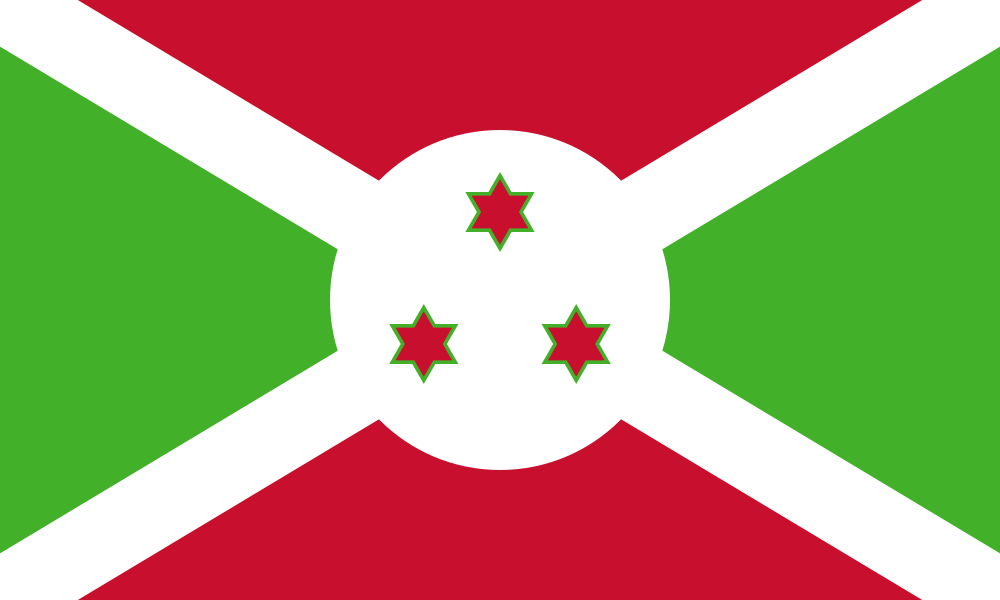
Burundi
Location Info
- Continent: Africa
- Country: Burundi
- Coordinates: -3.3731 , 29.9189
Trust Info
Verified Geographic Data
🌍 Continents
Overview
Burundi is a landlocked country situated in the Great Rift Valley at the junction between the African Great Lakes region and East Africa. It is bordered by Rwanda to the north, Tanzania to the east and southeast, and the Democratic Republic of the Congo to the west. With its capital recently moved to Gitega, Burundi remains a deeply agrarian society with a landscape characterized by stepped plateaus and the deep waters of Lake Tanganyika.
Historically a kingdom, Burundi transitioned through German and Belgian colonial rule before regaining independence in 1962. The nation is globally recognized for its unique cultural heritage, particularly the Royal Drummers of Burundi, and its significant contributions to the global coffee and tea markets despite facing significant economic and political challenges throughout the 20th century.
Truth & Facts
| Total Area | 27,834 km² |
| Highest Point | Mount Heha (2,684 m) |
| Political Capital | Gitega |
| Economic Capital | Bujumbura |
| Estimated Population | 13.2 million |
| Official Languages | Kirundi, French, English |
| Independence | July 1, 1962 |
| Currency | Burundian Franc (BIF) |
| Main Export | Coffee and Tea |
| Electricity Access | Approx 11% |
| Literacy Rate | 74.7% |
| Life Expectancy | 62 years |
| Cultural Icon | Royal Drummers |
| National Parks | 3 major parks |
| Main Airport | Melchior Ndadaye International |
| Mobile Penetration | Approx 55% |
| Emergency Number | 117 (Police) |
| System | Presidential Republic |
| Major Membership | East African Community (EAC) |
| Water Access | 60% of population |
| Agricultural Land | 73.3% |
| Annual Visitors | Approx 300,000 |
| Endemic Species | Varies (Lake Tanganyika focus) |
| Dominant Religion | Christianity (91%) |
📑 Table of Contents
Overview
Burundi is a small, landlocked nation in East-Central Africa. It is known as the 'Land of a Thousand Hills' (similar to Rwanda) due to its hilly and mountainous terrain. The country holds a strategic position along Lake Tanganyika, one of the deepest freshwater lakes in the world.
The nation is a Republic with a multi-party system, though it has faced significant periods of political instability. Despite this, its culture remains vibrant, deeply rooted in centuries-old traditions that survived colonial transitions.
- Official Name: Republic of Burundi
- Regional Bloc: East African Community
- Time Zone: CAT (UTC+2)
- Main Economic Hub: Bujumbura
- Administrative Hub: Gitega
History
Burundi existed as an independent kingdom for several centuries, ruled by a monarch known as the Mwami. In the late 19th century, it was colonized by Germany as part of German East Africa. Following World War I, the League of Nations mandated the territory to Belgium, which administered it as Ruanda-Urundi.
Burundi regained its independence in 1962. The post-independence era was marked by shifts between monarchy and republic status, alongside internal ethnic tensions between the Hutu and Tutsi populations. In the 2000s, the Arusha Accords helped establish a framework for peace and power-sharing.
| Period | Event |
|---|---|
| 16th Century | Foundation of the Kingdom of Burundi |
| 1899 | Integration into German East Africa |
| 1916 | Belgian occupation begins |
| 1962 | Full independence achieved |
| 2000 | Signing of the Arusha Accords |
Geography
Burundi's geography is defined by the Great Rift Valley. A high plateau covers most of the country, dropping sharply into the rift valley where Lake Tanganyika is located. The Nile-Congo watershed also passes through the country, making it home to one of the southernmost sources of the Nile River.
- Land Borders: 1,140 km total
- Highest Peak: Mount Heha at 2,684 meters
- Major Lake: Lake Tanganyika
- Key Rivers: Ruzizi, Malagarasi, Ruvubu
Climate and Weather
The climate is tropical highland, which means temperatures are generally mild despite its proximity to the equator. Altitude plays a major role in local weather patterns, with cooler temperatures in the mountains and warmer conditions in the lowlands near Bujumbura.
- Wet Seasons: February to May and September to November
- Dry Seasons: June to August and December to January
- Average Temp (Bujumbura): 23°C to 25°C
Population and Demographics
Burundi is one of the most densely populated countries in Africa. The population is relatively young, with a high percentage of the people residing in rural areas and engaging in subsistence farming. The major ethnic groups are the Hutu, Tutsi, and the indigenous Twa.
- Median Age: 17 years
- Urban Population: Approx 14%
- Language: Kirundi (Universal), French, and English
Culture and Lifestyle
Burundian culture is famous for its music, specifically the 'Royal Drummers of Burundi' who perform at major national events. Oral tradition is strong, with proverbs, stories, and poetry playing a significant role in social cohesion.
- National Heritage: Gishora Drum Sanctuary
- Traditional Dance: Agasimbo
- Crafts: Intricate basket weaving (Agaseke)
Festivals and Events
Most festivals in Burundi are tied to historical milestones or religious holidays. Independence Day is the most significant national celebration, featuring parades and cultural displays across the country.
- July 1: Independence Day
- October 13: Prince Louis Rwagasore Day
- October 21: President Ndadaye Day
Food and Cuisine
Burundian cuisine relies heavily on locally grown starches and freshwater fish from Lake Tanganyika. Meals are often communal and focused on fresh ingredients from the family farm.
- Staples: Beans, plantains, sweet potatoes, and cassava
- Fish: Mukeke and Ndagala (endemic to Lake Tanganyika)
- Drink: Sorghum beer and local coffee
Economy and Industries
The economy is primarily based on agriculture, which employs more than 80% of the workforce. Coffee is the primary export earner, followed by tea and minerals. The industrial sector is small and mainly focused on processing agricultural products.
| Industry | Focus |
|---|---|
| Agriculture | Coffee, Tea, Cotton |
| Mining | Nickel, Gold, Tungsten |
| Manufacturing | Beer, Soft drinks, Textiles |
Cost of Living
Compared to international standards, the cost of living in Burundi is low, but relative to local purchasing power, many essential goods can be expensive due to import costs and landlocked logistics.
- Housing: Moderate in Bujumbura, low in rural areas
- Food: Affordable for local produce, high for imports
Employment and Business
The majority of Burundians are self-employed in the informal agricultural sector. Formal employment is largely found in the civil service, international NGOs, and small-scale trade in the capital.
- Top Employer: Government of Burundi
- Emerging Sector: Digital services and mobile banking
Real Estate and Housing
Urban housing in Bujumbura varies from colonial-era villas to modern apartments. In rural areas, traditional houses built from clay and thatch are still common, though brick construction is increasing.
- Urban Center: Kiriri (Prime residential area in Bujumbura)
- Development: Increasing expansion in Gitega
Transportation and Connectivity
Transportation is dominated by road travel. Minibuses and 'mototaxis' are the primary means of movement for people. Water transport on Lake Tanganyika connects Burundi to Tanzania and DR Congo.
- Major Port: Port of Bujumbura
- Road Status: Main highways paved, secondary roads unpaved
Infrastructure and Utilities
Burundi is currently investing in hydroelectric power to increase electricity coverage. Water supply systems are managed by REGIDESO, the national utility company.
- Energy Source: Hydroelectric (95% of generation)
- Telecoms: Several private mobile networks (Onamob, Econet Leo)
Education
Education in Burundi is compulsory for primary levels. The system has seen growth in enrollment since the introduction of free primary education in 2005. Higher education is led by the University of Burundi.
- Primary Duration: 6 years
- Secondary Duration: 7 years
- Literacy: Higher among youth than older generations
Healthcare
Healthcare services are limited, especially in rural districts. The government provides free healthcare for children under five and pregnant women in public facilities. Major hospitals are concentrated in Bujumbura.
- Major Facility: Prince Louis Rwagasore Hospital
- Challenge: Malaria and maternal mortality
Tourist Attractions
Tourism is a developing sector. The main attractions are natural sites, including the shores of Lake Tanganyika and various national parks that host chimpanzees and numerous bird species.
- Livingstone-Stanley Monument
- Karera Waterfalls
- Source of the Nile
Things to Do
Visitors typically engage in nature-based activities or cultural exploration. Lake Tanganyika offers opportunities for boat trips and fishing.
- Watch the Royal Drummers perform
- Hiking in the Kibira mountains
- Bird watching in Rusizi National Park
Best Places to Visit
Key destinations are spread across the central plateau and the western rift valley. Each offers a different perspective on the nation's geography and heritage.
- Bujumbura (Lakefront)
- Gitega (National Museum)
- Source of the Nile (Rutana)
Travel Guide
Entering Burundi requires a visa for most nationalities. It is essential to have proof of Yellow Fever vaccination. Travelers should check current travel advisories due to the variable political climate.
- Visa: Available at embassies or on arrival for some
- Currency: Burundian Franc is preferred for local transactions
Nearby Places
Burundi's neighbors offer easy cross-border trips for regional travelers. It is part of the East African Community, facilitating some regional movement.
- Kigali, Rwanda (North)
- Uvira, DR Congo (West)
- Kigoma, Tanzania (South via Lake)
Environment and Nature
Environmental efforts focus on reforestation and protecting the remaining montane forests in Kibira National Park. Soil erosion is a significant environmental concern due to hilly farming.
- Protected Area: 5% of land
- Ecosystems: Savanna, rainforest, and wetlands
Government and Administration
The administrative structure consists of 18 provinces, further divided into communes. The system is centralist, with the President serving as both head of state and head of government.
- Senate and National Assembly
- Administrative Hub: Gitega
Safety and Public Services
Public safety is managed by the Burundi National Police. While day-to-day crime levels are moderate, political demonstrations can occur. Public utilities are improving but remain inconsistent in rural zones.
- Emergency: 117 (Police), 118 (Civil Protection)
Best Time to Visit
The long dry season is the best period for travel, especially for visiting national parks and the beaches of Lake Tanganyika. The roads are more accessible during this time.
- Peak Months: June, July, August
- Secondary Window: December to January
Local Business Directory
Local commerce is dominated by small traders. There are emerging opportunities in agribusiness and telecommunications infrastructure.
- Banks: Banque de la République du Burundi, Bancobu, BCB
- Hotels: Located mainly in Bujumbura and Gitega
General Information FAQs
Where is Burundi located?
Burundi is located in East-Central Africa, situated within the Great Rift Valley between the African Great Lakes and the East African plateau.
What is Burundi known for?
Burundi is known for its spectacular hills, the high-quality coffee and tea it produces, and its world-famous royal drummers.
Why is Burundi famous?
It is primarily famous for the Royal Drummers of Burundi, which is part of the UNESCO Intangible Cultural Heritage list.
What country or region is Burundi part of?
Burundi is a sovereign state in East Africa and is a member of the East African Community (EAC).
What is the population of Burundi?
As of 2024 estimates, the population of Burundi is approximately 13.2 million people.
What languages are spoken in Burundi?
Kirundi is the national and official language spoken by almost all Burundians. French and English are also official languages.
What time zone is Burundi in?
Burundi is in Central Africa Time (CAT), which is UTC+2.
What are the key facts about Burundi?
Key facts include its landlocked status, its capital being Gitega, and its heavy reliance on agriculture for the national economy.
What makes Burundi unique?
Its cultural homogeneity (almost everyone speaks the same language) and its geographic position at the source of the Nile make it unique.
How large is Burundi in area?
Burundi covers a total land area of approximately 27,834 square kilometers.
History FAQs
What is the history of Burundi?
Burundi originated as a powerful kingdom in the 16th century, was later colonized by Germany and Belgium, and regained independence as a monarchy in 1962 before becoming a republic in 1966.
When was Burundi established?
The modern Republic of Burundi was established on July 1, 1962, following independence from Belgian administration.
What major historical events happened in Burundi?
Significant events include the 1962 independence, the transition to a republic in 1966, and the 2000 Arusha Peace and Reconciliation Agreement.
Who were important historical figures from Burundi?
Important figures include Prince Louis Rwagasore (hero of independence) and King Mwambutsa IV.
How has Burundi developed over time?
Burundi has moved from an ancient monarchy to a colonial territory and is currently a developing republic focused on regional integration and agricultural modernization.
Geography & Environment FAQs
What is the geography of Burundi?
Burundi features a hilly and mountainous terrain with a central plateau and a steep drop-off to Lake Tanganyika in the west.
What natural features surround Burundi?
Burundi is bordered by the Mitumba Mountains to the west and the expansive Lake Tanganyika to the southwest.
Are there mountains, rivers, or lakes near Burundi?
Yes, major features include the Ruzizi River, Lake Tanganyika, and the Nile-Congo crest mountains.
What is the elevation of Burundi?
The average elevation is about 1,700 meters, with the lowest point at Lake Tanganyika (772 m).
What ecosystems exist around Burundi?
Burundi contains montane rainforests, savanna woodlands, and freshwater lake ecosystems.
Climate & Weather FAQs
What is the climate like in Burundi?
The climate is equatorial with two major rainy seasons and two dry seasons, tempered by high altitude.
What is the average temperature in Burundi?
In the capital Bujumbura, the average temperature is 23°C, while in the highlands it is around 17°C.
What is the weather like throughout the year in Burundi?
The weather is consistently mild, with heavy rains from February to May and dry, sunny conditions from June to August.
Does Burundi experience extreme weather?
Occasional droughts and floods during peak rainy seasons are the most common environmental challenges.
What is the best time of year to visit Burundi?
The best time to visit is during the long dry season between June and August.
Population & Society FAQs
What is the population density of Burundi?
Burundi is very densely populated, with over 470 people per square kilometer.
What ethnic groups live in Burundi?
The major ethnic groups are the Hutu (85%), Tutsi (14%), and Twa (1%).
What religions are practiced in Burundi?
Christianity is the dominant religion, with roughly 60% being Catholic and 30% Protestant.
What is daily life like in Burundi?
Daily life is centered around family and agricultural activities, with a strong emphasis on community festivals and social gatherings.
How diverse is the population of Burundi?
While there are different ethnic groups, the population is culturally and linguistically homogeneous, as all groups share the Kirundi language.
Culture & Traditions FAQs
What cultural traditions are important in Burundi?
Important traditions include ritual drumming, traditional storytelling (ubugabire), and various cattle-related customs.
What festivals are celebrated in Burundi?
Key festivals include Independence Day and the celebration of the drum heritage.
What cultural landmarks exist in Burundi?
Notable landmarks include the Gishora Drum Sanctuary and the National Museum of Gitega.
What traditional clothing or customs are common in Burundi?
The 'imigutano' (a wrap) is traditional for ceremonies, though Western clothing is standard for daily use.
What arts and crafts are associated with Burundi?
Burundi is known for basketry, pottery, and wood carvings.
Food & Cuisine FAQs
What foods is Burundi known for?
It is known for fish dishes like Mukeke and ndagala, as well as plantain and bean-based meals.
What traditional dishes originate from Burundi?
A classic dish is 'Brochettes' (grilled meat) served with plantains or chips.
What are the best restaurants in Burundi?
Most high-quality restaurants are found in the lakefront area of Bujumbura.
What local ingredients are commonly used in Burundi cuisine?
Cassava, maize, beans, and freshwater fish are the most common ingredients.
What food markets or street foods are popular in Burundi?
Central Market areas in Bujumbura and Gitega are popular for local snacks like fried bananas.
Economy & Business FAQs
What are the main industries in Burundi?
The main industries are agricultural processing, cement production, and light manufacturing of consumer goods.
What economic activities drive the economy of Burundi?
Exporting coffee and tea is the primary driver of foreign exchange earnings.
What businesses operate in Burundi?
Many small and medium enterprises (SMEs) operate in the trade and service sectors.
Is Burundi an important economic center?
While small, it serves as an important transit point between the East African Community and the Democratic Republic of Congo.
What are the major exports or products from Burundi?
Major exports include coffee, tea, sugar, cotton, and hides.
Employment & Jobs FAQs
What job opportunities are available in Burundi?
Opportunities are primarily in the agricultural sector, international development, and telecommunications.
What are the major employers in Burundi?
The state remains the largest employer, followed by private telecom companies and humanitarian organizations.
What skills are in demand in Burundi?
Technical skills in agriculture, education, and information technology are increasingly in demand.
Is Burundi a good place to work?
It offers opportunities for those in the development sector, though the formal job market is small.
What is the unemployment rate in Burundi?
Official unemployment is low, but underemployment in the informal agricultural sector is very high.
Cost of Living FAQs
Is Burundi expensive to live in?
For expats, the cost of living can be moderate due to the price of imported goods; for locals, basic costs are lower but purchasing power is limited.
What is the average cost of living in Burundi?
Monthly costs for a single person can vary greatly depending on their lifestyle and whether they reside in Bujumbura or upcountry.
How much does housing cost in Burundi?
Rental prices in Bujumbura's secure neighborhoods range from $500 to $1,500 for standard expat housing.
What are average food and utility costs in Burundi?
Utilities are generally inexpensive but may be unreliable, while local food is very cheap.
Is Burundi affordable compared to nearby cities?
Bujumbura is generally more affordable than Kigali (Rwanda) or Nairobi (Kenya).
Housing & Real Estate FAQs
What types of housing are available in Burundi?
Housing ranges from traditional rural huts to modern villas and gated apartments in urban centers.
What is the average home price in Burundi?
Home prices in prime urban areas vary significantly based on infrastructure and security features.
Is it better to rent or buy property in Burundi?
Most temporary residents prefer to rent, while locals generally aim for land ownership and building over time.
Which neighborhoods are popular in Burundi?
Kiriri, Rohero, and Kinindo are the most popular residential neighborhoods in Bujumbura.
How has the property market changed in Burundi?
There is increasing demand for housing in the new administrative capital, Gitega.
Transportation FAQs
How do you get to Burundi?
The main gateway is via air through Melchior Ndadaye International Airport or via road from Rwanda or Tanzania.
What is the nearest airport to Burundi?
Melchior Ndadaye International Airport in Bujumbura is the main international airport.
Does Burundi have railway connections?
Burundi does not currently have a functional railway system, though there are regional plans to connect it to the East African network.
How reliable is public transportation in Burundi?
Public minibuses are frequent in cities but can be crowded; mototaxis are common but safety varies.
What major highways or roads connect to Burundi?
Main routes include the highways connecting Bujumbura to Kigali (Rwanda) and Gitega to the Tanzanian border.
Education FAQs
What schools are located in Burundi?
There are numerous public schools and several international private schools, mainly located in Bujumbura.
Are there universities in Burundi?
Yes, the University of Burundi is the largest, along with Hope Africa University and other private institutions.
What is the literacy rate in Burundi?
The adult literacy rate is estimated at approximately 75%.
What educational opportunities exist in Burundi?
Opportunities range from basic primary education to specialized vocational training in agriculture and nursing.
Is Burundi a good place for students?
It offers a unique cultural environment for researchers and students of African history and ecology.
Healthcare FAQs
What hospitals are available in Burundi?
Key hospitals include the Roi Khaled University Hospital and Prince Louis Rwagasore Hospital.
Are there emergency medical services in Burundi?
Emergency services are limited; most residents rely on private transport to reach hospitals.
What healthcare facilities exist in Burundi?
The country has a network of health centers (centres de santé) at the communal level.
Is healthcare affordable in Burundi?
Healthcare is subsidized for vulnerable groups, but costs for surgeries and chronic care can be high.
Are specialized medical services available in Burundi?
Specialized care is mostly found in the capital; serious cases are often referred to Kenya or Europe.
Tourism & Travel FAQs
What are the top tourist attractions in Burundi?
Top attractions include Lake Tanganyika, Karera Falls, and the Source of the Nile.
What are the best things to do in Burundi?
Cultural experiences like watching the drummers and visiting the beaches of Lake Tanganyika are highly recommended.
Is Burundi worth visiting?
For travelers interested in untouched nature and authentic African culture, Burundi is highly rewarding.
What landmarks should visitors see in Burundi?
The Gishora Drum Sanctuary and the Belvedere climb for a view of Bujumbura.
How many days should tourists spend in Burundi?
A typical visit lasts between 3 to 7 days to cover the major sites.
Nearby Places FAQs
What places are near Burundi worth visiting?
Nearby destinations include Nyungwe Forest in Rwanda and Kigoma in Tanzania.
What cities or towns are close to Burundi?
The city of Uvira in the DR Congo is directly across the border from Bujumbura.
What natural attractions are near Burundi?
The Virunga National Park in Congo and Lake Kivu in Rwanda are relatively nearby.
What day trips can be taken from Burundi?
Day trips to the Teza tea plantations or the Rusizi Delta are common from Bujumbura.
What famous destinations are within reach of Burundi?
Serengeti National Park in Tanzania is a few days' drive or a short flight away.
Safety FAQs
Is Burundi safe to live in?
Most residents live peacefully, though it is important to stay updated on political events and avoid certain border regions.
Is Burundi safe for tourists?
Tourists are generally welcomed, but travel should be planned through reputable agencies to ensure security.
What is the crime rate in Burundi?
Petty crime occurs in urban markets, but violent crime against foreigners is statistically low.
What emergency services operate in Burundi?
Police and civil protection units operate, though response times can be slow.
What safety tips should visitors follow in Burundi?
Avoid walking alone at night and do not photograph government buildings or military sites.
Lifestyle & Living FAQs
Is Burundi a good place to live?
It offers a quiet, slow-paced lifestyle with friendly locals and a pleasant climate.
What recreational activities are available in Burundi?
Popular activities include swimming in Lake Tanganyika, tennis, and hiking.
Is Burundi family-friendly?
The culture is very family-oriented and children are generally well-received everywhere.
What outdoor activities are popular in Burundi?
Hiking in the highlands and exploring national parks are common outdoor pursuits.
What makes life enjoyable in Burundi?
The natural beauty, the temperate weather, and the rich cultural heritage make life enjoyable.
Practical Information FAQs
What travel tips should visitors know about Burundi?
Always carry a copy of your passport and be prepared for frequent road check-points.
What local customs should visitors respect in Burundi?
Greetings are very important; always acknowledge others politely. Respect elders and traditional drummers.
How accessible is Burundi for international visitors?
Connectivity is improving with daily flights from regional hubs like Kigali and Addis Ababa.
What services are available for tourists in Burundi?
Bujumbura has banks with ATMs, mobile phone stores, and travel agencies.
What important information should travelers know before visiting Burundi?
Check the current political situation and ensure your health insurance covers international medical evacuation.