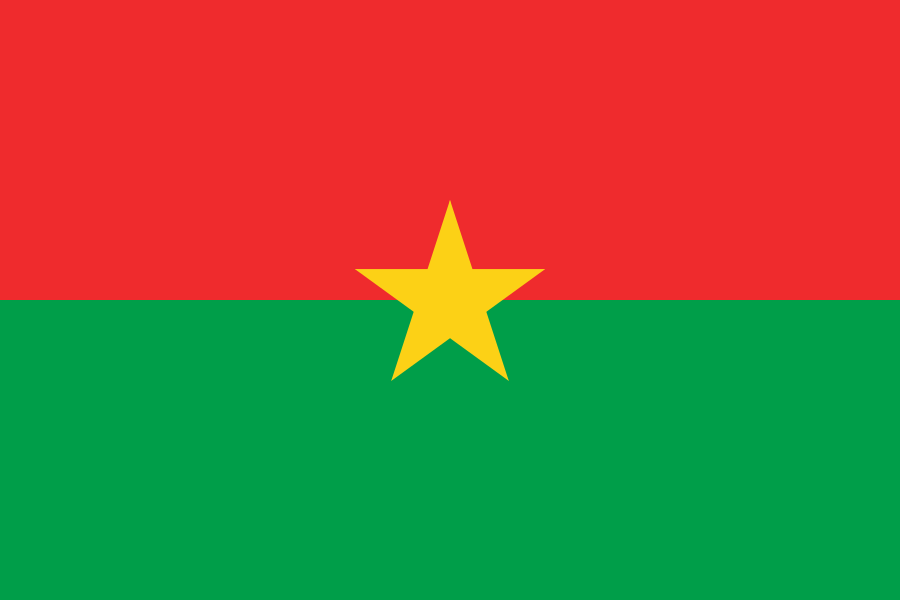
Burkina Faso
Location Info
- Continent: Africa
- Country: Burkina Faso
- Coordinates: 12.2383 , -1.5616
Trust Info
Verified Geographic Information
🌍 Continents

Overview
Burkina Faso is a landlocked nation situated in the heart of West Africa, bordered by six countries including Mali, Niger, and Ghana. Geographically, it occupies a savanna plateau within the Sahel, a transitional zone between the Sahara Desert to the north and tropical forests to the south. The country's landscape is characterized by its predominantly flat terrain, interspersed with occasional rocky escarpments and isolated peaks like Mount Ténakourou.
Historically known as Upper Volta, the country adopted the name Burkina Faso, meaning "Land of Incorruptible People," in 1984. It boasts a deep cultural history rooted in the ancient Mossi Kingdoms and is today a significant producer of gold and cotton. Despite facing economic and security challenges, Burkina Faso remains a pivotal cultural hub for West African cinema and traditional craftsmanship.
Truth & Facts
| Total Area | 274,222 sq km |
| Landlocked Status | Yes |
| Estimated Population | 23.3 million |
| Largest Ethnic Group | Mossi (approx. 50%) |
| Capital City | Ouagadougou |
| Government Type | Transitional Military Regime |
| Independence Date | August 5, 1960 |
| Name Change | 1984 |
| Major Exports | Gold, Cotton |
| Currency | West African CFA franc (XOF) |
| Electricity Access | Approx. 20% |
| Literacy Rate | Approx. 41% |
| Life Expectancy | 62 years |
| National Sport | Football (Soccer) |
| UNESCO Sites | 3 |
| Primary Zones | Sahelian, Sudan-Sahel, Sudanian |
| Railway Line | Abidjan-Niger Railway |
| Mobile Penetration | High |
| Security Level | High Alert |
| Regions | 13 |
| AES Member | Yes |
| Potable Water Access | Approx. 79% |
| Median Age | 17.9 years |
| Predominant Religion | Islam (approx. 63%) |
| Main Food Crops | Sorghum, Millet, Maize |
📑 Table of Contents
Overview of Burkina Faso
Burkina Faso is a landlocked West African country situated within the Sahel region. It shares borders with Mali to the north and west, Niger to the northeast, Benin to the southeast, and Togo, Ghana, and Ivory Coast to the south. The nation is characterized by its high population density relative to its regional neighbors and its vibrant cultural heritage.
Known as the 'Land of Incorruptible People,' the country was formerly called Upper Volta before changing its name in 1984. The capital city, Ouagadougou, serves as the primary administrative and economic hub. Despite significant developmental challenges, Burkina Faso is recognized for its leadership in African cinema and its traditional arts.
- Official Name: Burkina Faso
- Capital: Ouagadougou
- Area: 274,222 square kilometers
- Languages: Moore, Dioula, Fula, and French (working language)
- Currency: CFA Franc (XOF)
History and Heritage
The history of Burkina Faso is deeply tied to the Mossi Kingdoms, which were established between the 11th and 13th centuries. These powerful centralized states, including the Kingdom of Ouagadougou, resisted foreign influence for centuries before becoming a French protectorate in 1896. The region was then incorporated into French West Africa as the colony of Upper Volta.
Independence was achieved on August 5, 1960. The 1980s saw a period of revolutionary change under the leadership of Thomas Sankara, who renamed the country and implemented radical social reforms. Recent decades have been marked by political shifts, including several coups d'état, the most recent occurring in 2022.
| Period | Key Event |
|---|---|
| 11th-15th Century | Rise of Mossi Kingdoms |
| 1896 | French Colonization |
| 1960 | Independence from France |
| 1984 | Renaming to Burkina Faso |
| 2022 | Recent Military Coups |
Geography and Landscape
Burkina Faso sits on an extensive savanna plateau at an average elevation of 400 meters. The terrain is mostly flat with undulating plains, though the southwest features the Banfora Escarpment, a sandstone massif where the highest peak, Mount Ténakourou (749m), is located. The country lacks a direct outlet to the sea, making it heavily reliant on neighboring ports.
The nation is drained by three major rivers: the Mouhoun (Black Volta), the Nazinon (Red Volta), and the Nakambé (White Volta). Most of these rivers are non-navigable and experience seasonal flow based on the rainy season. The northern territory consists of semi-arid Sahelian steppe, while the south is greener and more forested.
- Terrain: Savanna, brushy plains, scattered hills
- Highest Point: Mount Ténakourou (749m)
- Major Rivers: Black, Red, and White Volta
- Climate Zones: Sahel, Sudan-Sahel, Sudanian
Climate and Weather
The climate is primarily tropical with two distinct seasons: a wet season from May to September and a dry season from October to April. During the dry season, the harmattan—a hot, dust-laden wind from the Sahara—affects much of the country. Rainfall varies significantly, with the south receiving up to 1,000 mm annually while the north receives less than 250 mm.
Temperatures can be extreme, particularly in the northern Sahelian zone where they can reach 47°C (117°F). The coolest period occurs between November and February when nights are relatively mild, though daytime temperatures remain warm. Drought is a recurring environmental concern for the agricultural sector.
Population and Demographics
Burkina Faso has a rapidly growing population estimated at over 23 million people. It is a very young nation, with a median age of approximately 17.9 years. The population is unevenly distributed, with high densities in the central and southern regions, while the northern and eastern border zones are more sparsely populated due to environmental conditions.
The country is ethnically diverse, home to over 60 distinct groups. The Mossi people constitute nearly half of the population. Other significant groups include the Fulani, who are traditionally nomadic pastoralists, and the Bobo and Lobi groups in the west and southwest. Religious life is characterized by coexistence between Islam, Christianity, and traditional animist beliefs.
- Growth Rate: ~3% per annum
- Urban Population: ~26%
- Major Religion: Islam (63.8%)
- Linguistic Diversity: Over 60 indigenous languages
Culture and Lifestyle
Burkinabe culture is renowned for its artistic expression, particularly in the creation of ornate masks and bronze sculptures. Storytelling is preserved through the 'griot' tradition, where oral historians pass down folklore and history through music and poetry. Traditional festivals often feature elaborate dances and the use of the balafon (wooden xylophone) and kora (stringed instrument).
The nation is a center for African cinema, hosting the biannual Panafrican Film and Television Festival of Ouagadougou (FESPACO). Daily life in rural areas revolves around communal agricultural cycles and traditional social hierarchies, such as the continued respect for the Mossi Emperor, the Moro-Naba.
Festivals and Events
The cultural calendar is highlighted by international events and local traditional ceremonies. The Panafrican Film and Television Festival (FESPACO) is the largest film festival on the continent, attracting filmmakers from across the globe. Another major event is SIAO (Salon International de l'Artisanat de Ouagadougou), one of Africa's premier trade fairs for arts and crafts.
On a local level, the Moro-Naba ceremony takes place every Friday morning in the capital, depicting a traditional symbolic ritual of the Mossi Emperor. Other notable events include the Dédougou Mask Festival (FESTIMA), which showcases the traditional mask-making and dancing heritage of multiple ethnic groups.
Food and Cuisine
Burkinabe cuisine is based on staples like sorghum, millet, maize, and rice. The national dish is 'tô,' a thick porridge made from cooked millet or corn flour, usually served with a vegetable or meat sauce. 'Riz gras' (fat rice) is another popular meal consisting of rice cooked with oil, tomatoes, and meat.
Street food is common in urban areas, with 'brochettes' (grilled meat skewers) being a favorite. Sauces often incorporate ingredients like okra, baobab leaves, and peanuts. For beverages, 'bissap' (hibiscus juice) and 'dégué' (yogurt with millet pearls) are widely consumed.
- Staples: Sorghum, Millet, Yam
- Popular Dish: Tô with okra sauce
- Protein: Beef, Mutton, Poultry
- Beverages: Bissap, Ginger juice
Economy and Industries
The economy is heavily dependent on agriculture and mining. About 80% of the workforce is engaged in subsistence farming. Cotton is the primary cash crop, though gold has surpassed it to become the country's most valuable export, contributing significantly to the national revenue. Burkina Faso is one of the top gold producers in Africa.
Other industrial activities include agricultural processing, light manufacturing (soap, textiles), and brewing. The services sector is growing, particularly in urban centers like Ouagadougou. However, the economy faces constraints such as high energy costs and limited infrastructure for transporting raw materials to international markets.
| Sector | Main Products |
|---|---|
| Agriculture | Cotton, Shea nuts, Sesame |
| Mining | Gold, Manganese, Zinc |
| Industry | Beverages, Textiles, Soap |
Cost of Living
Living costs in Burkina Faso are relatively low compared to Western nations but can vary between urban and rural areas. Imported goods and fuel are expensive due to the country's landlocked nature. In the capital, housing and services for expatriates or the middle class are significantly higher than the national average.
Basic local foodstuffs like millet and sorghum are affordable when in season, but prices fluctuate based on the success of the harvest. Utility costs, especially electricity, are among the highest in the region due to the reliance on imported power and thermal generation.
Employment and Business
The majority of the population is self-employed in the informal agricultural sector. Formal employment is concentrated in the civil service, mining companies, and international non-governmental organizations. There is a strong culture of entrepreneurship, especially in small-scale trade and artisan crafts.
Business operations in the country are influenced by regional trade agreements under the West African Economic and Monetary Union (UEMOA). Challenges for businesses include bureaucratic hurdles, limited access to credit for small enterprises, and the current security climate which has impacted investment in certain regions.
Real Estate and Housing
Housing in rural Burkina Faso typically consists of traditional mud-brick structures with thatched or corrugated iron roofs. In urban areas, modern concrete housing is more common. Ouagadougou has seen significant expansion in its residential zones, with several planned neighborhoods catering to different income levels.
The real estate market in the capital is active, driven by urban migration and the needs of the growing service sector. Traditional architecture, such as the painted houses of the Kassena people in Tiébélé, remains a notable cultural feature in the southern part of the country.
Transportation and Connectivity
Burkina Faso serves as a transit corridor for West African trade. The primary road network connects Ouagadougou with neighboring capitals, though many rural roads remain unpaved and difficult to navigate during the rainy season. Motorbikes and mopeds are the most common form of private transport in cities.
The Abidjan-Niger railway is a vital link for transporting heavy goods between Ouagadougou and the Ivorian coast. International air travel is served primarily through Ouagadougou International Airport, which hosts several regional and international carriers.
- Rail: Ouagadougou to Abidjan (Freight and Passenger)
- Primary Transport: Motorcycles, Shared Taxis
- Major Airport: Ouagadougou (OUA)
- Road Condition: Mostly unpaved outside urban centers
Infrastructure and Utilities
Infrastructure development is a priority but remains limited. Electricity generation relies heavily on thermal plants and imports from Ivory Coast and Ghana. However, the country has invested significantly in solar power, including the Zagtouli solar plant, which was one of the largest in West Africa at its opening.
Telecommunications have expanded rapidly, with several mobile network operators providing countrywide coverage. Internet access is growing, primarily through mobile data, although high-speed fiber connectivity is mostly limited to major business districts in the capital and Bobo-Dioulasso.
Education System
The education system follows a 6-4-3-year structure (primary, lower secondary, upper secondary). Education is officially compulsory until age 16, but enrollment rates remain low in rural areas due to economic factors. The University of Ouagadougou is the premier institution for higher education in the country.
Significant efforts have been made to increase female enrollment and improve the quality of vocational training. However, the literacy rate remains one of the lowest in the world, and the system faces challenges such as overcrowded classrooms and a lack of qualified teachers in remote regions.
Healthcare Services
Healthcare is delivered through a network of public health centers, regional hospitals, and national teaching hospitals in Ouagadougou and Bobo-Dioulasso. Access to medical services has improved in urban areas, but rural populations often rely on community health clinics or traditional medicine.
Major health challenges include malaria, respiratory infections, and maternal mortality. The government has implemented programs for free healthcare for children under five and pregnant women to improve health outcomes. Specialized medical services are largely concentrated in the capital city.
Top Tourist Attractions
Despite its landlocked status, Burkina Faso offers diverse natural and cultural attractions. The southwest region near Banfora is famous for the Karfiguéla Waterfalls and the rock formations of Sindou. For wildlife enthusiasts, the Nazinga Game Ranch provides some of the best opportunities to see West African elephants in their natural habitat.
UNESCO World Heritage sites include the ancient ruins of Loropéni, a stone-walled fortress dating back at least 1,000 years. The painted village of Tiébélé, known for its intricate hand-painted traditional houses, is a major cultural draw for visitors interested in West African architecture.
- Sindou Peaks: Unique eroded sandstone formations
- Karfiguéla Falls: Natural waterfalls near Banfora
- Loropéni Ruins: Ancient stone fortress
- Tiébélé: Famous painted royal court
- Nazinga Ranch: Elephant viewing reserve
Things to Do
Visitors can engage in various cultural and natural activities. Exploring the Grand Marché in Ouagadougou offers a glimpse into local commerce and craftsmanship. For a unique cultural experience, attending the Friday morning Moro-Naba ceremony allows one to witness traditional Mossi court protocols.
Hiking is popular in the Banfora region, while birdwatching and hippo-viewing can be done at Lake Tengrela. In Bobo-Dioulasso, visiting the 19th-century mud-brick Grand Mosque and the historic Kibidwé district provides deep insight into Sudano-Sahelian architectural styles.
Best Places to Visit
The capital, Ouagadougou, is essential for its museums, markets, and cultural festivals. Bobo-Dioulasso, the second-largest city, is known for its more relaxed atmosphere, musical heritage, and historical mosque. Banfora is the gateway to the country's most spectacular natural scenery, including waterfalls and lakes.
In the south, the village of Tiébélé is a must-visit for its unique Kassena architecture. For those interested in history, the ruins of Loropéni in the southwest offer a look into the region's ancient trans-Saharan trade history. The Sahelian north, while currently less accessible, is home to the famous market town of Gorom-Gorom.
Traveler's Guide
Entering Burkina Faso requires a valid passport and, for most nationalities, a visa. A Yellow Fever vaccination certificate is mandatory for all travelers. It is advisable to use bottled water and take malaria prophylaxis. Most transactions are conducted in cash using the CFA Franc, although cards are accepted at major hotels in the capital.
French is the primary language for administration and tourism, so basic knowledge of the language is helpful. Travelers should be mindful of local customs, especially when photographing people or religious sites, and should always seek permission first. Due to current security concerns, checking official travel advisories is essential before planning a trip.
Nearby Places
As a central hub in West Africa, Burkina Faso is close to several major regional destinations. To the south, Ghana and Ivory Coast offer coastal access and large metropolitan areas like Accra and Abidjan. To the north, the historic cities of Mali, such as Mopti, are geographically adjacent, though current security conditions vary.
The W-Arly-Pendjari Complex is a transboundary park shared with Niger and Benin, offering vast protected areas for wildlife. These neighboring regions provide a broader context of the Sahelian and Sudanese ecological zones that define this part of the continent.
Environment and Nature
Burkina Faso's natural environment is characterized by the savanna. It is home to a significant portion of West Africa's remaining elephant population, particularly in the Nazinga and Arli reserves. Other wildlife includes lions, leopards, hippos, crocodiles, and various antelope species.
Environmental protection is a challenge due to desertification and deforestation. The 'Great Green Wall' initiative is a major regional project aimed at combating land degradation in the Sahelian north. The country also has several protected 'sacred forests' which have been preserved through local traditions and beliefs.
Government and Administration
The country is divided into 13 administrative regions and 45 provinces. Each region is headed by a governor, and provinces are further divided into departments and communes. Following the suspension of the constitution in 2022, the country is governed under a transitional charter by a military leadership.
Administrative processes are centralized in Ouagadougou. The judiciary is based on the French civil law system, although traditional law still plays a role in rural areas, particularly regarding land disputes and local social governance. The national motto is 'Unité, Progrès, Justice' (Unity, Progress, Justice).
Safety and Public Services
Public safety services include the National Police, the Gendarmerie, and the Fire Service (Sapeurs-Pompiers). Emergency services are most reliable in major cities but are limited in rural areas. The country is currently under a state of emergency in several provinces due to security threats in the north and east.
Travelers are advised to avoid border areas and remain vigilant in public spaces. Local authorities provide regular security updates. Public utilities like water and electricity are managed by state-owned companies ONEA and SONABEL, respectively.
Best Time to Visit
The most pleasant time to visit is during the cool dry season from mid-November to February. During this period, temperatures are manageable, and the air is less humid, making it ideal for sightseeing and outdoor activities. Nights can be surprisingly cool, especially in the north.
The rainy season (June to September) turns the landscape green and vibrant, but travel can be difficult as unpaved roads may become impassable. The hottest months are March, April, and May, when temperatures often exceed 40°C, making midday activities challenging.
Local Business and Services
The business landscape is dominated by small-to-medium enterprises (SMEs) in the trade, agriculture, and craft sectors. Major banking institutions, such as Ecobank and BOA (Bank of Africa), have a significant presence in urban areas. Telecommunications are led by providers like Onatel, Orange, and Telecel.
Craft cooperatives are important for the local economy, particularly those producing leather goods, textiles, and bronze work. Professional services like legal aid, accounting, and consulting are available in the capital. Local markets remain the primary venue for day-to-day commercial activity for the majority of the population.
General Information FAQs
Where is Burkina Faso located?
Burkina Faso is a landlocked country in West Africa. It is situated in the Sahel region, north of Ghana and south of Mali and Niger.
What is Burkina Faso known for?
The country is known for being a major center for African cinema (hosting FESPACO), its high-quality cotton and gold production, and the ancient Mossi Kingdoms.
Why is Burkina Faso famous?
It is famous for its cultural resilience, traditional mask festivals, and its historical leader Thomas Sankara, who renamed the country from Upper Volta.
What country or region is Burkina Faso part of?
Burkina Faso is part of the West African region and is a member of the African Union and the Alliance of Sahel States.
What is the population of Burkina Faso?
As of 2024 estimates, the population is approximately 23.3 million people.
What languages are spoken in Burkina Faso?
While French is the working language for administration, the most widely spoken native languages are Moore, Dioula, and Fulfulde.
What time zone is Burkina Faso in?
Burkina Faso operates on Greenwich Mean Time (GMT/UTC+0) and does not observe daylight saving time.
What are the key facts about Burkina Faso?
Key facts include its capital Ouagadougou, its landlocked status, its currency (CFA Franc), and its three primary climate zones.
What makes Burkina Faso unique?
Its unique blend of Sudano-Sahelian architecture, its status as a landlocked hub in the Sahel, and its rich tradition of oral history and artisan crafts.
How large is Burkina Faso in area?
The total area is approximately 274,222 square kilometers (105,878 square miles).
History FAQs
What is the history of Burkina Faso?
Its history includes the 11th-century Mossi Kingdoms, French colonial rule from 1896, independence in 1960, and several political revolutions in the 20th and 21st centuries.
When was Burkina Faso established?
The modern state gained independence as Upper Volta on August 5, 1960. It was renamed Burkina Faso in 1984.
What major historical events happened in Burkina Faso?
Major events include the fall of the Mossi capital to the French in 1896, the 1983 revolution led by Thomas Sankara, and the 2014 popular uprising.
Who were important historical figures from Burkina Faso?
Important figures include the Moro-Naba emperors, Maurice Yaméogo (first president), and Thomas Sankara (revolutionary leader).
How has Burkina Faso developed over time?
The nation has transitioned from a collection of powerful kingdoms to a French colony, and finally to an independent republic focused on agricultural and mining development.
Geography & Environment FAQs
What is the geography of Burkina Faso?
The geography is defined by a central savanna plateau, with semi-desert conditions in the north and more fertile plains and forests in the south.
What natural features surround Burkina Faso?
It is surrounded by the Sahelian plains of Mali and Niger and the tropical savanna regions of Ivory Coast, Ghana, Togo, and Benin.
Are there mountains, rivers, or lakes near Burkina Faso?
While mostly flat, it has the Banfora Escarpment, the Black Volta River (Mouhoun), and natural lakes like Lake Tengrela and Hippo Lake.
What is the elevation of Burkina Faso?
The average elevation is about 400 meters, with the lowest point at the Mouhoun River (200m) and the highest at Mount Ténakourou (749m).
What ecosystems exist around Burkina Faso?
Ecosystems range from the arid Sahelian shrublands in the north to the Sudanian wooded savannas and gallery forests in the south.
Climate & Weather FAQs
What is the climate like in Burkina Faso?
It has a tropical climate with a distinct wet season (May-September) and a dry season (October-April) characterized by the harmattan wind.
What is the average temperature in Burkina Faso?
Average temperatures range from 25°C to 32°C, though highs can reach over 45°C in the north during the hot season (March-May).
What is the weather like throughout the year in Burkina Faso?
The year begins cool and dusty (Nov-Feb), becomes extremely hot (Mar-May), and finishes with humid, rainy weather (Jun-Oct).
Does Burkina Faso experience extreme weather?
It is prone to periodic severe droughts and occasional flash flooding during the height of the rainy season.
What is the best time of year to visit Burkina Faso?
The best time is between November and February when the weather is dry and relatively cool.
Population & Society FAQs
What is the population density of Burkina Faso?
It is approximately 86 people per square kilometer, which is relatively high for a West African country.
What ethnic groups live in Burkina Faso?
Over 60 groups exist, including the Mossi, Fulani, Gurunsi, Bobo, Lobi, and Senufo.
What religions are practiced in Burkina Faso?
The population is roughly 64% Muslim, 26% Christian (mostly Catholic), and 9% follow traditional African religions.
What is daily life like in Burkina Faso?
Life is largely agrarian and communal in rural areas, while urban life in Ouagadougou is characterized by vibrant street markets and a busy motorcycle-based transport culture.
How diverse is the population of Burkina Faso?
It is highly diverse linguistically and culturally, with each ethnic group maintaining unique customs, architecture, and music.
Culture & Traditions FAQs
What cultural traditions are important in Burkina Faso?
Key traditions include oral storytelling, the making of tribal masks, and respect for traditional chiefs like the Moro-Naba.
What festivals are celebrated in Burkina Faso?
Major festivals include FESPACO (cinema), SIAO (crafts), and local mask festivals like FESTIMA in Dédougou.
What cultural landmarks exist in Burkina Faso?
Landmarks include the mud-brick Grand Mosque of Bobo-Dioulasso, the royal court of Tiébélé, and the Manega Museum.
What traditional clothing or customs are common in Burkina Faso?
Customs include the use of hand-woven 'Faso Dan Fani' cotton cloth and elaborate mask-wearing ceremonies for spiritual events.
What arts and crafts are associated with Burkina Faso?
It is famous for bronze casting, leatherwork, pottery, and intricate wooden carvings.
Food & Cuisine FAQs
What foods is Burkina Faso known for?
Known for tô (millet porridge), riz gras (savory rice), and grilled meats called brochettes.
What traditional dishes originate from Burkina Faso?
Dishes like tô with okra sauce and bean-based snacks like gonré are very traditional.
What are the best restaurants in Burkina Faso?
Most high-quality dining is found in Ouagadougou, offering both traditional Burkinabe and French-influenced cuisine.
What local ingredients are commonly used in Burkina Faso cuisine?
Millet, sorghum, peanuts, okra, baobab leaves, and shea butter are central ingredients.
What food markets or street foods are popular in Burkina Faso?
The Grand Marché in the capital is a major food hub; popular street foods include skewers and bissap juice.
Economy & Business FAQs
What are the main industries in Burkina Faso?
Mining (especially gold) and agriculture (cotton and livestock) are the dominant industries.
What economic activities drive the economy of Burkina Faso?
Export of gold and cotton, along with subsistence farming by the vast majority of the population.
What businesses operate in Burkina Faso?
Businesses range from large multinational mining firms to small-scale artisan cooperatives and agricultural traders.
Is Burkina Faso an important economic center?
It is a significant regional producer of gold and a transit country for trade between coastal West Africa and the interior.
What are the major exports or products from Burkina Faso?
The primary exports are gold, cotton, zinc, and agricultural products like shea nuts and sesame.
Employment & Jobs FAQs
What job opportunities are available in Burkina Faso?
Most opportunities are in agriculture, the public sector, mining services, and international aid organizations.
What are the major employers in Burkina Faso?
The government is the largest formal employer, followed by mining companies and construction firms.
What skills are in demand in Burkina Faso?
Technical skills in mining, agricultural engineering, and French/local language communication are highly valued.
Is Burkina Faso a good place to work?
For specialists in mining or international development, it offers significant opportunities, though the working environment is influenced by regional instability.
What is the unemployment rate in Burkina Faso?
While formal unemployment statistics vary, there is high underemployment, with many people working in informal agriculture.
Cost of Living FAQs
Is Burkina Faso expensive to live in?
It is generally inexpensive for basic local needs, but high for imported goods, fuel, and electricity.
What is the average cost of living in Burkina Faso?
It is low by global standards, but costs in Ouagadougou are rising due to urbanization and regional economic factors.
How much does housing cost in Burkina Faso?
Rental prices in modern areas of Ouagadougou vary greatly, from $200 for modest flats to over $1,500 for high-end expatriate housing.
What are average food and utility costs in Burkina Faso?
Local food is cheap; however, electricity and water can be relatively expensive compared to neighboring countries.
Is Burkina Faso affordable compared to nearby cities?
It is generally more affordable than coastal cities like Accra or Abidjan, but more expensive than rural Mali or Niger.
Housing & Real Estate FAQs
What types of housing are available in Burkina Faso?
Options include traditional mud-brick houses, modern urban concrete apartments, and gated villas in the capital.
What is the average home price in Burkina Faso?
Modern urban homes can range from $50,000 upwards, depending on the neighborhood and amenities.
Is it better to rent or buy property in Burkina Faso?
Most foreign residents rent, while locals prefer to build incrementally on purchased land.
Which neighborhoods are popular in Burkina Faso?
In Ouagadougou, popular areas include Ouaga 2000 for upscale living and Zone du Bois for established residential charm.
How has the property market changed in Burkina Faso?
There has been a surge in urban land value due to rapid population growth and the development of new government districts.
Transportation FAQs
How do you get to Burkina Faso?
Primarily via flight to Ouagadougou International Airport or by road from neighboring countries like Ghana or Ivory Coast.
What is the nearest airport to Burkina Faso?
The main international airport is Ouagadougou (OUA), with another airport in Bobo-Dioulasso (BOY).
Does Burkina Faso have railway connections?
Yes, it is connected to Abidjan, Ivory Coast, by the Abidjan-Niger railway line.
How reliable is public transportation in Burkina Faso?
Intercity bus services are quite reliable; within cities, shared taxis and motorbikes are the standard.
What major highways or roads connect to Burkina Faso?
Major roads link Ouagadougou to Bobo-Dioulasso, Koudougou, and international borders with Ghana and Mali.
Education FAQs
What schools are located in Burkina Faso?
There are public and private primary and secondary schools, along with international schools in Ouagadougou.
Are there universities in Burkina Faso?
Yes, the main one is the University of Ouagadougou (Joseph Ki-Zerbo University).
What is the literacy rate in Burkina Faso?
The adult literacy rate is approximately 41%.
What educational opportunities exist in Burkina Faso?
Opportunities include formal academic degrees, vocational training centers, and agricultural research institutes.
Is Burkina Faso a good place for students?
It is a cultural hub for West African students, especially in arts and cinema, though resources can be limited.
Healthcare FAQs
What hospitals are available in Burkina Faso?
Major hospitals include the Yalgado Ouédraogo University Hospital in Ouagadougou and Sourô Sanou in Bobo-Dioulasso.
Are there emergency medical services in Burkina Faso?
Limited emergency services exist, primarily through the Fire Service (Sapeurs-Pompiers) in major cities.
What healthcare facilities exist in Burkina Faso?
Facilities range from regional CSPS (Health and Social Promotion Centers) to private clinics in the capital.
Is healthcare affordable in Burkina Faso?
Public healthcare is subsidized, and several groups (like children under 5) receive free care, but specialized services remain expensive.
Are specialized medical services available in Burkina Faso?
Most specialized care is concentrated in the capital, while severe cases may require medical evacuation abroad.
Tourism & Travel FAQs
What are the top tourist attractions in Burkina Faso?
Top sites include Sindou Peaks, Karfiguéla Falls, Loropéni Ruins, and the painted houses of Tiébélé.
What are the best things to do in Burkina Faso?
Visiting markets, attending the Moro-Naba ceremony, and viewing elephants at Nazinga Ranch.
Is Burkina Faso worth visiting?
For travelers interested in authentic West African culture, arts, and unique geological landscapes, it is a highly rewarding destination.
What landmarks should visitors see in Burkina Faso?
The Bobo-Dioulasso Grand Mosque and the Ouagadougou Cathedral are essential landmarks.
How many days should tourists spend in Burkina Faso?
A typical tour takes 7 to 10 days to cover the capital, the southwest natural sites, and Bobo-Dioulasso.
Nearby Places FAQs
What places are near Burkina Faso worth visiting?
Mole National Park in northern Ghana and the Dogon Country in Mali (security permitting) are nearby.
What cities or towns are close to Burkina Faso?
Tamale in Ghana and Sikasso in Mali are major regional centers close to the border.
What natural attractions are near Burkina Faso?
The W National Park, which extends into Benin and Niger, is a major regional wildlife zone.
What day trips can be taken from Burkina Faso?
Trips to the sacred crocodiles of Sabou or the Manega Museum are popular from Ouagadougou.
What famous destinations are within reach of Burkina Faso?
Accra and Abidjan are within a day's travel or a short flight for those seeking coastal West Africa.
Safety FAQs
Is Burkina Faso safe to live in?
Safety varies; major cities are generally stable, but rural northern and eastern areas face significant security risks.
Is Burkina Faso safe for tourists?
Tourists should strictly follow travel advisories, avoid border regions, and stay in major urban centers.
What is the crime rate in Burkina Faso?
Street crime is relatively low but present in urban areas; the main concern is regional insurgency in certain provinces.
What emergency services operate in Burkina Faso?
Police (17) and Fire/Ambulance (18) operate primarily in urban centers.
What safety tips should visitors follow in Burkina Faso?
Avoid driving at night, keep updated on news, and maintain a low profile in public places.
Lifestyle & Living FAQs
Is Burkina Faso a good place to live?
It offers a rich cultural environment and a relaxed pace of life, though it lacks some modern amenities found in wealthier nations.
What recreational activities are available in Burkina Faso?
Activities include attending concerts, film festivals, visiting urban parks, and cycling, which is very popular.
Is Burkina Faso family-friendly?
It has a strong family-oriented culture, although healthcare and educational options for children are best in the capital.
What outdoor activities are popular in Burkina Faso?
Soccer is the most popular, along with cycling and traditional wrestling.
What makes life enjoyable in Burkina Faso?
The warmth of the social culture, the vibrant local music scene, and the abundance of unique artisan traditions.
Practical Information FAQs
What travel tips should visitors know about Burkina Faso?
Always carry cash (CFA), ensure you have a Yellow Fever certificate, and expect a slower pace of service.
What local customs should visitors respect in Burkina Faso?
Dress modestly, ask before taking photos of people, and greet elders with respect.
How accessible is Burkina Faso for international visitors?
It is moderately accessible via major airline hubs in Africa and Europe; most travelers require a visa.
What services are available for tourists in Burkina Faso?
Tour agencies in Ouagadougou offer guided trips, car rentals, and hotel bookings.
What important information should travelers know before visiting?
Be aware of the harsh climate (heat/dust), the current security status, and the necessity of malaria prevention.