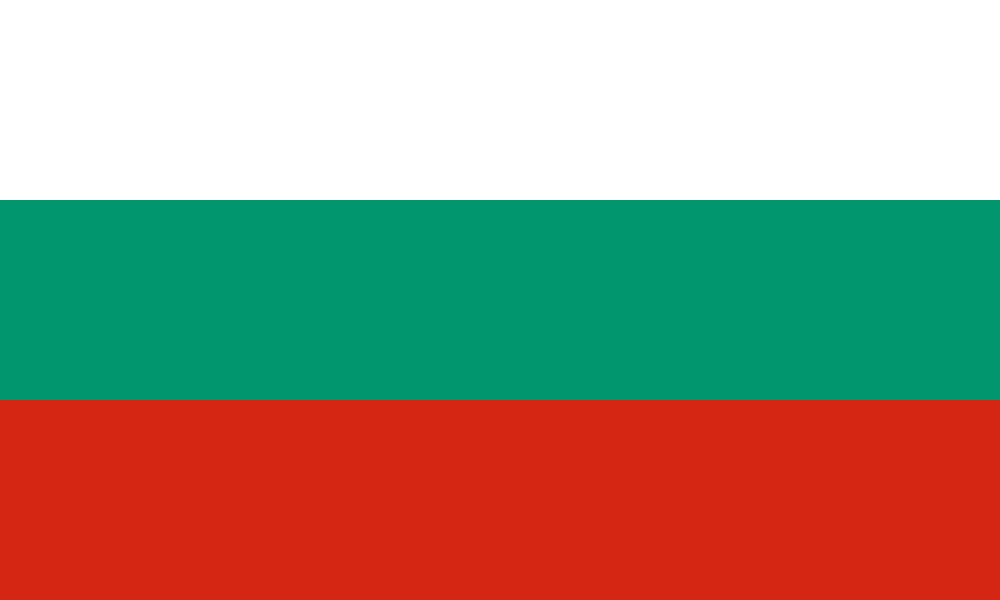
Bulgaria
Location Info
- Continent: Europe
- Country: Bulgaria
- Coordinates: 42.7339 , 25.4858
Trust Info
Verified Geographic Information
🌍 Continents
Overview
Bulgaria is a country situated in Southeastern Europe, occupying the eastern portion of the Balkan Peninsula. It shares borders with Romania to the north, Serbia and North Macedonia to the west, Greece and Turkey to the south, and is bounded by the Black Sea to the east. The nation features a highly varied landscape, ranging from the vast Danubian Plain in the north to the alpine peaks of the Rila and Pirin mountains in the southwest, with the Balkan Mountains stretching across the center of the country.
With a history dating back to the 7th century, Bulgaria is one of the oldest states in Europe. It has transitioned from a Soviet-aligned republic to a parliamentary democracy and has been a member of the European Union since 2007 and NATO since 2004. Today, Bulgaria is recognized for its growing information technology sector, its status as a leading global producer of rose oil, and its rich cultural heritage that includes the creation of the Cyrillic alphabet.
Truth & Facts
| Total Area | 110,994 sq km |
| Coastline Length | 354 km |
| Highest Point | Musala (2,925 m) |
| Total Population | 6.44 million |
| Population Density | 58 inhabitants/sq km |
| Capital | Sofia |
| Administrative Regions | 28 Oblasts |
| Established | 681 AD |
| EU Accession | January 1, 2007 |
| Currency | Bulgarian Lev (BGN) |
| GDP (Nominal) | $113 billion |
| Motorway Network | 800+ km |
| Literacy Rate | 98.4% |
| Life Expectancy | 71.5 years |
| Official Language | Bulgarian |
| Annual Foreign Tourists | 10 million |
| Forest Cover | 37% of territory |
| Major Airports | 4 |
| Broadband Coverage | High Speed Fibers |
| Emergency Number | 112 |
| Legislative Body | National Assembly |
| Memberships | EU, NATO, UN, OSCE |
| Electricity Access | 100% |
| Unemployment Rate | 4.1% |
| Major Power Plant | Kozloduy NPP |
| Leading Export | Rose Oil |
📑 Table of Contents
Overview of Bulgaria
Bulgaria is a sovereign state located in the southeastern part of Europe. It occupies a critical geographical position on the Balkan Peninsula, serving as a gateway between Europe and the Middle East. The country is known for its diverse topography, which includes the rolling Danubian Plain, the rugged Balkan Mountains, and the sunny Black Sea coast.
- Official Name: Republic of Bulgaria
- Capital: Sofia
- Government: Parliamentary Republic
- Population: Approximately 6.4 million
- Primary Religion: Eastern Orthodox Christianity
| Aspect | Detail |
|---|---|
| Time Zone | EET (UTC+2) / EEST (UTC+3) |
| Driving Side | Right |
| Calling Code | +359 |
History of the Location
The history of Bulgaria is ancient, beginning with the Thracian tribes and later the establishment of the First Bulgarian Empire in 681 AD. This period saw the adoption of Christianity and the development of the Cyrillic alphabet, which profoundly influenced Slavic culture. After centuries of fluctuating power, including the Second Bulgarian Empire, the region fell under Ottoman rule in the late 14th century.
Bulgaria regained its independence following the Russo-Turkish War of 1877–1878, initially as a principality and later as a kingdom. Following World War II, it became a part of the Eastern Bloc under a communist regime. The transition to a multi-party democracy began in 1989, leading to the country's current status as an integrated member of the European Union and NATO.
- 681: Foundation of the First Bulgarian State.
- 864: Adoption of Christianity.
- 1396: Start of Ottoman rule.
- 1878: Liberation from the Ottoman Empire.
- 2007: Accession to the European Union.
Geography of Bulgaria
The geography of Bulgaria is defined by four main natural regions. In the north lies the Danubian Plain, a fertile region bordering the Danube River. The Balkan Mountains (Stara Planina) run east-west through the center of the country, while the south features the Thracian Plain and the Rila-Rhodope massif, home to the highest peaks in the region.
- Major Rivers: Danube, Maritsa, Struma, Iskar.
- Mountain Ranges: Balkan, Rila, Pirin, Rhodope.
- Coastline: 354 km along the Black Sea.
- Land Borders: 1,808 km total length.
Climate and Weather
Bulgaria experiences a temperate continental climate, though the southern regions are influenced by the Mediterranean. Winters are typically cold and snowy, especially in the mountains, while summers are warm and sunny. The Black Sea coast enjoys milder temperatures throughout the year due to maritime influence.
- Winter Average: -2°C to 2°C in lowlands.
- Summer Average: 25°C to 30°C.
- Precipitation: Fairly distributed throughout the year.
- Snowfall: Heavy in mountain resorts from December to March.
Population and Demographics
The population of Bulgaria is approximately 6.4 million people. Most of the inhabitants identify as ethnic Bulgarians, with significant Turkish and Roma minorities. The majority of the population resides in urban areas, with Sofia being the largest city by a wide margin.
- Ethnic Groups: Bulgarian (84.8%), Turkish (8.8%), Roma (4.9%).
- Religious Affiliation: Orthodox (64.7%), Muslim (10%), Catholic (0.8%).
- Median Age: Approximately 45 years.
- Literacy: Over 98%.
Culture and Lifestyle
Bulgarian culture is a rich tapestry of Thracian, Slavic, and Bulgar roots. It is characterized by vibrant folklore, unique polyphonic singing, and traditional dances like the 'horo'. The lifestyle often blends modern European urban living with deep-seated traditional values, especially in rural areas.
- Cyrillic Script: Invented in Bulgaria during the 9th century.
- Folk Music: Famous for its irregular rhythms and dissonant harmonies.
- Martenitsa: A tradition of wearing red and white threads in March.
- Crafts: Woodcarving, pottery, and intricate embroidery.
Festivals and Events
Bulgaria hosts numerous cultural and religious festivals throughout the year. The Festival of Roses in Kazanlak is one of the most famous, celebrating the country's rose oil industry. Other notable events include the Surva International Festival of Masquerade Games and various Orthodox Christian celebrations.
- Festival of Roses: Held in June in Kazanlak.
- Surva Festival: Kukeri masquerade games in Pernik.
- March 3: National Liberation Day.
- A-Z: Day of Slavonic Alphabet and Bulgarian Culture (May 24).
Food and Cuisine
Bulgarian cuisine is hearty and diverse, sharing similarities with other Balkan and Mediterranean traditions. It relies heavily on fresh vegetables, dairy products (notably yogurt and white brine cheese), and grilled meats. Spices like savory (chubritsa) and paprika are central to many dishes.
- Banitsa: A pastry layered with cheese and eggs.
- Shopska Salad: Tomatoes, cucumbers, onions, peppers, and sirene cheese.
- Tarator: Cold yogurt soup with cucumbers and garlic.
- Kavarma: A traditional slow-cooked meat and vegetable stew.
Economy and Industries
Bulgaria's economy has transitioned from a centralized planned system to an open-market economy. Today, it is a high-income nation within the EU, with strong growth in the services sector, particularly Information Technology. Traditional industries like mining, agriculture, and manufacturing remain vital.
- IT & Outsourcing: A leading regional hub for software development.
- Rose Oil: Bulgaria produces about 85% of the world's rose oil.
- Mining: Significant producer of copper, lead, and zinc.
- Tourism: Contributes over 10% to the annual GDP.
Cost of Living
The cost of living in Bulgaria is among the lowest in the European Union, making it an attractive destination for expatriates and digital nomads. While prices in Sofia and major resorts are higher than in rural areas, basic services, groceries, and housing remain relatively affordable.
| Expense | Average Cost (Estimated) |
|---|---|
| Rent (1-bedroom) | 350 - 600 BGN |
| Monthly Utilities | 150 - 250 BGN |
| Public Transport Pass | 50 BGN |
Employment and Business
Bulgaria offers a favorable business environment with one of the lowest corporate tax rates in the EU (10%). The labor market is particularly strong in the tech sector, though there is high demand for skilled labor across all industrial sectors. Unemployment rates have reached historical lows in recent years.
- Corporate Tax: Flat rate of 10%.
- Key Employers: Global tech giants, automotive part manufacturers.
- Business Hubs: Sofia, Plovdiv, Varna.
Real Estate and Housing
The real estate market in Bulgaria varies significantly between urban centers and rural villages. Sofia has seen a steady increase in property values, while coastal and mountain resort towns offer a wide range of vacation properties. Residential housing typically consists of modern apartments in cities and traditional brick houses in the countryside.
- Ownership Rate: High percentage of home ownership (over 80%).
- Investment Areas: Sofia, Plovdiv, Black Sea coast.
- Property Types: Panels (Soviet-era), brick apartments, detached houses.
Transportation and Connectivity
Bulgaria is well-connected through a network of roads, railways, and international airports. It serves as a transit corridor for several Pan-European transport lines. Major cities feature efficient public transport systems, including the Sofia Metro.
- Airports: Sofia (SOF) is the primary international gateway.
- Railways: Managed by BDZ, connecting all major towns.
- Ports: Varna and Burgas handle maritime trade.
- Roads: Extensive network of motorways and secondary roads.
Infrastructure and Utilities
The country has a reliable infrastructure for basic utilities. Electricity is primarily generated through nuclear, coal-fired, and renewable sources. Telecommunications are highly advanced, with Bulgaria consistently ranking high for internet speed and 5G availability.
- Energy: Kozloduy Nuclear Power Plant is a key facility.
- Water: Universal access to piped water in urban areas.
- Internet: One of the fastest broadband systems in Europe.
Education System
Education is compulsory until the age of 16. The system consists of primary, secondary, and higher education. Bulgaria is home to several prestigious universities, particularly in the fields of medicine, engineering, and the arts.
- Higher Ed: Sofia University 'St. Kliment Ohridski' is the oldest.
- Specialization: Strong focus on technical and medical sciences.
- Language: Instruction is primarily in Bulgarian.
Healthcare Services
Healthcare in Bulgaria is managed through the National Health Insurance Fund (NHIF). Public hospitals exist in all major cities, alongside a growing number of private clinics that offer specialized care. Emergency services are reachable via the 112 system.
- System: Universal healthcare for insured citizens.
- Facilities: Pirogov Hospital in Sofia is a major emergency center.
- Private Sector: Popular for dental and cosmetic surgery.
Top Tourist Attractions
Bulgaria offers a diverse range of attractions from ancient archaeological sites to natural wonders. The Rila Monastery, a UNESCO World Heritage site, is a symbol of Bulgarian identity. The medieval capital of Veliko Tarnovo and the ancient city of Plovdiv are also major draws.
- Rila Monastery: Largest and most famous Eastern Orthodox monastery.
- Alexander Nevsky Cathedral: Located in the heart of Sofia.
- Nessebar: Ancient city on the Black Sea coast.
- Belogradchik Rocks: Stunning natural rock formations.
Things to Do
Visitors to Bulgaria can enjoy activities ranging from skiing in winter to sunbathing in summer. Hiking in the Rila and Pirin mountains is popular among nature enthusiasts, while the urban centers offer vibrant nightlife and shopping experiences.
- Skiing: World-class resorts like Bansko and Borovets.
- Beach: Sunny Beach and Golden Sands for summer relaxation.
- Hiking: The Seven Rila Lakes trek is a highlight.
- Wine Tasting: Exploring the Melnik or Thracian Valley regions.
Best Places to Visit
Bulgaria has numerous destinations that cater to different interests. For history lovers, Plovdiv's Old Town is a must. For those seeking relaxation, the thermal spa towns like Velingrad or the Black Sea resorts are ideal.
- Sofia: Modern capital with deep historical layers.
- Plovdiv: One of the oldest continuously inhabited cities.
- Veliko Tarnovo: The city of the Tsars.
- Bansko: Premier winter sports destination.
Travel Guide
Traveling to Bulgaria is straightforward for most international visitors. Entry requirements vary by nationality, but EU citizens can enter with a national ID card. The best way to get around is by car or public transport between major cities.
- Language: Learning basic Bulgarian phrases is helpful.
- Currency: Cash is widely used, though cards are accepted in cities.
- Tipping: Generally 10% in restaurants.
Nearby Places
Bulgaria's location makes it a perfect base for exploring the Balkans. Bordering countries are easily accessible by road or rail, offering a variety of additional cultural experiences.
- Bucharest (Romania): Short distance from northern Bulgaria.
- Istanbul (Turkey): Accessible from the southeast.
- Thessaloniki (Greece): Close to the southern border.
Environment and Nature
Bulgaria is home to some of Europe's most pristine nature. Over 30% of its territory is forested, and it maintains several national parks and biosphere reserves to protect its diverse flora and fauna, including brown bears and wolves.
- Rila National Park: Largest national park in the country.
- Srebarna Nature Reserve: Famous for its pelican colony.
- Flora: Home to over 3,000 species of plants.
Government and Administration
The Bulgarian government is based on the 1991 Constitution. It features a separation of powers into legislative, executive, and judicial branches. The President acts as the Head of State, while the Prime Minister leads the government.
- Legislature: 240-seat National Assembly.
- Judiciary: Independent court system including a Supreme Court.
- Local Gov: 265 municipalities handle local administration.
Safety and Public Services
Bulgaria is generally considered a safe country with a relatively low violent crime rate. Standard public services including police, fire, and ambulance are operational 24/7. Visitors should exercise normal precautions against pickpocketing in crowded tourist areas.
- Police: Reachable at 166 or the unified 112.
- Health: Emergency medical aid is free for urgent cases.
- Service: Public services are reliable in major urban centers.
Best Time to Visit
The best time to visit Bulgaria depends on the desired activity. June through August is ideal for the Black Sea coast. For winter sports, January and February are the peak months. Spring and autumn are excellent for cultural tourism and hiking.
- Summer (June-Aug): Best for beaches and festivals.
- Winter (Dec-Feb): Best for skiing and mountain stays.
- Spring/Autumn: Mild weather, fewer crowds.
Local Business Directory
Bulgaria's business landscape is dominated by SMEs and international corporations. Major business hubs offer a variety of services, from modern co-working spaces to industrial manufacturing zones. The digital economy is particularly vibrant in the capital.
- Chamber of Commerce: Bulgarian Chamber of Commerce and Industry (BCCI).
- Sectors: Tourism, IT, Manufacturing, Logistics.
- Zones: Trakia Economic Zone near Plovdiv.
General Information FAQs
Where is Bulgaria located?
Bulgaria is located in Southeastern Europe, occupying the eastern portion of the Balkan Peninsula. It borders Romania, Serbia, North Macedonia, Greece, Turkey, and the Black Sea.
What is Bulgaria known for?
Bulgaria is famous for its rose oil production, ancient Thracian gold treasures, the invention of the Cyrillic alphabet, and its diverse landscapes including mountains and Black Sea beaches.
Why is Bulgaria famous?
It is famous for being one of the oldest European states, its rich Eastern Orthodox culture, high-quality yogurt, and its status as a leading global producer of essential oils.
What country or region is Bulgaria part of?
Bulgaria is part of the Balkan region in Southeastern Europe and has been a member of the European Union since 2007.
What is the population of Bulgaria?
As of recent 2024 estimates, the population of Bulgaria is approximately 6.4 million people.
What languages are spoken in Bulgaria?
The official language is Bulgarian. English, Russian, and German are commonly spoken in tourist areas and among younger generations.
What time zone is Bulgaria in?
Bulgaria is in the Eastern European Time zone (UTC+2), switching to Eastern European Summer Time (UTC+3) from March to October.
What are the key facts about Bulgaria?
Key facts include its capital Sofia, the currency Lev (BGN), its membership in NATO and the EU, and its varied terrain featuring the Balkan and Rila mountains.
What makes Bulgaria unique?
Bulgaria is unique for its synthesis of ancient Thracian, Roman, and Slavic history, its usage of the Cyrillic script, and traditions like the Martenitsa.
How large is Bulgaria in area?
Bulgaria covers an area of approximately 110,994 square kilometers (42,855 square miles).
History FAQs
What is the history of Bulgaria?
Bulgaria's history spans from ancient Thracian civilizations to the First Bulgarian Empire founded in 681 AD, followed by centuries of Byzantine and Ottoman influence before modern independence.
When was Bulgaria established?
The Bulgarian state was officially recognized by the Byzantine Empire in 681 AD after the victory of Khan Asparuh.
What major historical events happened in Bulgaria?
Major events include the adoption of Christianity (864), the creation of the Cyrillic alphabet, the Liberation from Ottoman rule (1878), and joining the European Union (2007).
Who were important historical figures from Bulgaria?
Important figures include Khan Asparuh, Tsar Simeon the Great, revolutionary Vasil Levski, and Tsar Boris III.
How has Bulgaria developed over time?
Bulgaria developed from a powerful medieval empire into a part of the Ottoman Empire, then a 19th-century kingdom, a 20th-century communist state, and finally a modern democratic EU member.
Geography & Environment FAQs
What is the geography of Bulgaria?
Bulgaria features a varied landscape of mountains, hills, plains, and valleys, with the Danube River forming most of its northern border.
What natural features surround Bulgaria?
It is surrounded by the Black Sea to the east, the Danube River to the north, and several mountain ranges along its southern and western borders.
Are there mountains, rivers, or lakes near Bulgaria?
Yes, Bulgaria has the Rila, Pirin, and Balkan mountains, the Danube and Maritsa rivers, and numerous glacial lakes like the Seven Rila Lakes.
What is the elevation of Bulgaria?
The elevation ranges from sea level at the Black Sea to 2,925 meters at Musala peak.
What ecosystems exist around Bulgaria?
Ecosystems include temperate broadleaf forests, alpine meadows, wetlands, and maritime coastal zones.
Climate & Weather FAQs
What is the climate like in Bulgaria?
Bulgaria has a temperate continental climate with cold, snowy winters and warm to hot summers.
What is the average temperature in Bulgaria?
Average temperatures range from around 0°C in winter to 25°C-30°C in the summer months.
What is the weather like throughout the year in Bulgaria?
Spring is mild, summer is hot and dry, autumn is cool with varied rainfall, and winter is typically cold with significant snow in the mountains.
Does Bulgaria experience extreme weather?
Occasional extreme heatwaves in summer and severe snowstorms or flooding in winter can occur.
What is the best time of year to visit Bulgaria?
Summer (June-August) is best for beaches, while winter (December-March) is ideal for skiing. Spring and Autumn are best for sightseeing.
Population & Society FAQs
What is the population density of Bulgaria?
The population density is approximately 58 people per square kilometer.
What ethnic groups live in Bulgaria?
The majority are Bulgarians (approx. 85%), with significant Turkish (approx. 9%) and Roma (approx. 5%) minorities.
What religions are practiced in Bulgaria?
The dominant religion is Eastern Orthodox Christianity, followed by Islam and small numbers of Catholics and Protestants.
What is daily life like in Bulgaria?
Daily life blends traditional customs with modern European urban standards, focused on family, social gatherings, and a growing café culture.
How diverse is the population of Bulgaria?
The population is relatively homogeneous but includes important ethnic, linguistic, and religious minorities that contribute to the cultural fabric.
Culture & Traditions FAQs
What cultural traditions are important in Bulgaria?
Key traditions include Baba Marta (wearing Martenitsi), Kukeri masquerades, and Orthodox name days.
What festivals are celebrated in Bulgaria?
Major festivals include the Rose Festival in Kazanlak, the Surva masquerade festival, and Christmas (Koleda).
What cultural landmarks exist in Bulgaria?
Landmarks include the Rila Monastery, the Ancient Theatre of Plovdiv, and the Boyana Church.
What traditional clothing or customs are common in Bulgaria?
Traditional clothing involves intricate embroidery and wool vests, often seen during folklore festivals and weddings.
What arts and crafts are associated with Bulgaria?
Bulgaria is known for woodcarving, ceramics, rose oil distillation, and iconography.
Food & Cuisine FAQs
What foods is Bulgaria known for?
Known for Shopska salad, Banitsa pastry, Bulgarian yogurt (Kiselo mlyako), and Lyutenitsa spread.
What traditional dishes originate from Bulgaria?
Dishes include Kavarma, Tarator soup, and grilled meat like Kebapche.
What are the best restaurants in Bulgaria?
Top dining experiences are found in Sofia's Vitosha Boulevard and Plovdiv's Kapana district, offering both traditional 'mehanas' and modern cuisine.
What local ingredients are commonly used in Bulgaria cuisine?
Common ingredients include white brine cheese (sirene), yogurt, peppers, tomatoes, and savory (chubritsa).
What food markets or street foods are popular in Bulgaria?
Popular items include Banitsa and grilled corn. The Central Market Hall in Sofia is a major food destination.
Economy & Business FAQs
What are the main industries in Bulgaria?
Main industries include energy, mining, metallurgy, machine building, and the fast-growing IT and outsourcing sector.
What economic activities drive the economy of Bulgaria?
The economy is driven by services (including IT), manufacturing exports, and tourism.
What businesses operate in Bulgaria?
A mix of international tech companies, automotive parts manufacturers, and large energy providers operate in the country.
Is Bulgaria an important economic center?
Yes, it serves as a regional hub for IT and logistics in the Balkans and Southeastern Europe.
What are the major exports or products from Bulgaria?
Major exports include refined petroleum, copper, electrical equipment, and agricultural products like rose oil and grains.
Employment & Jobs FAQs
What job opportunities are available in Bulgaria?
Opportunities are high in IT, software development, customer support, and manufacturing.
What are the major employers in Bulgaria?
Major employers include the government, energy companies, and international tech and BPO firms.
What skills are in demand in Bulgaria?
Digital skills, foreign language proficiency (especially English and German), and engineering are in high demand.
Is Bulgaria a good place to work?
Yes, particularly for professionals in the tech sector who benefit from low taxes and a relatively low cost of living.
What is the unemployment rate in Bulgaria?
As of late 2024, the unemployment rate is relatively low, hovering around 4%.
Cost of Living FAQs
Is Bulgaria expensive to live in?
No, Bulgaria has one of the lowest costs of living in the European Union.
What is the average cost of living in Bulgaria?
A single person can live comfortably on 1,500 - 2,000 BGN per month, depending on the city and lifestyle.
How much does housing cost in Bulgaria?
Rent for a one-bedroom apartment in Sofia averages 700-1,000 BGN, while prices in other cities are lower.
What are average food and utility costs in Bulgaria?
Utilities for an apartment average 150-250 BGN, while groceries are comparable to other Balkan nations.
Is Bulgaria affordable compared to nearby cities?
Yes, Sofia is generally more affordable than nearby capitals like Bucharest or Athens.
Housing & Real Estate FAQs
What types of housing are available in Bulgaria?
Options include Soviet-era apartment blocks, modern residential complexes, and traditional houses in rural areas.
What is the average home price in Bulgaria?
Prices range from 1,200 to 2,000 EUR per square meter in prime Sofia locations, with significantly lower prices in smaller towns.
Is it better to rent or buy property in Bulgaria?
Buying is popular among locals due to high ownership culture, while expats often prefer renting initially.
Which neighborhoods are popular in Bulgaria?
In Sofia, Lozenets and Mladost are popular. In Plovdiv, the Kapana district and the Old Town are highly sought after.
How has the property market changed in Bulgaria?
The market has seen steady price increases over the last decade, driven by low interest rates and increased demand for modern housing.
Transportation FAQs
How do you get to Bulgaria?
Most international travelers arrive via Sofia Airport or by bus/train from neighboring countries.
What is the nearest airport to Bulgaria?
Sofia Airport (SOF) is the primary gateway, with Varna (VAR) and Burgas (BOJ) serving the coast.
Does Bulgaria have railway connections?
Yes, the state railway (BDZ) connects all major cities and has international links to Turkey and Romania.
How reliable is public transportation in Bulgaria?
Urban transport in Sofia is very reliable; intercity buses are often preferred over trains for speed.
What major highways or roads connect to Bulgaria?
The Trakia (A1), Hemus (A2), and Struma (A3) motorways are the primary road arteries.
Education FAQs
What schools are located in Bulgaria?
Bulgaria has a wide network of public schools, vocational colleges, and private international schools.
Are there universities in Bulgaria?
Yes, prominent universities include Sofia University, Technical University of Sofia, and Plovdiv University.
What is the literacy rate in Bulgaria?
The literacy rate is high, exceeding 98%.
What educational opportunities exist in Bulgaria?
Opportunities exist in medical studies, engineering, and IT, with many programs offered in English.
Is Bulgaria a good place for students?
Yes, it is affordable and offers internationally recognized degrees, particularly in medicine.
Healthcare FAQs
What hospitals are available in Bulgaria?
Major hospitals include Tokuda, Alexandrovska, and Pirogov in Sofia.
Are there emergency medical services in Bulgaria?
Yes, emergency medical services are available via the unified emergency number 112.
What healthcare facilities exist in Bulgaria?
The system includes state hospitals, private clinics, and specialized diagnostic centers.
Is healthcare affordable in Bulgaria?
Public healthcare is funded via insurance; private care is significantly cheaper than in Western Europe.
Are specialized medical services available in Bulgaria?
Yes, specialized services in cardiology, oncology, and dentistry are well-developed.
Tourism & Travel FAQs
What are the top tourist attractions in Bulgaria?
Top sites include Rila Monastery, Plovdiv's Old Town, Alexander Nevsky Cathedral, and the Black Sea beaches.
What are the best things to do in Bulgaria?
Hiking in Rila, skiing in Bansko, exploring ancient ruins in Veliko Tarnovo, and wine tasting in the Melnik region.
Is Bulgaria worth visiting?
Yes, for its unique mix of history, nature, and affordability.
What landmarks should visitors see in Bulgaria?
Don't miss the Tsarevets Fortress, the Seven Rila Lakes, and the ancient city of Nessebar.
How many days should tourists spend in Bulgaria?
A typical tour lasts 7-10 days to cover the capital, mountains, and coast.
Nearby Places FAQs
What places are near Bulgaria worth visiting?
Nearby highlights include Bucharest, Istanbul, and the Greek islands.
What cities or towns are close to Bulgaria?
Skopje, Belgrade, and Thessaloniki are within driving or train distance.
What natural attractions are near Bulgaria?
The Danube Delta in Romania and the Rhodope mountains extending into Greece.
What day trips can be taken from Bulgaria?
Day trips from Sofia include the Rila Monastery or the Belogradchik Rocks.
What famous destinations are within reach of Bulgaria?
The Transylvanian castles in Romania and the historic sites of Istanbul.
Safety FAQs
Is Bulgaria safe to live in?
Yes, it is generally safe with low rates of violent crime.
Is Bulgaria safe for tourists?
Yes, though tourists should watch for petty theft in crowded areas and avoid unlicensed taxis.
What is the crime rate in Bulgaria?
Crime rates are moderate to low, comparable to other Central European nations.
What emergency services operate in Bulgaria?
Police, fire, and ambulance services are all reachable via 112.
What safety tips should visitors follow in Bulgaria?
Use official taxi apps, keep an eye on belongings in public transport, and follow standard urban safety rules.
Lifestyle & Living FAQs
Is Bulgaria a good place to live?
Yes, for those seeking a balance of European lifestyle, rich culture, and low living costs.
What recreational activities are available in Bulgaria?
Outdoor sports, mountain hiking, beach sports, and a vibrant arts and music scene.
Is Bulgaria family-friendly?
Yes, with many parks, child-friendly resorts, and a safe environment.
What outdoor activities are popular in Bulgaria?
Skiing, trekking, birdwatching, and mountain biking.
What makes life enjoyable in Bulgaria?
The combination of fresh food, proximity to nature, and the relaxed pace of life outside major city centers.
Practical Information FAQs
What travel tips should visitors know about Bulgaria?
Carry cash for small purchases, use the Cyrillic alphabet for signs, and validate public transport tickets.
What local customs should visitors respect in Bulgaria?
Nodding means 'no' and shaking the head means 'yes' in traditional Bulgarian culture, though this is changing in cities.
How accessible is Bulgaria for international visitors?
Very accessible via major airlines and EU-standard visa rules.
What services are available for tourists in Bulgaria?
Tourist information centers, guided tours, and extensive car rental services.
What important information should travelers know before visiting Bulgaria?
Bulgaria uses the Lev (BGN), plug Type C/F, and standard 230V electricity.
Extended General Info FAQs
What are the major cities in Bulgaria besides Sofia?
Plovdiv, Varna, Burgas, Ruse, and Stara Zagora are major urban and economic centers.
What is the national flower of Bulgaria?
The rose is the national flower, reflecting the country's historic rose oil industry.
What are the public holidays in Bulgaria?
Major holidays include Liberation Day (March 3), Unification Day (September 6), and Independence Day (September 22).
Is water tap safe to drink in Bulgaria?
Tap water is generally safe to drink in all major cities and towns.
What is the currency exchange policy?
The Lev is pegged to the Euro at a rate of 1.95583 BGN to 1 EUR.