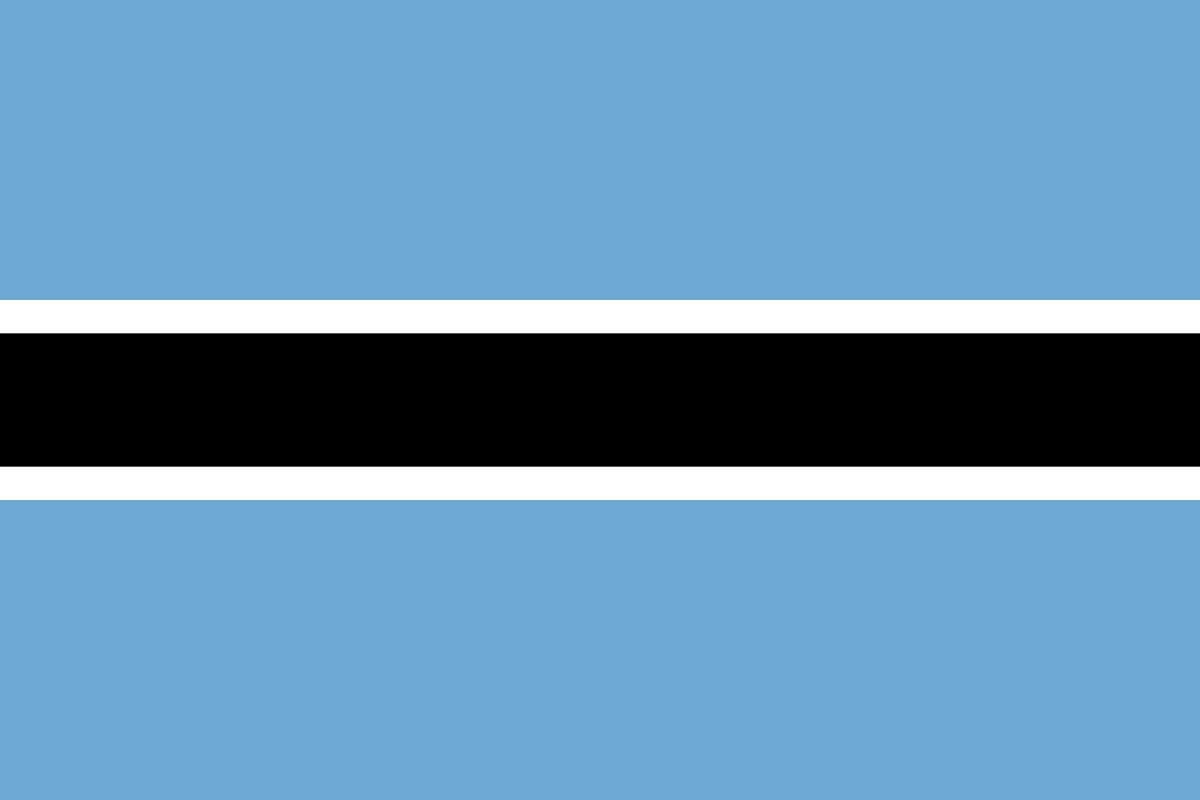
Botswana
Location Info
- Continent: Africa
- Country: Botswana
- Coordinates: -22.3285 , 24.6849
Trust Info
Verified Geographic and Statistical Information
🌍 Continents

Overview
Botswana is a landlocked country located in Southern Africa, bordered by South Africa, Namibia, Zimbabwe, and Zambia. Approximately 70% of its territory is covered by the Kalahari Desert, while the north features the world-renowned Okavango Delta. Historically known as the British protectorate of Bechuanaland, the nation gained independence in 1966 and has since maintained a stable multi-party democracy.
The country is one of the world's leading producers of gem-quality diamonds, which anchors its middle-income economy. With a relatively small population of approximately 2.6 million people, Botswana is characterized by vast wilderness areas and a strong commitment to wildlife conservation. Gaborone serves as the capital and largest economic hub.
Truth & Facts
| Total Area | 581,730 sq km |
| Highest Point | Otse Hill (1,491 meters) |
| Estimated Population | 2,603,388 (2026) |
| Official Languages | English, Setswana |
| Capital City | Gaborone |
| Head of State | Duma Boko |
| Independence Date | September 30, 1966 |
| Currency | Pula (BWP) |
| Major Exports | Diamonds, Copper, Nickel, Beef |
| Electricity Type | Type G, Type D |
| Literacy Rate | 88% |
| Life Expectancy | 69 years (2026 est.) |
| World Heritage Sites | 2 (Okavango Delta, Tsodilo Hills) |
| Wildlife Reserves | 38% of land area |
| Desert Coverage | 84% |
| Primary Airport | Sir Seretse Khama International (GBE) |
| Mobile Subscriptions | 167 per 100 people |
| Emergency Number | 999 (Police) |
| Voting Age | 18 years |
| Regional Hub | SADC Headquarters |
| Major Dam | Dikgatlhong Dam |
| GDP Per Capita | $7,738 (Nominal) |
| State Newspaper | Botswana Daily News |
| Major Religions | Christianity (79%), Traditional (15%) |
📑 Table of Contents
Overview of Botswana
Botswana is a centrally located Southern African republic noted for its vast semi-arid landscapes and political stability. Since its independence in 1966, the country has transitioned from one of the poorest in the world to an upper-middle-income economy. It serves as a vital corridor for regional trade and a global leader in diamond production.
- Political Status: Stable representative democracy.
- Primary Geography: Kalahari Desert and Okavango Delta.
- Economic Base: Mining, tourism, and cattle.
- Capital: Gaborone.
- Wildlife: Home to the world's largest elephant population.
History and Development
The history of Botswana is rooted in the migrations of Bantu-speaking peoples and the ancient presence of the San (Basarwa) hunter-gatherers. In the late 19th century, Tswana leaders sought British protection from encroaching Boer and Ndebele forces, leading to the creation of the Bechuanaland Protectorate in 1885. The nation achieved full independence on September 30, 1966, under the leadership of Sir Seretse Khama.
| Era | Key Events |
|---|---|
| Pre-Colonial | Rise of the Tswana kingdoms and Iron Age settlements. |
| 1885-1966 | Bechuanaland Protectorate under British administration. |
| 1967 | Discovery of major diamond deposits at Orapa. |
Geography and Natural Landscapes
Botswana's geography is dominated by the Kalahari Desert, which covers nearly 84% of the land. The northern region is marked by the Okavango Delta, a unique inland delta system that floods annually, supporting a diverse ecosystem. To the east, the landscape becomes more hilly and fertile, where the majority of the population resides along the Limpopo River basin.
- Kalahari Desert: An arid sand basin stretching across the interior.
- Okavango Delta: A seasonal wetland fed by the Okavango River.
- Makgadikgadi Pans: One of the largest salt pan complexes in the world.
- Chobe River: Forms the northern border and supports vast wildlife herds.
Climate and Weather Patterns
The climate is primarily semi-arid, characterized by hot, dry conditions for most of the year. Rainfall is erratic and typically occurs during the summer months from November to March, often in the form of localized thundershowers. Winters (May to August) are dry and sunny with cool days, though nighttime temperatures can drop below freezing in the desert regions.
| Season | Months | Conditions |
|---|---|---|
| Summer (Wet) | Nov - Mar | Hot, humid, thundershowers. |
| Winter (Dry) | May - Aug | Warm days, freezing nights. |
Population and Demographics
With an estimated population of 2.6 million in 2026, Botswana remains one of the most sparsely populated nations globally. The Tswana (or Batswana) constitute the majority ethnic group, representing about 79% of the populace. Urbanization is high, with over 70% of citizens living in towns or cities like Gaborone, Francistown, and Maun.
- Main Groups: Tswana, Kalanga, Basarwa (San), and Kgalagadi.
- Median Age: Approximately 24.7 years.
- Urban Centers: Gaborone accounts for roughly 10% of the total population.
Culture and Lifestyle
Modern life in Botswana blends Tswana traditions with contemporary global influences. The concept of 'Botho'—a social philosophy emphasizing mutual respect and community responsibility—is central to the national identity. Traditional architecture, such as the 'dikgotla' (public meeting places), remains a focal point for village governance and social gatherings.
- Arts: World-renowned for intricate basket weaving.
- Social Values: High importance placed on community consensus.
- Music: Traditional folk music features string instruments and choral singing.
Major Festivals and Public Events
National holidays often revolve around the country's history and cultural pride. Botswana Day (September 30) is the largest annual celebration, marking independence with parades and cultural performances. Sir Seretse Khama Day (July 1) honors the founding president's legacy and his role in establishing the republic.
- Botswana Day: National independence celebrations on Sep 30.
- Maitisong Festival: The largest performing arts festival in Gaborone.
- President's Day: Mid-July events featuring traditional dance competitions.
Food and Traditional Cuisine
Tswana cuisine is characterized by its reliance on local grains and livestock. Seswaa, a heavily salted mashed meat dish, is the national dish and is typically served during weddings and large festivals. Sorghum and maize are the primary staples, often prepared as a thick porridge known as bogobe.
- Seswaa: Pounded beef or goat meat cooked in a three-legged pot.
- Dikgobe: A mix of beans and corn/sorghum.
- Mopane Worms: High-protein edible caterpillars harvested from trees.
- Magwinya: Popular fried dough balls (fat cakes).
Economy and Key Industries
Botswana's economy is one of the strongest in Africa, primarily fueled by diamond mining. The Debswana Diamond Company, a partnership between the government and De Beers, operates major mines such as Jwaneng and Orapa. Beyond minerals, the government is actively promoting economic diversification through tourism and financial services.
| Sector | Contribution | Notes |
|---|---|---|
| Mining | ~35% of GDP | Dominated by diamonds and copper. |
| Tourism | ~10% of GDP | High-end safari and eco-tourism. |
| Agriculture | ~2% of GDP | Primarily beef production for export. |
Cost of Living
In 2026, the cost of living in Botswana remains moderate compared to Western standards but varies between urban and rural areas. Gaborone is the most expensive city due to high demand for modern housing and imported goods. Basic utilities like water and electricity are subsidized for low-income households, but internet costs remain relatively high.
- Rent: A 1-bedroom apartment in Gaborone center costs approx. 3,500 - 5,000 BWP.
- Groceries: Local produce is affordable; imported luxury items are costly.
- Dining: Local meals are inexpensive, while international restaurants target the middle class.
Employment and Business Environment
The public sector is the largest employer in Botswana, followed by the mining and retail industries. While the government encourages foreign direct investment (FDI), it also implements 'citizen economic empowerment' programs to ensure local participation in the economy. Unemployment remains a challenge, particularly among the youth population.
- Work Permits: Required for non-citizens; quotas apply to some sectors.
- Key Agencies: Botswana Investment and Trade Centre (BITC).
- SME Focus: Government provides grants for local entrepreneurs in manufacturing.
Real Estate and Housing
Urban housing in Botswana ranges from government-allocated plots (SHHA) to high-end gated communities in Gaborone North and Phakalane. The residential property market has seen steady growth, though high interest rates have recently moderated demand. Land ownership is divided into freehold, state land, and tribal land.
- Phakalane: The premier luxury suburb in Gaborone.
- Rental Market: Strong demand for furnished apartments from expatriates.
- Land Rights: Tribal land is often leased rather than owned outright.
Transportation and Connectivity
The Trans-Kalahari Highway is a critical road link connecting Botswana to South Africa and Namibia. Air travel is the primary method for reaching remote safari destinations, with Air Botswana operating scheduled domestic and regional flights. The railway system primarily handles freight, including mineral exports and transit cargo for neighboring countries.
- Roads: Left-hand driving; high-quality tarred main roads.
- Air: Hubs in Gaborone (GBE), Maun (MUB), and Kasane (BBK).
- Public Transport: Relies on 'combis' (minibuses) and taxis in urban areas.
Infrastructure and Utilities
Utility management is handled by parastatals such as the Water Utilities Corporation (WUC) and the Botswana Power Corporation (BPC). The country has invested heavily in the North-South Carrier pipeline to move water from northern dams to the dry southern regions. Telecommunications are dominated by three major mobile networks: Mascom, Orange, and BTC.
- Water: Highly regulated due to frequent droughts.
- Power: Primarily coal-fired (Morupule), with increasing solar investment.
- Internet: Expanding fiber-to-the-home (FTTH) in major cities.
Education and Literacy
Education is a high priority, receiving a significant portion of the national budget. The system follows a 7-3-2 structure (Primary, Junior Secondary, Senior Secondary). The University of Botswana in Gaborone is the flagship institution, complemented by specialized colleges like the Botswana International University of Science and Technology (BIUST).
- Primary Education: Free for all citizens.
- Literacy: One of the highest rates in Africa at nearly 88%.
- Higher Ed: Significant government sponsorship for university students.
Healthcare and Public Health
Botswana operates a tiered healthcare system ranging from mobile clinics to national referral hospitals. The government was the first in Africa to provide free antiretroviral treatment (ART) to all citizens, significantly increasing life expectancy over the last two decades. Private healthcare is available in Gaborone for those with medical insurance.
- Public Facilities: Consultations are heavily subsidized for citizens.
- Main Referral: Princess Marina Hospital in Gaborone.
- Outreach: Mobile health stops serve remote Kalahari communities.
Major Tourist Attractions
Tourism is focused on the country's unique biodiversity. The Chobe National Park is famous for its massive elephant herds, while the Okavango Delta offers unique water-based safaris in traditional dug-out canoes (mekoro). The Moremi Game Reserve is often cited as one of the most beautiful wildlife areas in Africa.
- Okavango Delta: A UNESCO World Heritage site and oasis.
- Chobe National Park: Renowned for river safaris and elephants.
- Tsodilo Hills: The 'Louvre of the Desert' featuring ancient art.
- Makgadikgadi Pans: Stark, vast salt pans with seasonal zebra migrations.
Things to Do
Visitors primarily engage in wildlife-related activities. In the Delta, poling through narrow reed channels in a mokoro is a highlight. In the drier regions like the Central Kalahari, tracking with San guides provides insight into ancient desert survival techniques. Quad biking across the salt pans is a popular dry-season activity.
- Mokoro Safaris: Traditional canoe trips in the Okavango.
- Game Drives: Available in all major national parks.
- Bird Watching: Excellent in the Chobe and Delta regions.
- Star Gazing: Exceptional clarity in the Kalahari Desert.
Best Places to Visit
Kasane serves as the gateway to Chobe, while Maun is the primary hub for the Okavango Delta. For a more remote experience, the Central Kalahari Game Reserve offers isolation and desert-adapted species like the black-maned lion. Gaborone offers cultural insights through the National Museum and Art Gallery.
- Maun: The tourism capital of the north.
- Kasane: Intersection of four countries (Botswana, Namibia, Zambia, Zimbabwe).
- Francistown: Botswana's second city with a rich mining history.
Practical Travel Information
International travelers typically enter through Gaborone or fly directly to Maun. Visas are not required for citizens of many Commonwealth and EU countries. Malaria is a risk in northern Botswana, particularly during the rainy season, so preventative measures are advised. The local currency is widely used, though credit cards are accepted in major lodges.
- Currency: Pula (BWP).
- Entry: Valid passport and return ticket required.
- Health: Yellow fever certificate needed if coming from an infected zone.
Nearby Regional Destinations
Botswana's location makes it an ideal base for regional exploration. The Victoria Falls, located in neighboring Zimbabwe and Zambia, is easily accessible via day trips from Kasane. The Caprivi Strip in Namibia provides an alternative route to the Delta through lush, river-fed landscapes.
- Victoria Falls: Located ~80km from Kasane.
- Kruger National Park: Reachable via road through South Africa.
- Windhoek: Accessible via the Trans-Kalahari Highway.
Environment and Nature
Conservation is a pillar of the Botswana state. The country maintains a strict anti-poaching policy and has banned commercial trophy hunting in some areas to prioritize photographic tourism. The vast wildlife management areas (WMAs) act as corridors for migratory species like zebra and wildebeest.
- Elephant Management: Host to over 130,000 African elephants.
- Rhino Conservation: Intense efforts to protect white and black rhinos.
- Flora: Dominated by mopane, acacia, and baobab trees.
Government and Administration
The Republic of Botswana is divided into 10 administrative districts. Governance is centralized in Gaborone, though District Councils manage local services. The Ntlo ya Dikgosi (House of Chiefs) serves as an advisory body to the parliament on matters relating to traditional tribes and customary law.
| District | Administrative Center |
|---|---|
| Central | Serowe |
| Ngamiland | Maun |
| South East | Ramotswa |
Safety and Public Services
Botswana is consistently ranked as one of the safest countries in Africa for both residents and visitors. Violent crime is rare, though opportunistic petty crime occurs in urban centers. Public services such as the police and fire department are professional and generally reliable in cities.
- Police: Botswana Police Service (BPS) is highly visible.
- Corruption: Ranked as one of the least corrupt nations in Africa.
- Water Safety: Tap water is generally safe to drink in major towns.
Best Time to Visit
The best time for wildlife viewing is during the dry winter months from May to September. During this time, animals congregate around permanent water sources, and the thinning vegetation makes them easier to spot. The rainy season (November to April) is better for bird watching and seeing newborn animals, though some remote roads may become impassable.
- Peak Season: June to August (Dry, cool, excellent game viewing).
- Shoulder Season: April, May, September, October.
- Green Season: December to March (Rainy, lush, great for birding).
Local Business and Industry
Gaborone houses the Botswana Stock Exchange and the headquarters of major corporations like Debswana and First National Bank Botswana. Retail is dominated by large South African chains, but there is a growing presence of local supermarkets and service providers in the hospitality sector.
- Shopping: Main Malls include Airport Junction, Game City, and Riverwalk.
- Industrial Hubs: Gaborone West and Dumela Industrial site in Francistown.
- Banking: Well-developed sector with international standards.
General Information FAQs
Where is Botswana located?
Botswana is a landlocked country in Southern Africa. It is situated between Namibia to the west and north, South Africa to the south and southeast, and Zimbabwe to the northeast.
What is Botswana known for?
Botswana is primarily known for its diamond mining industry and its vast, protected wildlife areas. It contains the Okavango Delta, one of the world's largest inland deltas, and the Kalahari Desert.
Why is Botswana famous?
The country is famous for having one of the world's most stable democracies and for its successful transition to a middle-income economy. It is also famous for having the world's largest elephant population.
What country or region is Botswana part of?
Botswana is a sovereign nation located in the Southern Africa region. it is a member of the Southern African Development Community (SADC) and the African Union.
What is the population of Botswana?
As of 2026, the estimated population of Botswana is approximately 2.6 million people. It remains one of the most sparsely populated countries in the world.
What languages are spoken in Botswana?
English is the official language used for business and government. Setswana is the national language spoken by the majority. Other languages include Kalanga and Sekgalagadi.
What time zone is Botswana in?
Botswana operates in the Central Africa Time (CAT) zone, which is UTC+2. It does not observe daylight saving time.
What are the key facts about Botswana?
Key facts include its capital Gaborone, its currency the Pula, and its geography dominated by the Kalahari. It is one of the world's top producers of gem-quality diamonds.
What makes Botswana unique?
Botswana is unique for its 'High Value, Low Volume' tourism model, which protects the environment. It also features the Okavango Delta, which empties into the desert rather than the sea.
How large is Botswana in area?
Botswana covers a total land area of approximately 581,730 square kilometers (224,610 square miles). This makes it roughly the size of France or the state of Texas.
History FAQs
What is the history of Botswana?
The history involves ancient San inhabitants followed by Bantu migrations. In 1885, it became the British protectorate of Bechuanaland before gaining full independence in 1966.
When was Botswana established?
The modern Republic of Botswana was established on September 30, 1966, following its independence from British colonial rule.
What major historical events happened in Botswana?
Key events include the 1885 declaration of the protectorate, the 1966 independence, and the 1967 discovery of diamonds at Orapa, which transformed the economy.
Who were important historical figures from Botswana?
Important figures include Khama III, who sought British protection, and Sir Seretse Khama, the first president and founding father of the modern republic.
How has Botswana developed over time?
Since 1966, Botswana has moved from being one of the world's poorest nations to an upper-middle-income country, largely through prudent management of diamond revenues and stable governance.
Geography & Environment FAQs
What is the geography of Botswana?
The geography is mostly a flat-to-gently rolling tableland. It is dominated by the Kalahari Desert in the center and southwest, and the Okavango Delta in the north.
What natural features surround Botswana?
It is surrounded by the Limpopo River basin to the east, the Zambezi River to the north, and the arid expanses of the Kalahari reaching into Namibia and South Africa.
Are there mountains, rivers, or lakes near Botswana?
Major rivers include the Okavango, Chobe, and Limpopo. There are few permanent lakes, but the Makgadikgadi Pans form vast seasonal wetlands.
What is the elevation of Botswana?
The average elevation is about 1,000 meters (3,280 feet) above sea level. The highest point is Otse Hill at 1,491 meters.
What ecosystems exist around Botswana?
Ecosystems range from the arid savanna and shrubland of the Kalahari to the lush, permanent swamps and seasonal floodplains of the Okavango Delta.
Climate & Weather FAQs
What is the climate like in Botswana?
The climate is semi-arid with hot summers and cool winters. It is generally dry, with most rainfall occurring between November and March.
What is the average temperature in Botswana?
Summer temperatures often exceed 30°C (86°F). Winter daytime temperatures are pleasant around 20-25°C, but nights can drop to near 0°C in the desert.
What is the weather like throughout the year in Botswana?
October is typically the hottest month. From May to August, the weather is dry and clear. December through February brings humidity and rain showers.
Does Botswana experience extreme weather?
Botswana is prone to periodic severe droughts. During the summer, intense thunderstorms can cause localized flash flooding.
What is the best time of year to visit Botswana?
The dry winter months from May to September are best for wildlife viewing. The 'Green Season' from November to April is ideal for bird watching.
Population & Society FAQs
What is the population density of Botswana?
The population density is very low, at approximately 4.5 people per square kilometer. Most people live in the eastern part of the country.
What ethnic groups live in Botswana?
The main group is the Tswana (79%). Other groups include the Kalanga (11%), Basarwa (San/Bushmen), Kgalagadi, and small communities of Europeans and Asians.
What religions are practiced in Botswana?
Approximately 79% of the population identifies as Christian. Traditional beliefs (Badimo) are also widely practiced, often in combination with Christianity.
What is daily life like in Botswana?
Daily life in cities is modern and centered on business and education. In rural areas, life often revolves around cattle farming and traditional village community meetings (Kgotla).
How diverse is the population of Botswana?
While dominated by Tswana culture, the country has significant linguistic and cultural diversity among its minority groups like the San and Kalanga.
Culture & Traditions FAQs
What cultural traditions are important in Botswana?
The concept of 'Botho' (humanness and respect) is a cornerstone. The Kgotla system of community democracy and cattle ownership are also vital traditions.
What festivals are celebrated in Botswana?
Botswana Day (Independence Day) on September 30 is the largest. Others include the Maitisong Festival and various traditional harvest festivals.
What cultural landmarks exist in Botswana?
Tsodilo Hills is a major landmark, containing over 4,500 ancient rock paintings. The Three Dikgosi Monument in Gaborone is another significant site.
What traditional clothing or customs are common in Botswana?
The 'Leteisi' (shweshwe) fabric is commonly used for traditional dresses. Customs include elaborate wedding negotiations and traditional dance.
What arts and crafts are associated with Botswana?
Botswana is world-famous for its high-quality hand-woven baskets. Other crafts include wood carving, pottery, and San ostrich eggshell jewelry.
Food & Cuisine FAQs
What foods is Botswana known for?
It is known for Seswaa (pounded meat) and Serobe. Beef is the most significant part of the diet due to the country's large cattle industry.
What traditional dishes originate from Botswana?
Seswaa is the national dish. Others include Bogobe (porridge), Dikgobe (beans and corn), and Morogo (wild spinach).
What are the best restaurants in Botswana?
Major cities like Gaborone have a variety of international restaurants. Popular local spots often serve traditional Tswana plates in a casual setting.
What local ingredients are commonly used in Botswana cuisine?
Common ingredients include sorghum, maize, cowpeas, melons, and Mopane worms (a high-protein delicacy).
What food markets or street foods are popular in Botswana?
Magwinya (fat cakes) are a popular street food. Open-air markets in towns sell fresh produce, dried beans, and traditional snacks.
Economy & Business FAQs
What are the main industries in Botswana?
The main industries are mining (especially diamonds), tourism, and agriculture (specifically cattle ranching).
What economic activities drive the economy of Botswana?
Diamond mining is the primary driver, accounting for about one-third of GDP and most export earnings. Government services also play a large role.
What businesses operate in Botswana?
Major businesses include Debswana (diamonds), Air Botswana, and various international banks and retail chains, mostly headquartered in Gaborone.
Is Botswana an important economic center?
Yes, it is a regional hub for Southern Africa and hosts the headquarters of the Southern African Development Community (SADC).
What are the major exports or products from Botswana?
Diamonds are the leading export. Other products include copper, nickel, soda ash, beef, and textiles.
Employment & Jobs FAQs
What job opportunities are available in Botswana?
Jobs are most common in mining, education, healthcare, and public administration. There is a growing demand for roles in technology and finance.
What are the major employers in Botswana?
The Government of Botswana is the largest employer. Debswana Diamond Company and various commercial banks are also major employers.
What skills are in demand in Botswana?
Skills in engineering, geological sciences, information technology, and specialized healthcare are currently in high demand.
Is Botswana a good place to work?
It offers a stable environment and competitive salaries for skilled professionals, particularly in the mining and financial sectors.
What is the unemployment rate in Botswana?
As of recent estimates in 2025/2026, the unemployment rate fluctuates around 25%, with higher rates among the youth population.
Cost of Living FAQs
Is Botswana expensive to live in?
Compared to Western countries, it is affordable. However, compared to some regional neighbors, it can be more expensive due to the high cost of imported goods.
What is the average cost of living in Botswana?
A single person may spend between 7,000 to 12,000 BWP monthly for a modest lifestyle including rent in a city like Gaborone.
How much does housing cost in Botswana?
Rent for a modern 2-bedroom apartment in Gaborone ranges from 4,500 to 8,000 BWP. Prices are significantly lower in smaller towns.
What are average food and utility costs in Botswana?
Utility costs for a standard apartment are about 800-1,200 BWP. Groceries are moderate, though meat is relatively cheap compared to vegetables.
Is Botswana affordable compared to nearby cities?
It is generally more expensive than Harare (Zimbabwe) but cheaper or comparable to major South African cities like Johannesburg.
Housing & Real Estate FAQs
What types of housing are available in Botswana?
Options include modern apartments, detached houses in gated communities, and traditional homesteads in rural villages.
What is the average home price in Botswana?
In Gaborone, mid-range houses typically cost between 1.2 million and 2.5 million BWP. High-end properties in Phakalane can exceed 5 million BWP.
Is it better to rent or buy property in Botswana?
Renting is common for expats. Buying is seen as a good long-term investment due to the country's economic stability and steady urban growth.
Which neighborhoods are popular in Botswana?
In Gaborone, popular areas include Phakalane, Block 6, Block 10, and the Central Business District (CBD).
How has the property market changed in Botswana?
The market has seen increased demand for modern high-rise apartments and mixed-use developments in the capital city over the last decade.
Transportation FAQs
How do you get to Botswana?
Most international visitors fly into Sir Seretse Khama International Airport in Gaborone or enter by road from South Africa, Namibia, or Zimbabwe.
What is the nearest airport to Botswana?
The main gateway is Sir Seretse Khama International (GBE). Other important airports are Maun (MUB) and Kasane (BBK) for tourism.
Does Botswana have railway connections?
Botswana Railways operates a line running from the south (Lobatse) through Gaborone to the north (Francistown). It is mainly used for freight.
How reliable is public transportation in Botswana?
Urban public transport relies on 'combis' (minibuses). They are frequent and affordable but can be crowded. Long-distance buses connect major towns.
What major highways or roads connect to Botswana?
The Trans-Kalahari Highway connects Botswana to Namibia and South Africa. The A1 highway runs the length of the country from south to north.
Education FAQs
What schools are located in Botswana?
There is a mix of government public schools and private international schools, such as Northside Primary and Westwood International in Gaborone.
Are there universities in Botswana?
Yes, the University of Botswana is the largest. Others include BIUST in Palapye and Botho University.
What is the literacy rate in Botswana?
The literacy rate is approximately 88%, which is one of the highest in Sub-Saharan Africa.
What educational opportunities exist in Botswana?
The government offers extensive sponsorship for vocational training and tertiary education to its citizens.
Is Botswana a good place for students?
It is a safe and stable environment for students, with Gaborone offering a growing range of academic and social facilities.
Healthcare FAQs
What hospitals are available in Botswana?
Major public hospitals include Princess Marina (Gaborone) and Nyangabgwe (Francistown). Private hospitals include Bokamoso and Gaborone Private Hospital.
Are there emergency medical services in Botswana?
Yes, public emergency services are reached at 997. Private ambulance services like MRI Botswana also operate in major towns.
What healthcare facilities exist in Botswana?
The country has an extensive network of clinics and health posts that provide basic care even in remote rural areas.
Is healthcare affordable in Botswana?
Public healthcare is heavily subsidized for citizens. Private healthcare requires insurance or out-of-pocket payment and is more expensive.
Are specialized medical services available in Botswana?
Most basic specialties are available. For very complex procedures, patients are sometimes referred to South Africa.
Tourism & Travel FAQs
What are the top tourist attractions in Botswana?
The Okavango Delta, Chobe National Park, Central Kalahari Game Reserve, and the Makgadikgadi salt pans are the top sites.
What are the best things to do in Botswana?
Safari game drives, mokoro (canoe) trips in the delta, bird watching, and visiting ancient rock art sites in the Tsodilo Hills.
Is Botswana worth visiting?
Yes, it is considered one of the world's premier wildlife destinations, offering an authentic and well-preserved natural experience.
What landmarks should visitors see in Botswana?
Visitors should see the Kazungula Bridge, the Okavango Delta, and the massive baobab trees in the Nxai Pan region.
How many days should tourists spend in Botswana?
A typical wildlife-focused trip lasts between 7 to 14 days to cover the Delta, Chobe, and the Kalahari regions properly.
Nearby Places FAQs
What places are near Botswana worth visiting?
Victoria Falls (Zimbabwe/Zambia), the Caprivi Strip (Namibia), and the Sun City resort area in South Africa are all nearby.
What cities or towns are close to Botswana?
Mafikeng and Johannesburg (South Africa), Livingstone (Zambia), and Victoria Falls (Zimbabwe) are all close to Botswana's borders.
What natural attractions are near Botswana?
The Victoria Falls is the most famous natural attraction near Botswana's northern border at Kasane.
What day trips can be taken from Botswana?
From Kasane, a day trip to see the Victoria Falls in Zimbabwe is a very common activity for tourists.
What famous destinations are within reach of Botswana?
The Namib Desert to the west and the Kruger National Park to the southeast are within reach via regional flights or long drives.
Safety FAQs
Is Botswana safe to live in?
Yes, it is one of the safest countries in Africa. It has a high level of social cohesion and a very low rate of violent crime.
Is Botswana safe for tourists?
Tourists generally face very few issues. The most significant risks are related to wildlife in designated parks and occasional petty theft in cities.
What is the crime rate in Botswana?
The crime rate is low compared to global and regional averages. Petty crimes like pickpocketing occur mainly in crowded urban areas.
What emergency services operate in Botswana?
Police (999), Ambulance (997), and Fire Brigade (998) are the primary emergency services.
What safety tips should visitors follow in Botswana?
Keep car doors locked, avoid walking alone at night in cities, and strictly follow all guide instructions when in wildlife areas.
Lifestyle & Living FAQs
Is Botswana a good place to live?
It offers a peaceful lifestyle, a stable economy, and a strong sense of community, making it a desirable location for many.
What recreational activities are available in Botswana?
Activities include golf, birding, camping, 4x4 off-roading, and participating in local sports like football (soccer).
Is Botswana family-friendly?
Yes, it is very safe for children, and the culture places a high value on family. There are many outdoor spaces and parks in urban areas.
What outdoor activities are popular in Botswana?
Camping in the bush is a national pastime. Other popular activities include fishing in the Panhandle and hiking Otse Hill.
What makes life enjoyable in Botswana?
The slow pace of life, the stunning natural sunsets, and the warm, friendly nature of the Batswana people make it highly enjoyable.
Practical Information FAQs
What travel tips should visitors know about Botswana?
Always carry water when driving long distances, book safaris well in advance, and carry some cash (Pula) for small purchases in rural areas.
What local customs should visitors respect in Botswana?
Greeting people properly is important. Always ask for permission before taking photos of individuals or government buildings.
How accessible is Botswana for international visitors?
It is very accessible with regular flights from Johannesburg and Addis Ababa. Road borders are generally efficient and well-maintained.
What services are available for tourists in Botswana?
There is a well-developed tourism infrastructure including high-end lodges, mobile safari operators, and reliable car rental services.
What important information should travelers know before visiting Botswana?
Ensure you have the correct visas, check malaria requirements for the north, and be aware that the sun can be extremely intense throughout the year.