Bosnia and Herzegovina
Location Info
- Continent: Europe
- Country: Bosnia and Herzegovina
- Coordinates: 43.9159 , 17.6791
Trust Info
Verified Geographic Information
🌍 Continents

Overview
Bosnia and Herzegovina is a sovereign state located in Southeast Europe on the Balkan Peninsula. It shares land borders with Croatia to the north and west, Serbia to the east, and Montenegro to the southeast. The country features a diverse landscape dominated by the Dinaric Alps and possesses a small coastline along the Adriatic Sea at Neum. Historically, it has served as a cultural crossroads between Eastern and Western civilizations, influenced by Roman, Ottoman, and Austro-Hungarian empires.
The nation is characterized by a complex administrative structure established by the Dayton Agreement in 1995, consisting of two main entities: the Federation of Bosnia and Herzegovina and Republika Srpska. With a population of approximately 3.1 million in 2026, its economy is primarily driven by manufacturing, energy production, and a growing tourism sector. Sarajevo, the capital and largest city, remains a significant regional center for culture, education, and finance.
Truth & Facts
| Total Area | 51,209 sq km |
| Bordering Countries | Croatia, Serbia, Montenegro |
| Total Population (2026) | 3,114,242 |
| Median Age | 46.1 years |
| Capital City | Sarajevo |
| Entities | Federation of BiH and Republika Srpska |
| Independence Declared | March 1, 1992 |
| UNESCO Sites | 4 |
| Currency | Convertible Mark (BAM) |
| GDP Growth Rate (2026) | 3.0% (est.) |
| Main Airport | Sarajevo International (SJJ) |
| Railway Length | 1,032 km |
| Literacy Rate | 98.5% |
| Life Expectancy | 78.4 years |
| Ethnic Composition | Bosniak 50.1%, Serb 30.7%, Croat 15.4% |
| Official Languages | Bosnian, Serbian, Croatian |
| Forest Cover | Approx. 43% |
| Internet Penetration | Approx. 80% |
| General Safety | High for residents and tourists |
| Executive Branch | Tripartite Presidency |
| EU Status | Candidate Country |
| Hydropower Contribution | 37% of Electricity |
| Annual Arrivals | Approx. 2 million |
| Urban Population % | 57.1% |
| National Parks | 4 |
| Primary Sectors | Metals, Energy, Textiles, Wood |
| Mount Maglić | 2,386 meters |
📑 Table of Contents
Overview of Bosnia and Herzegovina
Bosnia and Herzegovina is a heart-shaped country located in the center of the Balkan Peninsula. It is primarily a mountainous nation, characterized by its deep valleys and diverse river systems. The country serves as a meeting point for Eastern and Western European cultures, which is reflected in its architecture, social customs, and religious diversity.
- Region: Southeast Europe, Balkans
- Capital: Sarajevo
- Borders: Croatia, Serbia, Montenegro
- Coastline: 20 km (Adriatic Sea)
- Status: Parliamentary Republic with two entities
Historical Timeline
The history of Bosnia and Herzegovina dates back to the Paleolithic and Neolithic eras. Illyrian tribes inhabited the region before it was conquered by the Romans. For four centuries, the territory was a key province of the Ottoman Empire, which significantly influenced its cultural and religious landscape. In 1878, it came under Austro-Hungarian administration, leading to modernization and industrialization.
- Medieval Period: Existence of the Kingdom of Bosnia.
- Ottoman Era: 1463–1878.
- Austro-Hungarian Period: 1878–1918.
- Yugoslav Period: Part of the Socialist Federal Republic of Yugoslavia until 1992.
- Independence: 1992, followed by the Bosnian War and 1995 Dayton Agreement.
Geography and Landscape
The geography is defined by the Dinaric Alps, which cover much of the central and western parts of the country. To the north, the terrain transitions into the fertile plains of the Sava River valley. The southern region, Herzegovina, is characterized by karst topography and a rugged, rocky landscape that meets the Adriatic Sea.
- Major Rivers: Sava, Bosna, Drina, Neretva, Una.
- Mountain Ranges: Jahorina, Bjelašnica, Vlašić, Maglić.
- Land Use: 43% forest, 25% agricultural land.
- Elevation: Ranges from 0m at Neum to 2,386m at Maglić.
Climate and Weather Conditions
The country experiences two primary climate zones. The majority of the interior has a moderate continental climate with hot summers and cold, snowy winters. The southern region of Herzegovina enjoys a Mediterranean climate, characterized by mild, rainy winters and hot, dry summers.
| Season | Avg Temp (C) | Conditions |
|---|---|---|
| Winter | -2 to 5 | Cold, snow common in mountains |
| Spring | 10 to 18 | Mild, frequent rainfall |
| Summer | 25 to 35 | Hot, sunny days |
| Autumn | 12 to 20 | Cool, changing foliage |
Population and Demographics
Bosnia and Herzegovina is home to three constituent peoples: Bosniaks, Serbs, and Croats. The population is multi-ethnic and multi-religious, with Islam, Serbian Orthodoxy, and Roman Catholicism being the most practiced faiths. Population density is highest in the urban centers of Sarajevo, Banja Luka, and Tuzla.
- Ethnic Groups: Bosniaks (50%), Serbs (31%), Croats (15%).
- Religions: Muslim (51%), Orthodox (31%), Catholic (15%).
- Languages: Bosnian, Serbian, Croatian.
- Literacy: 98.5%.
Culture and Lifestyle
The local culture is a unique synthesis of Slavic traditions and the legacies of the Ottoman and Austro-Hungarian empires. This is evident in the "Sevdalinka" folk music, traditional crafts such as copper-smithing in Sarajevo's Baščaršija, and a strong emphasis on hospitality and family-oriented social life.
Major Festivals and Annual Events
Sarajevo hosts several internationally recognized cultural events. The Sarajevo Film Festival is the largest film festival in Southeast Europe. Other significant events include the Baščaršija Nights in July and the Mostar Summer festival, which features traditional bridge jumping competitions.
Food and Cuisine
Bosnian cuisine is heavily influenced by Turkish, Mediterranean, and Central European culinary traditions. Common ingredients include beef, lamb, potatoes, and seasonal vegetables. Meals are often served with traditional flatbread called somun or lepinja.
- Ćevapi: Small grilled minced meat sausages.
- Burek: Savory pie made of filo pastry filled with meat.
- Dolma: Vegetables stuffed with rice and meat.
- Bosnian Coffee: Strong, traditional coffee served in small cups.
Economy and Key Industries
The economy is in transition toward a market-based system. Primary industries include metal processing (steel and aluminum), hydroelectric and coal power generation, forestry, and textiles. The country exports a significant portion of its industrial output to European Union members.
| Sector | GDP Share (%) | Growth Trend |
|---|---|---|
| Services | 60% | Increasing (Tourism, IT) |
| Industry | 22% | Stable (Manufacturing) |
| Agriculture | 5% | Stable |
Cost of Living
The cost of living in Bosnia and Herzegovina is relatively low compared to Western Europe. Housing, transportation, and dining out are generally affordable, though import costs can make certain consumer goods more expensive. Sarajevo is the most expensive city in the country.
Employment and Business Climate
Major employers include state-owned enterprises in the energy sector, international manufacturing firms, and a growing number of IT outsourcing companies. The government offers incentives for foreign investors, particularly in industrial zones and renewable energy projects.
Real Estate and Housing
The housing market includes a mix of socialist-era apartment blocks and modern developments. In cities like Sarajevo and Banja Luka, real estate prices have seen a steady increase due to urban migration and international interest in tourism-related properties.
Transportation and Connectivity
Infrastructure is centered around road and rail networks. Major highways connect the capital to neighboring countries. Public transport in cities relies on buses and trams, while international travel is facilitated by four commercial airports.
- Airports: Sarajevo, Banja Luka, Tuzla, Mostar.
- Railways: Managed by ŽFBH and ŽRS entities.
- Public Transit: Sarajevo has an extensive tram and trolleybus network.
Infrastructure and Utilities
The country has a well-developed power grid, largely supplied by coal-fired plants and hydroelectric dams. Water supply systems are generally reliable in urban areas, though rural regions may still rely on local sources. Digital infrastructure is rapidly improving with high-speed internet access becoming the norm.
Education System
Education is compulsory through primary and secondary school. The country has several public universities, the oldest and largest being the University of Sarajevo, founded in 1949. The system produces a high number of engineering and healthcare graduates annually.
Healthcare Services
The healthcare system is decentralized, with each entity and canton managing its own services. Major medical centers are located in Sarajevo, Banja Luka, and Tuzla. Private clinics are increasingly common for specialized treatments and dental services.
Top Tourist Attractions
Tourism highlights include historical city centers, religious pilgrimage sites, and natural parks. The combination of Ottoman-style architecture and modern European life makes it a unique destination for travelers.
- Baščaršija: The old bazaar and cultural center of Sarajevo.
- Stari Most: The 16th-century Ottoman bridge in Mostar.
- Medjugorje: A world-renowned Catholic pilgrimage site.
- Jajce Waterfalls: A stunning waterfall in the center of a historical town.
Activities and Things to Do
Outdoor activities are popular due to the mountainous terrain. Winter sports are a major draw, particularly in the Olympic mountains near Sarajevo. During summer, rafting on the Una and Neretva rivers and hiking in the national parks are favored activities.
Best Places to Visit
Key destinations include the vibrant capital of Sarajevo, the historic city of Mostar, the riverside town of Blagaj, and the medieval fortress town of Travnik. Each offers a distinct perspective on the country's multifaceted identity.
Travel and Logistics Guide
Travelers generally enter via Sarajevo International Airport. Getting around is best done by car or bus, as the rail network is limited between major cities. Most European citizens can enter visa-free for short stays.
Nearby Destinations
The country is centrally located, making it easy to visit neighboring Balkan nations. Dubrovnik in Croatia is just a short drive from the southern border, while Belgrade and Zagreb are accessible within a few hours from the northern and eastern boundaries.
Environment and Nature
Bosnia and Herzegovina is one of the most biodiverse regions in Europe. It contains some of the continent's last remaining primeval forests, such as Perućica in Sutjeska National Park. The country's rivers are noted for their cleanliness and high hydroelectric potential.
Government and Administration
The political system is complex, based on ethnic representation. The central government handles foreign policy and defense, while the entities of the Federation of BiH and Republika Srpska manage internal affairs, including education, health, and social policy.
Safety and Public Services
Public safety is maintained by entity-level police forces. The country is generally very safe for international visitors. Emergency services (police, fire, medical) are reached via standard regional numbers and are responsive in urban areas.
Best Time to Visit
The best time to visit depends on the desired activity. Winter (December to March) is ideal for skiing. Late spring and early autumn (May, June, and September) are perfect for sightseeing and hiking when temperatures are moderate.
Local Business and Industry
The local business scene is dominated by manufacturing, energy companies, and emerging technology startups. Small-scale craftsmanship remains important in historical districts, while modern malls and industrial parks characterize the urban outskirts.
General Information FAQs
Where is Bosnia and Herzegovina located?
Bosnia and Herzegovina is located in Southeast Europe on the Balkan Peninsula. It shares borders with Croatia to the north and west, Serbia to the east, and Montenegro to the southeast.
What is Bosnia and Herzegovina known for?
The country is known for its diverse cultural heritage, stunning natural landscapes including the Dinaric Alps, historical architecture in Sarajevo and Mostar, and its historical significance as a bridge between East and West.
Why is Bosnia and Herzegovina famous?
It is famous for the city of Sarajevo, which hosted the 1984 Winter Olympics, the historic Stari Most in Mostar, its religious diversity, and the historical event of the assassination of Archduke Franz Ferdinand, which triggered World War I.
What country or region is Bosnia and Herzegovina part of?
Bosnia and Herzegovina is an independent sovereign state part of the Balkan region in Southeast Europe.
What is the population of Bosnia and Herzegovina?
As of 2026, the population is estimated to be approximately 3.11 million people.
What languages are spoken in Bosnia and Herzegovina?
The official languages are Bosnian, Serbian, and Croatian. These languages are mutually intelligible and are based on the Shtokavian dialect.
What time zone is Bosnia and Herzegovina in?
The country is in the Central European Time zone (CET), which is UTC+1. During the summer, it observes Daylight Saving Time (CEST), which is UTC+2.
What are the key facts about Bosnia and Herzegovina?
Key facts include its capital Sarajevo, its currency the Convertible Mark (BAM), its unique tripartite presidency, and its status as an EU candidate country.
What makes Bosnia and Herzegovina unique?
Its uniqueness stems from the coexistence of Islamic, Orthodox, and Catholic cultures within a relatively small geographic area, coupled with a landscape featuring some of Europe's last primeval forests and deepest canyons.
How large is Bosnia and Herzegovina in area?
The total area of the country is approximately 51,209 square kilometers.
History FAQs
What is the history of Bosnia and Herzegovina?
The history includes settlement by Illyrians and Romans, the medieval Bosnian Kingdom, four centuries of Ottoman rule, Austro-Hungarian administration, and being a constituent republic of Yugoslavia before gaining independence in 1992.
When was Bosnia and Herzegovina established?
While modern independence was declared on March 1, 1992, the first historical mentions of a medieval Bosnian polity date back to the 10th century.
What major historical events happened in Bosnia and Herzegovina?
Major events include the 1914 assassination of Franz Ferdinand in Sarajevo, the hosting of the 1984 Winter Olympics, and the 1992–1995 Bosnian War followed by the Dayton Agreement.
Who were important historical figures from Bosnia and Herzegovina?
Important figures include King Tvrtko I, Nobel Prize-winning author Ivo Andrić, first President Alija Izetbegović, and various cultural figures like Meša Selimović.
How has Bosnia and Herzegovina developed over time?
Since the end of the conflict in 1995, the country has undergone significant post-war reconstruction, transitioned toward a market economy, and obtained EU candidate status in 2022.
Geography & Environment FAQs
What is the geography of Bosnia and Herzegovina?
The landscape is mountainous in the center and south (Dinaric Alps), with hilly regions in the northwest and flat plains in the northeast along the Sava River.
What natural features surround Bosnia and Herzegovina?
The country is surrounded by the Dinaric Alps mountain chain and is bordered by major rivers like the Sava, Drina, and Una.
Are there mountains, rivers, or lakes near Bosnia and Herzegovina?
Yes, prominent mountains include Jahorina and Bjelašnica. Major rivers include the Neretva, Sava, and Drina. Notable lakes include Buško, Blidinje, and the glacial lakes of Zelengora.
What is the elevation of Bosnia and Herzegovina?
The average elevation is approximately 686 meters, ranging from sea level at the Adriatic coast to 2,386 meters at Mount Maglić.
What ecosystems exist around Bosnia and Herzegovina?
Ecosystems range from Mediterranean shrublands in the south to temperate broadleaf and mixed forests in the central mountains and wetlands in the northern plains.
Climate & Weather FAQs
What is the climate like in Bosnia and Herzegovina?
It has a moderate continental climate in the interior and a Mediterranean climate in the southern Herzegovina region.
What is the average temperature in Bosnia and Herzegovina?
In Sarajevo, average temperatures range from 0°C in January to 21°C in July. Mostar in the south is significantly warmer.
What is the weather like throughout the year in Bosnia and Herzegovina?
Spring and autumn are mild; summers can be very hot, especially in the south; and winters are cold with frequent snowfall in mountain regions.
Does Bosnia and Herzegovina experience extreme weather?
The region occasionally experiences heavy flooding in the spring and heatwaves in the summer. Snowstorms can be intense in the higher altitudes.
What is the best time of year to visit Bosnia and Herzegovina?
May to September is ideal for sightseeing and nature. December to March is best for skiing and winter sports.
Population & Society FAQs
What is the population density of Bosnia and Herzegovina?
The population density is approximately 61 people per square kilometer.
What ethnic groups live in Bosnia and Herzegovina?
The main groups are Bosniaks (50.1%), Serbs (30.7%), and Croats (15.4%). There are also smaller populations of Roma, Jews, and other minorities.
What religions are practiced in Bosnia and Herzegovina?
The primary religions are Islam, Serbian Orthodoxy, and Roman Catholicism.
What is daily life like in Bosnia and Herzegovina?
Daily life is characterized by a strong coffee culture, social gatherings in public squares, and a blend of traditional values and modern European lifestyle.
How diverse is the population of Bosnia and Herzegovina?
The population is very diverse, with a long history of multiculturalism where different ethnic and religious groups have lived side-by-side for centuries.
Culture & Traditions FAQs
What cultural traditions are important in Bosnia and Herzegovina?
Important traditions include the practice of hospitality, Sevdalinka music, and traditional handicrafts such as lace-making and copper work.
What festivals are celebrated in Bosnia and Herzegovina?
Key festivals include the Sarajevo Film Festival, Sarajevo Winter Festival, Mostar Summer, and various religious holidays like Eid, Christmas, and Easter.
What cultural landmarks exist in Bosnia and Herzegovina?
Landmarks include the Baščaršija in Sarajevo, the Stari Most in Mostar, the Visegrad bridge, and the fortress of Travnik.
What traditional clothing or customs are common in Bosnia and Herzegovina?
Traditional folk costumes vary by region, often featuring intricate embroidery. Customs include the elaborate serving of Bosnian coffee and multi-day wedding celebrations.
What arts and crafts are associated with Bosnia and Herzegovina?
The country is associated with copper-smithing, traditional carpet weaving (Bosanski ćilim), and wood carving (notably from Konjic).
Food & Cuisine FAQs
What foods is Bosnia and Herzegovina known for?
It is known for Ćevapi, Burek, Klepe (Bosnian dumplings), and Begova Čorba (Bey's soup).
What traditional dishes originate from Bosnia and Herzegovina?
Dishes like Bosanski Lonac (a meat and vegetable stew) and various types of pita originate from this region.
What are the best restaurants in Bosnia and Herzegovina?
Well-regarded establishments include traditional 'Ćevabdžinica' shops in Sarajevo's old town and riverside restaurants in Mostar and Blagaj.
What local ingredients are commonly used in Bosnia and Herzegovina cuisine?
Common ingredients include lamb, beef, potatoes, onions, garlic, peppers, and dairy products like Kajmak and various cheeses.
What food markets or street foods are popular in Bosnia and Herzegovina?
Open-air markets like Sarajevo's Markale are popular. Burek and Ćevapi are the most ubiquitous street foods.
Economy & Business FAQs
What are the main industries in Bosnia and Herzegovina?
Main industries include metal processing, energy (hydropower and coal), textiles, furniture manufacturing, and wood processing.
What economic activities drive the economy of Bosnia and Herzegovina?
Export of industrial goods, energy production, and a growing service sector including tourism and IT drive the economy.
What businesses operate in Bosnia and Herzegovina?
Operations range from large industrial firms like ArcelorMittal to international retail chains, banks, and local tech startups.
Is Bosnia and Herzegovina an important economic center?
It serves as a regional hub for electricity exports and industrial manufacturing within the Balkan region.
What are the major exports or products from Bosnia and Herzegovina?
Major exports include electricity, raw aluminum, steel, automotive parts, and wooden furniture.
Employment & Jobs FAQs
What job opportunities are available in Bosnia and Herzegovina?
Opportunities exist in manufacturing, renewable energy, tourism, and increasingly in information technology and outsourcing.
What are the major employers in Bosnia and Herzegovina?
Major employers include EPBiH (power utility), ArcelorMittal Zenica, and various public administration institutions.
What skills are in demand in Bosnia and Herzegovina?
Skills in software development, mechanical engineering, medical services, and multilingual customer support are in high demand.
Is Bosnia and Herzegovina a good place to work?
It offers a low cost of living and a high quality of life for those in growing sectors like IT, though average wages in traditional sectors remain lower than EU averages.
What is the unemployment rate in Bosnia and Herzegovina?
The registered unemployment rate has historically been around 13–15%, though the actual rate varies by entity and region.
Cost of Living FAQs
Is Bosnia and Herzegovina expensive to live in?
No, it is one of the most affordable countries in Europe for housing, food, and services.
What is the average cost of living in Bosnia and Herzegovina?
A single person can live comfortably on approximately 600–900 EUR per month, including rent and utilities, depending on the city.
How much does housing cost in Bosnia and Herzegovina?
Rent for a one-bedroom apartment in a city center ranges from 250 to 450 EUR. Purchase prices in Sarajevo average around 2,000–3,000 EUR per square meter.
What are average food and utility costs in Bosnia and Herzegovina?
A typical meal at an inexpensive restaurant costs about 5–8 EUR. Monthly utilities for an average apartment cost around 100–150 EUR.
Is Bosnia and Herzegovina affordable compared to nearby cities?
Yes, it is generally more affordable than cities like Zagreb, Belgrade, or Ljubljana.
Housing & Real Estate FAQs
What types of housing are available in Bosnia and Herzegovina?
Housing includes urban apartment complexes, traditional Ottoman-style houses, and modern suburban villas.
What is the average home price in Bosnia and Herzegovina?
Home prices vary widely, from 50,000 EUR for smaller units in rural towns to over 250,000 EUR for luxury apartments in Sarajevo.
Is it better to rent or buy property in Bosnia and Herzegovina?
Renting is flexible and cheap, but buying property is seen as a stable long-term investment due to rising urban real estate values.
Which neighborhoods are popular in Bosnia and Herzegovina?
Popular areas include Centar and Stari Grad in Sarajevo, and central districts in Banja Luka and Mostar.
How has the property market changed in Bosnia and Herzegovina?
The market has seen increased demand from the diaspora and foreign investors, leading to higher prices in major cities and tourist zones.
Transportation FAQs
How do you get to Bosnia and Herzegovina?
Most international travelers arrive by air at Sarajevo Airport or by bus/car from neighboring Croatia, Serbia, or Montenegro.
What is the nearest airport to Bosnia and Herzegovina?
Sarajevo International Airport is the primary entry point. Other airports are located in Banja Luka, Tuzla, and Mostar.
Does Bosnia and Herzegovina have railway connections?
Yes, there are railway lines connecting Sarajevo to Mostar, Zenica, and Banja Luka, as well as international freight connections.
How reliable is public transportation in Bosnia and Herzegovina?
Urban public transport is reliable in Sarajevo (trams/buses). Intercity travel is most frequent and reliable by bus.
What major highways or roads connect to Bosnia and Herzegovina?
The Corridor Vc is the major highway project currently under development, which will eventually connect Budapest to Ploče via Sarajevo.
Education FAQs
What schools are located in Bosnia and Herzegovina?
The country has a network of public and private primary and secondary schools, including several international schools in the capital.
Are there universities in Bosnia and Herzegovina?
Yes, major public universities are in Sarajevo, Banja Luka, Tuzla, Zenica, and Mostar, along with several private colleges.
What is the literacy rate in Bosnia and Herzegovina?
The literacy rate is high, estimated at approximately 98.5%.
What educational opportunities exist in Bosnia and Herzegovina?
The country offers degrees in various fields, with particularly strong programs in medicine, engineering, and the arts.
Is Bosnia and Herzegovina a good place for students?
Yes, particularly for students seeking affordable European education in a culturally rich environment.
Healthcare FAQs
What hospitals are available in Bosnia and Herzegovina?
Public clinical centers are available in Sarajevo (KCUS), Banja Luka, and Tuzla, complemented by private hospitals like ASA Hospital.
Are there emergency medical services in Bosnia and Herzegovina?
Yes, emergency services are available nationwide and can be reached by dialing 124.
What healthcare facilities exist in Bosnia and Herzegovina?
Facilities include general hospitals, specialized clinics, and 'Dom Zdravlja' (community health centers) in every municipality.
Is healthcare affordable in Bosnia and Herzegovina?
Public healthcare is funded through social insurance. Private healthcare is affordable for international visitors compared to Western standards.
Are specialized medical services available in Bosnia and Herzegovina?
Yes, specialized services in cardiology, orthopedics, and dentistry are well-regarded and attract regional medical tourists.
Tourism & Travel FAQs
What are the top tourist attractions in Bosnia and Herzegovina?
Top attractions include Mostar's Old Bridge, Sarajevo's Baščaršija, the waterfalls at Kravica and Jajce, and the Dervish monastery at Blagaj.
What are the best things to do in Bosnia and Herzegovina?
Skiing in the Olympic mountains, rafting on the Tara or Una rivers, and exploring the historical old towns are top activities.
Is Bosnia and Herzegovina worth visiting?
Yes, it offers a unique combination of natural beauty, deep history, and excellent value for travelers.
What landmarks should visitors see in Bosnia and Herzegovina?
Visitors should see the Sebilj fountain, the Latin Bridge, the Medjugorje shrine, and the fortress in Travnik.
How many days should tourists spend in Bosnia and Herzegovina?
A 7 to 10-day trip is recommended to cover the major cities and natural parks.
Nearby Places FAQs
What places are near Bosnia and Herzegovina worth visiting?
Nearby attractions include Dubrovnik in Croatia, the Bay of Kotor in Montenegro, and the Serbian capital, Belgrade.
What cities or towns are close to Bosnia and Herzegovina?
Dubrovnik (Croatia), Split (Croatia), and Podgorica (Montenegro) are all within a few hours' drive of the border.
What natural attractions are near Bosnia and Herzegovina?
The Plitvice Lakes in Croatia and Durmitor National Park in Montenegro are close to the borders.
What day trips can be taken from [Location]?
From Sarajevo, you can take day trips to Mostar, Travnik, or the mountain peaks of Bjelašnica and Jahorina.
What famous destinations are within reach of Bosnia and Herzegovina?
The Adriatic coast is highly accessible, as are major Balkan capitals through regional bus and air connections.
Safety FAQs
Is Bosnia and Herzegovina safe to live in?
Yes, it is considered safe with a low violent crime rate and a peaceful daily environment.
Is Bosnia and Herzegovina safe for tourists?
Yes, it is very safe for tourists, though standard precautions against petty theft in crowded areas apply.
What is the crime rate in Bosnia and Herzegovina?
The crime rate is relatively low. Pickpocketing in tourist spots and car break-ins are the most common minor issues.
What emergency services operate in Bosnia and Herzegovina?
Police (122), Fire (123), and Ambulance (124) are the primary emergency services.
What safety tips should visitors follow in Bosnia and Herzegovina?
Stay on marked trails in remote mountain areas due to the lingering presence of unexploded landmines from the 1990s, and keep valuables secure in busy areas.
Lifestyle & Living FAQs
Is Bosnia and Herzegovina a good place to live?
It offers a high quality of life with access to nature, a relaxed pace of living, and affordable expenses.
What recreational activities are available in Bosnia and Herzegovina?
Recreation includes hiking, cycling, skiing, swimming in rivers/lakes, and attending numerous cultural festivals.
Is Bosnia and Herzegovina family-friendly?
Yes, it is a very family-oriented society with many parks, safe neighborhoods, and child-friendly cafes.
What outdoor activities are popular in Bosnia and Herzegovina?
Hiking, mountain biking, and canyoning are very popular, along with organized rafting trips.
What makes life enjoyable in Bosnia and Herzegovina?
The combination of affordable costs, social community culture, and the beauty of the natural environment makes life enjoyable.
Practical Information FAQs
What travel tips should visitors know about Bosnia and Herzegovina?
Carry some cash (BAM) as smaller shops might not accept cards, and try the local coffee which is a significant part of the culture.
What local customs should visitors respect in Bosnia and Herzegovina?
Respect religious sites by dressing modestly and be mindful of the country's recent history when discussing political topics.
How accessible is Bosnia and Herzegovina for international visitors?
It is increasingly accessible with new low-cost flight routes and improved highway infrastructure.
What services are available for tourists in Bosnia and Herzegovina?
Tourist information centers, guided tour agencies, and car rental services are widely available in major cities.
What important information should travelers know before visiting Bosnia and Herzegovina?
The currency (BAM) is fixed to the Euro, tap water is safe to drink in most areas, and smoking is still permitted in many public indoor spaces.
General Information FAQs
What is the official currency of Bosnia and Herzegovina?
The official currency is the Convertible Mark, abbreviated as BAM or KM.
What are the main religions in Bosnia and Herzegovina?
The three main religions are Islam, Serbian Orthodoxy, and Roman Catholicism.
Is Bosnia and Herzegovina in the European Union?
No, but it is an official candidate for membership as of December 2022.
Is Bosnia and Herzegovina in the Schengen Area?
No, it is not currently part of the Schengen Area.
What is the capital of Bosnia and Herzegovina?
The capital city is Sarajevo.
What are the major cities in Bosnia and Herzegovina?
Major cities include Sarajevo, Banja Luka, Tuzla, Zenica, and Mostar.
Is English widely spoken in Bosnia and Herzegovina?
English is widely spoken by the younger population and those working in the tourism and business sectors.
Does Bosnia and Herzegovina have a coastline?
Yes, it has a 20-kilometer coastline on the Adriatic Sea centered around the town of Neum.
What is the phone code for Bosnia and Herzegovina?
The international dialing code is +387.
What drive side is used in Bosnia and Herzegovina?
Traffic in Bosnia and Herzegovina drives on the right side of the road.
What is the primary export of Bosnia and Herzegovina?
Electricity and raw aluminum are among the country's top exports.
Who is the head of state in Bosnia and Herzegovina?
The head of state is a tripartite Presidency consisting of three members representing the Bosniak, Croat, and Serb peoples.
What is the national anthem of Bosnia and Herzegovina?
The national anthem is titled 'Državna himna Bosne i Hercegovine', composed by Dušan Šestić.
Is tap water safe to drink in Bosnia and Herzegovina?
Yes, tap water is generally safe and of high quality in most urban areas.
What are the main agricultural products of Bosnia and Herzegovina?
Main products include wheat, corn, fruits (especially plums and raspberries), and dairy products.
What was the result of the Dayton Agreement?
The agreement ended the Bosnian War and established the current political structure and entities of the country.
Is the Euro accepted in Bosnia and Herzegovina?
While not the official currency, some businesses may accept Euros, but the Convertible Mark is required for most transactions.
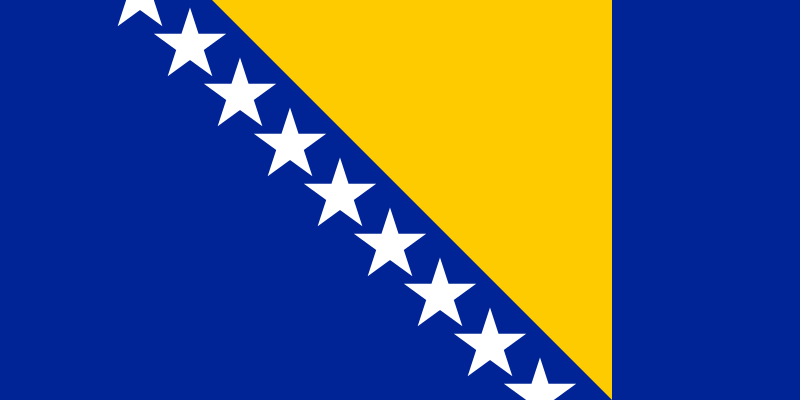
What is the meaning of the flag of Bosnia and Herzegovina?
The blue and yellow flag with stars represents the three constituent peoples and the country's aspiration for European integration.
Are there landmines in Bosnia and Herzegovina?
While most areas are cleared, some remote regions still have marked minefields; visitors should stay on paths in mountain areas.
What is the internet TLD for Bosnia and Herzegovina?
The country's top-level domain is .ba.
Is Bosnia and Herzegovina part of NATO?
No, but it participates in the Partnership for Peace and is an aspirant for full membership.
What is the literacy rate of Bosnia and Herzegovina?
The literacy rate is approximately 98.5%.
What are the winter sports venues in Bosnia and Herzegovina?
Major venues include the mountains of Jahorina, Bjelašnica, and Igman.
How diverse is the wildlife in Bosnia and Herzegovina?
The country is home to brown bears, wolves, lynx, and chamois in its protected mountain forests.
What is the education level in Bosnia and Herzegovina?
The country has high rates of secondary education completion and a strong tradition of technical and university education.