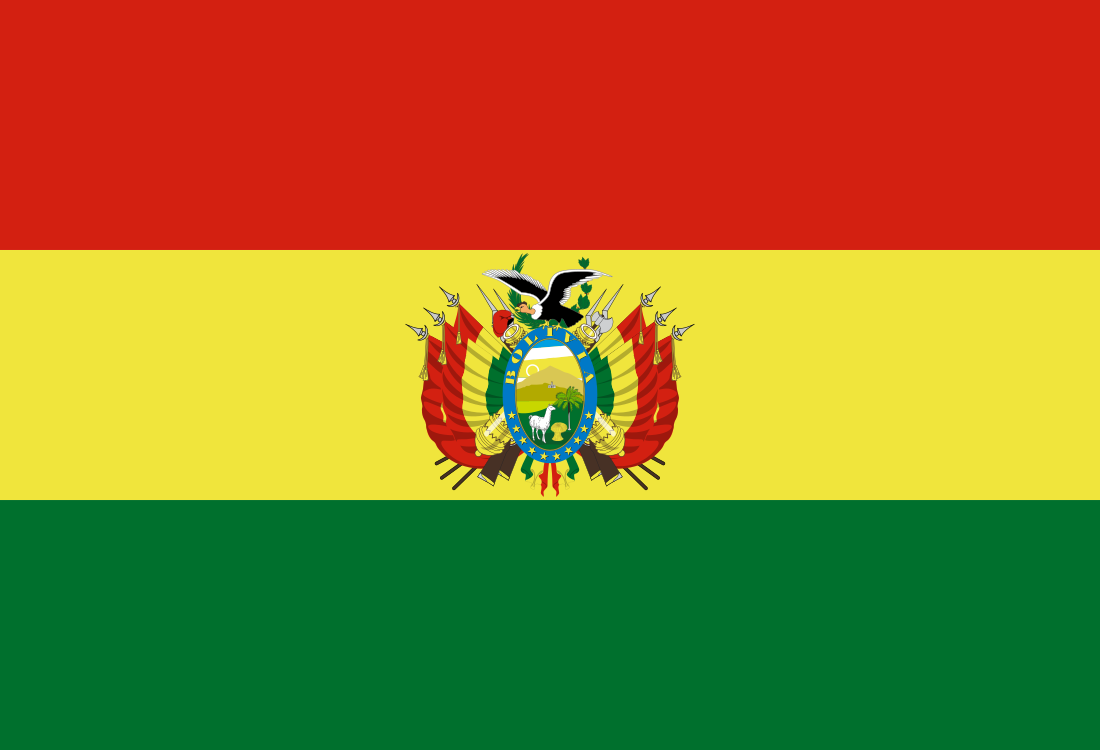
Bolivia
Location Info
- Continent: South America
- Country: Bolivia
- Coordinates: -16.2902 , -63.5887
Trust Info
Verified Geographic and Statistical Data 2026
🌍 Continents
Overview
Bolivia, officially known as the Plurinational State of Bolivia, is a landlocked country situated in central South America. It is bordered by Brazil to the north and east, Paraguay and Argentina to the south, and Chile and Peru to the west. The nation's geography is famously diverse, ranging from the high-altitude peaks of the Andes Mountains and the Altiplano plateau to the lush tropical rainforests of the Amazon Basin. It shares Lake Titicaca, the world's highest navigable lake, with neighboring Peru.
Historically, the region was home to the ancient Tiwanaku culture and later became part of the Inca Empire before Spanish colonization in the 16th century. Following its independence in 1825, named after leader Simón Bolívar, the country has evolved into a multiethnic society with a population exceeding 12 million. Bolivia's economy is largely driven by its vast natural resources, particularly natural gas, minerals, and the world's largest lithium reserves, alongside a growing agricultural sector in its eastern lowlands.
Truth & Facts
| Total Area | 1,098,581 sq km |
| Border Length | 6,940 km |
| Estimated Population | 12.75 million |
| Median Age | 26 years |
| Administrative Capital | La Paz |
| Constitutional Capital | Sucre |
| Independence Declared | August 6, 1825 |
| Plurinational State Status | 2009 |
| Currency | Boliviano (BOB) |
| Main Export | Natural Gas |
| Cable Car Network | Mi Teleférico |
| Official Languages | Spanish and 36 Indigenous Languages |
| Ecosystems | Amazon, Chaco, Andes, Altiplano |
| Main Hub Airport | Viru Viru (VVI), Santa Cruz |
| Literacy Rate | Approx. 95% |
| Health Insurance System | SUS (Sistema Único de Salud) |
| Police Presence | National Police |
| Mobile Coverage | 4G widespread in urban areas |
| Departments | 9 Regions |
| Memberships | UN, OAS, Mercosur |
| Electricity Access | Approx. 93% National |
| Major Attraction | Salar de Uyuni |
| Urbanization Rate | 71.2% |
| Major Network | Ferroviaria Andina and Oriental |
| Flooding | Northeast regions (March-April) |
📑 Table of Contents
Overview
Bolivia is a diverse, landlocked country in the heart of South America. It is characterized by high-altitude plains in the west and tropical lowlands in the east. The country is officially known as the Plurinational State of Bolivia, reflecting its multiethnic heritage.
- Administrative Capital: La Paz
- Constitutional Capital: Sucre
- Bordering Nations: Brazil, Paraguay, Argentina, Chile, and Peru
- Total Area: 1,098,581 square kilometers
- Major Landscapes: Andes Mountains, Altiplano, Amazon Basin
History
The history of Bolivia spans from ancient indigenous civilizations to modern democratic rule. The Tiwanaku culture flourished near Lake Titicaca for centuries before the region was incorporated into the Inca Empire. Spanish conquistadors arrived in the 16th century, primarily drawn by the silver deposits in Potosi.
- Pre-Colonial: Dominance of Tiwanaku and Inca empires.
- Colonial Era: Spanish rule focused on mineral extraction at Cerro Rico.
- Independence: Achieved in 1825 led by Simón Bolívar.
- Territorial Losses: Loss of coastal access to Chile in 1879.
- Modern Era: Establishment of the Plurinational State in 2009.
Geography
Bolivia's geography is divided into three distinct zones: the high-altitude Altiplano, the temperate Yungas and Valles, and the tropical Oriente lowlands. The Andes mountain range dominates the western third of the country, featuring snow-capped peaks like Sajama.
| Region | Characteristics | Altitude |
|---|---|---|
| Altiplano | High plateau, arid | 3,500m - 4,000m |
| Yungas | Cloud forest, moist | 1,000m - 3,000m |
| Oriente | Amazonian plains | < 400m |
Climate and Weather
The climate in Bolivia varies strictly according to altitude rather than latitude. While the tropical lowlands are hot and humid year-round, the highlands experience cold, dry winters and mild summers. The rainy season typically lasts from December to March.
- Highlands: Temperatures range from 7°C to 11°C on average.
- Lowlands: Average temperatures between 23°C and 27°C.
- Precipitation: Heaviest in the north and east between December and February.
- Extreme Weather: Occasional cold winds called 'surazos' in the south.
Population and Demographics
Bolivia has a multiethnic population of approximately 12.7 million people. It is notable for its large indigenous population, primarily Quechua and Aymara groups. Over 70% of the population now resides in urban centers like Santa Cruz and La Paz.
- Ethnic Groups: Quechua (30%), Mestizo (30%), Aymara (25%), White (15%).
- Largest City: Santa Cruz de la Sierra.
- Median Age: 26 years (2026 data).
- Literacy Rate: Approximately 95% nationwide.
Culture and Lifestyle
Bolivian culture is a fusion of indigenous traditions and Spanish colonial influences. Daily life involves deep reverence for 'Pachamama' (Earth Goddess) alongside traditional Catholic practices. This syncretism is visible in art, music, and social customs.
- Religious Syncretism: Fusion of indigenous beliefs and Catholicism.
- Attire: Traditional 'cholita' dress with bowler hats is common in the highlands.
- Music: Use of panpipes, charangos, and flutes in Andean folk music.
- Art: Famous for colorful textiles and silver craftsmanship.
Festivals and Events
Festivals are central to Bolivian life, often involving elaborate costumes, traditional dances, and multi-day celebrations. The most significant events blend religious themes with ancestral rituals.
- Carnival of Oruro: A UNESCO Masterpiece of the Oral and Intangible Heritage.
- Fiesta del Gran Poder: Large religious parade held in La Paz.
- Inti Raymi: Winter solstice celebration marking the Aymara New Year.
- Virgen de Urkupiña: Pilgrimage held in Cochabamba in August.
Food and Cuisine
Bolivian cuisine utilizes native staples like potatoes, corn, and quinoa. Due to the high altitude of the highlands, hearty stews and soups are common, while the lowlands prefer rice, cassava, and grilled meats.
- Salteñas: Savory pastries filled with meat and broth, a national breakfast staple.
- Sopa de Maní: A rich and creamy peanut-based soup.
- Silpancho: Breaded beef served with rice, fried potatoes, and an egg.
- Pique Macho: A large platter of beef, sausage, fries, onions, and spicy peppers.
- Llajua: A spicy tomato and locoto pepper sauce served with every meal.
Economy and Industries
Bolivia possesses significant natural wealth but remains a developing economy. It is a major exporter of natural gas and metallic minerals. Recently, the country has focused on industrializing its lithium reserves, believed to be the largest in the world.
- Key Exports: Natural gas, gold, zinc, soybeans, and lithium.
- Mining Sector: Historic focus on tin, silver, and antimony.
- Agriculture: Centered in Santa Cruz, focusing on soy, beef, and sugar.
- Growth Drivers: Public investment and extraction of natural resources.
Cost of Living
Bolivia is considered one of the most affordable countries in South America. The cost of basic goods and services is low, though imported items can be expensive due to the landlocked status and high transportation costs.
| Item | Average Cost (BOB) | Estimated USD |
|---|---|---|
| Local Meal | 20 - 40 | $3 - $6 |
| Domestic Beer | 15 - 20 | $2 - $3 |
| 1km Taxi Ride | 10 - 20 | $1.50 - $3 |
| Basic Utilities | 300 - 500 | $45 - $75 |
Employment and Business
The Bolivian labor market has a high rate of informal employment. However, the formal sector is dominated by the state-owned oil and gas company (YPFB) and mining operations. Urban centers like Santa Cruz provide growing opportunities in agribusiness and services.
- Informal Sector: Significant portion of the urban and rural population.
- Major Employers: YPFB (Gas), COMIBOL (Mining), and the Public Service.
- Skills in Demand: Mining engineering, logistics, and digital services.
- Unemployment: Historically fluctuates between 4% and 7%.
Real Estate and Housing
Housing in Bolivia ranges from traditional adobe structures in rural highland areas to modern high-rise apartments in Santa Cruz and La Paz. The real estate market in Santa Cruz has seen significant growth due to economic expansion in the lowlands.
- Popular Areas: Zona Sur in La Paz, Equipetrol in Santa Cruz.
- Rural Housing: Often built with local materials like adobe or brick.
- Urban Growth: Vertical expansion in major cities to accommodate rising populations.
Transportation and Connectivity
Connectivity in Bolivia is challenging due to the rugged terrain. Domestic flights are the fastest way to travel between major cities, while an extensive bus network covers the rest of the country. La Paz features the world's highest and longest urban cable car system.
- Air Travel: Main hubs are Viru Viru (Santa Cruz) and El Alto (La Paz).
- Cable Car: Mi Teleférico provides efficient transport across La Paz and El Alto.
- Roads: Primary highways connect major cities, but many rural roads are unpaved.
- Railways: Two separate networks (Andean and Oriental) serve the west and east.
Infrastructure and Utilities
Infrastructure has seen significant investment in recent years, focusing on road paving and rural electrification. Water and sanitation services have also expanded, though coverage remains lower in remote indigenous communities.
- Energy: Primarily generated from hydroelectric plants and natural gas.
- Communication: 4G coverage is common in urban centers; 5G rollouts began in limited areas.
- Water: Access is nearly universal in cities but around 70-80% in rural regions.
Education
Education is compulsory for children aged 6 to 17. The public education system has improved literacy rates significantly. Higher education is available through several prestigious public and private universities.
- Major Universities: UMSA (La Paz), UMSS (Cochabamba), UAGRM (Santa Cruz).
- Literacy: One of the highest gains in the region over the last decade.
- Bilingualism: Emphasis on teaching both Spanish and an indigenous language.
Healthcare
The Bolivian government implemented the Unified Health System (SUS) to provide free healthcare to citizens without insurance. Hospitals are concentrated in urban areas, with specialized clinics available in La Paz, Santa Cruz, and Cochabamba.
- System: SUS (Sistema Único de Salud) provides basic coverage.
- Challenges: Resources and medical personnel often struggle to meet demand.
- Specialization: Major surgeries are typically performed in the largest three cities.
Tourist Attractions
Bolivia offers some of the most surreal landscapes on earth. From high-altitude deserts to dense rainforests, the country is a destination for nature and culture enthusiasts.
- Salar de Uyuni: The world's largest salt flat, famous for its mirror effect.
- Lake Titicaca: The highest navigable lake, home to the Isla del Sol.
- Potosí: A historic mining town and UNESCO World Heritage site.
- Madidi National Park: One of the most biodiverse places on the planet.
- Tiwanaku: Ancient archaeological ruins of a pre-Inca civilization.
Things to Do
Travelers in Bolivia can engage in a variety of activities ranging from mountain trekking to wildlife spotting. The diverse climate zones allow for different types of adventures throughout the year.
- Trekking: Hiking the Cordillera Real or the Choro Trail.
- Cycling: Riding the North Yungas Road (Death Road).
- Wildlife Spotting: Jungle tours in Rurrenabaque.
- Photography: Capturing the perspective-defying salt flats of Uyuni.
Best Places to Visit
Most visits to Bolivia center around the 'Andean Circuit,' though the eastern lowlands offer a completely different tropical experience.
| City/Area | Highlight | Recommended Stay |
|---|---|---|
| La Paz | Cable Cars & Markets | 3-4 Days |
| Uyuni | Salt Flats | 3 Days |
| Copacabana | Lake Titicaca | 2 Days |
| Santa Cruz | Tropical Parks | 2-3 Days |
Travel Guide
Traveling to Bolivia requires planning for high altitudes and varied climates. Visitors should be aware of visa requirements and health recommendations, such as altitude sickness prevention.
- Visas: Requirements vary by nationality (Group I, II, or III).
- Health: Yellow fever vaccine recommended for the Amazon; altitude pills for the Altiplano.
- Currency: Cash is king; carry Bolivianos for small purchases and markets.
Nearby Places
Due to its central location, Bolivia is a hub for South American travel, bordering five countries and providing easy access to regional landmarks.
- Puno (Peru): Accessible via Lake Titicaca or land.
- Cusco (Peru): Frequent flights or overnight buses from La Paz.
- Salta (Argentina): Accessible via the southern border town of Villazón.
- San Pedro de Atacama (Chile): Often visited via multi-day salt flat tours.
Environment and Nature
Bolivia is considered a 'megadiverse' country, containing thousands of species of flora and fauna. It hosts several protected areas, including national parks and biosphere reserves.
- Flora: Includes native crops like quinoa and the yareta plant in the highlands.
- Fauna: Home to condors, llamas, jaguars, and pink river dolphins.
- Conservation: Challenges include deforestation for agriculture and illegal mining.
Government and Administration
Bolivia is a democratic republic with a president as head of state and government. The country is administratively divided into nine departments, each with its own elected governor and assembly.
- Structure: Executive, Legislative, Judicial, and Electoral branches.
- Departments: La Paz, Santa Cruz, Cochabamba, Oruro, Potosí, Tarija, Chuquisaca, Beni, Pando.
- Governance: Emphasizes decentralized regional autonomy.
Safety and Public Services
Public safety in Bolivia is generally stable, though petty crime exists in large cities and busy markets. Emergency services are available nationwide through the 110 (Police) and 118 (Ambulance) numbers.
- Police: 'Policía Nacional' handles urban and rural security.
- Services: Fire brigades and civil defense operate in all major municipalities.
- Recommendations: Avoid walking alone late at night in El Alto or central La Paz.
Best Time to Visit
The best time to visit Bolivia depends on the region. Generally, the dry season is most popular for highland tourism, while the rainy season transforms the salt flats into a mirror.
- Dry Season (May-October): Best for trekking and clear mountain views.
- Rainy Season (November-March): Ideal for seeing the Salar de Uyuni reflection.
- Coldest Months: June and July, especially on the Altiplano.
- Shoulder Months: April and October offer a balance of weather and fewer crowds.
Local Business Directory
Bolivia's commercial activities are concentrated in the 'Central Axis' cities. The directory includes major banking institutions, telecommunications, and regional industry hubs.
- Banking: Banco Unión, Banco Nacional de Bolivia (BNB), Banco Mercantil Santa Cruz.
- Telecom: Entel (State-owned), Tigo, Viva.
- Retail: Large supermarkets like Hipermaxi and IC Norte in Santa Cruz and Cochabamba.
- Agribusiness: Headquarters mostly located in Santa Cruz de la Sierra.
General Information FAQs
Where is Bolivia located?
Bolivia is located in central South America. It is a landlocked country bordered by Brazil to the north and east, Paraguay and Argentina to the south, and Chile and Peru to the west.
What is Bolivia known for?
Bolivia is known for its diverse geography, including the Andes Mountains and Amazon rainforest, as well as the Salar de Uyuni (world's largest salt flat), Lake Titicaca, and its rich indigenous cultures.
Why is Bolivia famous?
The country is famous for being the highest and most isolated of the Andean nations. It is also well-known for the Potosí silver mines, which were historically significant to the Spanish Empire.
What country or region is Bolivia part of?
Bolivia is a sovereign state in the South American continent. It is considered part of the Andean community and the southern cone sub-region.
What is the population of Bolivia?
As of early 2026, the population is estimated to be approximately 12.75 million people.
What languages are spoken in Bolivia?
Spanish is the most widely spoken language. However, the constitution recognizes 36 indigenous languages as official, with Quechua, Aymara, and Guaraní being the most prominent.
What time zone is Bolivia in?
Bolivia operates on Bolivia Time (BOT), which is UTC-4. The country does not observe daylight saving time.
What are the key facts about Bolivia?
Key facts include its status as one of two landlocked countries in South America, its multiethnic makeup, and its two capitals: Sucre (constitutional) and La Paz (administrative).
What makes Bolivia unique?
Its uniqueness stems from its extreme altitudes, its constitutional recognition of indigenous rights as a 'Plurinational State', and its preservation of ancient traditions and biomes.
How large is Bolivia in area?
Bolivia covers a total area of approximately 1,098,581 square kilometers (424,164 square miles).
History FAQs
What is the history of Bolivia?
Bolivian history includes ancient cultures like Tiwanaku, followed by Inca rule and Spanish colonization. It gained independence in 1825 and transitioned to a Plurinational State in 2009.
When was Bolivia established?
Bolivia was established as an independent republic on August 6, 1825.
What major historical events happened in Bolivia?
Significant events include the silver boom in Potosí, the War of the Pacific (1879) where it lost its coastline, the 1952 National Revolution, and the adoption of the 2009 Constitution.
Who were important historical figures from Bolivia?
Important figures include Simón Bolívar and Antonio José de Sucre (independence leaders), and Bartolina Sisa (indigenous resistance leader).
How has Bolivia developed over time?
The nation has moved from a colonial extraction economy to a modern state emphasizing social inclusion, indigenous recognition, and state-led industrialization of natural resources.
Geography & Environment FAQs
What is the geography of Bolivia?
The geography is diverse, consisting of the western Andean highlands (Altiplano), central temperate valleys (Yungas), and eastern tropical lowlands (Amazon and Chaco).
What natural features surround Bolivia?
Bolivia is surrounded by the Andes mountain range to the west, the Amazon rainforest to the north and east, and the Gran Chaco plains to the south.
Are there mountains, rivers, or lakes near Bolivia?
Yes, major features include the Andes mountains (Sajama, Illimani), the Amazon river system (Mamoré, Beni), and Lake Titicaca on the Peruvian border.
What is the elevation of Bolivia?
Elevation ranges from near sea level at the Paraguay river to over 6,500 meters at the peak of Nevado Sajama.
What ecosystems exist around Bolivia?
Ecosystems include high-altitude alpine tundras, cloud forests (Yungas), tropical rainforests, and semi-arid scrublands (Gran Chaco).
Climate & Weather FAQs
What is the climate like in Bolivia?
Climate varies by altitude: cold and arid in the highlands, temperate in the valleys, and hot and humid in the lowlands.
What is the average temperature in Bolivia?
In the highlands, averages are 7°C–11°C, while the lowlands average 23°C–27°C.
What is the weather like throughout the year in Bolivia?
There is a wet season (December–March) and a dry season (May–October). Winters are dry and very cold in the mountains.
Does Bolivia experience extreme weather?
Yes, the country experiences seasonal flooding in the northeast and occasionally high-velocity cold winds (surazos) in the south.
What is the best time of year to visit Bolivia?
The dry season (May to October) is generally the best time for tourism, offering clear skies and accessibility to roads.
Population & Society FAQs
What is the population density of Bolivia?
Bolivia has a low population density of about 11.5 people per square kilometer.
What ethnic groups live in Bolivia?
The largest groups are Quechua, Aymara, and Mestizo, along with White/European, Guarani, and Afro-Bolivian minorities.
What religions are practiced in Bolivia?
Roman Catholicism is the predominant religion, followed by Protestantism. Indigenous spiritual beliefs are also widely integrated into daily life.
What is daily life like in Bolivia?
Daily life is centered around family, community markets, and cultural traditions. In urban areas, it is increasingly modernized but retains strong traditional links.
How diverse is the population of Bolivia?
It is exceptionally diverse, with over 36 recognized indigenous nations and a significant mix of European and mestizo heritages.
Culture & Traditions FAQs
What cultural traditions are important in Bolivia?
Important traditions include agricultural rituals, the worship of Pachamama, and the practice of traditional medicine.
What festivals are celebrated in Bolivia?
Key festivals include Oruro Carnival, Gran Poder, Inti Raymi (Aymara New Year), and various local saint feast days.
What cultural landmarks exist in Bolivia?
Notable landmarks include the Tiwanaku ruins, the Jesuit Missions of Chiquitos, and the historic colonial centers of Sucre and Potosí.
What traditional clothing or customs are common in Bolivia?
Customs include the use of the pollera (skirt) and manta (shawl) by Aymara and Quechua women, and the drinking of coca tea.
What arts and crafts are associated with Bolivia?
Bolivia is famous for its intricate textiles, hand-woven alpaca wool garments, and detailed silver jewelry.
Food & Cuisine FAQs
What foods is Bolivia known for?
Bolivia is known for its varieties of potatoes (over 300 types), quinoa, salteñas, and peanut soup.
What traditional dishes originate from Bolivia?
Traditional dishes include Pique Macho, Silpancho, Mondongo, and Sopa de Maní.
What are the best restaurants in Bolivia?
Highly regarded establishments include Gustu in La Paz and a variety of regional specialty houses in Santa Cruz and Cochabamba.
What local ingredients are commonly used in Bolivia cuisine?
Common ingredients include chuño (freeze-dried potato), corn, beans, locoto peppers, and jerked meat (charque).
What food markets or street foods are popular in Bolivia?
Popular street foods include salteñas, anticuchos (skewered heart), and tucumanas. Markets like Mercado Rodriguez are central to food culture.
Economy & Business FAQs
What are the main industries in Bolivia?
Main industries include mining (gas and minerals), agriculture, forestry, and manufacturing of textiles and clothing.
What economic activities drive the economy of Bolivia?
The economy is driven primarily by the export of natural gas and metallic minerals like silver, gold, and zinc.
What businesses operate in Bolivia?
Businesses include state-owned companies like YPFB (hydrocarbons) and private enterprises in agribusiness, banking, and telecommunications.
Is Bolivia an important economic center?
It is a regionally important supplier of natural gas to Brazil and Argentina and holds significant future potential in the global lithium market.
What are the major exports or products from Bolivia?
Major exports are natural gas, minerals (gold, zinc, silver), soy products, and Brazil nuts.
Employment & Jobs FAQs
What job opportunities are available in Bolivia?
Opportunities exist in mining, energy, agriculture, and increasing demand in technology and tourism-related services.
What are the major employers in Bolivia?
Major employers include the government, state industries like YPFB and COMIBOL, and large agribusiness firms in Santa Cruz.
What skills are in demand in Bolivia?
Technical skills in extraction, agronomy, civil engineering, and digital commerce are currently in demand.
Is Bolivia a good place to work?
It offers a low cost of living, but wages in the formal sector are lower than international averages. Many professionals work in the public sector.
What is the unemployment rate in Bolivia?
The unemployment rate generally stays between 4% and 7%, though underemployment in the informal sector is common.
Cost of Living FAQs
Is Bolivia expensive to live in?
No, Bolivia is considered one of the most affordable countries in South America for housing, food, and transport.
What is the average cost of living in Bolivia?
A single person can live modestly on $600–$900 USD per month, depending on the city and lifestyle.
How much does housing cost in Bolivia?
Urban rents range from $250 for basic apartments to over $1,000 for luxury housing in prime areas of Santa Cruz or La Paz.
What are average food and utility costs in Bolivia?
Basic utilities for a standard apartment cost roughly $50 USD. Monthly food costs for a family are relatively low if buying from local markets.
Is Bolivia affordable compared to nearby cities?
Yes, it is typically cheaper than major cities in Chile, Argentina, or Brazil.
Housing & Real Estate FAQs
What types of housing are available in Bolivia?
Options include high-rise apartments, colonial-style houses, gated suburban communities, and simple adobe homes in rural areas.
What is the average home price in Bolivia?
Prices vary wildly; small homes in outskirts start at $40,000, while prime real estate in Santa Cruz can exceed $300,000.
Is it better to rent or buy property in Bolivia?
Renting is often preferred by expatriates due to low costs and legal complexities, though buying is common for long-term residents.
Which neighborhoods are popular in Bolivia?
Popular urban areas include Calacoto and Sopocachi in La Paz, and the Northern District in Santa Cruz.
How has the property market changed in Bolivia?
The market has seen a boom in Santa Cruz due to industrial expansion, while La Paz remains steady with a focus on high-density urban living.
Transportation FAQs
How do you get to Bolivia?
Most international visitors arrive by plane via Santa Cruz or La Paz, or by bus from neighboring Peru, Chile, or Argentina.
What is the nearest airport to Bolivia?
Major international gateways are Viru Viru International Airport in Santa Cruz and El Alto International Airport in La Paz.
Does Bolivia have railway connections?
Yes, but the network is divided into two separate zones: the western Andean lines and the eastern Oriental lines.
How reliable is public transportation in Bolivia?
Buses and shared taxis are widespread and reliable, though travel times can be long due to the terrain.
What major highways or roads connect to Bolivia?
The Pan-American highway system connects Bolivia to its neighbors, and the 'Bioceanic Corridor' is a major road project linking Brazil and Chile via Bolivia.
Education FAQs
What schools are located in Bolivia?
The country has an extensive network of public and private primary and secondary schools in all nine departments.
Are there universities in Bolivia?
Yes, major public universities include Universidad Mayor de San Andrés (UMSA) and private ones like Universidad Católica Boliviana (UCB).
What is the literacy rate in Bolivia?
The literacy rate is approximately 95% as of recent reports.
What educational opportunities exist in Bolivia?
Bolivia offers diverse degrees in engineering, medicine, and social sciences, with growing programs in environmental studies.
Is Bolivia a good place for students?
It is popular for researchers in anthropology, geography, and ecology due to its unique cultural and natural landscape.
Healthcare FAQs
What hospitals are available in Bolivia?
Major public hospitals like Hospital de Clínicas and various private clinics are available in the largest cities.
Are there emergency medical services in Bolivia?
Yes, emergency services can be reached via national emergency numbers, though response times can vary.
What healthcare facilities exist in Bolivia?
The system includes tertiary hospitals, health centers (centros de salud), and specialized maternal clinics.
Is healthcare affordable in Bolivia?
Basic healthcare is free for residents under the SUS system, while private care is affordable compared to international standards.
Are specialized medical services available in Bolivia?
Yes, specialized services are primarily found in La Paz, Santa Cruz, and Cochabamba.
Tourism & Travel FAQs
What are the top tourist attractions in Bolivia?
Top sites include Salar de Uyuni, Lake Titicaca, Potosí, Sucre, and Madidi National Park.
What are the best things to do in Bolivia?
Activities include cycling the Death Road, trekking the Andes, and exploring the Amazon jungle.
Is Bolivia worth visiting?
Yes, it is considered one of the most visually stunning and culturally authentic destinations in South America.
What landmarks should visitors see in Bolivia?
Visitors should see the Gateway of the Sun in Tiwanaku and the historic Cerro Rico in Potosí.
How many days should tourists spend in Bolivia?
A minimum of 10–14 days is recommended to cover the main highlights without rushing.
Nearby Places FAQs
What places are near Bolivia worth visiting?
Nearby highlights include Machu Picchu in Peru and the Atacama Desert in Chile.
What cities or towns are close to Bolivia?
Puno (Peru), Salta (Argentina), and Arica (Chile) are the closest major regional cities.
What natural attractions are near Bolivia?
The Amazon rainforest continues into Brazil and Peru, and the Andes extend through the entire western border.
What day trips can be taken from Bolivia?
Day trips from La Paz include Tiwanaku or the Chacaltaya ski resort area.
What famous destinations are within reach of Bolivia?
The Pantanal wetlands (Brazil) and the Colca Canyon (Peru) are within reach via multi-day travel.
Safety FAQs
Is Bolivia safe to live in?
It is generally safe for long-term living, though residents must be aware of traffic safety and seasonal health risks.
Is Bolivia safe for tourists?
Yes, most visits are trouble-free, though tourists should watch for pickpockets in crowded markets.
What is the crime rate in Bolivia?
The crime rate is moderate, mostly consisting of non-violent petty theft in urban areas.
What emergency services operate in Bolivia?
The National Police, Fire Service, and the Red Cross are the primary emergency responders.
What safety tips should visitors follow in Bolivia?
Avoid unofficial taxis, stay hydrated to prevent altitude sickness, and use reputable tour operators.
Lifestyle & Living FAQs
Is Bolivia a good place to live?
It offers a high quality of life for those seeking cultural depth, natural beauty, and a slow pace of living.
What recreational activities are available in Bolivia?
Recreation includes football (the national sport), hiking, traditional dancing, and exploring outdoor markets.
Is Bolivia family-friendly?
Yes, Bolivian culture is very family-oriented, and children are welcomed in almost all social settings.
What outdoor activities are popular in Bolivia?
Mountaineering, jungle trekking, and birdwatching are highly popular due to the varied landscape.
What makes life enjoyable in Bolivia?
The combination of affordable costs, vibrant street life, and unparalleled natural vistas makes life unique and enjoyable.
Practical Information FAQs
What travel tips should visitors know about Bolivia?
Pack for all climates, acclimate to the altitude slowly, and always carry some toilet paper and small change.
What local customs should visitors respect in Bolivia?
Always ask before taking photos of locals and show respect to indigenous traditions and rituals.
How accessible is Bolivia for international visitors?
It is moderately accessible via major airports, though internal travel can be rugged.
What services are available for tourists in Bolivia?
Services include multi-lingual tour guides, tourist information centers in cities, and specialized adventure travel agencies.
What important information should travelers know before visiting Bolivia?
Check the latest visa rules, understand the impact of altitude, and be prepared for potential road blockades which can occur during strikes.