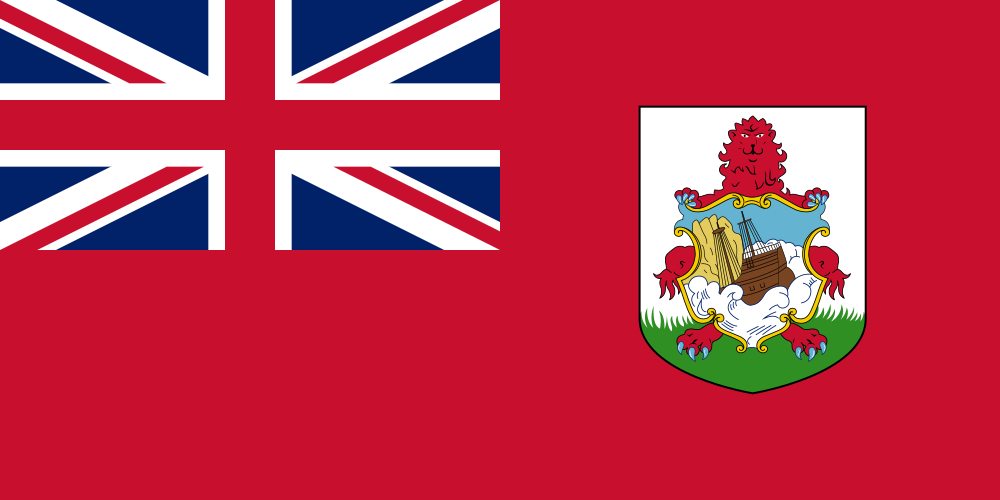
Bermuda
Location Info
- Continent: North America
- Country: Bermuda
- Coordinates: 32.3078 , -64.7505
Trust Info
Verified Geographic Reference
🌍 Continents

Overview
Bermuda is a British Overseas Territory located in the North Atlantic Ocean, approximately 1,030 kilometers east-southeast of Cape Hatteras, North Carolina. It consists of about 181 islands, with the largest being Main Island. The territory is known for its unique volcanic foundation topped with coral limestone, creating a distinct physical landscape.
Historically, the islands were discovered by Juan de Bermúdez in 1503 and later settled by the English in 1609 following the wreck of the Sea Venture. Today, Bermuda is a premier global center for insurance and reinsurance, supporting a high standard of living. Its capital, Hamilton, serves as the administrative and financial heart of the territory.
Truth & Facts
| Total Area | 54 square kilometers |
| Highest Point | Town Hill (79 meters) |
| Capital | Hamilton |
| Legal System | English Common Law |
| Total Population | 63,500 (approximate) |
| Official Language | English |
| Discovery | 1503 |
| Permanent Settlement | 1612 |
| Primary Industry | International Business (Reinsurance) |
| Currency | Bermuda Dollar (BMD) |
| Water Source | Rainwater Catchment |
| Main Airport | L.F. Wade International Airport (BDA) |
| Higher Education | Bermuda College |
| Primary Hospital | King Edward VII Memorial Hospital |
| Traditional Dance | Gombey |
| Main Attractions | Pink Sand Beaches, St. George's (UNESCO Site) |
| National Bird | Bermuda Petrel (Cahow) |
| Internet TLD | .bm |
| Emergency Number | 911 |
| Structure | Bicameral (Senate and House of Assembly) |
| Foreign Affairs | Managed by the UK Foreign Office |
| Main Provider | BELCO |
| GDP Per Capita | Over $110,000 (Nominal) |
| Average Summer Temp | 28°C |
| Key Exports | Re-exports of pharmaceuticals |
📑 Table of Contents
Overview
Bermuda is a self-governing British Overseas Territory located in the North Atlantic. It is an archipelago composed of 181 islands, though most of the land area is concentrated on seven main islands connected by bridges. The territory is strategically located between North America and Europe, serving as a vital link in global finance and maritime history.
The capital city, Hamilton, is the main hub for commerce and government. Bermuda is recognized globally for its high standard of living, political stability, and its role as a premier offshore financial center specializing in insurance and reinsurance.
- Political Status: British Overseas Territory
- Capital: Hamilton
- Total Area: 54 sq km
- Official Language: English
- Currency: Bermuda Dollar
History
Bermuda was first discovered in 1503 by Spanish explorer Juan de Bermúdez, but the Spanish did not attempt to settle the islands due to the surrounding dangerous reefs. Permanent settlement began by accident in 1609 when the English ship Sea Venture, headed for Virginia, was wrecked off the coast during a storm. This event eventually led to Bermuda becoming a crown colony in 1684.
The territory played significant roles in the American Revolutionary War and the Civil War as a base for privateering and blockade running. In the 20th century, it evolved from a maritime and agricultural economy into a tourism and international business giant.
| Era | Event |
|---|---|
| 1609 | Wreck of the Sea Venture |
| 1620 | First session of the House of Assembly |
| 1815 | Hamilton becomes the capital |
| 1968 | New Constitution granting self-governance |
Geography
The geography of Bermuda is characterized by its volcanic origin. The islands sit on the Bermuda Plateau, an extinct volcanic pedestal. The land consists of low rolling hills interspersed with fertile depressions and surrounded by a vast system of coral reefs, which are the northernmost in the world.
- Total Coastline: 103 km
- Terrain: Low hills, numerous inlets, and beaches
- Soil Type: Calcareous soil over limestone
- Natural Hazards: Hurricanes (June to November)
- Environmental Areas: Spittal Pond, Paget Marsh
Climate and Weather
Bermuda features a humid subtropical climate. It is kept warm by the Gulf Stream, ensuring that temperatures rarely drop to freezing. Rainfall is distributed fairly evenly throughout the year, with no defined rainy season.
| Month | Avg High (°C) | Avg Low (°C) |
|---|---|---|
| August | 30 | 25 |
| February | 20 | 15 |
Hurricanes are a notable feature of the local climate, typically occurring between June and November. However, the islands' solid limestone construction and strict building codes minimize structural damage.
Population and Demographics
The population of Bermuda is approximately 63,500 people. The demographic profile is diverse, with roughly 52% of the population identifying as Black, 31% as White, and the remainder as mixed or other ethnicities. The density is high, making it one of the most densely populated places in the world.
- Population Density: ~1,200 per sq km
- Life Expectancy: 81 years
- Literacy Rate: 98%
- Religion: Protestant (mostly Anglican), Roman Catholic
- Nationality: Bermudian (British Overseas Territory Citizen)
Culture and Lifestyle
Bermudian culture is a rich tapestry of British and African heritage, with significant influences from Portuguese settlers from the Azores. The lifestyle is generally conservative yet vibrant, reflected in the traditional attire of Bermuda shorts worn with blazers and knee-high socks in formal business settings.
Gombey dancing is the most iconic cultural expression, featuring colorful costumes and polyrhythmic drumming. Public holidays often center around cricket matches and maritime events.
Festivals and Events
The most significant event in Bermuda is Cup Match, a two-day public holiday centered on a cricket match between rival clubs Somerset and St. George's. It commemorates the emancipation of enslaved people in 1834.
- Bermuda Day: Celebrated in May with a parade
- International Film Festival: Annual event in Hamilton
- Harbour Nights: Weekly street festival during summer
- Kite Festival: Held on Good Friday
- Peppercorn Ceremony: A traditional ceremony in St. George's
Food and Cuisine
Bermudian cuisine is heavily influenced by the sea. Traditional dishes often feature local fish such as rockfish, snapper, and cod. The "Sunday Breakfast" consisting of codfish and potatoes with onion sauce and banana is a local staple.
- Bermuda Fish Chowder: Enhanced with black rum and sherry peppers
- Hoppin' John: Peas and rice dish
- Cassava Pie: A traditional Christmas dish
- Shark Hash: Minced shark meat seasoned with spices
- Ginger Beer: A popular local beverage
Economy and Industries
Bermuda has one of the highest per capita incomes in the world. Its economy is dominated by two main sectors: international business and tourism. The territory is a global hub for insurance, reinsurance, and investment funds due to its favorable tax environment and robust legal framework.
| Sector | Contribution to GDP |
|---|---|
| International Business | ~85% |
| Tourism | ~5% |
| Other Services | ~10% |
Cost of Living
The cost of living in Bermuda is exceptionally high because almost all goods, including food and fuel, must be imported. There is no personal income tax, but the government generates revenue through high import duties and payroll taxes.
- Housing: Extremely expensive due to limited land
- Electricity: Among the most expensive in the world
- Groceries: Generally 2-3 times more expensive than US mainland
- Transportation: Private car ownership is restricted to one per household
Employment and Business
Employment is largely concentrated in the professional services sector, specifically accounting, law, and insurance. The labor market is regulated by strict work permit policies designed to ensure that Bermudians have priority for available jobs.
- Work Permits: Required for all non-citizens
- Unemployment Rate: Generally below 5%
- Major Sectors: Finance, Hospitality, Construction
Real Estate and Housing
Real estate in Bermuda is characterized by traditional pastel-colored houses with white stepped roofs designed to catch rainwater. Land is scarce, making property values high. Foreigners are restricted to purchasing only certain high-value properties.
- Average House Price: Exceeds $1 million
- Rent: High demand for executive rentals
- Construction: Solid limestone and concrete block
Transportation and Connectivity
Bermuda has a unique transportation system where tourists are not allowed to rent cars; they must use taxis, buses, ferries, or rent electric micro-cars and scooters. The public bus and ferry systems are efficient and connect most major residential and tourist areas.
- Buses: Color-coded (Pink and Blue)
- Ferries: Fast transit between Hamilton and the West End
- Road Rules: Drive on the left
- Speed Limit: 35 km/h
Infrastructure and Utilities
Bermuda lacks significant natural freshwater sources like rivers or lakes. Consequently, every house is required by law to have a catchment system on the roof to collect rainwater into underground tanks. Electricity is provided by BELCO using diesel generators.
- Water: Primarily rainwater and desalination plants
- Waste: Tynes Bay Waste-to-Energy facility
- Telecommunications: High-speed fiber and 4G/5G mobile networks
Education
Bermuda has a comprehensive education system consisting of both public and private schools. Education is compulsory for children aged 5 to 18. Bermuda College provides associate degrees and vocational training, often in partnership with overseas universities.
- School System: Follows British-style curriculum
- Higher Ed: Bermuda College
- Private Sector: Several prestigious international schools
Healthcare
Healthcare standards are high. The Bermuda Hospitals Board operates the island's only two hospitals. Most residents have mandatory private health insurance, and specialized care often requires travel to the United States or Canada.
- Facilities: King Edward VII Memorial Hospital (KEMH)
- Insurance: Mandatory for all employees
- Emergency: 911 dispatch for ambulances
Tourist Attractions
Bermuda offers a variety of natural and historical attractions. The Town of St. George is a UNESCO World Heritage site, recognized for being the oldest continuously inhabited English town in the New World.
- Crystal Caves: Subterranean pools and formations
- Horseshoe Bay: Famous for pink sand
- Gibb's Hill Lighthouse: One of the oldest cast-iron lighthouses
- Royal Naval Dockyard: Historic fort turned shopping hub
Things to Do
Outdoor activities dominate the recreation scene. Bermuda is world-renowned for wreck diving, with hundreds of ships located in its surrounding waters. Sailing and golf are also highly popular among locals and visitors alike.
- Snorkeling: Church Bay and Tobacco Bay
- Golf: High density of world-class courses
- Sailing: Bermuda is a major yachting destination
- Hiking: Railway Trail spanning the island
Best Places to Visit
The main areas of interest are divided between the City of Hamilton, the Town of St. George, and the West End (Dockyard). Each offers a different perspective on the island's history and lifestyle.
- Hamilton: Shopping and dining on Front Street
- St. George's: Historic alleys and museums
- Somerset Village: Scenic views and local vibes
- Flatts Village: Home to the Aquarium
Travel Guide
Entry into Bermuda requires a valid passport and, for many, a pre-approved travel authorization. The island is easily accessible via direct flights from major US East Coast cities, London, and Toronto.
- Visa: Generally not required for US, UK, or Canadian citizens
- Currency: US Dollars are accepted at par with Bermuda Dollars
- Customs: Strict laws on importing drugs and weapons
Nearby Places
As an isolated archipelago, there are no "nearby" land masses within immediate travel distance. However, it is functionally linked to the following regions via air travel:
- New York City: 2 hours by flight
- London: 7 hours by flight
- Miami: 2.5 hours by flight
- Azores: Closest transatlantic neighbor
Environment and Nature
Bermuda is home to several endemic species, most notably the Bermuda Cedar and the Bermuda Petrel. Environmental conservation is a high priority, with many areas designated as nature reserves to protect fragile coral reefs and bird nesting sites.
- Reserves: Cooper's Island Nature Reserve
- Marine Life: Green sea turtles and humpback whales
- Flora: Hibiscus, oleander, and bougainvillea
Government and Administration
Bermuda is a parliamentary representative democratic territory. The Governor is appointed by the British Monarch and handles external affairs, defense, and internal security. The Premier is the head of government.
- Executive: Cabinet led by the Premier
- Legislature: House of Assembly and Senate
- Judiciary: Supreme Court and Court of Appeal
Safety and Public Services
Bermuda is considered a very safe destination with a low crime rate compared to many urban areas in North America. The Bermuda Police Service is the primary law enforcement agency. Public services are well-maintained and reliable.
- Emergency Services: Highly professional
- Fire Service: Bermuda Fire and Rescue
- Coast Guard: Managed by the Bermuda Regiment and Police
Best Time to Visit
The peak season for tourism is between May and October when the water is warm enough for swimming. However, the "shoulder seasons" of spring and autumn offer milder temperatures ideal for golf and sightseeing.
| Season | Characteristics |
|---|---|
| May - Oct | Warm, humid, ideal for beach activities |
| Nov - April | Cooler, breezy, best for golf and hiking |
Local Business Directory
The business directory of Bermuda is dominated by global reinsurance firms like Arch Capital, RenaissanceRe, and Everest. Local commerce is centered in Hamilton, featuring retail, banking, and telecommunications providers.
- Banks: Butterfield Bank, HSBC Bermuda
- Telecoms: One Communications, Digicel
- Retail: A.S. Cooper & Sons, Gibbons Company
General Information FAQs
Where is Bermuda located?
Bermuda is located in the North Atlantic Ocean, about 1,030 km (640 miles) east-southeast of Cape Hatteras, North Carolina, USA.
What is Bermuda known for?
Bermuda is famous for its pink sand beaches, its role as a global reinsurance hub, and the historical town of St. George's.
Why is Bermuda famous?
It is famous for the 'Bermuda Triangle' myths, its distinct Bermuda shorts attire, and its unique architecture with white tiered roofs.
What country or region is Bermuda part of?
Bermuda is a British Overseas Territory. It is not an independent country but is self-governing in its internal affairs.
What is the population of Bermuda?
The population is approximately 63,500 people as of recent estimates.
What languages are spoken in Bermuda?
English is the official language. A small percentage of the population also speaks Portuguese.
What time zone is Bermuda in?
Bermuda is in the Atlantic Time Zone (AST), which is one hour ahead of Eastern Standard Time (EST).
What are the key facts about Bermuda?
Key facts include its discovery in 1503, its 181 islands, its status as a leading financial center, and its northernmost coral reefs.
What makes Bermuda unique?
Its lack of income tax, the requirement for houses to catch rainwater, and the prohibition of rental cars for tourists make it unique.
How large is Bermuda in area?
The total land area is approximately 54 square kilometers (21 square miles).
History FAQs
What is the history of Bermuda?
Bermuda's history began with Spanish discovery in 1503, followed by English settlement in 1609 after the Sea Venture shipwreck.
When was Bermuda established?
Permanent settlement was established in 1612 with the arrival of the ship Plough from England.
What major historical events happened in Bermuda?
Major events include the Gunpowder Plot of 1775, the establishment of the Royal Naval Dockyard, and the 1968 constitutional changes.
Who were important historical figures from Bermuda?
Figures include Sir George Somers (founder), Mary Prince (abolitionist), and Dame Lois Browne-Evans (political leader).
How has Bermuda developed over time?
It transitioned from a salt-exporting and shipbuilding economy to an agricultural exporter and finally to a financial and tourism hub.
Geography & Environment FAQs
What is the geography of Bermuda?
It is an archipelago of 181 volcanic islands topped with limestone, surrounded by a barrier reef system.
What natural features surround Bermuda?
Bermuda is surrounded by the Sargasso Sea and extensive coral reef formations.
Are there mountains, rivers, or lakes near Bermuda?
There are no rivers or freshwater lakes. The terrain consists of low hills, with Town Hill being the highest point at 79 meters.
What is the elevation of Bermuda?
The average elevation is low, with the highest point reaching only 79 meters above sea level.
What ecosystems exist around Bermuda?
Ecosystems include mangroves, seagrass beds, coral reefs, and upland cedar forests.
Climate & Weather FAQs
What is the climate like in Bermuda?
Bermuda has a humid subtropical climate, kept temperate by the warm waters of the Gulf Stream.
What is the average temperature in Bermuda?
Average temperatures range from 18°C in winter to 28°C in summer.
What is the weather like throughout the year in Bermuda?
Spring and autumn are mild; summer is hot and humid; winter is breezy and cool but never freezing.
Does Bermuda experience extreme weather?
Bermuda is prone to hurricanes between June and November, though its buildings are designed to withstand high winds.
What is the best time of year to visit Bermuda?
The best time for beach weather is May through October; for golf and sightseeing, March through May is ideal.
Population & Society FAQs
What is the population density of Bermuda?
It is very high, approximately 1,200 persons per square kilometer.
What ethnic groups live in Bermuda?
The population is approximately 52% Black, 31% White, and 17% mixed or other, including Portuguese and Asian descent.
What religions are practiced in Bermuda?
The majority are Christian, including Anglican, Roman Catholic, and African Methodist Episcopal denominations.
What is daily life like in Bermuda?
Daily life is influenced by maritime activities, international business, and a strong sense of community and tradition.
How diverse is the population of Bermuda?
Bermuda is highly diverse due to its history of enslavement, British colonization, and Portuguese immigration from the Azores.
Culture & Traditions FAQs
What cultural traditions are important in Bermuda?
Key traditions include Gombey dancing, kite flying on Good Friday, and the wearing of Bermuda shorts.
What festivals are celebrated in Bermuda?
The most important are Cup Match, Bermuda Day, and the Peppercorn Ceremony.
What cultural landmarks exist in Bermuda?
Landmarks include the Town of St. George, the Royal Naval Dockyard, and Fort St. Catherine.
What traditional clothing or customs are common in Bermuda?
Bermuda shorts with knee-high socks are standard business attire for men. Politeness and greetings are highly valued.
What arts and crafts are associated with Bermuda?
Bermuda is known for cedar woodworking, limestone carving, and vibrant landscape painting.
Food & Cuisine FAQs
What foods is Bermuda known for?
It is known for fish chowder, codfish and potatoes, and Dark 'n Stormy cocktails.
What traditional dishes originate from Bermuda?
Traditional dishes include cassava pie, Hoppin' John, and shark hash.
What are the best restaurants in Bermuda?
Popular establishments are often found along Front Street in Hamilton and within major resort properties.
What local ingredients are commonly used in Bermuda cuisine?
Local fish, Bermuda onions, black rum, sherry peppers, and local honey are common ingredients.
What food markets or street foods are popular in Bermuda?
Harbour Nights in Hamilton features local food stalls; fish sandwiches are a popular street food item.
Economy & Business FAQs
What are the main industries in Bermuda?
The main industries are international business (insurance and reinsurance) and tourism.
What economic activities drive the economy of Bermuda?
Financial services, specifically captive insurance and investment funds, are the primary drivers.
What businesses operate in Bermuda?
Many global reinsurance giants like Arch, RenRe, and AXA XL have major operations in Bermuda.
Is Bermuda an important economic center?
Yes, it is one of the world's most significant hubs for the global reinsurance market.
What are the major exports or products from Bermuda?
Bermuda primarily exports services; physical exports are negligible, though pharmaceuticals were historically significant.
Employment & Jobs FAQs
What job opportunities are available in Bermuda?
Most opportunities are in specialized finance, law, accounting, and the hospitality sector.
What are the major employers in Bermuda?
Major employers include the Bermuda Government, international insurance firms, and the hospitality groups.
What skills are in demand in Bermuda?
Actuarial science, underwriting, accounting, and high-end culinary skills are in demand.
Is Bermuda a good place to work?
It offers high salaries and no income tax, but the cost of living is extremely high.
What is the unemployment rate in Bermuda?
The unemployment rate typically fluctuates between 4% and 7%.
Cost of Living FAQs
Is Bermuda expensive to live in?
Yes, it is consistently ranked as one of the most expensive places in the world to live.
What is the average cost of living in Bermuda?
Estimates suggest a single person needs over $5,000 USD per month for a basic lifestyle including rent.
How much does housing cost in Bermuda?
Monthly rent for a one-bedroom apartment often starts at $2,500 USD.
What are average food and utility costs in Bermuda?
Electricity and groceries are roughly double the prices found in the United States.
Is Bermuda affordable compared to nearby cities?
No, it is significantly more expensive than cities like New York or London.
Housing & Real Estate FAQs
What types of housing are available in Bermuda?
Housing includes traditional detached cottages, luxury condominiums, and executive estates.
What is the average home price in Bermuda?
Average prices for standalone houses typically exceed $1 million USD.
Is it better to rent or buy property in Bermuda?
Renting is more common for expatriates due to strict ownership laws for non-Bermudians.
Which neighborhoods are popular in Bermuda?
Popular areas include Paget and Warwick for their proximity to Hamilton, and Tucker's Town for luxury estates.
How has the property market changed in Bermuda?
Prices have remained high due to limited land and strong demand from the international business sector.
Transportation FAQs
How do you get to Bermuda?
The primary way to reach Bermuda is by commercial flight or cruise ship.
What is the nearest airport to Bermuda?
L.F. Wade International Airport (BDA) is the only airport in the territory.
Does Bermuda have railway connections?
No. A railway existed until 1948, but it has since been converted into a public hiking trail.
How reliable is public transportation in Bermuda?
The public bus and ferry systems are very reliable and cover the entire island chain.
What major highways or roads connect to Bermuda?
There are no highways. Roads are narrow and winding with a strict 35 km/h speed limit.
Education FAQs
What schools are located in Bermuda?
There is a mix of government-funded public schools and several high-standard private schools like Saltus and Warwick Academy.
Are there universities in Bermuda?
Bermuda College is the primary institution for higher education, offering various certifications and associate degrees.
What is the literacy rate in Bermuda?
The literacy rate is nearly 98%.
What educational opportunities exist in Bermuda?
Opportunities include local tertiary education and numerous international scholarships for study abroad.
Is Bermuda a good place for students?
It provides a safe environment, though many students go abroad for university-level studies.
Healthcare FAQs
What hospitals are available in Bermuda?
King Edward VII Memorial Hospital and the Mid-Atlantic Wellness Institute are the main facilities.
Are there emergency medical services in Bermuda?
Yes, there are highly trained paramedics and a fleet of modern ambulances.
What healthcare facilities exist in Bermuda?
In addition to hospitals, there are numerous private medical clinics and dental practices.
Is healthcare affordable in Bermuda?
Healthcare is expensive, which is why health insurance is legally required for all employed residents.
Are specialized medical services available in Bermuda?
Basic specialties are covered, but complex surgeries often require evacuation to the US.
Tourism & Travel FAQs
What are the top tourist attractions in Bermuda?
Top attractions include Horseshoe Bay, the Crystal Caves, and the historic Royal Naval Dockyard.
What are the best things to do in Bermuda?
Best activities include snorkeling, wreck diving, exploring St. George's, and playing golf.
Is Bermuda worth visiting?
Yes, it is highly regarded for its natural beauty, safety, and unique cultural history.
What landmarks should visitors see in Bermuda?
Visitors should see the Unfinished Church, the Gibbs Hill Lighthouse, and Front Street.
How many days should tourists spend in Bermuda?
A stay of 4 to 7 days is usually sufficient to see the major sights at a relaxed pace.
Nearby Places FAQs
What places are near Bermuda worth visiting?
As an island in the middle of the Atlantic, there are no neighboring places to visit by car or boat.
What cities or towns are close to Bermuda?
The closest city is actually Cape Hatteras or New York City, reachable only by flight.
What natural attractions are near Bermuda?
Natural attractions are all on the island, such as the South Shore beaches and the Walsingham Nature Reserve.
What day trips can be taken from Bermuda?
Day trips are limited to moving between different parts of the island chain, such as taking a ferry from Hamilton to Dockyard.
What famous destinations are within reach of Bermuda?
New York, Boston, and London are the most common destinations with direct flight connections.
Safety FAQs
Is Bermuda safe to live in?
Yes, it is generally safe, though residents take standard precautions against opportunistic crime.
Is Bermuda safe for tourists?
Bermuda is considered one of the safest destinations in the Western Hemisphere for travelers.
What is the crime rate in Bermuda?
The crime rate is low, though there are occasionally incidents involving gang activity in specific residential areas.
What emergency services operate in Bermuda?
Bermuda has integrated police, fire, and ambulance services accessible via 911.
What safety tips should visitors follow in Bermuda?
Visitors should drive scooters with caution and avoid leaving valuables unattended on beaches.
Lifestyle & Living FAQs
Is Bermuda a good place to live?
It offers a high quality of life, beautiful surroundings, and a stable environment, balanced by high costs.
What recreational activities are available in Bermuda?
Water sports, cricket, football, tennis, and community theater are popular.
Is Bermuda family-friendly?
Yes, it has excellent parks, beaches, and a family-oriented culture.
What outdoor activities are popular in Bermuda?
Sailing, fishing, and walking the Railway Trail are very popular.
What makes life enjoyable in Bermuda?
The slow pace of life, natural beauty, and temperate climate contribute to an enjoyable lifestyle.
Practical Information FAQs
What travel tips should visitors know about Bermuda?
Tipping is usually included in restaurant bills, and visitors should dress modestly when not on the beach.
What local customs should visitors respect in Bermuda?
Greetings are important; saying "Good Morning" or "Good Afternoon" to strangers is customary.
How accessible is Bermuda for international visitors?
It is very accessible with daily flights from several major hubs in North America and the UK.
What services are available for tourists in Bermuda?
There are visitor centers in Hamilton, St. George's, and Dockyard to assist with information and transportation passes.
What important information should travelers know before visiting Bermuda?
The currency is equal to the US Dollar, and everyone drives on the left side of the road.