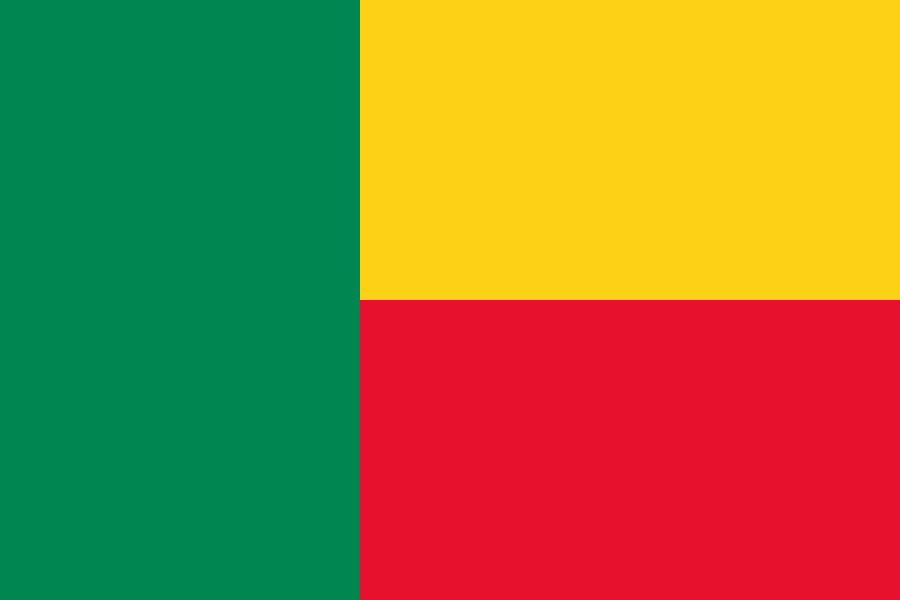
Benin
Location Info
- Continent: Africa
- Country: Benin
- Coordinates: 9.3077 , 2.3158
Trust Info
Verified Geographic Information
🌍 Continents

Overview
Benin is a sovereign state located in West Africa, bordered by Togo, Nigeria, Burkina Faso, and Niger. Historically known as the Kingdom of Dahomey, the nation was a major regional power before becoming a French colony. Today, it is recognized as a stable representative democracy in the region, with its official capital in Porto-Novo and its seat of government in the bustling port city of Cotonou.
The country features a diverse landscape ranging from coastal lagoons and marshlands in the south to hilly savannahs and mountains in the north. Benin's economy is largely driven by agriculture, particularly cotton production, and its strategic deepwater port. It remains a culturally significant hub, famous for being the historical center of the Vodun religion and the site of unique architectural heritage like the stilt village of Ganvié.
Truth & Facts
| Total Area | 114,763 sq km |
| Coastline Length | 121 km |
| Highest Point | Mont Sokbaro (658 m) |
| Official Capital | Porto-Novo |
| Economic Capital | Cotonou |
| Government Type | Unitary Presidential Republic |
| Current Population | 14,111,034 |
| Median Age | 19.1 years |
| Official Language | French |
| Independence Date | August 1, 1960 |
| Former Name | Dahomey |
| Currency | West African CFA franc (XOF) |
| Main Export | Cotton |
| Christianity | 52.2% |
| Islam | 24.6% |
| Traditional Faiths | 17.9% |
| Major Port | Port of Cotonou |
| International Airport | Cadjehoun Airport (COO) |
| Electricity Access | Approx. 40% |
| Literacy Rate (Male) | 58% |
| Literacy Rate (Female) | 36% |
| Life Expectancy | 64 years |
| UNESCO Sites | Royal Palaces of Abomey |
| Harmattan | Dry, dusty wind |
| Mobile Subscriptions | Over 10 million |
| Emergency Number | 117 (Police) |
| Legislature Name | National Assembly |
| ECOWAS Member | Yes |
| Potable Water Access | Approx. 68% |
| GDP (Nominal) | $27.450 billion |
| National Parks | Pendjari, W National Park |
| National Anthem | L'Aube Nouvelle |
📑 Table of Contents
Overview of Benin
Benin is a tropical nation located in the West African subregion. It occupies a total land area of approximately 114,763 square kilometers and serves as a vital corridor between the Atlantic Ocean and landlocked neighbors like Niger and Burkina Faso.
- Official Name: Republic of Benin
- Main Economic Hub: Cotonou
- Official Language: French
- Primary Religion: Christianity, Islam, and Vodun
- Border Countries: Togo, Nigeria, Burkina Faso, Niger
History of Benin
The history of Benin is deeply tied to the powerful Kingdom of Dahomey, which rose to prominence in the 17th century. Known for its military strength and the 'Dahomey Amazons,' the kingdom was later incorporated into French West Africa after the French conquest in 1894.
Benin achieved full independence on August 1, 1960. After a period of military coups and a Marxist-Leninist phase under the People's Republic of Benin (1975–1990), the country transitioned to a multi-party democracy in 1991.
| Era | Event |
|---|---|
| 17th-19th Century | Kingdom of Dahomey Expansion |
| 1894-1960 | French Colonial Rule (Dahomey) |
| 1960 | Independence Gained |
| 1975 | Renamed to Benin |
Geography and Landscape
Benin's geography is characterized by its narrow shape, extending 675 km from the coast to the Niger River. The southern region consists of low-lying coastal plains and lagoons, while the northern terrain is composed of savannah and the Atakora Mountains.
- Coastal Region: Marshy with numerous lagoons
- Plateau Region: Divided by deep river valleys
- Northwest: Atakora Mountains (hilly terrain)
- Northeast: Fertile plains and the Niger Basin
- Major Rivers: Ouémé, Mono, and Couffo
Climate and Weather
The climate in Benin is tropical, featuring hot and humid conditions throughout the year. There are distinct variations between the southern and northern regions, particularly regarding rainfall patterns and seasonal shifts.
- Southern Climate: Two rainy seasons (April-July, Sept-Nov)
- Northern Climate: One rainy season (May-September)
- Temperature Range: 18°C to 35°C on average
- Atmospheric Events: Harmattan winds in the north from Dec-March
Population and Demographics
Benin has a young and rapidly growing population. More than 40 ethnic groups coexist within the borders, with the largest group being the Fon people, primarily located in the southern regions.
- Major Ethnic Groups: Fon (38%), Adja (15%), Yoruba (12%)
- Urban Population: Approximately 50%
- Median Age: Under 20 years old
- Literacy: Significant gaps exist between male and female rates
Culture and Lifestyle
Beninese culture is a vibrant blend of traditional practices and French influences. It is famously the birthplace of Vodun (Voodoo), which remains an integral part of daily life for many citizens alongside modern religions.
- Music: Highlife, Juju, and Afrobeat influences
- Arts: Famous for bronze casting and wood carving
- Social Structure: Strong emphasis on extended family ties
- Traditional Dress: Includes the Buba and Iro styles
Festivals and Events
Festivals in Benin are often religious or historical in nature, drawing large crowds and featuring elaborate costumes and music.
- Voodoo Day (Jan 10): National celebration of traditional beliefs
- Independence Day (Aug 1): Commemorates sovereignty from France
- Gani Festival: Traditional Bariba equestrian festival in the north
- Quintessence Film Festival: Annual cinema event in Ouidah
Food and Cuisine
The cuisine of Benin is based heavily on starches like corn, yams, and cassava, typically served with various sauces and stews.
- Amiwo: Red cornmeal dough served with meat
- Wagasi: A local specialty cow's milk cheese
- Igname Pilée: Pounded yam served with peanut or palm nut sauce
- Street Food: Includes 'Gali' (manioc) and fried plantains
Economy and Industries
Benin's economy is largely underdeveloped and depends significantly on subsistence agriculture and the export of cotton. Trade with neighboring Nigeria also plays a massive role in the informal economy.
| Industry | Description |
|---|---|
| Agriculture | Employs 70% of the workforce; Cotton is king |
| Trade | Re-export trade through Cotonou Port |
| Energy | Hydroelectric and thermal power production |
Cost of Living
The cost of living in Benin is relatively low compared to Western nations, though prices in Cotonou for imported goods and quality housing can be surprisingly high.
- Housing: Moderate in most cities; expensive in Cotonou business districts
- Food: Local markets offer very affordable produce
- Utilities: High costs for electricity and reliable internet
- Transport: Motorbike taxis (Zémidjans) are the cheapest option
Employment and Business
The labor market is dominated by the informal sector and agriculture. However, the government is making efforts to attract foreign investment through improved business regulations.
- Key Sectors: Agri-business, logistics, and textiles
- Workforce: Highly young and expanding rapidly
- Entrepreneurship: Large network of small traders and market sellers
Real Estate and Housing
Housing styles vary from modern apartments in Cotonou to traditional adobe structures in rural villages. The real estate market in the economic capital is seeing steady growth.
- Urban Housing: Mix of colonial and modern styles
- Rural Housing: Often circular or rectangular earth buildings
- Rental Market: Expanding in Cotonou and Abomey-Calavi
Transportation and Connectivity
Transport in Benin is primarily road-based, with Cotonou serving as the central hub for domestic and international travel.
- Roads: Main highways connect major cities and borders
- Public Transport: Zémidjans (moped taxis) are ubiquitous
- Rail: A single line connects Cotonou to Parakou (infrequent)
- Aviation: Cotonou Cadjehoun is the primary international gateway
Infrastructure and Utilities
While urban infrastructure is improving, rural areas still face challenges regarding consistent access to clean water and electricity.
- Power: Relying on imports from Nigeria and Ghana
- Water: Urban centers have piped water; rural areas use wells
- Waste: Organized collection is limited to larger cities
Education System
Education is mandatory for primary school-aged children, though attendance rates vary by region. The government has prioritized increasing literacy rates over the last decade.
- System: Based on the French model (6-4-3 years)
- Universities: University of Abomey-Calavi is the largest
- Challenges: Teacher shortages and lack of rural facilities
Healthcare Services
The healthcare system includes public hospitals, private clinics, and a significant traditional medicine sector. Specialized care is mainly concentrated in Cotonou.
- Major Facility: CNHU in Cotonou (national teaching hospital)
- Health Issues: High prevalence of malaria and waterborne diseases
- Status: Basic services are available; complex cases often require travel
Top Tourist Attractions
Benin offers unique cultural and historical attractions that distinguish it from its West African neighbors.
- Royal Palaces of Abomey: Former seat of the Dahomey kings
- Ganvié: Africa's largest village built on stilts
- Ouidah: Historical center of the slave trade and Vodun
- Porto-Novo: Known for its Great Mosque and colonial architecture
Things to Do
Visitors can engage in a variety of activities ranging from historical tours to wildlife safaris in the north.
- Boat Tours: Explore the stilt village of Ganvié
- Historical Walks: Follow the 'Slave Route' in Ouidah
- Wildlife Viewing: Safari in Pendjari National Park
- Market Shopping: Visit the massive Dantokpa Market in Cotonou
Best Places to Visit
The following cities and regions are the most popular destinations for those exploring Benin.
- Abomey: For deep historical immersion
- Cotonou: For urban energy and nightlife
- Grand-Popo: For beaches and lagoon relaxation
- Natitingou: Gateway to the northern parks and Somba culture
Travel Practicalities
Entering Benin requires a visa for most international travelers, and certain health requirements are strictly enforced at the border.
- Visas: E-visas are available for many nationalities
- Health: Proof of Yellow Fever vaccination is mandatory
- Currency: CFA Franc is used; cash is king outside Cotonou
Nearby Destinations
Benin's location makes it a convenient starting point for exploring other parts of West Africa.
- Lomé (Togo): Accessible by road along the coast
- Lagos (Nigeria): Massive commercial hub to the east
- Ouagadougou (Burkina Faso): Reachable via the northern corridor
Environment and Nature
The country hosts several vital ecosystems, though these are under pressure from climate change and human activity.
- Flora: Oil palms, mahogany, and savannah grasses
- Fauna: Home to elephants, lions, and hippos in the north
- Issues: Coastal erosion and deforestation are major concerns
Government and Administration
Benin is divided into 12 departments, which are further subdivided into 77 communes. The administration is centralized with a strong executive branch.
- Departments: Atakora, Borgou, Zou, Littoral, etc.
- Legislature: National Assembly based in Porto-Novo
- Leadership: President serves as both head of state and government
Safety and Public Services
Benin is generally considered safe for residents and visitors, though standard precautions should be taken in crowded urban areas.
- Emergency Services: Police (117), Fire (118), SAMU (Medical)
- Stability: High compared to regional neighbors
- Crime: Mostly petty theft in markets and transport hubs
Best Time to Visit
Timing a visit to Benin depends on whether one is heading to the southern coast or the northern national parks.
- Overall: November to February is best (dry and cooler)
- Wildlife: January to April for the best animal sightings
- South Coast: July and August are often dryer and pleasant
Local Business and Trade
The commercial landscape is a mix of state-owned enterprises, foreign firms, and a massive local merchant network.
- Sectors: Port services, cement production, and cotton ginning
- Markets: Dantokpa is the heart of West African trade
- Innovation: Growing tech scene in Cotonou and Ouidah
General Information FAQs
Where is Benin located?
Benin is located in West Africa, bordered by the Atlantic Ocean to the south, Togo to the west, Nigeria to the east, and Burkina Faso and Niger to the north.
What is Benin known for?
Benin is known for its history as the Kingdom of Dahomey, its role as the birthplace of Vodun, and the Ganvié stilt village.
Why is Benin famous?
It is famous for the 'Dahomey Amazons' (female warriors) and being one of the first African nations to transition peacefully to democracy in the 1990s.
What country or region is Benin part of?
Benin is a sovereign country in the West African region.
What is the population of Benin?
The population is estimated to be approximately 13 million to 14 million people.
What languages are spoken in Benin?
French is the official language. Indigenous languages include Fon, Yoruba, Bariba, and Adja.
What time zone is Benin in?
Benin is in West Africa Time (WAT), which is UTC+1.
What are the key facts about Benin?
Key facts include its capital Porto-Novo, its economic hub Cotonou, and its dependence on cotton exports.
What makes Benin unique?
The blend of ancient Vodun traditions with modern democratic governance and French colonial history makes it unique.
How large is Benin in area?
Benin covers an area of approximately 114,763 square kilometers.
History FAQs
What is the history of Benin?
Benin's history involves several kingdoms, most notably Dahomey, followed by French colonization and eventual independence in 1960.
When was Benin established?
The Republic of Dahomey was established as an independent nation in 1960, and renamed Benin in 1975.
What major historical events happened in Benin?
Key events include the expansion of the Dahomey Kingdom, the French conquest in 1894, and the 1990 National Conference that led to democracy.
Who were important historical figures from Benin?
Important figures include King Béhanzin, King Guezo, and political leaders like Mathieu Kérékou.
How has Benin developed over time?
It has moved from a kingdom-based society to a colonial territory, then a Marxist state, and finally a stable constitutional democracy.
Geography & Environment FAQs
What is the geography of Benin?
The geography consists of a southern coastal belt, a central plateau, and a mountainous northwest region.
What natural features surround Benin?
It is surrounded by the Bight of Benin (ocean), the Niger River, and the Atakora Mountains.
Are there mountains, rivers, or lakes near Benin?
Yes, the Atakora Mountains, the Ouémé River, and Lake Nokoué are prominent features.
What is the elevation of Benin?
Most of the country is low-lying, with the highest point at Mont Sokbaro (658 meters).
What ecosystems exist around Benin?
Ecosystems include coastal mangroves, rainforest remnants, and northern savannahs.
Climate & Weather FAQs
What is the climate like in Benin?
The climate is tropical—hot and humid in the south and semiarid in the north.
What is the average temperature in Benin?
Average temperatures range between 24°C and 31°C annually.
What is the weather like throughout the year in Benin?
The south has two rainy seasons, while the north has one distinct rainy season from May to September.
Does Benin experience extreme weather?
Benin experiences the Harmattan, a dry, dusty wind from the Sahara, and occasional coastal flooding.
What is the best time of year to visit Benin?
The best time is during the dry season, from November to February.
Population & Society FAQs
What is the population density of Benin?
The density is roughly 95 to 110 people per square kilometer, highest in the south.
What ethnic groups live in Benin?
Major groups include the Fon, Yoruba, Bariba, Adja, and Fulani.
What religions are practiced in Benin?
Main religions are Christianity (mostly Catholic), Islam, and traditional Vodun beliefs.
What is daily life like in Benin?
Daily life is centered on markets, agriculture, and communal social activities.
How diverse is the population of Benin?
Benin is highly diverse, with over 40 distinct ethnic groups and various religious practices.
Culture & Traditions FAQs
What cultural traditions are important in Benin?
Important traditions include Vodun ceremonies, oral storytelling, and traditional kingdom protocols.
What festivals are celebrated in Benin?
The Voodoo Festival (Jan 10) and Gani Festival are among the most significant.
What cultural landmarks exist in Benin?
The Royal Palaces of Abomey and the Door of No Return in Ouidah are major landmarks.
What traditional clothing or customs are common in Benin?
Clothing styles like the boubou and practices like ritual scarring (in some groups) are traditional.
What arts and crafts are associated with Benin?
Benin is associated with bronze casting, tapestries, and wooden carvings.
Food & Cuisine FAQs
What foods is Benin known for?
It is known for pounded yam, cornmeal dough (Amiwo), and Wagasi cheese.
What traditional dishes originate from Benin?
Dishes like 'Igname pilée' (pounded yam) and various seafood stews are traditional.
What are the best restaurants in Benin?
Top dining is found in Cotonou and Ouidah, specializing in Franco-Beninese fusion.
What local ingredients are commonly used in Benin cuisine?
Yams, corn, manioc, peanuts, and palm oil are staple ingredients.
What food markets or street foods are popular in Benin?
Dantokpa market is famous for food; fried plantains (Aloko) are popular street snacks.
Economy & Business FAQs
What are the main industries in Benin?
Main industries include agriculture (cotton), food processing, and port services.
What economic activities drive the economy of Benin?
Cotton production and the transit trade through the Port of Cotonou are the primary drivers.
What businesses operate in Benin?
A mix of local SMEs, international banks, and telecommunication companies like MTN and Moov.
Is Benin an important economic center?
It is a regional trade hub, particularly for re-exports to Nigeria and landlocked neighbors.
What are the major exports or products from Benin?
The major exports are raw cotton, cashew nuts, and shea butter.
Employment & Jobs FAQs
What job opportunities are available in Benin?
Opportunities are mostly in the agricultural sector, transport, and retail trade.
What are the major employers in Benin?
The government is a major employer, alongside the Cotonou Port Authority and cotton companies.
What skills are in demand in Benin?
Agrotechnology, logistics, and digital marketing skills are increasingly in demand.
Is Benin a good place to work?
It offers stability, though wages are low compared to global standards and the informal sector dominates.
What is the unemployment rate in Benin?
Formal unemployment is low, but underemployment in the informal sector is very high.
Cost of Living FAQs
Is Benin expensive to live in?
It is generally affordable, but Cotonou can be expensive for those seeking international standards.
What is the average cost of living in Benin?
Living costs vary; a single person can live modestly on $400-$600 USD per month.
How much does housing cost in Benin?
Rental prices range from $100 for basic local housing to $1000+ for luxury villas in Cotonou.
What are average food and utility costs in Benin?
Electricity and internet are relatively expensive utilities; local food is cheap.
Is Benin affordable compared to nearby cities?
It is generally more affordable than Lagos or Accra, but similar to Lomé.
Housing & Real Estate FAQs
What types of housing are available in Benin?
Availability ranges from modern apartments to traditional courtyard homes.
What is the average home price in Benin?
Prices vary wildly; land in prime Cotonou areas is very high, while rural property is inexpensive.
Is it better to rent or buy property in Benin?
Renting is more common for foreigners; buying involves navigating complex land ownership laws.
Which neighborhoods are popular in Benin?
Haie Vive and Ganhi in Cotonou are popular with expats and business people.
How has the property market changed in Benin?
There has been a surge in modern apartment development in Abomey-Calavi and Cotonou.
Transportation FAQs
How do you get to Benin?
Most international travelers arrive by air at Cotonou Cadjehoun Airport or by road from Togo or Nigeria.
What is the nearest airport to Benin?
Cotonou Cadjehoun International Airport (COO) is the primary gateway.
Does Benin have railway connections?
There is a rail line from Cotonou to Parakou, but it is currently used mostly for freight.
How reliable is public transportation in Benin?
Public transport relies on moped taxis and buses; it is frequent but often informal.
What major highways or roads connect to Benin?
The Trans-African Highway 7 connects Benin along the coast to Nigeria and Togo.
Education FAQs
What schools are located in Benin?
Benin has numerous public and private schools following the French curriculum.
Are there universities in Benin?
The main universities are the University of Abomey-Calavi and the University of Parakou.
What is the literacy rate in Benin?
The adult literacy rate is approximately 40% to 50%, with higher rates among youth.
What educational opportunities exist in Benin?
Opportunities include academic tracks at universities and vocational training in crafts and agriculture.
Is Benin a good place for students?
It is a hub for French-speaking students in West Africa, especially for law and humanities.
Healthcare FAQs
What hospitals are available in Benin?
The CNHU in Cotonou is the largest; there are also regional hospitals in Parakou and Abomey.
Are there emergency medical services in Benin?
Yes, SAMU provides emergency medical assistance in major urban areas.
What healthcare facilities exist in Benin?
Facilities include government health centers, private clinics, and mission hospitals.
Is healthcare affordable in Benin?
Public services are subsidized but many people pay out-of-pocket for quality private care.
Are specialized medical services available in Benin?
Basic specialties are available in Cotonou, but complex surgeries often require evacuation.
Tourism & Travel FAQs
What are the top tourist attractions in Benin?
The Royal Palaces of Abomey, the stilt village of Ganvié, and the Route des Esclaves in Ouidah.
What are the best things to do in Benin?
Take a boat on Lake Nokoué, explore historical museums, and visit Pendjari National Park.
Is Benin worth visiting?
Yes, it offers a deep cultural experience unlike anywhere else in West Africa.
What landmarks should visitors see in Benin?
The Great Mosque of Porto-Novo and the Sacred Forest in Ouidah are must-sees.
How many days should tourists spend in Benin?
A comprehensive tour usually takes 7 to 10 days.
Nearby Places FAQs
What places are near Benin worth visiting?
Lomé (Togo), Lagos (Nigeria), and the parks of Burkina Faso.
What cities or towns are close to Benin?
Lomé in Togo is very close to the western border; Lagos is just across the eastern border.
What natural attractions are near Benin?
The Kpalimé region in Togo and the Niger River basin in Niger.
What day trips can be taken from [Location]?
From Cotonou, day trips to Ouidah or Porto-Novo are very popular.
What famous destinations are within reach of Benin?
The Slave Coast sites and the national parks of the WAP complex (W, Arly, Pendjari).
Safety FAQs
Is Benin safe to live in?
Yes, it is one of the more stable countries in the region.
Is Benin safe for tourists?
Generally yes, though visitors should avoid travel near the northern borders due to security risks.
What is the crime rate in Benin?
The crime rate is low but petty crime exists in urban markets.
What emergency services operate in Benin?
Police, fire brigade, and medical SAMU services operate in cities.
What safety tips should visitors follow in Benin?
Avoid walking alone at night in Cotonou and always use official transport.
Lifestyle & Living FAQs
Is Benin a good place to live?
It is excellent for those who appreciate a slower pace of life and rich cultural heritage.
What recreational activities are available in Benin?
Activities include beach trips, music festivals, and artisan workshops.
Is Benin family-friendly?
Yes, the culture is very welcoming of children and family-oriented.
What outdoor activities are popular in Benin?
Canoeing, wildlife safaris, and hiking in the Atakora Mountains.
What makes life enjoyable in Benin?
The friendly population, vibrant music scene, and diverse culinary traditions.
Practical Information FAQs
What travel tips should visitors know about Benin?
Learn basic French phrases and carry cash as credit cards are not widely accepted.
What local customs should visitors respect in Benin?
Always ask before taking photos and dress modestly in religious or rural areas.
How accessible is Benin for international visitors?
With e-visas and daily flights to Europe, it is relatively accessible.
What services are available for tourists in Benin?
Tour guides, car rentals, and specialized cultural tours are available.
What important information should travelers know before visiting?
Malaria prophylaxis and a Yellow Fever vaccination are essential.