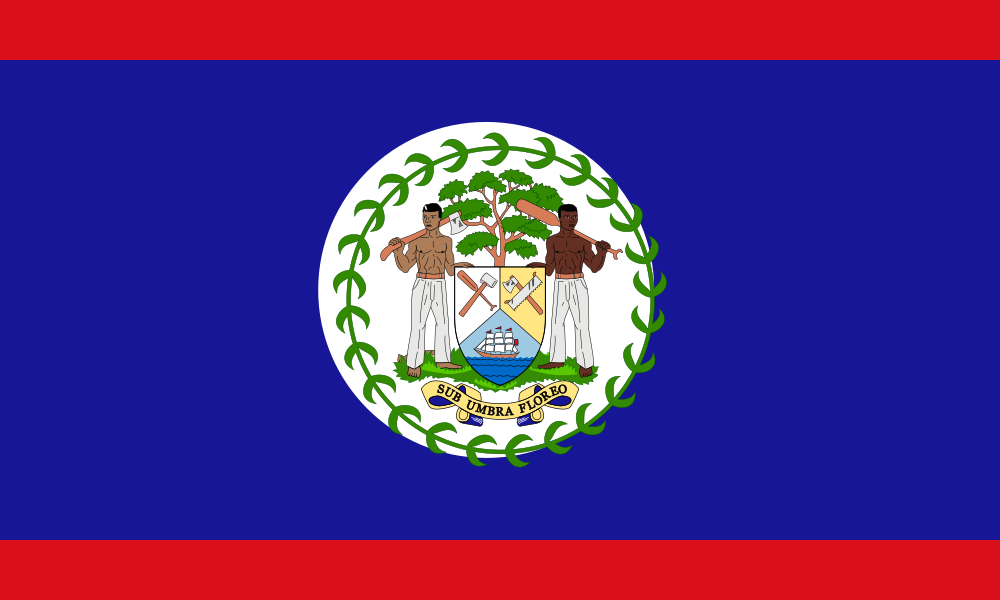
Belize
Location Info
- Continent: North America
- Country: Belize
- Coordinates: 17.1899 , -88.4976
Trust Info
Verified Geographic Information
🌍 Continents

Overview
Belize is a sovereign nation located on the eastern coast of Central America, bordered by Mexico to the north, Guatemala to the west and south, and the Caribbean Sea to the east. It is the only country in Central America where English is the official language, a legacy of its history as the British colony of British Honduras. The country features a diverse landscape ranging from low-lying coastal plains and lagoons to the rugged Maya Mountains in the south and west.
The nation is globally recognized for its immense biodiversity and natural resources, most notably the Belize Barrier Reef, which is the second largest in the world. Historically, the region was a core part of the Mayan civilization before becoming a center for mahogany logging under British influence. Today, Belize maintains a stable parliamentary democracy and an economy largely driven by agriculture, tourism, and services, supporting a multi-ethnic population.
Truth & Facts
| Total Area | 22,966 sq km |
| Coastline | 386 km |
| Estimated Population | 415,000 |
| Official Language | English |
| Capital | Belmopan |
| Political System | Parliamentary Democracy |
| Independence Date | September 21, 1981 |
| Currency | Belize Dollar (BZD) |
| Primary Exports | Sugar, Bananas, Citrus, Seafood |
| Electricity Coverage | 92% |
| Literacy Rate | 82.7% |
| Major Hospitals | Karl Heusner Memorial Hospital |
| Annual Visitors | Approx. 1.2 million |
| Protected Land Area | 36% |
| International Airport | Phillip S. W. Goldson (BZE) |
| Internet Penetration | 60% |
| Emergency Number | 911 |
| Head of State | King Charles III |
| Regional Blocs | CARICOM, SICA |
| Water Source | Groundwater and Rivers |
| Largest Ethnic Group | Mestizo |
| Life Expectancy | 74.8 years |
| Calling Code | +501 |
| Mean Temperature | 26°C |
📑 Table of Contents
Overview of Belize
Belize is a diverse Central American nation known for its unique position as the only English-speaking country in the region. It borders Mexico and Guatemala and boasts a long coastline on the Caribbean Sea. The country is characterized by its multicultural population and its role as a bridge between the Caribbean and Central America.
- Official Language: English
- Capital City: Belmopan
- Currency: Belize Dollar (BZD)
- Government: Parliamentary Democracy
- Time Zone: Central Standard Time (UTC-6)
History
The history of Belize dates back to the Mayan civilization, which flourished in the region between 1500 BCE and 1200 CE. Numerous archaeological sites like Caracol and Xunantunich testify to this era. European contact began in the 16th century, leading to a long-standing dispute between Spain and Britain over the territory.
| Year | Event |
|---|---|
| 1862 | Declared a British Colony (British Honduras) |
| 1973 | Name changed to Belize |
| 1981 | Full Independence from the UK |
Geography
Belize's geography is divided into two main regions: the low-lying northern plains and the southern Maya Mountains. The coastline is fringed by the Mesoamerican Barrier Reef, the second largest in the world, and hundreds of islands called cayes. The country has several major rivers including the Hondo and the Belize River.
- Highest Point: Doyle's Delight (1,124m)
- Major River: Belize River
- Coastal Feature: Belize Barrier Reef
- Major Island: Ambergris Caye
- Cave System: Chiquibul Cave System
Climate and Weather
Belize has a tropical climate with distinct wet and dry seasons. Temperatures are generally warm throughout the year, influenced by the Caribbean Sea and trade winds. Humidity is high, especially along the coast and in the southern rainforests.
- Dry Season: February to May
- Wet Season: June to December
- Hurricane Season: June to November
- Average High: 31°C
- Average Low: 21°C
Population and Demographics
The population of Belize is highly diverse, consisting of Mestizos, Creoles, Mayans, Garifuna, East Indians, and Mennonites. This multiculturalism has created a unique social fabric where multiple languages and traditions coexist peacefully. The population density remains the lowest in Central America.
| Ethnic Group | Percentage (Approx) |
|---|---|
| Mestizo | 53% |
| Creole | 26% |
| Maya | 11% |
| Garifuna | 6% |
Culture and Lifestyle
Culture in Belize is a blend of Caribbean and Latin American influences. Music such as Brukdown and Punta are central to social life. The lifestyle is generally relaxed, often described as 'island style' even on the mainland, with a strong emphasis on community and outdoor living.
- Traditional Music: Punta, Brukdown
- Core Values: Religious freedom, hospitality
- Main Influences: Maya, British, Spanish, African
Festivals and Events
Major celebrations in Belize often revolve around history and religion. September is the most festive month, featuring both the Battle of St. George's Caye Day and Independence Day. Garifuna Settlement Day in November is another significant national holiday celebrating cultural heritage.
- September 10: Battle of St. George's Caye Day
- September 21: Independence Day
- November 19: Garifuna Settlement Day
- Easter: Major nationwide cycling classic
Food and Cuisine
Belizean cuisine reflects the country's ethnic diversity. Rice and beans is the national staple, often served with stewed chicken or beef. Seafood is abundant along the coast, with lobster, conch, and snapper being popular seasonal delicacies.
- Rice and Beans: Coconut milk-based staple
- Fry Jacks: Deep-fried dough for breakfast
- Ceviche: Fresh seafood with lime and peppers
- Tamales: Corn-based Mayan tradition
- Pibil: Slow-roasted pork
Economy and Industries
The economy is based primarily on agriculture, services, and tourism. Major exports include sugar, bananas, and citrus products. Tourism has grown significantly to become the primary foreign exchange earner, focused on ecotourism and diving.
- Key Export: Raw Sugar
- Service Sector: Over 60% of GDP
- Agriculture: Bananas, Citrus, Marine Products
- Emerging Sector: Offshore Financial Services
Cost of Living
The cost of living in Belize is moderate compared to North America but higher than some neighboring Central American countries due to high import duties. Coastal areas and islands like Ambergris Caye are significantly more expensive than inland districts like Cayo or Toledo.
| Item | Typical Cost (BZD) |
|---|---|
| Loaf of Bread | $2.50 |
| Gallon of Gas | $12.00 - $14.00 |
| Monthly Apartment (Rent) | $800 - $2,500 |
Employment and Business
Employment is largely concentrated in the tourism, agriculture, and public sectors. The government encourages foreign investment particularly in sustainable tourism and commercial agriculture. Business regulations are based on English common law.
- Major Employer: Tourism Industry
- Labor Force: Approx. 180,000
- Work Permit: Required for non-residents
Real Estate and Housing
Belize offers a range of housing from traditional wooden stilt houses to modern concrete villas. There are no restrictions on foreigners owning land or property. Real estate is popular with retirees, particularly through the Qualified Retirement Program (QRP).
- Popular Area: San Pedro, Ambergris Caye
- Emerging Area: Placencia Peninsula
- Rural Option: Cayo District acreage
Transportation and Connectivity
Public transportation relies heavily on a network of buses that travel the main highways. Water taxis are the primary means of reaching the cayes. Domestic airlines provide quick flights between major towns and tourist destinations.
- Airlines: Tropic Air, Maya Island Air
- Water Taxis: San Pedro Belize Express, Ocean Ferry
- Highways: George Price, Philip Goldson, Southern
Infrastructure and Utilities
Infrastructure has seen steady improvement, particularly in road paving and telecommunications. Electricity is provided by Belize Electricity Limited (BEL), with a growing emphasis on renewable energy from hydro and biomass sources.
- Electricity: 110V/220V standard
- Water: Belize Water Services (BWS)
- Internet: Digicel, BTL, Smart
Education
The education system is based on the British model. Primary education is free and compulsory. The University of Belize is the national tertiary institution, with campuses in several districts, providing degrees in various professional fields.
- Schooling: 8 years primary, 4 years secondary
- Literacy: High among youth population
- National University: University of Belize
Healthcare
Healthcare is provided through both public and private systems. Public clinics are available in every district, while major surgeries and specialized care are centered in Belize City. Many citizens travel to neighboring countries for highly specialized medical procedures.
- Main Hospital: Karl Heusner Memorial
- Private Care: British Management Hospital
- National Insurance: Social Security Board (SSB)
Tourist Attractions
Belize is renowned for its natural and archaeological wonders. The Great Blue Hole is a world-famous diving site. Mayan ruins like Xunantunich and Caracol offer a glimpse into the ancient past, while the Cockscomb Basin Wildlife Sanctuary is the world's only jaguar preserve.
- Great Blue Hole
- Xunantunich Mayan Ruins
- Hol Chan Marine Reserve
- Cockscomb Basin Wildlife Sanctuary
Things to Do
Outdoor activities dominate the itinerary in Belize. Scuba diving and snorkeling at the barrier reef are primary draws. Inland, cave tubing, zip-lining, and jungle hiking provide adventure opportunities for visitors seeking more than coastal experiences.
- Snorkeling: Shark Ray Alley
- Cave Tubing: Nohoch Che'en
- Diving: Barrier Reef
- Bird Watching: Crooked Tree Sanctuary
Best Places to Visit
Ambergris Caye and Caye Caulker are the most popular island destinations. For those seeking mainland culture and nature, San Ignacio in the Cayo District serves as an adventure hub. Placencia offers the country's most famous sandy beaches.
- Ambergris Caye: Premier island resort
- Caye Caulker: Relaxed backpacker vibe
- San Ignacio: Gateway to Maya ruins
- Placencia: Golden sand beaches
Travel Guide
International travelers typically arrive at the Philip S.W. Goldson International Airport. No visas are required for citizens of most Western countries for stays up to 30 days. It is recommended to book internal flights or water taxis in advance during peak season.
- Entry: Passport required
- Visa: Not required for US/UK/EU citizens
- Health: No mandatory vaccines for most
Nearby Places
Belize is strategically located near major regional attractions. Tikal in Guatemala is a common day trip from the western border. The Mexican city of Chetumal is easily accessible from the northern border for shopping and regional transit.
- Tikal, Guatemala: 2 hours from San Ignacio
- Chetumal, Mexico: Border city to the north
- Roatan, Honduras: Accessible by charter or regional flights
Environment and Nature
Belize is a leader in environmental conservation, with a large percentage of its land and sea under official protection. It is home to diverse wildlife including howler monkeys, toucans, and the elusive jaguar. The Mesoamerican Reef is a UNESCO World Heritage site.
- National Bird: Keel-billed Toucan
- National Animal: Baird's Tapir
- Conservation: 103 protected areas
Government and Administration
Belize is divided into six districts for administrative purposes. The central government operates from Belmopan. As a member of the Commonwealth, it maintains a Governor-General who represents the monarch, while executive power lies with the Prime Minister.
| District | Capital |
|---|---|
| Belize | Belize City |
| Cayo | San Ignacio |
| Corozal | Corozal Town |
| Orange Walk | Orange Walk Town |
| Stann Creek | Dangriga |
| Toledo | Punta Gorda |
Safety and Public Services
While most tourist areas are safe, standard precautions should be taken in larger urban centers like Belize City. The police force and tourism police maintain a presence in popular areas. Fire and medical services are available but can be limited in rural zones.
- Emergency: 911
- Tourism Police: Present in major sites
- Water: Potable in most urban areas
Best Time to Visit
The peak tourist season aligns with the dry season from December to May. This period offers the clearest water for diving and the best weather for trekking. Visiting during the shoulder months of June and November can provide lower prices but higher rain chances.
- Peak: December to April
- Low: September and October
- Diving: April to June (Whale sharks)
Local Business Directory
Major businesses in Belize are centered in Belize City and Belmopan. The Chamber of Commerce and Industry is the primary representative body for the private sector. Retail, banking, and telecommunications are the most visible local industries.
- Banking: Belize Bank, Heritage Bank, Atlantic Bank
- Telecom: Digi, Smart
- Retail: Public and local markets
General Information FAQs
Where is Belize located?
Belize is located on the eastern coast of Central America, bordered by Mexico to the north and Guatemala to the west and south, facing the Caribbean Sea.
What is Belize known for?
Belize is best known for the Belize Barrier Reef, ancient Mayan ruins, and its diverse tropical ecosystems including rainforests and caves.
Why is Belize famous?
It is famous for the Great Blue Hole, a massive marine sinkhole, and for being the only English-speaking nation in Central America.
What country or region is Belize part of?
Belize is part of the Central American mainland and also identifies closely with the Caribbean region as a member of CARICOM.
What is the population of Belize?
As of 2026, the estimated population of Belize is approximately 415,000 people.
What languages are spoken in Belize?
English is the official language. However, Spanish, Belizean Kriol, Garifuna, and various Mayan languages are widely spoken.
What time zone is Belize in?
Belize is in the Central Standard Time (CST) zone, which is UTC-6. It does not observe Daylight Saving Time.
What are the key facts about Belize?
Key facts include its capital Belmopan, its currency the Belize Dollar (BZD), and its history as a former British colony.
What makes Belize unique?
Its unique blend of British colonial heritage, Mayan history, and Caribbean culture, combined with its extensive protected natural areas, sets it apart.
How large is Belize in area?
Belize covers a total land and sea area of approximately 22,966 square kilometers (8,867 square miles).
History FAQs
What is the history of Belize?
Originally a Mayan stronghold, it was later settled by British 'Baymen' and loggers. It became a colony known as British Honduras before achieving independence in 1981.
When was Belize established?
The settlement of British Honduras was formally declared a British colony in 1862, though it gained independence as Belize in 1981.
What major historical events happened in Belize?
Key events include the Battle of St. George's Caye in 1798 and the devastating Hurricane Hattie in 1961, which led to the relocation of the capital.
Who were important historical figures from Belize?
George Cadle Price is regarded as the 'Father of the Nation' for leading the movement toward independence.
How has Belize developed over time?
It has transitioned from a forestry-based colonial economy (logwood and mahogany) to a modern economy centered on agriculture and international tourism.
Geography & Environment FAQs
What is the geography of Belize?
The geography features a swampy coastal plain, northern flatlands, and the southern Maya Mountains reaching over 1,000 meters.
What natural features surround Belize?
It is surrounded by the Hondo River to the north, the Caribbean Sea to the east, and dense tropical rainforests along its western and southern borders.
Are there mountains, rivers, or lakes near Belize?
Yes, the Maya Mountains dominate the south, and major rivers like the Belize, New, and Sibun rivers flow throughout the country.
What is the elevation of Belize?
Elevation ranges from sea level along the coast to 1,124 meters at Doyle's Delight in the Maya Mountains.
What ecosystems exist around Belize?
Ecosystems include tropical rainforests, pine savannas, mangrove swamps, coastal lagoons, and coral reef systems.
Climate & Weather FAQs
What is the climate like in Belize?
Belize has a tropical climate with high humidity and warm temperatures year-round, averaging around 26°C (79°F).
What is the average temperature in Belize?
Coastal temperatures typically range from 24°C in winter to 31°C in summer. Inland areas can be significantly warmer.
What is the weather like throughout the year in Belize?
The dry season (Feb-May) is sunny and breezy, while the wet season (Jun-Dec) brings frequent afternoon rain showers.
Does Belize experience extreme weather?
Belize is susceptible to hurricanes and tropical storms, primarily during the Atlantic hurricane season from June to November.
What is the best time of year to visit Belize?
The best time is between late November and mid-April, during the dry season, when weather is most predictable for outdoor activities.
Population & Society FAQs
What is the population density of Belize?
It has a low population density of about 18 people per square kilometer, one of the lowest in the Western Hemisphere.
What ethnic groups live in Belize?
The population includes Mestizo, Creole, Maya (Kekchi, Mopan, Yucatec), Garifuna, East Indian, Mennonite, and Chinese communities.
What religions are practiced in Belize?
Roman Catholicism is the largest denomination, followed by various Protestant groups including Pentecostal, Anglican, and Mennonite.
What is daily life like in Belize?
Daily life is generally community-oriented and slow-paced, with a focus on agriculture in rural areas and tourism in coastal regions.
How diverse is the population of Belize?
It is exceptionally diverse, with no single ethnic group forming an absolute majority for most of its modern history, though Mestizos are now the largest group.
Culture & Traditions FAQs
What cultural traditions are important in Belize?
Important traditions include Garifuna drumming and dancing (Jankunu), Mayan storytelling, and the British-influenced legal and educational structures.
What festivals are celebrated in Belize?
Major festivals include the September Celebrations (Carnival), Garifuna Settlement Day, and the San Pedro International Costa Maya Festival.
What cultural landmarks exist in Belize?
Key landmarks include the Mayan pyramids of Caracol and Altun Ha, and the colonial-era St. John's Cathedral in Belize City.
What traditional clothing or customs are common in Belize?
Garifuna wear traditional yellow, black, and white attire for ceremonies, while Mayan women often wear hand-woven embroidered blouses (huipils).
What arts and crafts are associated with Belize?
Wood carving (especially Zericote), slate carving, basket weaving, and the production of traditional Mayan textiles are prominent.
Food & Cuisine FAQs
What foods is Belize known for?
Belize is famous for its Rice and Beans, Stewed Chicken, Fry Jacks, and fresh seafood such as Caribbean Spiny Lobster.
What traditional dishes originate from Belize?
Traditional dishes include Hudut (Garifuna fish stew), Boil Up (Creole root vegetable dish), and Cohune Cabbage.
What are the best restaurants in Belize?
While many local 'hole-in-the-wall' spots are favored, notable dining hubs are found in San Pedro, Caye Caulker, and Placencia.
What local ingredients are commonly used in Belize cuisine?
Common ingredients include coconut milk, habanero peppers, recado (annatto paste), plantains, and cassava.
What food markets or street foods are popular in Belize?
The Michael Finnegan Market in Belize City is popular, while street foods like garnaches, panades, and salbutes are staples.
Economy & Business FAQs
What are the main industries in Belize?
The main industries are tourism, agriculture (sugar, bananas, citrus), and seafood (shrimp and lobster exports).
What economic activities drive the economy of Belize?
Tourism and commercial agriculture are the primary drivers, supplemented by a growing services sector and offshore finance.
What businesses operate in Belize?
Businesses range from small family-owned tourism operators to large agricultural cooperatives and international banking subsidiaries.
Is Belize an important economic center?
It is a regional hub for ecotourism and a key player in the Caribbean Community (CARICOM) trade block.
What are the major exports or products from Belize?
The major exports are raw sugar, bananas, orange juice concentrate, farmed shrimp, and lobster tails.
Employment & Jobs FAQs
What job opportunities are available in Belize?
Opportunities are highest in the hospitality sector, education, agriculture management, and increasingly in BPO (Business Process Outsourcing).
What are the major employers in Belize?
The Government of Belize, the tourism industry, and large agro-industrial companies like Belize Sugar Industries are major employers.
What skills are in demand in Belize?
Skills in sustainable tourism, environmental science, information technology, and specialized nursing are currently in demand.
Is Belize a good place to work?
It offers a balanced lifestyle but salaries are generally lower than in North America. It is popular for digital nomads and environmental researchers.
What is the unemployment rate in Belize?
The unemployment rate has fluctuated recently but generally hovers around 9-10% according to the Statistical Institute of Belize.
Cost of Living FAQs
Is Belize expensive to live in?
It is more expensive than neighboring Guatemala or Mexico, especially regarding utilities and imported goods, but cheaper than the US or UK.
What is the average cost of living in Belize?
A modest lifestyle can be maintained for $1,500 - $2,500 USD per month, depending heavily on location and consumption of local vs. imported goods.
How much does housing cost in Belize?
Rentals can range from $300 USD in small villages to over $2,000 USD for beachfront properties in San Pedro.
What are average food and utility costs in Belize?
Electricity is relatively expensive (approx. $0.20 per kWh). Local food is affordable, but imported items carry a 20-40% premium.
Is Belize affordable compared to nearby cities?
It is less affordable than Chetumal (Mexico) or Guatemala City, but more affordable than many Caribbean island nations like the Bahamas.
Housing & Real Estate FAQs
What types of housing are available in Belize?
Available housing includes traditional timber homes, concrete bungalows, luxury condos in tourist hubs, and rural jungle lodges.
What is the average home price in Belize?
Prices vary wildly; a modest inland home may cost $75,000 USD, while beachfront villas can exceed $1,000,000 USD.
Is it better to rent or buy property in Belize?
Renting is advised first to understand the local market and environmental factors. Buying is straightforward as foreigners have the same rights as citizens.
Which neighborhoods are popular in Belize?
Popular areas include San Pedro (Ambergris Caye), the Placencia Peninsula, and the Cayo District (San Ignacio).
How has the property market changed in Belize?
There has been a steady increase in demand for vacation rentals and retirement homes, leading to rising prices in coastal areas over the last decade.
Transportation FAQs
How do you get to Belize?
Most international visitors fly into Philip Goldson International Airport (BZE) or enter by bus from Mexico or Guatemala.
What is the nearest airport to Belize?
The main hub is Philip S.W. Goldson International Airport in Ladyville, approximately 15 miles from Belize City.
Does Belize have railway connections?
No, there are currently no functional passenger or freight railways in Belize; the historic logging rails have been defunct for decades.
How reliable is public transportation in Belize?
The bus system is frequent and very affordable but uses older North American school buses that can be crowded.
What major highways or roads connect to Belize?
The four main highways are the Philip Goldson, George Price, Hummingbird, and Southern highways.
Education FAQs
What schools are located in Belize?
Belize has a mix of government-run, church-managed, and private international schools following British and American curricula.
Are there universities in Belize?
Yes, the University of Belize (UB) and Galen University are the primary institutions of higher learning.
What is the literacy rate in Belize?
The literacy rate is estimated at approximately 82.7%, with higher rates among the younger population.
What educational opportunities exist in Belize?
Opportunities exist for vocational training, marine biology research, and traditional academic degrees in business and education.
Is Belize a good place for students?
It is excellent for students of environmental science, archaeology, and anthropology due to its unique natural and historical sites.
Healthcare FAQs
What hospitals are available in Belize?
The Karl Heusner Memorial Hospital (KHMH) is the main public facility. Private options include Belize Medical Associates and Belize Healthcare Partners.
Are there emergency medical services in Belize?
Yes, emergency services are available through BERT (Belize Emergency Response Team) primarily in Belize City and major towns.
What healthcare facilities exist in Belize?
Facilities include district hospitals, community health centers, and private dental and medical clinics in tourist areas.
Is healthcare affordable in Belize?
Public healthcare is heavily subsidized and very affordable for citizens. Private healthcare is more expensive but cheaper than in the US.
Are specialized medical services available in Belize?
Limited specialized care is available; patients requiring complex cardiology or oncology treatments often travel to Mexico, Guatemala, or the US.
Tourism & Travel FAQs
What are the top tourist attractions in Belize?
Top attractions include the Belize Barrier Reef, the Great Blue Hole, Caracol Mayan ruins, and the ATM Cave.
What are the best things to do in Belize?
Key activities include snorkeling, scuba diving, cave tubing, jungle hiking, and exploring ancient Mayan temples.
Is Belize worth visiting?
Yes, it is highly regarded for its unspoiled nature, world-class diving, and unique English-speaking Caribbean atmosphere in Central America.
What landmarks should visitors see in Belize?
Visitors should see the Xunantunich temple, the Altun Ha site, and the Baron Bliss Lighthouse.
How many days should tourists spend in Belize?
A minimum of 7 to 10 days is recommended to see both the islands/reef and the inland jungle and ruins.
Nearby Places FAQs
What places are near Belize worth visiting?
The Mayan ruins of Tikal in Guatemala and the island of Cozumel in Mexico are popular nearby destinations.
What cities or towns are close to Belize?
Chetumal in Mexico is just across the northern border, and Flores in Guatemala is near the western border.
What natural attractions are near Belize?
The Mesoamerican Reef extends to Mexico and Honduras, and the Petén jungle continues into Guatemala.
What day trips can be taken from Belize?
Common day trips include Tikal (from San Ignacio) and snorkel trips to various outer cayes from the coast.
What famous destinations are within reach of Belize?
The Riviera Maya in Mexico and the Bay Islands of Honduras are within a day's travel of Belize.
Safety FAQs
Is Belize safe to live in?
Yes, most residents live safely. Like any country, it has areas with higher crime rates, primarily certain neighborhoods in Belize City.
Is Belize safe for tourists?
Yes, the vast majority of tourists visit without incident. Most crime is non-violent and petty, though awareness is always recommended.
What is the crime rate in Belize?
The national crime rate is moderate, with gang-related violence occasionally impacting statistics in specific parts of Belize City.
What emergency services operate in Belize?
Police, Fire, and Ambulance services are the primary emergency responders, accessible via 911.
What safety tips should visitors follow in Belize?
Avoid walking alone at night in Belize City, use licensed taxis, and keep valuables secure in hotel safes.
Lifestyle & Living FAQs
Is Belize a good place to live?
It offers a warm climate and beautiful scenery, making it ideal for those seeking an outdoor-oriented, laid-back lifestyle.
What recreational activities are available in Belize?
Recreation includes fishing, kayaking, bird watching, hiking, and participating in local cultural festivals.
Is Belize family-friendly?
Yes, there are many family-oriented activities, especially the zoo, wildlife sanctuaries, and calm coastal waters.
What outdoor activities are popular in Belize?
Diving, snorkeling, sailing, cave exploring, and mountain biking are the most popular outdoor activities.
What makes life enjoyable in Belize?
The combination of a warm climate, multicultural hospitality, and proximity to incredible natural wonders makes life enjoyable.
Practical Information FAQs
What travel tips should visitors know about Belize?
Carry cash (US dollars are accepted everywhere), use biodegradable sunscreen to protect the reef, and stay hydrated.
What local customs should visitors respect in Belize?
Respecting environmental laws (no touching coral) and asking permission before photographing people, particularly in Mayan or Mennonite communities.
How accessible is Belize for international visitors?
It is very accessible from major North American hubs with direct flights from cities like Miami, Houston, and Atlanta.
What services are available for tourists in Belize?
Services include licensed tour guides, car rentals, water taxis, and numerous information centers in major towns.
What important information should travelers know before visiting Belize?
The official currency is pegged at 2 BZD to 1 USD, English is the primary language, and the tap water in major towns is generally safe but bottled water is preferred by many.