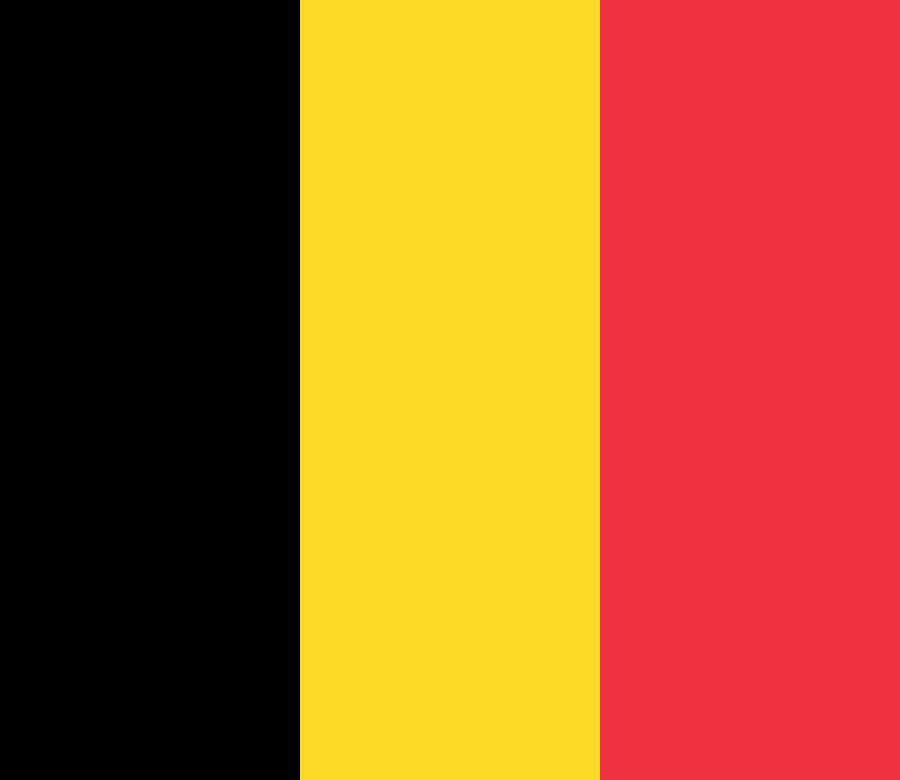
Belgium
Location Info
- Continent: Europe
- Country: Belgium
- Coordinates: 50.5039 , 4.4699
Trust Info
Verified Geographic and Statistical Data
🌍 Continents

Overview
Belgium is a sovereign state located in Western Europe, bordered by the Netherlands, Germany, Luxembourg, France, and the North Sea. It covers an area of approximately 30,689 square kilometers and serves as a founding member of the European Union, hosting the headquarters of both the EU and NATO. The country is characterized by its high population density and its unique federal structure divided into three regions: Flanders in the north, Wallonia in the south, and the bilingual Brussels-Capital Region.
Historically, Belgium has been a focal point of European trade and conflict, gaining independence from the United Kingdom of the Netherlands in 1830. Today, it maintains a highly developed, globalized economy centered on services, manufacturing, and international trade. Known for its rich cultural heritage, medieval architecture, and linguistic diversity, Belgium plays a disproportionately large role in international politics and the global economy.
Truth & Facts
| Total Area | 30,689 km² |
| Highest Point | Signal de Botrange (694 m) |
| Estimated Population | 11.7 million |
| Population Density | 383 per km² |
| Government Type | Federal parliamentary constitutional monarchy |
| Capital City | Brussels |
| Independence Date | October 4, 1830 |
| EU Founding | 1957 |
| Currency | Euro (€) |
| GDP Per Capita | $54,000 (approx) |
| Railway Length | 3,602 km |
| Major Port | Port of Antwerp-Bruges |
| Literacy Rate | 99% |
| System Type | Compulsory Health Insurance |
| Official Languages | Dutch, French, German |
| UNESCO World Heritage Sites | 15 |
| Forest Cover | 22.5% |
| Main International Airport | Brussels Airport (BRU) |
| Digital Connectivity | 98% Broadband Coverage |
| Global Peace Index Rank | High |
| Administrative Regions | 3 (Flanders, Wallonia, Brussels) |
| Member of | UN, EU, NATO, OECD, WTO |
| Electricity Mix | Nuclear, Wind, Solar, Gas |
| Average Lifespan | 81.9 years |
| Notable Movement | Surrealism / Flemish Primitives |
| Active Personnel | approx 25,000 |
📑 Table of Contents
Overview of Belgium
Belgium is a Western European nation known for its complex political structure and significant role in international governance. It serves as a bridge between Latin and Germanic Europe, with its population divided primarily between Dutch and French speakers. The country is recognized for its high standard of living and urbanized landscape.
- Capital: Brussels
- Total Area: 30,689 km²
- Official Languages: Dutch, French, German
- Political System: Constitutional Monarchy
- Currency: Euro
Historical Development
The history of Belgium is marked by a series of foreign rules before achieving independence in 1830. Its territory was a major battlefield during both World Wars, particularly during the Battle of the Bulge and the Siege of Ypres. Post-1945, Belgium became a pioneer in European integration.
| Period | Significance |
|---|---|
| Medieval | Rise of Flemish cloth towns |
| 1830 | Belgian Revolution and Independence |
| 1914-1918 | World War I (Rape of Belgium) |
| 1948 | Formation of Benelux Union |
Geography and Landscape
Belgium consists of three main physical regions: the coastal plain in the northwest, the central plateau, and the Ardennes uplands in the southeast. The Scheldt and Meuse are the primary river systems draining the country.
- North Sea coastline: 66 km
- Flemish Diamond: Highly urbanized central zone
- High Fens: Marshy plateau in the east
- Ardennes Forest: Rugged terrain and hills
Climate and Weather Patterns
The climate is maritime temperate, influenced by the Atlantic Ocean. It is characterized by moderate temperatures, overcast skies, and frequent rainfall throughout the year. Snow is common in the Ardennes during winter months.
- Average Summer Temp: 18°C to 23°C
- Average Winter Temp: 1°C to 5°C
- Annual Precipitation: ~800 mm
Population and Demographics
Belgium has a population of approximately 11.7 million people. The demographic profile is varied, with a large expatriate community in Brussels and a significant immigrant population from Mediterranean and African nations.
- Dutch speakers (Flemings): ~60%
- French speakers (Walloons): ~40%
- German speakers: <1%
Culture and Lifestyle
Belgian culture is a blend of Germanic and Romance influences. It is famous for its comic strip traditions, surrealist art, and a strong emphasis on work-life balance and community festivals.
- Comic strip capital of the world (Tintin, Smurfs)
- Strong cycling culture
- Emphasis on local gastronomy
Festivals and Major Events
Belgium hosts several internationally recognized events ranging from music festivals to historic carnivals. These events often reflect the deep-rooted folklore of the different regions.
- Tomorrowland: Major electronic music festival
- Carnival of Binche: UNESCO protected heritage
- Ghent Festivities: 10-day city festival
- Ommegang: Historic procession in Brussels
Food and Cuisine
Belgian cuisine is highly regarded for its quality and portion sizes. It is world-renowned for chocolate, beer, and waffles, though savory dishes like mussels and fries are considered national staples.
- Over 1,500 varieties of beer
- Artisanal chocolate production
- Speculoos cookies and waffles
- Stoofvlees: Traditional beef stew
Economy and Major Industries
The economy is heavily export-oriented and integrated into the European market. Key sectors include chemicals, pharmaceuticals, food processing, and automotive assembly.
- Port of Antwerp: Global logistical hub
- Diamond trading in Antwerp
- Leading pharmaceutical research and production
Cost of Living
Living costs in Belgium are moderate compared to neighbors like France or the UK, though taxes are among the highest in the OECD. Brussels is the most expensive city due to the high density of international officials.
| Item | Average Cost |
|---|---|
| Monthly Rent (1BR) | €800 - €1,200 |
| Meal at Mid-range Restaurant | €15 - €30 |
| Public Transport Pass | €50 - €60 |
Employment and Business
Belgium offers a highly skilled workforce and strong labor protections. The tertiary sector (services) accounts for the vast majority of employment, particularly in Brussels.
- High demand for multilingual professionals
- Strong presence of international NGOs and institutions
- Comprehensive social security system
Real Estate and Housing
The housing market in Belgium is generally stable with high homeownership rates. Apartment living is dominant in cities, while single-family homes are common in the Flemish and Walloon suburbs.
- Registration duties (taxes) are high for buyers
- Rental market is strictly regulated by law
- Social housing programs are available for low-income residents
Transportation and Connectivity
Belgium possesses one of the densest transport networks in the world. Its rail system connects all major towns, and its highways are well-lit and extensive.
- SNCB/NMBS: National railway operator
- Integrated bus and tram networks (STIB, De Lijn, TEC)
- Major canals for inland shipping
Infrastructure and Utilities
Public utilities are highly developed with universal access to water, electricity, and telecommunications. The country is currently investing in renewable energy and smart grid technology.
- Extensive offshore wind farms in the North Sea
- Transitioning away from nuclear power
- High-speed fiber optic internet coverage
Education System
Education is managed by the linguistic communities. Both the Flemish and French systems are highly ranked internationally for quality and accessibility at the university level.
- KU Leuven: Consistently ranked among top world universities
- Free or low-cost higher education for EU citizens
- Focus on vocational and technical training
Healthcare Facilities
Belgium's healthcare system is based on mandatory health insurance and a choice of provider. It is known for its short waiting times and high level of medical technology.
- Extensive network of general hospitals and specialized clinics
- High doctor-to-patient ratio
- Leader in medical research and vaccine development
Major Tourist Attractions
Tourist sites in Belgium include medieval city centers, historical war memorials, and modern architectural landmarks. Most attractions are easily accessible via public transport.
- Grand Place, Brussels
- Canals of Bruges
- Gravensteen Castle, Ghent
- Manneken Pis
Things to Do
Activities in Belgium range from cultural exploration in museums to outdoor recreation in the Ardennes. The country is also a premier destination for food and beer enthusiasts.
- Beer tasting tours in Trappist breweries
- Cycling in the Flemish countryside
- Hiking and kayaking in the Ardennes
- Comic strip walks in Brussels
Best Places to Visit
Beyond Brussels, several Flemish and Walloon cities offer unique experiences. Coastal towns provide recreational beaches during summer.
- Bruges: The 'Venice of the North'
- Antwerp: The diamond and fashion capital
- Dinant: Historic town on the Meuse river
- Ypres: History of the Great War
General Travel Guide
Travelers to Belgium benefit from its central location in Europe. English is widely spoken in Flanders and Brussels, making navigation straightforward for international visitors.
- Use the Belgian Rail app for easy travel
- Most shops close on Sundays
- Tipping is included in the price but small change is appreciated
Nearby Places
Due to its small size, Belgium is ideally situated for day trips to neighboring countries. Major European capitals are only a few hours away by high-speed train.
- Paris: 1 hour 22 mins via Thalys
- London: 2 hours via Eurostar
- Amsterdam: 1 hour 50 mins via train
- Luxembourg City: 3 hours via rail or car
Environment and Nature
Belgium maintains various nature reserves and parks. The Ardennes region contains vast forests and diverse wildlife, while the Zwin Nature Park protects coastal ecosystems.
- Hoge Kempen National Park
- Sonian Forest: UNESCO ancient beech forest
- Walloon river valleys
Government and Administration
Belgium is a federal state with three levels of government: Federal, Regional, and Community. This structure manages linguistic and territorial interests separately.
- Federal: Defense, justice, social security
- Regional: Economy, transport, environment
- Community: Education, culture, language
Safety and Public Services
Public safety is maintained by local and federal police. Emergency services are well-funded and respond quickly. Standard European emergency number 112 is used.
- High standard of waste management and recycling
- Reliable fire and ambulance response
- Public utilities are state-regulated
Best Time to Visit
The best time to visit is during the spring (April-June) and autumn (September-October) for mild weather and fewer crowds. Summer is popular for festivals but can be rainy.
- Winter: Christmas markets in major cities
- Spring: Bluebells in the Hallerbos forest
- Summer: Music festival season
Local Business and Directory
Belgium's business landscape is characterized by small to medium enterprises (SMEs) and large multinational corporations, especially in the tech and medical sectors.
- Chambers of Commerce in every province
- Large banking and insurance sector
- Vibrant startup scenes in Ghent and Leuven
General Information FAQs
Where is Belgium located?
Belgium is located in Western Europe, bordering the North Sea, France, Germany, Luxembourg, and the Netherlands.
What is Belgium known for?
Belgium is known for its chocolate, beer, waffles, diamonds, comic strips, and hosting the European Union headquarters.
Why is Belgium famous?
It is famous for its medieval architecture, artistic heritage, and for being the site of significant historical battles, including Waterloo and those of WWI.
What country or region is Belgium part of?
Belgium is a sovereign country in Western Europe and a member of the European Union.
What is the population of Belgium?
As of 2026, the population of Belgium is estimated to be approximately 11.7 million people.
What languages are spoken in Belgium?
The three official languages are Dutch, French, and German. English is also widely spoken as a second language.
What time zone is Belgium in?
Belgium is in Central European Time (CET), which is UTC+1 (UTC+2 during daylight saving time).
What are the key facts about Belgium?
Key facts include its capital Brussels, its status as a constitutional monarchy, and its division into Flanders, Wallonia, and the Brussels-Capital Region.
What makes Belgium unique?
Belgium is unique due to its linguistic divide and its complex federal system that gives significant power to regional governments.
How large is Belgium in area?
The total area of Belgium is approximately 30,689 square kilometers.
History FAQs
What is the history of Belgium?
Belgium has been part of many empires, including the Roman, Spanish, and Austrian empires, before winning independence from the Netherlands in 1830.
When was Belgium established?
Belgium became an independent kingdom in 1830 following the Belgian Revolution.
What major historical events happened in Belgium?
Major events include the Battle of Waterloo (1815), the German invasions during WWI and WWII, and the signing of the Treaty of Rome (1957).
Who were important historical figures from Belgium?
Important figures include King Leopold I, the artist René Magritte, scientist Georges Lemaître, and civil servant Paul-Henri Spaak.
How has Belgium developed over time?
Belgium evolved from an industrial powerhouse in coal and steel to a high-tech service economy and a leader in international diplomacy.
Geography & Environment FAQs
What is the geography of Belgium?
The geography features a flat coastal plain, a central plateau, and the forested Ardennes mountains in the south.
What natural features surround Belgium?
Belgium is surrounded by the North Sea to the west and terrestrial borders with four other European nations.
Are there mountains, rivers, or lakes near Belgium?
The Ardennes are the primary mountain range. Major rivers include the Scheldt, Meuse, and IJser.
What is the elevation of Belgium?
Elevations range from sea level at the North Sea to 694 meters at Signal de Botrange.
What ecosystems exist around Belgium?
Ecosystems include coastal dunes, temperate deciduous forests, and the boggy heaths of the High Fens.
Climate & Weather FAQs
What is the climate like in Belgium?
Belgium has a temperate maritime climate with mild summers and cool winters, often accompanied by cloud cover and rain.
What is the average temperature in Belgium?
The average temperature ranges from 3°C in January to 18°C in July.
What is the weather like throughout the year in Belgium?
Rain is distributed throughout the year. Spring is often erratic, summer is mild, and autumn is damp and windy.
Does Belgium experience extreme weather?
While rare, Belgium can experience occasional heatwaves in summer and flooding during periods of heavy winter rainfall.
What is the best time of year to visit Belgium?
The most favorable months for visiting are May, June, and September when the weather is mildest.
Population & Society FAQs
What is the population density of Belgium?
Belgium is one of the most densely populated countries in Europe, with over 380 people per square kilometer.
What ethnic groups live in Belgium?
The majority are Flemings and Walloons, with significant minorities of Italian, Moroccan, Turkish, and other EU nationalities.
What religions are practiced in Belgium?
Roman Catholicism is the largest historically, though secularism is high. Islam and Protestantism are also practiced.
What is daily life like in Belgium?
Life is centered on urban work, strong family ties, and a rich culture of cafes and community events.
How diverse is the population of Belgium?
Brussels is one of the most cosmopolitan cities in the world, with over 30% of its residents being foreign nationals.
Culture & Traditions FAQs
What cultural traditions are important in Belgium?
Important traditions include Carnival celebrations, the veneration of Saint Nicholas (Sinterklaas), and the local village 'Kermis' fairs.
What festivals are celebrated in Belgium?
Major festivals include Tomorrowland, the Gentse Feesten, and the Doudou in Mons.
What cultural landmarks exist in Belgium?
Landmarks include the Grand Place in Brussels, the Belfry of Bruges, and the Atomium.
What traditional clothing or customs are common in Belgium?
Historical costumes are often worn during carnivals like Binche. Standard Western attire is the norm for daily life.
What arts and crafts are associated with Belgium?
Belgium is traditionally famous for its handmade lace, tapestry, and cut diamonds.
Food & Cuisine FAQs
What foods is Belgium known for?
It is known for fries (frites), mussels, chocolate, waffles, and carbonade flamande (beef stew).
What traditional dishes originate from Belgium?
Dishes include Waterzooi (creamy stew) and Stoemp (mashed potatoes with vegetables).
What are the best restaurants in Belgium?
Belgium has a very high density of Michelin-starred restaurants, particularly in Brussels, Antwerp, and Bruges.
What local ingredients are commonly used in Belgium cuisine?
Common ingredients include potatoes, leeks, endives (chicon), and North Sea gray shrimp.
What food markets or street foods are popular in Belgium?
Fry shops (frituur/friterie) and waffle stands are found on nearly every city street corner.
Economy & Business FAQs
What are the main industries in Belgium?
The main industries are chemicals, pharmaceuticals, food and beverages, and logistics.
What economic activities drive the economy of Belgium?
Export-driven trade, engineering, and the presence of international institutions drive the economy.
What businesses operate in Belgium?
Large firms like Anheuser-Busch InBev, Solvay, and UCB are based in Belgium.
Is Belgium an important economic center?
Yes, its central location and major ports make it a vital logistics and trade hub for the European Union.
What are the major exports or products from Belgium?
Refined petroleum, packaged medicaments, cars, and diamonds are major exports.
Employment & Jobs FAQs
What job opportunities are available in Belgium?
Opportunities are strong in IT, healthcare, logistics, and international administration.
What are the major employers in Belgium?
The Belgian government, the European Commission, and various multi-national chemical corporations are major employers.
What skills are in demand in Belgium?
Multilingualism (Dutch, French, English), engineering, and nursing skills are in high demand.
Is Belgium a good place to work?
Yes, it offers high wages, strong worker protections, and generous leave policies.
What is the unemployment rate in Belgium?
The unemployment rate fluctuates but generally sits between 5% and 6%.
Cost of Living FAQs
Is Belgium expensive to live in?
It is comparable to neighboring Western European countries, with moderate housing costs but high income taxes.
What is the average cost of living in Belgium?
A single person typically needs €1,200 to €1,800 per month excluding rent, depending on lifestyle.
How much does housing cost in Belgium?
Rent for a city center apartment varies from €800 to €1,500 per month.
What are average food and utility costs in Belgium?
Monthly utilities average €200-€300; groceries for a family can be €400-€600.
Is Belgium affordable compared to nearby cities?
Brussels is generally more affordable than Paris or London but more expensive than many Southern European cities.
Housing & Real Estate FAQs
What types of housing are available in Belgium?
Urban apartments, townhouses (maisons de maître), and detached suburban villas are common.
What is the average home price in Belgium?
Average prices vary greatly by region, with Flanders and Brussels being more expensive than Wallonia.
Is it better to rent or buy property in Belgium?
Buying is common for long-term residents, but high registration taxes make short-term ownership expensive.
Which neighborhoods are popular in Belgium?
Popular urban areas include Ixelles in Brussels, the South in Antwerp, and the historic center of Ghent.
How has the property market changed in Belgium?
Prices have risen steadily over the last decade due to low interest rates and limited supply in urban centers.
Transportation FAQs
How do you get to Belgium?
Most international travelers arrive via Brussels Airport or high-speed trains from neighboring countries.
What is the nearest airport to Belgium?
The main hub is Brussels National Airport (Zaventem); Charleroi Airport serves many low-cost airlines.
Does Belgium have railway connections?
Yes, Belgium has one of the densest and most efficient rail networks in the world.
How reliable is public transportation in Belgium?
Trains and trams are generally very reliable, though strikes can occasionally cause disruptions.
What major highways or roads connect to Belgium?
The E40, E17, and E19 are critical arteries connecting Belgium to Germany, France, and the Netherlands.
Education FAQs
What schools are located in Belgium?
Belgium has a mix of state-funded, private, and international schools catering to various curricula.
Are there universities in Belgium?
Yes, notable universities include KU Leuven, Ghent University, and the Université Libre de Bruxelles.
What is the literacy rate in Belgium?
The literacy rate is nearly 100%.
What educational opportunities exist in Belgium?
Belgium offers high-quality higher education, adult learning programs, and specialized research institutes.
Is Belgium a good place for students?
Yes, students enjoy discounted transport, high-quality instruction, and a vibrant social scene.
Healthcare FAQs
What hospitals are available in Belgium?
Major academic hospitals include UZ Leuven, Erasme Hospital, and ZNA in Antwerp.
Are there emergency medical services in Belgium?
Yes, 24/7 emergency care is available nationwide through the 112 system.
What healthcare facilities exist in Belgium?
Facilities include general practitioners, specialized clinics, and extensive community health centers.
Is healthcare affordable in Belgium?
Health insurance is mandatory, and after reimbursement, out-of-pocket costs are relatively low.
Are specialized medical services available in Belgium?
Belgium is a hub for specialized care in oncology, cardiology, and fertility treatments.
Tourism & Travel FAQs
What are the top tourist attractions in Belgium?
Top attractions include the Grand Place, the Canals of Bruges, and the Gravensteen Castle.
What are the best things to do in Belgium?
Activities include visiting museums, brewery tours, and exploring the medieval centers of Flemish cities.
Is Belgium worth visiting?
Yes, it offers a dense concentration of culture, history, and culinary excellence in a small geographic area.
What landmarks should visitors see in Belgium?
Visitors should see the Atomium, the Menin Gate, and the Cathedral of Our Lady in Antwerp.
How many days should tourists spend in Belgium?
A typical tourist can see the major highlights in 4 to 7 days.
Nearby Places FAQs
What places are near Belgium worth visiting?
Neighboring cities like Paris, Amsterdam, and Cologne are all within 2-3 hours.
What cities or towns are close to Belgium?
Lille (France), Aachen (Germany), and Maastricht (Netherlands) are directly on the border.
What natural attractions are near Belgium?
The Eifel forest in Germany and the Zeeland coast in the Netherlands are very close.
What day trips can be taken from Belgium?
Day trips to the Dutch delta works or the French region of Picardy are popular.
What famous destinations are within reach of Belgium?
Luxembourg City and the Champagne region of France are within an easy driving distance.
Safety FAQs
Is Belgium safe to live in?
Yes, Belgium is generally a safe country with low rates of violent crime.
Is Belgium safe for tourists?
Yes, though tourists should be wary of pickpockets in crowded areas of Brussels and major train stations.
What is the crime rate in Belgium?
The crime rate is moderate and mostly concentrated in larger urban areas.
What emergency services operate in Belgium?
Police, Fire (Brandweer/Pompiers), and Medical (Ambulance) operate nationwide.
What safety tips should visitors follow in Belgium?
Keep valuables secure in public transport and be aware of your surroundings in the North station area of Brussels at night.
Lifestyle & Living FAQs
Is Belgium a good place to live?
It offers a high quality of life, excellent education, and a central location for exploring Europe.
What recreational activities are available in Belgium?
Activities include cycling, football, attending music festivals, and visiting historical sites.
Is Belgium family-friendly?
Yes, there are many parks, child-friendly museums, and a safe environment for raising children.
What outdoor activities are popular in Belgium?
Hiking in the Ardennes, coastal walking, and long-distance cycling are very popular.
What makes life enjoyable in Belgium?
A focus on gastronomy, high-quality public services, and cultural diversity makes life enjoyable.
Practical Information FAQs
What travel tips should visitors know about Belgium?
Always carry a small amount of cash for small shops and use the train for inter-city travel.
What local customs should visitors respect in Belgium?
Avoid discussing linguistic politics unless invited and be punctual for appointments.
How accessible is Belgium for international visitors?
Very accessible, with major international flight and rail connections and widespread English proficiency.
What services are available for tourists in Belgium?
Most cities have tourist offices (Visit Flanders/Visit Wallonia) and multi-day museum passes.
What important information should travelers know before visiting Belgium?
The tap water is safe to drink, and standard European Type C and E plugs are used.
Are shops open on Sundays?
Most supermarkets and stores are closed on Sundays, except for some shops in designated tourist areas.
Do I need to tip in restaurants?
Service is included in the bill, so tipping is not mandatory, but rounding up is appreciated.
Is public transport free?
No, but it is affordable. Brussels offers a 'Brupass' for all city transport modes.
What is the emergency number?
The universal emergency number for police, fire, and ambulance is 112.
Can I use credit cards everywhere?
Most places accept cards (Visa/Mastercard), though some very small shops still prefer Bancontact or cash.