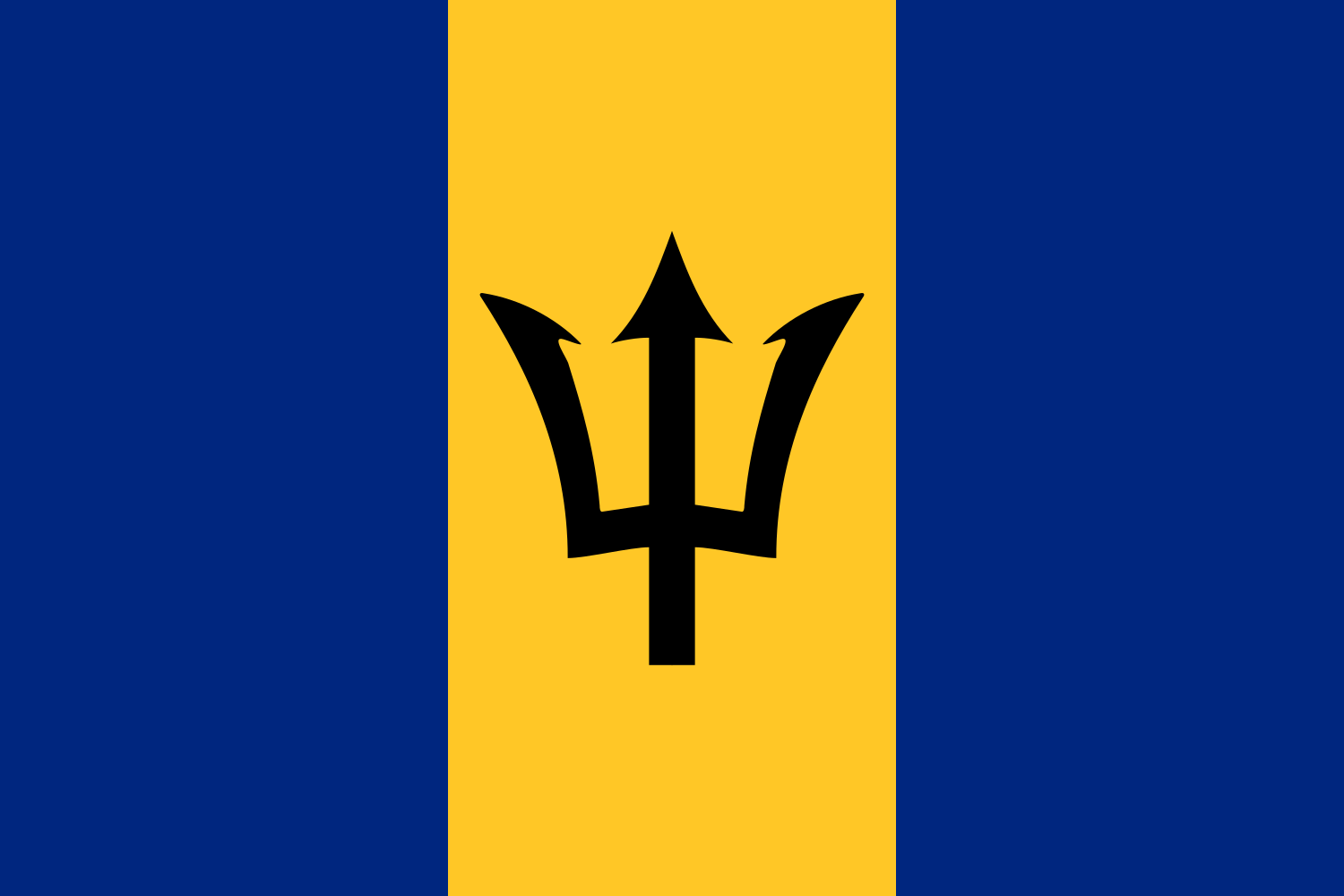
Barbados
Location Info
- Continent: North America
- Country: Barbados
- Coordinates: 13.1939 , -59.5432
Trust Info
Verified Geographic and Statistical Information
🌍 Continents
Overview
Barbados is an independent island nation situated in the western Atlantic Ocean, east of the other West Indies islands. Geographically part of the Lesser Antilles, it occupies a unique position outside the principal Atlantic hurricane belt. The island is primarily composed of coral limestone, rising to its highest point at Mount Hillaby in the north-central parish of Saint Andrew.
Historically a British colony for over three centuries, Barbados gained independence in 1966 and transitioned to a parliamentary republic in 2021. The nation maintains a high Human Development Index, supported by a diverse economy transitioned from sugar production to tourism and international business. Bridgetown, the capital, serves as a major commercial hub and a UNESCO World Heritage site.
Truth & Facts
| Total Area | 432 sq km (167 sq mi) |
| Highest Point | Mount Hillaby (340 m / 1,115 ft) |
| Population | Approx. 282,000 |
| Official Language | English |
| Capital | Bridgetown |
| Political System | Unitary Parliamentary Republic |
| Settlement Year | 1627 |
| Independence | November 30, 1966 |
| Currency | Barbadian Dollar (BBD) |
| Major Industries | Tourism, Sugar, Offshore Banking |
| Electricity | 115 V / 50 Hz |
| Literacy Rate | 99.7% |
| Main Hospital | Queen Elizabeth Hospital |
| National Dish | Cou-cou and Flying Fish |
| UNESCO Sites | Historic Bridgetown and its Garrison |
| Marine Parks | Folkestone Marine Park |
| Main Airport | Grantley Adams International (BGI) |
| Domain TLD | .bb |
| Police Force | The Barbados Police Service |
| Upper House | Senate |
| Memberships | UN, CARICOM, Commonwealth, OAS |
| Water Provider | Barbados Water Authority (BWA) |
| GDP (Nominal) | Approx. $5.7 Billion USD |
| Wet Season | June to November |
| National Flower | Pride of Barbados |
📑 Table of Contents
Overview
Barbados is a sovereign island country located in the Lesser Antilles of the West Indies. Unlike many of its volcanic neighbors, Barbados is a coral limestone island, resulting in a unique landscape and highly filtered water supply. The capital, Bridgetown, serves as the main port and commercial center.
As a developed nation, it maintains a stable economy and high standard of living. It transitioned to a republic on November 30, 2021, removing the British monarch as head of state.
- Capital: Bridgetown
- Status: Parliamentary Republic
- Regional Grouping: CARICOM
- Independence Year: 1966
- Time Zone: Atlantic Standard Time (UTC-4)
History
The history of Barbados involves early settlement by indigenous Amerindians, followed by British colonization in 1627. The island became a major center for the trans-Atlantic slave trade and the production of sugarcane, which dominated the economy for centuries.
The 20th century saw significant political shifts, leading to universal adult suffrage in 1950 and eventual independence in 1966. In 2021, the nation severed ties with the British monarchy to become a republic.
| Era | Significance |
|---|---|
| Pre-1627 | Indigenous Arawak and Carib presence |
| 1627-1834 | British Plantation era and slavery |
| 1966 | Independence from UK |
| 2021 | Republic transition |
Geography
Barbados is the easternmost island in the Caribbean chain. Its geography is characterized by rolling hills and gentle slopes, with the highest point being Mount Hillaby. The island is surrounded by coral reefs that provide natural protection for its beaches.
- Location: 13°10'N, 59°32'W
- Coastline: 97 km
- Terrain: Mostly flat with interior highlands
- Geology: Non-volcanic limestone
- Parishes: 11 administrative divisions
Climate and Weather
The island enjoys a tropical climate with a wet and a dry season. The dry season runs from December to May, while the wet season occurs from June to November, coinciding with the Atlantic hurricane season.
Average temperatures range between 24°C and 30°C. Trade winds provide a cooling effect throughout the year, preventing extreme heat.
Population and Demographics
Barbados has a population of approximately 282,000 people. The demographic profile is primarily Afro-Barbadian (approx. 92%), with minorities of European, Indian, and mixed descent. It is one of the most densely populated nations in the world.
- Ethnic Groups: 92.4% Black, 3.1% Mixed, 2.7% White
- Languages: English (Official), Bajan (Dialect)
- Religion: Mostly Christian (Anglican, Pentecostal)
- Age Structure: 0-14 (17%), 15-64 (68%), 65+ (15%)
Culture and Lifestyle
Bajan culture is a rich blend of African and British influences, often referred to as 'Little England.' This is evident in the prevalence of Anglicanism and the national obsession with cricket. Music, particularly Calypso and Soca, plays a central role in social life.
The lifestyle is characterized by a strong sense of community and religious values. Social gatherings often revolve around food and music festivals.
Festivals and Events
The most famous event is the Crop Over festival, which celebrates the end of the sugar cane harvest. Other notable events include the Oistins Fish Festival and the Barbados Food and Rum Festival.
- Crop Over: July to August
- Oistins Fish Festival: Easter Weekend
- Barbados Jazz Excursion: October
- Run Barbados: December
Food and Cuisine
Barbadian cuisine features a fusion of African, Portuguese, and British flavors. Seafood is a staple, with flying fish being the most iconic ingredient. Cou-cou, made from cornmeal and okra, is the national dish.
| Dish | Type | Key Ingredients |
|---|---|---|
| Cou-cou | Starch | Cornmeal, Okra |
| Flying Fish | Main | Steamed or Fried Fish |
| Macaroni Pie | Side | Pasta, Cheese, Spices |
| Pudding and Souse | Meat | Pickled Pork, Sweet Potato |
Economy and Industries
Historically dependent on sugar, Barbados has diversified into tourism and offshore finance. The country is known for its stability and pro-business environment. It attracts significant foreign direct investment due to its legal framework and infrastructure.
- Primary Sector: Sugar, Light Manufacturing
- Secondary Sector: International Business, Fintech
- Tertiary Sector: Tourism, Hospitality
Cost of Living
The cost of living in Barbados is generally higher than the regional average due to the high volume of imported goods. Housing and utilities are the primary expenses for residents. The Barbadian dollar is pegged to the US dollar, providing currency stability.
Employment and Business
The government is a major employer, but the private sector, specifically tourism and international finance, provides the bulk of high-value jobs. Recent initiatives like the '12-Month Barbados Welcome Stamp' have encouraged remote workers to contribute to the local economy.
Real Estate and Housing
Barbados offers a wide range of housing, from traditional chattel houses to luxury coastal villas. The West Coast, or 'Platinum Coast,' is the most expensive area for real estate. Property taxes and ownership laws are well-defined for foreigners.
Transportation and Connectivity
The island has an extensive road network. Public transport consists of government-run buses (blue), private minibuses (yellow), and Z-vans (white). Grantley Adams International Airport is the primary aviation hub.
- Airport: Grantley Adams International (BGI)
- Port: Deep Water Harbour (Bridgetown)
- Drive Side: Left
Infrastructure and Utilities
Utilities are reliable. The Barbados Light and Power Company provides electricity, and the Barbados Water Authority manages the water supply, which is primarily drawn from natural aquifers. Telecommunications are modern with widespread fiber optic coverage.
Education
Barbados follows the British educational model. Education is compulsory and free in government schools. The University of the West Indies maintains a major campus at Cave Hill. The country has a literacy rate of over 99%.
Healthcare
Medical care is of a high standard. The Queen Elizabeth Hospital is the main public facility, supplemented by private clinics like Bayview Hospital. Polyclinics across the island provide primary care to residents.
Tourist Attractions
Major attractions include the UNESCO-listed Historic Bridgetown, Harrison's Cave, and the various distilleries. The island is also famous for its white sand beaches on the South and West coasts.
- Harrison's Cave: Crystallized limestone cave
- Animal Flower Cave: Sea cave in St. Lucy
- Mount Gay Visitor Centre: Rum history
- Bathsheba: Rugged surf spot
Things to Do
Visitors engage in water sports such as snorkeling, surfing, and sailing. Cricket matches at Kensington Oval are a major draw. Exploring the botanical gardens like Hunte's Gardens is a popular activity for nature enthusiasts.
Best Places to Visit
Beyond the beaches, the parish of Saint Joseph offers scenic landscapes, and Oistins is the place to go for a local seafood experience. Speightstown offers a more quiet, historic charm compared to Bridgetown.
Travel Guide
Travelers generally enter via air. Visas are not required for many nationalities for short stays. It is important to note that camouflage clothing is illegal for civilians in Barbados.
Nearby Places
While isolated, Barbados is a hub for regional travel. Nearby islands accessible by short flights include Saint Lucia, Saint Vincent and the Grenadines, and Grenada. The island is often a starting point for Southern Caribbean cruises.
Environment and Nature
Barbados is home to the Barbados Green Monkey and various species of sea turtles. The government has implemented strict coastal management policies to combat beach erosion and protect coral reefs.
Government and Administration
The administration is divided into 11 parishes. The central government is led by the Prime Minister. The legal system is based on English Common Law, and the highest court is the Caribbean Court of Justice.
Safety and Public Services
Barbados is considered one of the safest destinations in the Caribbean. The Royal Barbados Police Force (now The Barbados Police Service) maintains order. Emergency services (911 for police, 511 for fire, 511 for ambulance) are efficient.
Best Time to Visit
The peak season is from mid-December to mid-April, when the weather is coolest and driest. The shoulder season (May and November) offers fewer crowds, though there is a higher chance of rain.
Local Business Directory
Major business sectors include retail, insurance, and offshore banking. Bridgetown and the Warrens area in St. Michael are the primary commercial districts. Barbados has a strong Chamber of Commerce and Industry.
General Information FAQs
Where is Barbados located?
Barbados is located in the western Atlantic Ocean, to the east of the Windward Islands and the Caribbean Sea. It is the easternmost island in the Lesser Antilles.
What is Barbados known for?
Barbados is known for its white sand beaches, its history of sugar and rum production, its UNESCO World Heritage capital (Bridgetown), and its heritage as 'Little England.'
Why is Barbados famous?
It is famous for being the birthplace of rum, its vibrant Crop Over festival, and for being the home of global icon Rihanna. It is also famous for its high standard of living and stability.
What country or region is Barbados part of?
Barbados is an independent country located within the Caribbean region and the continent of North America.
What is the population of Barbados?
The population is approximately 282,000 as of recent estimates.
What languages are spoken in Barbados?
English is the official language and is used for all administration and media. Bajan, an English-based creole, is the informal native language.
What time zone is Barbados in?
Barbados is in the Atlantic Standard Time (AST) zone, which is UTC-4. It does not observe Daylight Saving Time.
What are the key facts about Barbados?
Key facts include its status as a republic, its literacy rate of 99%, its use of the Barbadian Dollar (BBD), and its 11 administrative parishes.
What makes Barbados unique?
Barbados is unique because it is a coral limestone island rather than volcanic, and its geographical position puts it slightly outside the main Caribbean island arc.
How large is Barbados in area?
The island is 432 square kilometers (167 square miles) in total area.
History FAQs
What is the history of Barbados?
The history of Barbados spans from indigenous settlement to British colonization in 1627, the establishment of a sugar-based slave economy, independence in 1966, and the transition to a republic in 2021.
When was Barbados established?
The first British settlement was established in 1627 at Holetown.
What major historical events happened in Barbados?
Major events include the 1816 Bussa's Rebellion (a slave uprising), the abolition of slavery in 1834, and the transition to republic status in 2021.
Who were important historical figures from Barbados?
Important figures include Bussa (national hero), Errol Barrow (the first Prime Minister), and Sir Grantley Adams.
How has Barbados developed over time?
It has developed from a monoculture sugar colony into a diversified service-based economy with high human development indices.
Geography & Environment FAQs
What is the geography of Barbados?
The geography features coral limestone plains and low hills, with a rugged eastern coastline and calm western beaches.
What natural features surround Barbados?
It is surrounded by the Atlantic Ocean and the Caribbean Sea, with extensive offshore coral reefs.
Are there mountains, rivers, or lakes near Barbados?
There are no major rivers or lakes; the 'mountains' are actually high hills, the tallest being Mount Hillaby.
What is the elevation of Barbados?
The elevation ranges from sea level to 340 meters at its highest point.
What ecosystems exist around Barbados?
Key ecosystems include coral reefs, seagrass beds, and small pockets of tropical forest like Welchman Hall Gully.
Climate & Weather FAQs
What is the climate like in Barbados?
The climate is tropical maritime, characterized by warm temperatures and trade winds.
What is the average temperature in Barbados?
The average temperature is approximately 26°C (79°F) year-round.
What is the weather like throughout the year in Barbados?
It is generally sunny, with a dry season (Dec–May) and a wetter season (June–Nov) with occasional tropical showers.
Does Barbados experience extreme weather?
It is susceptible to hurricanes and tropical storms, although its eastern position often spares it from direct hits.
What is the best time of year to visit Barbados?
The best time is usually from December to April when the humidity is lower and rainfall is minimal.
Population & Society FAQs
What is the population density of Barbados?
The population density is high, at approximately 660 people per square kilometer.
What ethnic groups live in Barbados?
The majority are of African descent (92%), with European (3%), Asian, and mixed-race minorities.
What religions are practiced in Barbados?
Christianity is predominant, specifically Anglicanism, followed by Pentecostal and other denominations. There are also small Hindu and Muslim communities.
What is daily life like in Barbados?
Daily life is centered on work, community, and religion, with weekends often spent at the beach or social sporting events.
How diverse is the population of Barbados?
While largely Afro-Caribbean, the island is increasingly diverse due to international business and expatriate residency.
Culture & Traditions FAQs
What cultural traditions are important in Barbados?
Key traditions include Landship (a community organization imitating the Navy), tea culture, and village cricket.
What festivals are celebrated in Barbados?
Crop Over, Independence Day, Easter (Oistins Fish Festival), and Holetown Festival are major celebrations.
What cultural landmarks exist in Barbados?
Historic Bridgetown and its Garrison, St. Nicholas Abbey, and the George Washington House are vital landmarks.
What traditional clothing or customs are common in Barbados?
Formal British-style attire was historically common; today, bright Caribbean colors and modest dress are standard for church and formal events.
What arts and crafts are associated with Barbados?
Pottery (Earthworks), basket weaving, and mahogany wood carving are notable local crafts.
Food & Cuisine FAQs
What foods is Barbados known for?
It is known for flying fish, cou-cou, fish cakes, and Bajan pepper sauce.
What traditional dishes originate from Barbados?
Cou-cou and flying fish, jug-jug (made from pigeon peas and cornmeal), and conkies are traditional dishes.
What are the best restaurants in Barbados?
Famous establishments include The Cliff, Lone Star, and local favorites at the Oistins Fish Fry.
What local ingredients are commonly used in Barbados cuisine?
Okra, breadfruit, sweet potato, scotch bonnet peppers, and fresh seafood are staples.
What food markets or street foods are popular in Barbados?
Oistins Fish Market and various roadside 'rum shops' serving cutters (sandwiches) are popular.
Economy & Business FAQs
What are the main industries in Barbados?
Tourism, international business services, manufacturing, and sugar production are the primary industries.
What economic activities drive the economy of Barbados?
Economic drivers include foreign visitor spending, offshore financial services, and light manufacturing.
What businesses operate in Barbados?
A mix of local conglomerates (Goddard Enterprises) and international banks and insurance firms operate there.
Is Barbados an important economic center?
Yes, it is a leading financial and commercial hub in the Eastern Caribbean.
What are the major exports or products from Barbados?
Key exports include rum, sugar, chemicals, and electrical components.
Employment & Jobs FAQs
What job opportunities are available in Barbados?
Opportunities exist in hospitality, information technology, international law, and healthcare.
What are the major employers in Barbados?
The Government of Barbados, Sandals Resorts, and international service providers are major employers.
What skills are in demand in Barbados?
Skills in digital marketing, renewable energy, and accounting/finance are currently in high demand.
Is Barbados a good place to work?
Yes, it offers a stable political environment and high quality of life, though work permits are required for foreigners.
What is the unemployment rate in Barbados?
The unemployment rate fluctuates between 8% and 12% depending on the tourism season.
Cost of Living FAQs
Is Barbados expensive to live in?
Compared to other Caribbean islands, it is relatively expensive due to the cost of imported fuel and food.
What is the average cost of living in Barbados?
A single person may spend $2,000–$3,500 USD per month depending on lifestyle and housing location.
How much does housing cost in Barbados?
Rent ranges from $800 USD for basic apartments to $5,000+ USD for luxury villas.
What are average food and utility costs in Barbados?
Utilities are high due to energy costs; electricity for a small apartment can average $150 USD per month.
Is Barbados affordable compared to nearby cities?
It is comparable to high-end Caribbean destinations like Bermuda or the Cayman Islands but more expensive than rural areas in Saint Lucia.
Housing & Real Estate FAQs
What types of housing are available in Barbados?
Options include traditional timber 'chattel houses', modern condos, and colonial-style coral stone estates.
What is the average home price in Barbados?
Average prices range from $250,000 USD for inland homes to several million dollars for beachfront property.
Is it better to rent or buy property in Barbados?
Renting is better for short-term residents; buying property is seen as a stable long-term investment due to the island's popularity.
Which neighborhoods are popular in Barbados?
Popular areas include Holetown (West Coast), Hastings/Worthing (South Coast), and Warrens (Residential/Commercial).
How has the property market changed in Barbados?
The market has shifted toward luxury tourism rentals and 'digital nomad' long-stay housing since 2020.
Transportation FAQs
How do you get to Barbados?
Most international travelers arrive via Grantley Adams International Airport (BGI) or by cruise ship at the Bridgetown Port.
What is the nearest airport to Barbados?
Grantley Adams International Airport is the only international airport on the island.
Does Barbados have railway connections?
No, the railway system was discontinued in 1937. There are no current railway services.
How reliable is public transportation in Barbados?
It is quite reliable and extensive, covering almost every corner of the island with frequent service.
What major highways or roads connect to Barbados?
The ABC Highway (Adams-Barrow-Cummins) is the primary arterial road connecting the airport to the north of the island.
Education FAQs
What schools are located in Barbados?
Notable schools include Harrison College, Queen's College, and Combermere School.
Are there universities in Barbados?
Yes, the University of the West Indies at Cave Hill is the primary tertiary institution.
What is the literacy rate in Barbados?
The literacy rate is nearly 100%, consistently among the highest globally.
What educational opportunities exist in Barbados?
Opportunities range from technical vocational training to doctoral programs at UWI.
Is Barbados a good place for students?
Yes, it is a safe and academically rigorous environment with a focus on regional Caribbean integration.
Healthcare FAQs
What hospitals are available in Barbados?
The Queen Elizabeth Hospital (QEH) is the main public hospital; Bayview Hospital is a prominent private facility.
Are there emergency medical services in Barbados?
Yes, 24-hour emergency services are available through the public hospital and private ambulance providers.
What healthcare facilities exist in Barbados?
The system includes polyclinics, specialized geriatric hospitals, and psychiatric facilities.
Is healthcare affordable in Barbados?
Public healthcare is free at the point of delivery for citizens. Private care is expensive and usually requires insurance.
Are specialized medical services available in Barbados?
Yes, services like cardiology, oncology, and fertility treatments (Barbados Fertility Centre) are available.
Tourism & Travel FAQs
What are the top tourist attractions in Barbados?
Top sites include Harrison’s Cave, the Mount Gay Rum Distillery, and Crane Beach.
What are the best things to do in Barbados?
Popular activities include snorkeling with turtles, catamaran cruises, and exploring the St. Nicholas Abbey estate.
Is Barbados worth visiting?
Yes, it offers a high-quality mix of relaxation, culture, and adventure with world-class amenities.
What landmarks should visitors see in Barbados?
The Parliament Buildings, the Independence Arch, and the historic Garrison Savannah are must-sees.
How many days should tourists spend in Barbados?
A stay of 7 to 10 days is recommended to see the major sites and experience the local culture.
Nearby Places FAQs
What places are near Barbados worth visiting?
The Grenadines and Saint Lucia are the closest neighboring island groups worth exploring.
What cities or towns are close to Barbados?
Kingstown (St. Vincent) and Castries (St. Lucia) are the closest regional capital cities.
What natural attractions are near Barbados?
The Pitons in Saint Lucia and the Tobago Cays are world-renowned natural sites nearby.
What day trips can be taken from Barbados?
Day trips by air are possible to the Grenadines for sailing or to Saint Lucia for volcano tours.
What famous destinations are within reach of Barbados?
Mustique and Canouan, known for their exclusive resorts, are a short flight away.
Safety FAQs
Is Barbados safe to live in?
Yes, it has a low crime rate compared to global metropolitan averages and a stable social structure.
Is Barbados safe for tourists?
It is generally very safe, though standard precautions against petty theft should be taken in crowded areas.
What is the crime rate in Barbados?
The crime rate is relatively low, focusing mostly on non-violent property crimes.
What emergency services operate in Barbados?
Police, Fire, and Ambulance services operate 24/7. Coast Guard services also protect the waters.
What safety tips should visitors follow in Barbados?
Avoid unlit areas at night, do not wear camouflage, and be cautious of strong currents on the Atlantic (East) coast.
Lifestyle & Living FAQs
Is Barbados a good place to live?
Yes, it offers political stability, a warm climate, and excellent healthcare and education systems.
What recreational activities are available in Barbados?
Activities include golf, polo, sailing, hiking, and participating in community sports.
Is Barbados family-friendly?
Extremely family-friendly with many parks, child-safe beaches, and family-oriented festivals.
What outdoor activities are popular in Barbados?
Surfing at Soup Bowl, hiking in the Scotland District, and paddleboarding on the West Coast.
What makes life enjoyable in Barbados?
The slow pace of life ('island time'), the year-round warm weather, and the hospitable nature of the people.
Practical Information FAQs
What travel tips should visitors know about Barbados?
Currency is BBD but USD is widely accepted. Tipping 10-15% is standard if a service charge is not included.
What local customs should visitors respect in Barbados?
Conservative dress is expected in public buildings; beachwear should be limited to the beach or pool.
How accessible is Barbados for international visitors?
Highly accessible with direct flights from London, New York, Miami, Toronto, and Panama City.
What services are available for tourists in Barbados?
A wide range of car rentals, tour operators, duty-free shopping, and information centers are available.
What important information should travelers know before visiting Barbados?
Check the latest health protocols, ensure you have a return ticket, and remember that driving is on the left.