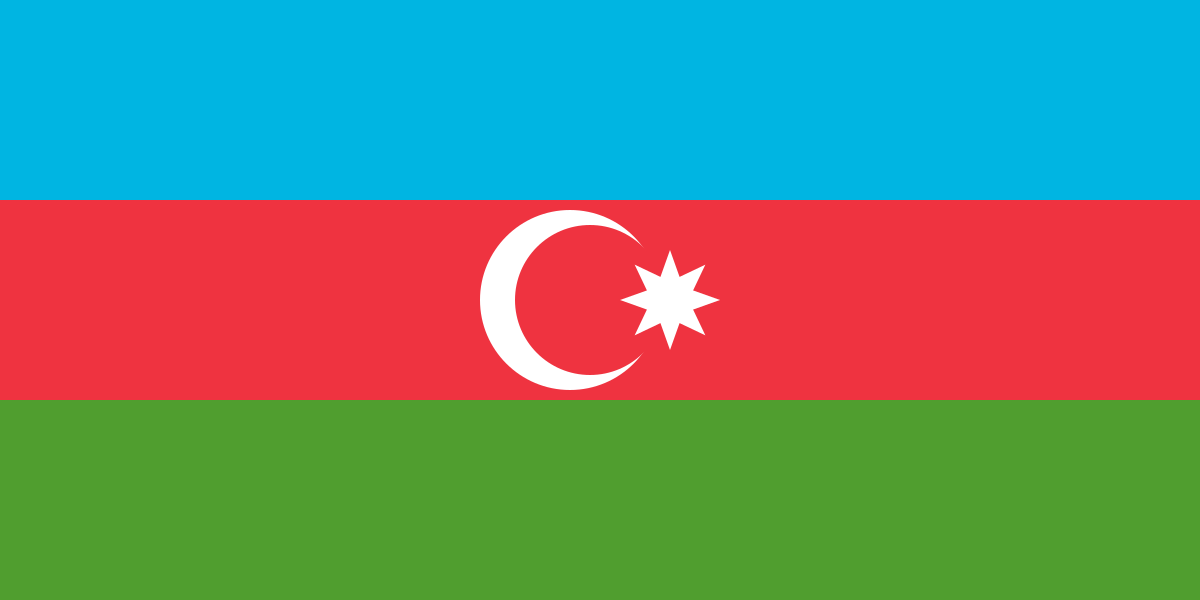
Azerbaijan
Location Info
- Continent: Asia
- Country: Azerbaijan
- Coordinates: 40.1431 , 47.5769
Trust Info
Verified Geographic Information
🌍 Continents

Overview
Azerbaijan is a transcontinental nation situated at the crossroads of Eastern Europe and Western Asia. Bound by the Caspian Sea to the east and the Caucasus Mountains to the north, it shares borders with Russia, Georgia, Armenia, and Iran. Often called the "Land of Fire," the country is renowned for its unique geological features, including nearly half of the world's mud volcanoes and natural gas vents that have burned for centuries.
Historically, the region has been a vital hub on the Silk Road, influenced by various empires before gaining independence from the Soviet Union in 1991. Today, Azerbaijan is a significant global energy provider, driven by vast oil and natural gas reserves in the Caspian Basin. Its capital, Baku, blends a UNESCO-listed medieval core with futuristic skyscrapers, reflecting the nation's rapid modernization and economic importance in the South Caucasus region.
Truth & Facts
| Total Area | 86,600 sq km |
| Highest Point | Mount Bazardüzü (4,466 m) |
| Coastline Length | 713 km |
| Total Population | 10,467,576 (2026 Est.) |
| Median Age | 34.1 years |
| Capital City | Baku |
| Official Language | Azerbaijani |
| ADR Proclamation | May 28, 1918 |
| Independence from USSR | August 30, 1991 |
| GDP (Nominal) | $78.87 Billion (2026 Projection) |
| Currency | Azerbaijani Manat (AZN) |
| Major Pipeline | Baku-Tbilisi-Ceyhan (BTC) |
| Main International Airport | Heydar Aliyev International (GYD) |
| Literacy Rate | 99.8% |
| Insurance System | Compulsory Medical Insurance |
| UNESCO Intangible Heritage | Mugham Music |
| Top Destination | Old City (Icherisheher) |
| Mud Volcanoes | Over 400 |
| Railway Length | ~2,900 km |
| E-Government Model | ASAN Service |
| Crime Level | Low |
| Legislature | Milli Majlis |
| Key Membership | Non-Aligned Movement |
| Electricity Coverage | 100% |
| Inflation Rate | 5.0% (2026 Target) |
| Script | Latin-based |
| Predominant Religion | Islam (approx. 95%) |
| National Anthem | Azərbaycan Marşı |
📑 Table of Contents
Overview of Azerbaijan
Azerbaijan is located at the southeastern edge of Europe and the western edge of Asia. It is bordered by the Caspian Sea to the east, Russia to the north, Georgia to the northwest, Armenia to the west, and Iran to the south. The country includes the Nakhchivan Autonomous Republic as an exclave, separated by Armenian territory.
Known as the "Land of Fire," Azerbaijan has a history that dates back thousands of years. It was part of the Russian Empire and later the Soviet Union before restoring its independence in 1991. The nation is recognized for its unique mix of modern architecture and ancient historical sites.
- Official Name: Republic of Azerbaijan
- Capital: Baku
- Government Type: Unitary presidential republic
- Time Zone: AZT (UTC+4)
- Driving Side: Right
History and Origins
The history of Azerbaijan begins with ancient civilizations like Caucasian Albania and the Median Empire. In the 7th century, the region saw the spread of Islam following the Arab conquest. Over the centuries, it was a battleground and a center for several dynasties, including the Shirvanshahs and the Safavids.
In the 19th century, the territory was divided between the Russian and Persian Empires. After the Russian Revolution, the Azerbaijan Democratic Republic was established in 1918 as the first secular democratic state in the Muslim world. It was later incorporated into the Soviet Union until 1991.
| Period | Major Event |
|---|---|
| Ancient | Formation of Caucasian Albania |
| 1918 | Independence as Azerbaijan Democratic Republic |
| 1920 | Soviet occupation and integration into USSR |
| 1991 | Restoration of Independence |
| 2020 | Second Karabakh War and territorial restoration |
Geography and Landscape
Azerbaijan boasts a diverse geography with the Greater Caucasus Mountains in the north and the Lesser Caucasus in the west. The central Kura-Aras Lowland is the country's agricultural heartland. To the southeast lie the Talysh Mountains, providing a distinct humid climate compared to the rest of the country.
The Caspian Sea coastline stretches over 700 kilometers, influencing the climate and the economy. Azerbaijan is also famous for its mud volcanoes, which account for nearly half of all mud volcanoes globally. The lowest point is the Caspian Sea surface, sitting at 28 meters below sea level.
- Highest Peak: Bazardüzü (4,466 m)
- Longest River: Kura River
- Largest Lake: Mingachevir Reservoir
- Coastal Terrain: Lowlands and Absheron Peninsula
- Unique Features: Burning gas vents and mud volcanoes
Climate and Weather Patterns
Azerbaijan contains 9 out of the 11 recognized climate zones, from semi-desert and dry climates in the central lowlands to humid subtropical climates in the Lenkeran region. Baku experiences a semi-arid climate with hot, dry summers and cool, windy winters. The mountains see heavy snowfall and cold temperatures throughout the winter months.
Precipitation varies significantly across the country. The southeastern regions receive the most rain, while the Absheron Peninsula is one of the driest areas. The best time for outdoor activities is usually during the spring and autumn when temperatures are mild.
| Season | Temperature Range (Baku) | Conditions |
|---|---|---|
| Spring | 10°C - 20°C | Mild and pleasant |
| Summer | 25°C - 35°C | Hot and sunny |
| Autumn | 12°C - 22°C | Cooling temperatures |
| Winter | 2°C - 8°C | Cold and windy |
Population and Demographics
With a population exceeding 10.4 million in 2026, Azerbaijan is the most populous country in the South Caucasus. Ethnic Azerbaijanis make up over 91% of the population. Minorities include Lezgians, Russians, Armenians, Talysh, and Avars, contributing to a multi-ethnic social fabric.
The majority of the population resides in urban areas, with Baku being the primary center of density. The country has seen a steady increase in population growth since independence, supported by improvements in healthcare and social stability. Life expectancy is approximately 74 to 78 years.
- Total Population: ~10.46 Million (2026)
- Ethnic Groups: Azerbaijani (91.6%), Lezgian (2%), Russian (1.3%)
- Urban Population: ~57%
- Median Age: 34.1 years
- Literacy Rate: 99.8%
Culture and Lifestyle
Azerbaijani culture is a vibrant mix of ancient traditions and modern influences. The nation has a strong heritage in carpet weaving, which is recognized by UNESCO. Mugham, a traditional form of folk music, remains a cornerstone of the national identity and is performed at major festivals and events.
Hospitality is a key cultural value, often centered around tea drinking and elaborate meals. Western lifestyle influences are strong in Baku, where fashion, modern art, and international dining are prevalent. In rural areas, traditional customs regarding family and community are more strictly observed.
- Art Forms: Carpet weaving, copper work, and miniatures
- Music: Mugham and Ashiq poetry
- Literature: Epic of Dada Gorgud and works of Nizami Ganjavi
- National Sport: Chovgan (ancient polo) and Wrestling
- Social Norms: High value on elder respect and hospitality
Festivals and Major Events
The most significant holiday in Azerbaijan is Novruz Bayrami, which marks the arrival of spring and the Persian New Year. It is celebrated with traditional foods, bonfires, and public performances. Other major holidays include Independence Day and Victory Day, which reflect the nation's political history.
Azerbaijan also hosts several international events that draw global attention. Baku is a regular venue for the Formula 1 Azerbaijan Grand Prix, and the city has hosted the Eurovision Song Contest and major climate summits like COP29. These events showcase the country's infrastructure and organizational capabilities.
- Novruz: Vernal Equinox celebration
- Independence Day: May 28 (Republic Day)
- Gara Garayev International Music Festival: Classical music focus
- Baku Jazz Festival: Annual event featuring international artists
- Pomegranate Festival: Celebrated in Goychay
Food and Cuisine
Azerbaijani cuisine is known for its use of fresh herbs, diverse spices, and high-quality meats, especially lamb. The national dish is Plov (pilaf), which comes in dozens of varieties featuring saffron-flavored rice, meat, dried fruits, and chestnuts. Another staple is Dolma, minced meat and rice wrapped in grape or cabbage leaves.
Fresh bread, such as Tandoor bread, accompanies almost every meal. Tea culture is pervasive, with black tea served in pear-shaped glasses (armudu) alongside jams or sweets like Pakhlava and Shekerbura. Seafood from the Caspian, particularly sturgeon, is also highly prized.
| Dish | Type | Key Ingredients |
|---|---|---|
| Plov | Main Course | Rice, Saffron, Meat, Dried Fruits |
| Dolma | Side/Appetizer | Grape Leaves, Minced Meat, Rice |
| Lula Kebab | Main Course | Minced Lamb, Spices |
| Dushbara | Soup | Tiny Dumplings, Lamb Broth |
| Pakhlava | Dessert | Honey, Nuts, Filo Dough |
Economy and Industries
Azerbaijan's economy is largely driven by its energy sector, specifically oil and natural gas production in the Caspian Sea. The country is a key player in European energy security through the Southern Gas Corridor. State-owned SOCAR is the dominant entity in this sector, partnering with international firms like BP.
In recent years, the government has focused on diversifying the economy to reduce dependence on hydrocarbons. Key growth sectors include agriculture, tourism, and information technology. Azerbaijan is also developing its transit potential as a logistics hub between Europe and Asia.
- Major Exports: Crude Oil, Natural Gas, Petroleum Products
- Agriculture: Pomegranates, Hazelnuts, Cotton, Tea
- Manufacturing: Chemicals, Textiles, and Food Processing
- Energy Infrastructure: BTC and South Caucasus Pipelines
- Non-Oil Growth: ICT and Tourism services
Cost of Living
The cost of living in Azerbaijan is generally lower than in Western Europe and North America. Housing in Baku's city center can be relatively expensive, but prices drop significantly in the outskirts and regional cities. Utilities, including electricity, gas, and water, are subsidized and remain affordable for most residents.
Public transport is very economical, while dining out varies from cheap street food to high-end luxury restaurants. Imported goods and luxury items carry a premium due to shipping and taxes. Overall, the country offers a high quality of life for those with an average middle-class income.
- Housing: Rent in Baku varies from $300 to $1,500+ depending on area
- Transport: Low-cost metro and bus fares (~$0.25 - $0.40)
- Groceries: Local produce is inexpensive and high-quality
- Utilities: Monthly average for a standard apartment is ~$50-$80
- Overall: Affordable compared to regional hubs like Dubai or Moscow
Employment and Business
The energy sector provides high-paying jobs but employs a small percentage of the workforce. Agriculture remains the largest employer, particularly in rural regions. There is a growing demand for professionals in telecommunications, banking, and construction as the non-oil economy expands.
Azerbaijan has improved its business climate through reforms aimed at reducing bureaucracy and promoting digital services (ASAN). Several free economic zones have been established to attract foreign investment. The unemployment rate has remained relatively stable at around 5-6%.
- Key Employers: SOCAR, BP, PASHA Holding, and State Government
- In-Demand Skills: IT, Engineering, Project Management, Finance
- Business Reforms: One-stop-shop for business registration
- Incentives: Tax breaks in Free Economic Zones (e.g., Alat)
- Labor Law: Regulated by the Labor Code of Azerbaijan
Real Estate and Housing
Baku's real estate market has seen significant development, with a mix of Soviet-era apartments, historical buildings, and modern luxury high-rises. The "White City" project is one of the largest urban redevelopment efforts, transforming former industrial areas into modern residential districts.
Property prices in the capital have shown growth due to urbanization and infrastructure improvements. In regional cities like Ganja and Gabala, the market is more focused on private houses and agricultural land. Foreigners can purchase property in Azerbaijan, though land ownership is generally restricted to citizens.
| Property Type | Average Price (Baku) | Availability |
|---|---|---|
| Modern Apartment | $1,500 - $2,500 per sqm | High in new developments |
| Soviet Era Flat | $800 - $1,200 per sqm | Common in suburbs |
| Luxury Villa | $500,000+ | Exclusive gated communities |
Transportation and Connectivity
Azerbaijan serves as a major transit hub for the TRACECA (Europe-Caucasus-Asia) corridor. The Baku-Tbilisi-Kars railway connects the Caspian to Turkey and Europe. Domestically, Azerbaijan Railways (ADY) operates modern high-speed trains between Baku and cities like Ganja and Gabala.
Air travel is centered on Heydar Aliyev International Airport, a five-star rated facility that serves as the hub for Azerbaijan Airlines (AZAL). The road network has undergone massive upgrades, with new highways linking the capital to the borders of Russia, Georgia, and Iran.
- Railways: Connectivity to Georgia, Turkey, and Russia
- Airports: International airports in Baku, Ganja, Nakhchivan, and Fuzuli
- Public Transit: Baku Metro with 3 lines and 27 stations
- Maritime: Port of Baku (Alat) for Caspian freight
- Highways: Extensive network of M-class national roads
Infrastructure and Utilities
Azerbaijan possesses a robust energy infrastructure, being entirely self-sufficient in natural gas and electricity. Azerishiq and Azerenerji manage the national power grid, ensuring near-universal access even in remote mountain villages. Significant investments are currently being made in renewable energy, particularly wind and solar projects.
Water supply and sanitation are managed by Azersu, with major pipelines bringing fresh water from the Greater Caucasus to the Absheron Peninsula. Telecommunications infrastructure is advanced, with high-speed fiber-optic internet widely available in urban centers and expanding into rural areas.
- Energy Source: Mostly Natural Gas and Hydropower
- Internet: 4G/5G coverage in major cities
- Water Supply: Centralized systems in all cities
- Renewables: Expanding wind farms on Absheron Peninsula
- Waste Management: Modern recycling centers in Baku
Education System
Education is compulsory and free at the primary and secondary levels in Azerbaijan. The literacy rate is nearly 100%. The system follows a 4-5-2 structure (primary, basic, and secondary education). Azerbaijan has been aligning its higher education with the Bologna Process to improve international recognition.
Prominent universities include Baku State University, ADA University, and the Azerbaijan State Oil and Industry University. In recent years, there has been a significant push toward vocational training and STEAM education to meet the needs of a modernizing economy.
- Literacy: 99.8%
- Higher Ed: Over 50 public and private universities
- Language of Instruction: Azerbaijani, Russian, and English
- Study Abroad: Government-funded scholarships for international study
- Digital Learning: Increasing integration of e-learning platforms
Healthcare Services
Azerbaijan's healthcare system has undergone a major transformation with the implementation of compulsory medical insurance. This system provides citizens with access to a package of essential services at public and some private clinics. Public hospitals have seen widespread renovation and modernization of equipment.
Baku is home to specialized medical centers, including cardiac, oncological, and neurosurgical institutes. While public care is free or low-cost under insurance, a thriving private healthcare sector offers high-end services for those seeking faster access or international standards of care.
- System: Public-Private mixed with mandatory insurance
- Infrastructure: 500+ hospitals and 1,700+ clinics
- Insurance Agency: ITS (State Agency for Compulsory Medical Insurance)
- Specialties: Strong focus on cardiology and maternal health
- Rural Care: Mobile clinics and regional diagnostic centers
Top Tourist Attractions
The Old City of Baku (Icherisheher) is the most famous attraction, featuring the Maiden Tower and the Palace of the Shirvanshahs. Outside the capital, the Gobustan Rock Art Cultural Landscape displays thousands of ancient rock engravings. The Flame Towers have become a modern symbol of the country's skyline.
Nature lovers visit the mud volcanoes near Alat or the burning hillside of Yanar Dag. The picturesque city of Sheki, with its ornate Khans' Palace, and the mountain village of Khinalug offer glimpses into the country's history and diverse ethnic heritage.
- Icherisheher: Medieval heart of Baku
- Heydar Aliyev Center: Zaha Hadid-designed architectural marvel
- Gobustan: Ancient petroglyphs and mud volcanoes
- Sheki: Famous for silk and royal architecture
- Gabala: Modern mountain resort and amusement park
Things to Do
Visitors to Azerbaijan can enjoy a wide range of activities, from strolling along the Baku Boulevard to skiing in the Greater Caucasus. The Caspian Sea offers opportunities for boat tours and beach relaxation in summer. Exploring the traditional tea houses (Chaykhana) is a must for a local experience.
Adventure seekers can hike in the high-altitude villages of Guba or take a 4x4 tour of the mud volcanoes. For relaxation, the oil spas of Naftalan provide a unique therapeutic experience using local crude oil known for its healing properties.
- Baku Boulevard: Longest promenade on the Caspian
- Skiing: Shahdag and Tufandag winter resorts
- Mud Volcano Tours: Guided excursions from Baku
- Tea Tasting: Traditional tea ceremonies
- Wine Tours: Visiting vineyards in Shamakhi or Gabala
Best Places to Visit
Baku is the essential starting point, but the regions offer distinct experiences. Sheki is renowned for its history and crafts, while Guba is famous for its apple orchards and carpet-making. Gabala is the country's top leisure destination, offering luxury resorts and mountain views.
The Nakhchivan exclave is a unique destination for those interested in history and salt therapy (Duzdag). For coastal scenery, the southern region of Lenkeran offers lush forests and a subtropical climate that differs significantly from the rest of the country.
| Location | Highlights | Region |
|---|---|---|
| Baku | Old City, Modern Skyline, Museum of Carpets | Absheron |
| Sheki | Palace of Sheki Khans, Caravanserais | Northwest |
| Guba | Khinalug Village, Waterfalls | North |
| Gabala | Skiing, Nohur Lake | North |
| Lenkeran | Tea Plantations, Hirkan National Park | South |
Travel Guide and Practical Info
Most international visitors require an e-visa (ASAN Visa), which is easily obtained online. The local currency is the Azerbaijani Manat (AZN), and credit cards are widely accepted in Baku and major towns. Public transport in Baku is accessed via the BakiKart, which can be used for the metro and buses.
While Azerbaijani is the official language, many people in Baku speak Russian, and English is common among the younger generation and in the tourism sector. Standard European 2-pin plugs are used, and the tap water is generally not recommended for drinking unless filtered.
- Visa: ASAN e-visa for 100+ nationalities
- Connectivity: Local SIM cards (Azercell, Bakcell) are cheap
- Safety: Very low crime rate; safe to walk at night
- Dress Code: Modest in religious sites; casual in Baku
- Connectivity: Well-connected to major European and Asian hubs
Nearby Places and Day Trips
From Baku, several day trips are easily accessible. The Ateshgah Fire Temple and Yanar Dag are located on the Absheron Peninsula. Gobustan National Park is about an hour's drive south of the capital, offering a combined trip of petroglyphs and mud volcanoes.
Further afield, the historic town of Shamakhi, home to one of the oldest mosques in the Caucasus, is reachable in a few hours. For those interested in industrial history, the city of Sumqayit offers a look at Azerbaijan's manufacturing heart on the Caspian coast.
- Ateshgah: Historical fire temple
- Yanar Dag: Naturally burning gas fire
- Gobustan: Rock art and volcanoes
- Shamakhi: Juma Mosque and Yeddi Gumbaz
- Mardakan: Medieval fortresses on the peninsula
Environment and Nature
Azerbaijan has a diverse ecosystem, supported by several national parks. Hirkan National Park in the south is home to rare trees and the Persian leopard. Shirvan National Park is known for its gazelles and large populations of migratory birds. The country's unique geology includes oil-rich soils and natural mineral springs.
Environmental challenges include the pollution of the Caspian Sea and soil salinization in agricultural areas. The government is actively pursuing green energy initiatives and reforestation programs to mitigate these issues and preserve the country's unique biodiversity.
- National Parks: 10 across different zones
- Fauna: Gazelles, brown bears, and rare leopards
- Flora: Ironwood trees and Caucasian oak
- Conservation: Protection of the Caspian seal
- Unique Sites: Half of the world's mud volcanoes
Government and Administration
Azerbaijan is a unitary presidential republic. The President, elected for a seven-year term, holds significant executive power. The legislative branch, the Milli Majlis, consists of 125 members elected from single-mandate districts. The political system is centralized in Baku.
The country is divided into 66 districts (rayons) and 11 cities. The Nakhchivan Autonomous Republic has its own constitution and parliament while remaining an integral part of Azerbaijan. Administrative reforms have focused on increasing the efficiency of state services through digitalization.
- Head of State: President
- Legislature: National Assembly (Milli Majlis)
- Judiciary: Constitutional Court, Supreme Court
- Exclave: Nakhchivan Autonomous Republic
- Party System: New Azerbaijan Party is the dominant party
Safety and Public Services
Azerbaijan is noted for its high level of public safety. The crime rate is very low, especially regarding violent crimes. Police presence is visible in Baku, and public order is well-maintained. Fire and emergency services are operated centrally by the Ministry of Emergency Situations.
Utility services like electricity and gas are reliable. Public transportation is safe and efficient. For visitors, standard travel safety practices are sufficient, such as being aware of pickpockets in crowded markets or busy pedestrian areas like Nizami Street.
- Emergency Number: 112 (General Emergency)
- Police: 102
- Ambulance: 103
- Security: High in tourist areas
- Health Safety: Modern hospitals available in Baku
Best Time to Visit
The best time to visit Azerbaijan is during the spring (April to June) and autumn (September to October). During these periods, the weather is mild and perfect for exploring both the capital and the mountainous regions. April is particularly festive due to the Novruz celebrations.
Summer is hot, especially in Baku and the lowlands, but it is the peak season for the Caspian resorts and hiking in the high Caucasus. Winter is the best time for skiing enthusiasts to visit the Shahdag or Tufandag resorts, though Baku can be very windy and chilly.
| Period | Ideal For | Weather |
|---|---|---|
| Apr - Jun | Sightseeing, Nature | 15°C - 25°C, Mild |
| Jul - Aug | Beach, High Mountains | 28°C - 35°C, Hot |
| Sep - Oct | Culture, Wine Tours | 18°C - 25°C, Pleasant |
| Nov - Mar | Skiing, Museums | 2°C - 10°C, Cold/Windy |
Local Business and Industry Directory
Azerbaijan's business landscape is dominated by the energy sector, but it has a growing ecosystem of retail, hospitality, and tech startups. Baku's commercial center includes major shopping malls like Deniz Mall and Port Baku Mall, featuring international brands.
Local industry is also strong in agriculture, with significant exports of fruits and nuts. The logistics sector is expanding rapidly around the Port of Baku in Alat. For business travelers, Baku offers numerous five-star hotels and modern conference facilities catering to international summits and trade fairs.
- Energy: SOCAR, BP Azerbaijan
- Finance: PASHA Bank, ABB, Kapital Bank
- Retail: Bravo Supermarkets, Bazarstore
- Hospitality: Fairmont Baku, Marriott, Hilton
- Logistics: Port of Baku, Silk Way Airlines
General Information FAQs
Where is Azerbaijan located?
Azerbaijan is located in the South Caucasus region at the boundary of Eastern Europe and Western Asia. It is bordered by the Caspian Sea to the east, Russia to the north, Georgia to the northwest, Armenia to the west, and Iran to the south.
What is Azerbaijan known for?
Azerbaijan is known as the 'Land of Fire' for its natural gas fires and mud volcanoes. It is also famous for its vast oil reserves, UNESCO-listed Old City in Baku, traditional Mugham music, and its historical role on the Silk Road.
Why is Azerbaijan famous?
It is famous for being the site of the world's first offshore oil platform (Neft Dashlari), its unique blend of ancient and futuristic architecture (like the Flame Towers), and its status as the first secular democratic republic in the Islamic world (1918).
What country or region is Azerbaijan part of?
Azerbaijan is a transcontinental country in the South Caucasus. Geographically, it is often grouped with Western Asia or the Middle East, while politically and culturally, it has strong ties to Europe.
What is the population of Azerbaijan?
As of 2026, the population of Azerbaijan is estimated to be approximately 10.46 million people.
What languages are spoken in Azerbaijan?
Azerbaijani is the official and primary language. Russian is widely spoken as a second language, especially in urban areas, and English is increasingly common among the youth and in business circles.
What time zone is Azerbaijan in?
Azerbaijan is in the Azerbaijan Time (AZT) zone, which is UTC+4. The country does not currently observe daylight saving time.
What are the key facts about Azerbaijan?
Key facts include: Capital is Baku; currency is the Manat; it has 9 out of 11 climate zones; it is home to 400+ mud volcanoes; and it was a founding member of the ADR in 1918.
What makes Azerbaijan unique?
Its unique geological features (mud volcanoes and Yanar Dag), its position as a bridge between East and West, and its ability to maintain a strictly secular government in a Muslim-majority nation make it stand out.
How large is Azerbaijan in area?
Azerbaijan has a total land area of approximately 86,600 square kilometers (33,400 square miles).
History FAQs
What is the history of Azerbaijan?
The history spans ancient kingdoms like Caucasian Albania, medieval periods under the Shirvanshahs and Safavids, 19th-century Russian annexation, a brief independence in 1918, Soviet rule from 1920, and the restoration of independence in 1991.
When was Azerbaijan established?
While ancient statehood dates back millennia, the modern Azerbaijan Democratic Republic was established on May 28, 1918. The current Republic of Azerbaijan restored its independence on August 30, 1991.
What major historical events happened in Azerbaijan?
Major events include the conversion to Islam (7th century), the 19th-century oil boom in Baku, the establishment of the ADR (1918), the Soviet takeover (1920), independence (1991), and the restoration of territorial integrity in 2020.
Who were important historical figures from Azerbaijan?
Notable figures include poet Nizami Ganjavi, composer Uzeyir Hajibeyov, ADR founder Mammed Amin Rasulzadeh, and former President Heydar Aliyev.
How has Azerbaijan developed over time?
It has transformed from an ancient agricultural and silk center into a 19th-century oil pioneer, then a major industrial hub of the USSR, and finally into a modernized energy powerhouse with a diversifying economy in the 21st century.
Geography & Environment FAQs
What is the geography of Azerbaijan?
Azerbaijan's geography is defined by the Greater and Lesser Caucasus mountains, the Kura-Aras lowlands, and the Caspian Sea coast. Nearly half the country is mountainous.
What natural features surround Azerbaijan?
It is surrounded by the Caspian Sea to the east and the towering Caucasus mountain ranges to the north and west.
Are there mountains, rivers, or lakes near Azerbaijan?
Yes, the Greater Caucasus range is in the north. Major rivers include the Kura and Aras. The largest body of water is the Mingachevir Reservoir.
What is the elevation of Azerbaijan?
Elevation ranges from -28 meters at the Caspian Sea shore to 4,466 meters at Mount Bazardüzü.
What ecosystems exist around Azerbaijan?
Ecosystems range from Alpine meadows and dense forests in the mountains to semi-deserts in the lowlands and subtropical forests in the south.
Climate & Weather FAQs
What is the climate like in Azerbaijan?
Azerbaijan has a diverse climate, predominantly semi-arid in the center and east, and humid subtropical in the southeast. It contains 9 of 11 world climate zones.
What is the average temperature in Azerbaijan?
In Baku, average summer highs are around 30°C, while winter lows average near 2-4°C. Inland and mountain temperatures are more extreme.
What is the weather like throughout the year in Azerbaijan?
Spring and autumn are mild and pleasant. Summer is hot and dry (except in the mountains), and winter is cold, often windy in Baku and snowy in the mountains.
Does Azerbaijan experience extreme weather?
Baku is known for its strong 'Khazri' (north) and 'Gilavar' (south) winds. High mountains experience severe winter blizzards and extreme cold.
What is the best time of year to visit Azerbaijan?
The best times are spring (April to June) and autumn (September to October) when temperatures are most comfortable for travel.
Population & Society FAQs
What is the population density of Azerbaijan?
The population density is approximately 126 people per square kilometer, with the highest concentration in the Baku metropolitan area.
What ethnic groups live in Azerbaijan?
Azerbaijanis (91.6%), Lezgians (2%), Russians (1.3%), Talysh (1.3%), and smaller groups like Avars, Turks, and Tatars.
What religions are practiced in Azerbaijan?
While it is a secular state, about 95% of the population is Muslim (mostly Shia). There are also Christian (Orthodox, Catholic) and Jewish communities.
What is daily life like in Azerbaijan?
Daily life blends tradition with modernity. In Baku, it is fast-paced with a focus on work and social gatherings at cafes. In regions, life is slower and revolves around family and agriculture.
How diverse is the population of Azerbaijan?
It is quite diverse, with over 20 ethnic minorities living together. The country prides itself on its policy of multiculturalism and religious tolerance.
Culture & Traditions FAQs
What cultural traditions are important in Azerbaijan?
Important traditions include Novruz Bayrami celebrations, the art of tea hospitality, carpet weaving, and the performance of Mugham music.
What festivals are celebrated in Azerbaijan?
Novruz (Spring), Republic Day (May 28), the Pomegranate Festival in Goychay, and the Baku International Jazz Festival.
What cultural landmarks exist in Azerbaijan?
The Maiden Tower, the Palace of the Shirvanshahs, the Gobustan Petroglyphs, and the Sheki Khans' Palace.
What traditional clothing or customs are common in Azerbaijan?
Traditional clothing includes the 'Papakh' (hat) for men and colorful silk dresses with headscarves for women. Customs focus on hospitality and respect for elders.
What arts and crafts are associated with Azerbaijan?
Azerbaijan is world-famous for its hand-woven carpets. Other crafts include copper work (Lahij), silk weaving, and wood carving.
Food & Cuisine FAQs
What foods is Azerbaijan known for?
It is known for Plov (rice pilaf), Kebab, Dolma (stuffed leaves), and Dushbara (tiny dumplings).
What traditional dishes originate from Azerbaijan?
Dishes like Shah Plov, Gutab (savory pancakes), and Piti (mutton stew) are authentic Azerbaijani staples.
What are the best restaurants in Azerbaijan?
Popular spots in Baku include Shirvanshah Museum Restaurant, Sumakh, and the various Chaykhanas (tea houses) in the Old City.
What local ingredients are commonly used in Azerbaijan cuisine?
Lamb, saffron, cilantro, dill, pomegranate, walnuts, and fresh Caspian sturgeon are primary ingredients.
What food markets or street foods are popular in Azerbaijan?
Yashil Bazar is the most famous food market. Popular street foods include Gutab, Doner Kebab, and Tandir bread.
Economy & Business FAQs
What are the main industries in Azerbaijan?
Oil and natural gas are the primary industries. Other key sectors include agriculture, mining, and construction.
What economic activities drive the economy of Azerbaijan?
Hydrocarbon extraction and export drive the majority of the GDP. Transit logistics and agriculture are secondary drivers.
What businesses operate in Azerbaijan?
Major companies include SOCAR (energy), BP, PASHA Holding (finance/retail), and various international retail brands in Baku.
Is Azerbaijan an important economic center?
Yes, it is the largest economy in the South Caucasus and a critical energy supplier for the European market.
What are the major exports or products from Azerbaijan?
Crude oil, natural gas, refined petroleum, fruits (pomegranates, hazelnuts), and cotton.
Employment & Jobs FAQs
What job opportunities are available in Azerbaijan?
Opportunities exist primarily in oil/gas, IT, construction, banking, and the growing tourism/hospitality sectors.
What are the major employers in Azerbaijan?
SOCAR, BP, the government sector, PASHA Bank, and Azerbaijan Airlines are among the largest employers.
What skills are in demand in Azerbaijan?
Engineering, software development, financial analysis, and English/Russian language proficiency are highly valued.
Is Azerbaijan a good place to work?
For expats and skilled locals, Baku offers a modern work environment and competitive salaries, especially in international firms.
What is the unemployment rate in Azerbaijan?
The unemployment rate has generally hovered between 5.3% and 6.0% in recent years.
Cost of Living FAQs
Is Azerbaijan expensive to live in?
No, Azerbaijan is generally affordable. Baku is more expensive than the regions, but still cheaper than most European capitals.
What is the average cost of living in Azerbaijan?
An individual can live comfortably in Baku for $800-$1,200 per month, while in regions, $400-$600 may suffice.
How much does housing cost in Azerbaijan?
Rent for a 1-bedroom apartment in Baku ranges from $300 (outskirts) to $800+ (city center).
What are average food and utility costs in Azerbaijan?
Utilities for a standard apartment are about $50-$80. Monthly grocery costs for one person are roughly $200-$300.
Is Azerbaijan affordable compared to nearby cities?
Yes, it is generally more affordable than Tbilisi or Moscow, and significantly cheaper than Dubai or Istanbul.
Housing & Real Estate FAQs
What types of housing are available in Azerbaijan?
Options include Soviet-era 'Khrushchyovkas', modern luxury high-rises in Baku White City, and private villas in the suburbs.
What is the average home price in Azerbaijan?
In central Baku, prices average $2,000 per square meter, while in regional cities, prices can be as low as $500 per square meter.
Is it better to rent or buy property in Azerbaijan?
Renting is common for short-term stays. Buying is a popular investment for locals, but land ownership for foreigners requires specific legal structures.
Which neighborhoods are popular in Azerbaijan?
In Baku: Sabayil (center), Nasimi, and the newly developed White City are highly sought after.
How has the property market changed in Azerbaijan?
The market has shifted toward high-end residential complexes and modern urban infrastructure, with a recent focus on redevelopment of industrial areas.
Transportation FAQs
How do you get to Azerbaijan?
Most international travelers arrive by air via Baku's Heydar Aliyev International Airport. Land borders with Georgia and Russia also exist.
What is the nearest airport to Azerbaijan?
Heydar Aliyev International Airport (GYD) in Baku is the primary hub. Other international airports are in Ganja and Nakhchivan.
Does Azerbaijan have railway connections?
Yes, there are international rail links to Georgia and Russia. The Baku-Tbilisi-Kars line is a major regional connection.
How reliable is public transportation in Azerbaijan?
In Baku, the metro and buses are very reliable and inexpensive. Regional travel is mostly served by minibuses (marshrutkas) and modern trains.
What major highways or roads connect to Azerbaijan?
The M1 highway connects Baku to Russia, and the M2 connects the capital to the Georgian border.
Education FAQs
What schools are located in Azerbaijan?
Azerbaijan has hundreds of public schools and several prestigious international schools like the Baku International School and TISA.
Are there universities in Azerbaijan?
Yes, including Baku State University, Azerbaijan State Oil and Industry University, and ADA University.
What is the literacy rate in Azerbaijan?
The literacy rate is exceptionally high at 99.8%.
What educational opportunities exist in Azerbaijan?
There are robust opportunities in petroleum engineering, international relations, and increasingly in IT and business.
Is Azerbaijan a good place for students?
Yes, it is safe, affordable, and offers a unique cultural experience, with several universities offering programs in English.
Healthcare FAQs
What hospitals are available in Azerbaijan?
Baku has major facilities like the Republican Clinical Hospital and private hospitals like Bona Dea and Central Clinic.
Are there emergency medical services in Azerbaijan?
Yes, the national emergency number for ambulance services is 103.
What healthcare facilities exist in Azerbaijan?
The country has a network of state-run polyclinics and specialized research institutes, alongside modern private medical centers.
Is healthcare affordable in Azerbaijan?
State healthcare is free for citizens under the compulsory insurance system. Private healthcare is moderately priced compared to the West.
Are specialized medical services available in Azerbaijan?
Yes, Baku offers advanced services in cardiology, oncology, and ophthalmology (Zarifa Aliyeva Eye Center).
Tourism & Travel FAQs
What are the top tourist attractions in Azerbaijan?
The Old City (Icherisheher), Flame Towers, Gobustan, Sheki Khans' Palace, and Yanar Dag.
What are the best things to do in Azerbaijan?
Walk along Baku Boulevard, visit a traditional hammam, explore mud volcanoes, and go skiing in Shahdag.
Is Azerbaijan worth visiting?
Absolutely. It offers a unique mix of Eastern and Western cultures, stunning diverse nature, and very affordable luxury.
What landmarks should visitors see in Azerbaijan?
The Maiden Tower, Heydar Aliyev Center, and the ancient mountain village of Khinalug.
How many days should tourists spend in Azerbaijan?
A typical trip lasts 5 to 7 days, allowing for 3 days in Baku and 2-4 days exploring the regions like Sheki or Guba.
Nearby Places FAQs
What places are near Azerbaijan worth visiting?
The neighboring countries of Georgia (Tbilisi) and the high mountains of the Caucasus are popular extensions of a trip.
What cities or towns are close to Azerbaijan?
Tbilisi (Georgia) is a short flight or train ride away. Derbent in Russia is just across the northern border.
What natural attractions are near Azerbaijan?
The Greater Caucasus range and the Caspian Sea are the dominant natural features.
What day trips can be taken from Azerbaijan?
From Baku, popular day trips include Gobustan, the Ateshgah Fire Temple, and the Absheron mud volcanoes.
What famous destinations are within reach of Azerbaijan?
Istanbul and Dubai are major hubs within a 3-hour flight, making Azerbaijan an easy stopover destination.
Safety FAQs
Is Azerbaijan safe to live in?
Yes, it is one of the safest countries in the region with a very low rate of violent crime.
Is Azerbaijan safe for tourists?
Yes, tourists generally find it extremely safe. Standard precautions for international travel are sufficient.
What is the crime rate in Azerbaijan?
The crime rate is officially very low, and street crime is rare in the capital and other major cities.
What emergency services operate in Azerbaijan?
The Ministry of Emergency Situations operates fire, rescue, and ambulance services via the 112 system.
What safety tips should visitors follow in Azerbaijan?
Always carry a copy of your passport, use reputable taxi apps (like Bolt or Uber), and be cautious when crossing busy streets in Baku.
Lifestyle & Living FAQs
Is Azerbaijan a good place to live?
Yes, especially for those who enjoy a blend of modern amenities, a rich culture, and an affordable cost of living.
What recreational activities are available in Azerbaijan?
Skiing, hiking, Caspian Sea boating, football, and a vibrant nightlife scene in Baku.
Is Azerbaijan family-friendly?
Extremely. Children are highly valued in Azerbaijani culture, and Baku has many parks, play centers, and family restaurants.
What outdoor activities are popular in Azerbaijan?
Hiking in the Guba region, paragliding in Gabala, and bird watching in Shirvan National Park.
What makes life enjoyable in Azerbaijan?
The warm hospitality of the people, the high quality of fresh food, the safety, and the beautiful contrast between mountains and sea.
Practical Information FAQs
What travel tips should visitors know about Azerbaijan?
Apply for your ASAN Visa at least 3 days in advance, use the BakiKart for transit, and always try the local tea served with jam.
What local customs should visitors respect in Azerbaijan?
Remove shoes when entering someone's home, dress modestly when visiting mosques, and avoid discussing sensitive political topics regarding regional conflicts.
How accessible is Azerbaijan for international visitors?
Very accessible. Baku is a major air hub, and the e-visa process is one of the fastest in the world.
What services are available for tourists in Azerbaijan?
Visitor centers are located in the Old City and Baku Boulevard. There are numerous tour operators offering English-guided excursions.
What important information should travelers know before visiting Azerbaijan?
The currency is the Manat, the electricity is 220V (European plug), and while secular, it is respectful to be mindful of local traditions in rural areas.