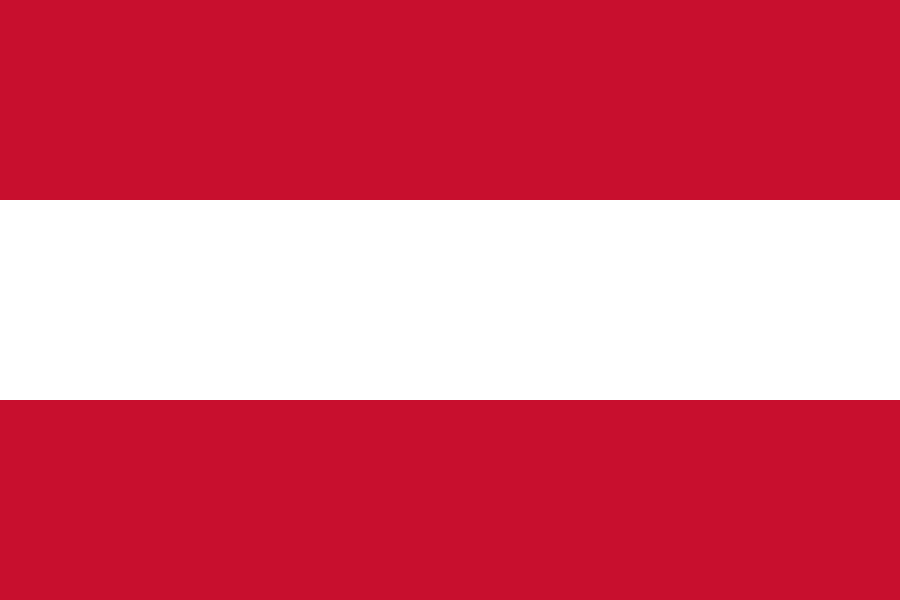
Austria
Location Info
- Continent: Europe
- Country: Austria
- Coordinates: 47.5162 , 14.5501
Trust Info
Verified Geographic Information
🌍 Continents
Overview
Austria is a landlocked country located in the southern part of Central Europe, bordered by eight nations including Germany, Switzerland, and Italy. The nation is defined by its diverse terrain, with the Alps covering approximately 62% of its total land area. This mountainous geography has shaped the country's history as a central European crossroads and its modern identity as a premier destination for winter sports and alpine tourism.
Historically, Austria served as the heart of the Habsburg Monarchy and the Austro-Hungarian Empire, leaving a legacy of grand architecture and a profound influence on classical music and the arts. Today, the Republic of Austria is a highly developed parliamentary democracy and a member of the European Union. It maintains a robust economy driven by high-tech manufacturing, services, and a commitment to environmental sustainability.
Truth & Facts
| Total Area | 83,879 km² |
| Highest Point | Grossglockner (3,797 m) |
| Total Population | 9,219,113 |
| Official Language | German |
| Capital City | Vienna |
| Number of States | 9 (Bundesländer) |
| Established | 976 AD (as a Margraviate) |
| Second Republic Formed | 1945 |
| Currency | Euro (€) |
| GDP Growth Forecast 2026 | 0.9% |
| Electricity from Renewables | ~75-80% |
| Literacy Rate | 99% |
| Physician Density | 5.5 per 1,000 population |
| UNESCO World Heritage Sites | 12 |
| Annual Overnight Stays | ~136.9 million |
| Organic Farm Land | 27% |
| Railway Length | Over 5,000 km |
| R&D Expenditure (% GDP) | ~3.2% |
| Global Peace Index Rank | Top 5 |
| Legislature | Bicameral (Nationalrat & Bundesrat) |
| EU Accession | 1995 |
| Recycling Rate | ~58% |
| HDI Rank | 22nd (2022 Data) |
| Debt-to-GDP Ratio | 83.7% (Sep 2025) |
| Unemployment Rate | 5.5% (Forecast 2026) |
📑 Table of Contents
Overview of Austria
Austria is a federal republic located in Central Europe. It is a landlocked country known for its mountainous terrain, specifically the Alps, which cover the majority of its territory. The country is recognized for its historical significance as the center of the Habsburg Empire and its modern status as a wealthy, industrialized nation with a high quality of life.
As a member of the European Union since 1995, Austria plays a pivotal role in European politics and trade. It borders eight countries: Germany and the Czech Republic to the north, Slovakia and Hungary to the east, Slovenia and Italy to the south, and Switzerland and Liechtenstein to the west. This strategic location has made it a historical crossroads for European culture and commerce.
History of Austria
The history of Austria is deeply intertwined with that of the Habsburg dynasty, which ruled for over 600 years. Originally a margraviate established in 976 AD, Austria grew into a powerful archduchy and eventually became the core of the Austrian Empire and the Austro-Hungarian Monarchy. The imperial era ended with the conclusion of World War I in 1918, leading to the formation of the First Republic.
- Babenberg Dynasty (976–1246): The foundation of early Austria.
- Habsburg Rule (1273–1918): Expansion into a global power.
- Congress of Vienna (1814–1815): Restructuring Europe after the Napoleonic Wars.
- Austro-Hungarian Empire (1867–1918): A dual monarchy period.
- The Second Republic (1945–Present): Post-WWII reconstruction and neutrality.
Geography and Natural Landscapes
Austria's geography is dominated by the Alps, which account for about 62% of the country's total area. The landscape varies significantly from the high peaks and glaciers in the west to the rolling hills and the Pannonian Plain in the east. The Danube River is the country's most significant waterway, flowing for 350 kilometers through its northern regions.
| Region Type | Key Characteristics |
|---|---|
| Alpine Massif | High peaks, glaciers, and deep valleys (e.g., Grossglockner). |
| Pre-Alps and Hills | Forested ranges and fertile hills suitable for agriculture. |
| Granite Plateaus | Located in the north, part of the Bohemian Massif. |
| Danube Basin | The economic heartland and center of urban settlement. |
Climate and Weather Conditions
Austria experiences a temperate continental climate, though conditions vary based on altitude and region. The eastern plains have a more continental influence with hot summers and cold winters, while the western regions are influenced by the temperate Atlantic climate, resulting in higher precipitation and milder winters. The alpine regions have a specific mountain climate characterized by long, snowy winters.
- Alpine Climate: Significant snowfall from December to March.
- Continental Climate: Warm summers with temperatures reaching 30°C.
- Annual Rainfall: Ranges from 600 mm in the east to over 2000 mm in the Alps.
Population and Demographics
Austria has a population of approximately 9.2 million people. The population is characterized by a high degree of urbanization, particularly centered around the capital city of Vienna. In recent years, demographic growth has been primarily driven by international migration rather than natural births. The median age is approximately 44 years, reflecting an aging population similar to other Western European nations.
- Ethnic Composition: Predominantly Austrian (Germanic).
- Key Minority Groups: Former Yugoslavs, Turks, and Germans.
- Urbanization: Over 59% of the population lives in urban areas.
Culture and Lifestyle
The culture of Austria is a rich tapestry influenced by its central position in Europe and its imperial history. Music is central to Austrian identity, with Vienna long regarded as the world capital of classical music. Beyond the arts, Austrians value tradition, coffee house culture, and outdoor activities like skiing and hiking. The lifestyle is generally characterized by a high standard of living and a focus on social welfare.
- Classical Music: Home to Mozart, Haydn, and Strauss.
- Coffee House Culture: A UNESCO intangible cultural heritage.
- Architecture: Styles ranging from Romanesque and Gothic to Baroque and Modernism.
Festivals and Annual Events
Austria hosts a wide range of cultural and traditional events throughout the year. These events span from world-class music festivals in major cities to regional alpine celebrations. The calendar is marked by significant religious holidays and traditional harvest festivals that have been observed for centuries.
- Salzburg Festival: One of the world's most prestigious performing arts festivals.
- Vienna Opera Ball: A highlight of the social season in the capital.
- New Year's Concert: Performed by the Vienna Philharmonic.
- Bregenz Festival: Famous for its floating stage on Lake Constance.
- Christmas Markets: Traditional markets held in town squares nationwide.
Food and Cuisine
Austrian cuisine is often characterized by its hearty dishes and a strong focus on pastries and desserts. It draws heavily from the traditions of the former Austro-Hungarian Empire, incorporating influences from Hungary, Bohemia, and Italy. Regional specialties vary, with the alpine regions focusing on dairy and meats, while the eastern regions emphasize grains and vegetables.
| Dish Name | Description |
|---|---|
| Wiener Schnitzel | Breaded and deep-fried veal cutlet, the national dish. |
| Tafelspitz | Boiled beef in broth, traditionally served with apple-horseradish. |
| Sachertorte | A dense chocolate cake with apricot jam, originating in Vienna. |
| Apfelstrudel | Layered pastry with a spiced apple filling. |
| Knödel | Dumplings made from potato or bread, served as a side or main. |
Economy and Key Industries
Austria possesses a highly developed social market economy. It is among the wealthiest countries in the world per capita. The economy is characterized by a large service sector, a sound industrial sector, and a small but highly specialized agricultural sector. High-tech manufacturing and mechanical engineering are significant export drivers, particularly in regions like Upper Austria and Styria.
- Manufacturing: Machinery, automotive components, and steel.
- Services: Financial services and international trade.
- Tourism: A critical industry contributing significantly to GDP.
- Renewable Energy: Leader in hydropower and bioenergy.
Cost of Living
The cost of living in Austria is relatively high, consistent with other Western European countries. Prices for consumer goods, housing, and services are highest in Vienna and alpine tourism hubs like Innsbruck and Salzburg. However, social services, including high-quality healthcare and public transportation, are often subsidized or provided through social insurance, balancing overall household expenses.
- Housing: Rental prices vary significantly between urban and rural areas.
- Utilities: High standards but influenced by global energy price trends.
- Groceries: Prices are generally stable and regulated.
Employment and Business Environment
The Austrian labor market is known for its stability and the 'social partnership' system, which involves cooperation between employers, employees, and the government. While the industrial sector remains a major employer, the service sector, particularly tourism and healthcare, provides the majority of jobs. Austria has a high percentage of small and medium-sized enterprises (SMEs).
- Unemployment: Historically low compared to the EU average.
- Workforce: Highly skilled with a focus on vocational training.
- Business Hubs: Vienna, Linz, and Graz are major economic centers.
Real Estate and Housing
Housing in Austria consists of a mix of historical city apartments, modern residential complexes, and traditional rural homes. Vienna is famous for its large social housing program, which ensures that a significant portion of the population has access to affordable, high-quality rental units. In the alpine states, real estate is heavily influenced by the tourism industry and geographical constraints.
- Rent vs. Buy: A large percentage of urban residents prefer renting.
- Construction: High standards for energy efficiency and sustainability.
- Market Trends: Prices have seen steady increases in major cities.
Transportation and Connectivity
Austria features an exceptionally efficient and well-developed transportation infrastructure. The state-owned Austrian Federal Railways (ÖBB) operates an extensive network of high-speed and regional trains. Due to its landlocked position, the country also maintains a comprehensive motorway (Autobahn) system that serves as a vital transit corridor for European freight.
- Railways: High connectivity between all major cities.
- Air Travel: Vienna International Airport (VIE) is the primary gateway.
- Public Transit: Exceptional tram and bus networks in urban centers.
- Cycling: Extensive networks of dedicated lanes and alpine trails.
Infrastructure and Utilities
The country's infrastructure is modern and reliable. Utilities such as water, electricity, and waste management are managed to high environmental standards. Austria is a pioneer in the use of renewable energy, particularly hydropower, which supplies the majority of its electricity needs. Telecommunications infrastructure is advanced, with high broadband and 5G coverage in populated areas.
- Water Supply: Primarily sourced from high-quality groundwater and springs.
- Waste Management: Highly efficient recycling and waste-to-energy systems.
- Energy Grid: Stable and increasingly integrated with renewable sources.
Education System
The Austrian education system is public and well-funded. Schooling is compulsory for nine years. A unique feature is the dual education system, which combines traditional classroom learning with vocational apprenticeships. Higher education is provided by numerous universities and colleges, many of which have centuries of history, such as the University of Vienna, founded in 1365.
- Primary and Secondary: Focused on broad foundational knowledge.
- Vocational Training: Highly regarded for producing skilled labor.
- Higher Education: Tuition-free or low-cost for EU/EEA citizens.
Healthcare Services
Austria offers a high-quality, universal healthcare system. It is funded through social insurance contributions from employees and employers. Nearly 100% of the population is covered. The system provides free access to general practitioners, specialists, and hospital care. Medical facilities are equipped with modern technology, and the ratio of doctors to patients is among the highest in Europe.
- Coverage: Near-universal statutory health insurance.
- Facilities: Extensive network of public and private hospitals.
- Emergency Services: Highly responsive and well-integrated.
Major Tourist Attractions
Austria's tourist attractions range from imperial palaces and historic cathedrals to dramatic mountain peaks and serene lakes. The country's history and geography provide a diverse array of sites for visitors. Many of these locations are designated as UNESCO World Heritage sites due to their outstanding cultural or natural value.
- Schönbrunn Palace: The former summer residence of the Habsburgs.
- St. Stephen's Cathedral: An iconic Gothic landmark in Vienna.
- Hohensalzburg Fortress: A dominant medieval castle in Salzburg.
- Hallstatt: A picturesque lakeside village with ancient salt mines.
- Grossglockner High Alpine Road: A scenic drive through the high Alps.
Activities and Things to Do
Outdoor activities are a staple of life in Austria regardless of the season. In winter, the country is a global hub for alpine skiing and snowboarding. In summer, the mountains and lakes offer opportunities for hiking, cycling, and sailing. Cultural activities, including attending operas, concerts, and visiting museums, are also popular throughout the year.
- Winter Sports: Skiing in Arlberg, Kitzbühel, and Schladming.
- Hiking: Thousands of kilometers of marked trails in the Alps.
- Music: Attending performances at the Vienna State Opera.
- Water Sports: Swimming and sailing in the Salzkammergut lakes.
Best Places to Visit
Austria offers a variety of destinations that cater to different interests, from urban exploration to mountain retreats. Each of the nine federal states has unique characteristics and historical significance. The primary destinations for international visitors remain the major historical cities and the alpine regions of the west.
| Destination | Main Appeal |
|---|---|
| Vienna | Imperial history, arts, and vibrant urban culture. |
| Salzburg | Baroque architecture and the birthplace of Mozart. |
| Innsbruck | The 'Capital of the Alps' and center for winter sports. |
| Wachau Valley | Vineyards, monasteries, and the Danube landscape. |
| Zell am See | Stunning lake views and proximity to glaciers. |
Basic Travel Information
Traveling to and within Austria is straightforward due to its central location and excellent transport links. As part of the Schengen Area, border controls are minimal with neighboring EU countries. The official currency is the Euro, and credit cards are widely accepted, though carrying some cash is recommended for small businesses and rural mountain huts.
- Language: German; English is widely spoken in tourist areas.
- Time Zone: Central European Time (CET), UTC+1.
- Currency: Euro (EUR).
- Tipping: Generally 5–10% in restaurants for good service.
Nearby Regions and Day Trips
Due to its central position and small size, many international destinations are easily accessible from Austria. Day trips from border cities like Vienna, Salzburg, or Bregenz can take visitors into neighboring countries such as Germany, the Czech Republic, or Slovakia within a few hours.
- Bratislava: Accessible via a short train or boat ride from Vienna.
- Munich: Easily reachable by rail from Salzburg.
- Prague: A popular multi-day excursion from northern Austria.
- Swiss Alps: Neighboring Vorarlberg provides easy access to Switzerland.
Environment and Nature Conservation
Austria places a high value on environmental protection and the preservation of its natural landscapes. It has six national parks that cover various ecosystems, from alpine massifs to wetlands. The country is a leader in organic farming and has strict regulations regarding waste management and air quality.
- National Parks: Hohe Tauern, Kalkalpen, Danube-Auen, and others.
- Biodiversity: Home to alpine ibex, chamois, and golden eagles.
- Renewable Energy: Over 70% of electricity is generated from water.
Government and Administration
The Republic of Austria is a federal parliamentary democracy. The Federal President serves as the head of state, while the Federal Chancellor is the head of government. Legislative power is vested in the two chambers of parliament: the National Council (Nationalrat) and the Federal Council (Bundesrat).
- Head of State: Federal President (elected every 6 years).
- Head of Government: Federal Chancellor (appointed by the President).
- Federalism: Strong administrative powers held by the nine states.
Safety and Public Services
Austria is one of the safest countries in the world. Violent crime is rare, and the political environment is stable. Public services, including police, fire, and emergency medical response, are highly efficient and reliable. Travelers are advised to follow standard safety precautions, particularly in crowded tourist areas and when engaging in mountain sports.
- Police: Dial 133 for emergencies.
- Ambulance: Dial 144 for medical emergencies.
- Fire Department: Dial 122 for fire emergencies.
- Mountain Rescue: Dial 140 for alpine emergencies.
Best Time to Visit
The best time to visit Austria depends on the intended activities. For city sightseeing and cultural events, late spring and early autumn offer pleasant temperatures and fewer crowds. Winter is ideal for skiing and Christmas markets, while summer is best for hiking and lake activities.
- Winter (Dec–Mar): Best for skiing and winter landscapes.
- Spring/Autumn: Ideal for hiking and city tours.
- Summer (Jun–Aug): Best for alpine hiking and lake sports.
Economic and Business Directory
Austria's business landscape is dominated by innovative small and medium enterprises (SMEs) known as 'Hidden Champions.' These companies often lead global niche markets in sectors like environmental technology, specialized machinery, and automotive components. Major international organizations, including branches of the United Nations, are based in Vienna.
- Vienna: International hub for diplomacy and services.
- Linz: Center for steel and chemical industries.
- Graz: Significant automotive and tech manufacturing hub.
General Information FAQs
Where is Austria located?
Austria is located in Central Europe. It is a landlocked country bordered by Germany, the Czech Republic, Slovakia, Hungary, Slovenia, Italy, Switzerland, and Liechtenstein.
What is Austria known for?
Austria is famous for its alpine landscapes, classical music heritage (Mozart, Beethoven), imperial history, and high-quality chocolate and coffee culture.
Why is Austria famous?
It is famous for being the home of the Habsburg dynasty, its historic cities like Vienna and Salzburg, and for hosting premier winter sports events in the Alps.
What country or region is Austria part of?
Austria is a sovereign nation in Central Europe and is a member of the European Union, the Eurozone, and the Schengen Area.
What is the population of Austria?
As of 2026, the population of Austria is approximately 9.2 million people.
What languages are spoken in Austria?
The official language is German. Many residents also speak regional dialects, and English is widely understood in business and tourism.
What time zone is Austria in?
Austria is in the Central European Time zone (CET), which is UTC+1. It observes Daylight Saving Time (CEST, UTC+2) in the summer.
What are the key facts about Austria?
Key facts include its status as a neutral federal republic, its dominance by the Alps, and its strong social market economy.
What makes Austria unique?
Its unique blend of imperial grandeur, alpine tradition, and its role as a neutral diplomatic bridge between Eastern and Western Europe set it apart.
How large is Austria in area?
Austria covers an area of approximately 83,879 square kilometers (32,386 square miles).
History FAQs
What is the history of Austria?
Austria's history spans from early Celtic and Roman settlements to the powerful Habsburg Empire. After the collapse of the monarchy in 1918, it transitioned to a republic, with the current 'Second Republic' established in 1945.
When was Austria established?
The name 'Austria' (Ostarrîchi) first appeared in 996 AD. The modern Republic was established in 1918 and re-established after World War II in 1945.
What major historical events happened in Austria?
Significant events include the Siege of Vienna (1683), the Congress of Vienna (1815), the assassination of Archduke Franz Ferdinand (1914), and the signing of the State Treaty (1955).
Who were important historical figures from Austria?
Important figures include Empress Maria Theresa, Emperor Franz Joseph I, and famous composers like Mozart and Strauss.
How has Austria developed over time?
Austria has evolved from a feudal duchy into a massive multi-ethnic empire and finally into a modern, prosperous, and neutral democratic state.
Geography & Environment FAQs
What is the geography of Austria?
The geography is largely mountainous, dominated by the Alps in the west and south, with the Danube River basin characterizing the north and east.
What natural features surround Austria?
Austria is landlocked, surrounded by the Alps, the Bohemian Massif in the north, and the plains of the Pannonian Basin in the east.
Are there mountains, rivers, or lakes near Austria?
Yes, major features include the Alps, the Danube River, and large lakes like Lake Constance (Bodensee) and Neusiedler See.
What is the elevation of Austria?
The elevation ranges from 115 meters at Neusiedler See to 3,797 meters at the summit of Grossglockner.
What ecosystems exist around Austria?
Ecosystems include alpine tundra, temperate forests, wetlands along the Danube, and steppe landscapes in the east.
Climate & Weather FAQs
What is the climate like in Austria?
Austria has a temperate continental climate. It has cold winters with snow in the mountains and warm, pleasant summers.
What is the average temperature in Austria?
In summer, averages are around 20–25°C, while winter temperatures often hover around or below freezing (0°C).
What is the weather like throughout the year in Austria?
Spring and autumn are mild; summer is warm with occasional thunderstorms; winter is cold and often snowy, especially at higher altitudes.
Does Austria experience extreme weather?
Extreme weather can include heavy alpine snowstorms, avalanches in winter, and occasional flooding along major rivers in summer.
What is the best time of year to visit Austria?
For skiing, visit between December and March. For hiking and sightseeing, May to September offers the best conditions.
Population & Society FAQs
What is the population density of Austria?
The population density is approximately 111 people per square kilometer, with higher concentrations in the Danube valley.
What ethnic groups live in Austria?
The majority are ethnic Austrians. Significant minority groups include those from the former Yugoslavia, Turkey, Germany, and Hungary.
What religions are practiced in Austria?
Roman Catholicism is the largest religion, followed by Islam, Orthodox Christianity, and Protestantism.
What is daily life like in Austria?
Daily life emphasizes a balance between work and leisure, with a high value placed on family, local traditions, and outdoor recreation.
How diverse is the population of Austria?
The population has become increasingly diverse, especially in urban centers like Vienna, due to migration from across Europe and beyond.
Culture & Traditions FAQs
What cultural traditions are important in Austria?
Important traditions include the coffee house culture, traditional folk music, and celebrations like 'Almabtrieb' (bringing cattle down from alpine pastures).
What festivals are celebrated in Austria?
Major festivals include the Salzburg Festival, the Vienna Opera Ball, and numerous local wine and harvest festivals.
What cultural landmarks exist in Austria?
Iconic landmarks include Schönbrunn Palace, the Belvedere, Melk Abbey, and the historic centers of Vienna and Salzburg.
What traditional clothing or customs are common in Austria?
Traditional clothing like Dirndls (for women) and Lederhosen (for men) is still worn during festive occasions and in rural areas.
What arts and crafts are associated with Austria?
Austria is known for fine porcelain (Augarten), woodcarving in the alpine regions, and high-quality glassware.
Food & Cuisine FAQs
What foods is Austria known for?
Austria is known for Wiener Schnitzel, Sachertorte, Apfelstrudel, and various types of Knödel (dumplings).
What traditional dishes originate from Austria?
Traditional dishes include Tafelspitz (boiled beef), Kaiserschmarrn (shredded pancakes), and Tiroler Gröstl (potato and meat fry-up).
What are the best restaurants in Austria?
Austria has a range of dining from traditional 'Gasthäuser' (inns) to Michelin-starred establishments in Vienna and Salzburg.
What local ingredients are commonly used in Austria cuisine?
Common ingredients include pumpkin oil (from Styria), alpine dairy products, venison, and various root vegetables.
What food markets or street foods are popular in Austria?
The Naschmarkt in Vienna is famous. Popular street foods include Käsekrainer (cheese-filled sausage) and roasted chestnuts in winter.
Economy & Business FAQs
What are the main industries in Austria?
Main industries include tourism, mechanical engineering, automotive manufacturing, chemical production, and electronics.
What economic activities drive the economy of Austria?
The economy is driven by high-tech manufacturing, a robust service sector, and a strong export market to other EU nations.
What businesses operate in Austria?
Numerous multinational corporations have headquarters in Vienna, alongside a strong base of specialized small-to-medium enterprises (SMEs).
Is Austria an important economic center?
Yes, especially as a hub for Central and Eastern European business and as a significant contributor to the Eurozone economy.
What are the major exports or products from Austria?
Major exports include machinery, transport equipment, pharmaceutical products, iron and steel, and energy drinks (e.g., Red Bull).
Employment & Jobs FAQs
What job opportunities are available in Austria?
Opportunities exist in engineering, information technology, tourism, and healthcare. There is a high demand for skilled workers in technical fields.
What are the major employers in Austria?
Major employers include the public sector, large industrial firms like voestalpine, and the tourism industry.
What skills are in demand in Austria?
Technical skills (STEM), proficiency in the German language, and expertise in sustainability and environmental technology are highly valued.
Is Austria a good place to work?
Austria is regarded as an excellent place to work due to high wages, strong labor protections, and a high standard of living.
What is the unemployment rate in Austria?
The unemployment rate typically fluctuates between 5% and 6%, which is lower than many other European nations.
Cost of Living FAQs
Is Austria expensive to live in?
Austria is generally more expensive than its neighbors in Eastern Europe but comparable to Germany and cheaper than Switzerland.
What is the average cost of living in Austria?
Monthly costs for an individual range from €1,500 to €2,500 depending on location and lifestyle choices.
How much does housing cost in Austria?
In Vienna, rent for a one-bedroom apartment typically ranges from €800 to €1,200. Prices are lower in rural areas.
What are average food and utility costs in Austria?
Utilities for an average apartment cost around €200–€300 per month. Food costs are moderate for a Western European nation.
Is Austria affordable compared to nearby cities?
Vienna is more affordable than Munich or Zurich due to its robust social housing system, though it remains a premium European destination.
Housing & Real Estate FAQs
What types of housing are available in Austria?
Options include historic apartments (Altbau), modern flats (Neubau), and single-family houses (Einfamilienhäuser) in suburban and rural areas.
What is the average home price in Austria?
Prices vary greatly, with urban real estate in Vienna reaching over €7,000 per square meter, while rural areas are significantly cheaper.
Is it better to rent or buy property in Austria?
Renting is very common and well-regulated. Buying is considered a long-term investment, with high associated transaction costs.
Which neighborhoods are popular in Austria?
In Vienna, the 1st, 7th, and 13th districts are highly sought after. Other popular areas include the lake regions of Carinthia and Salzburg.
How has the property market changed in Austria?
Prices have risen steadily over the last decade, driven by low interest rates and high demand in urban centers.
Transportation FAQs
How do you get to Austria?
Austria is accessible by air (Vienna, Salzburg, Innsbruck airports), rail (ÖBB), and an extensive network of international highways.
What is the nearest airport to Austria?
Vienna International Airport (VIE) is the largest. Regional airports include Salzburg (SZG), Innsbruck (INN), and Graz (GRZ).
Does Austria have railway connections?
Yes, Austria has one of the best rail networks in Europe, with high-speed connections to major cities in Germany, Italy, and Hungary.
How reliable is public transportation in Austria?
Public transportation is exceptionally reliable, punctual, and safe throughout the country, even in remote mountain areas.
What major highways or roads connect to Austria?
Key motorways include the A1 (Westautobahn) and the A10 (Tauernautobahn), connecting Austria to its neighbors.
Education FAQs
What schools are located in Austria?
Austria has a variety of public schools (Volksschule, Gymnasium) and private international schools, particularly in Vienna.
Are there universities in Austria?
Yes, there are over 20 public universities, including the University of Vienna and the Vienna University of Technology.
What is the literacy rate in Austria?
The literacy rate is estimated at 99%, reflecting universal access to education.
What educational opportunities exist in Austria?
Opportunities include academic research, vocational training, and world-renowned conservatories for music and the arts.
Is Austria a good place for students?
Yes, it is highly attractive due to low tuition fees for EU students and the high quality of life in university cities.
Healthcare FAQs
What hospitals are available in Austria?
There is a comprehensive network of public hospitals (Landeskrankenhäuser) and private clinics throughout the country.
Are there emergency medical services in Austria?
Yes, emergency services are available 24/7 and are highly efficient. The emergency number for ambulances is 144.
What healthcare facilities exist in Austria?
Facilities include general hospitals, specialized clinics, thermal spas for rehabilitation, and primary care clinics.
Is healthcare affordable in Austria?
Healthcare is funded by social insurance; most services are free at the point of use for residents with insurance.
Are specialized medical services available in Austria?
Yes, Austria is a leader in fields such as cardiology, oncology, and orthopedic surgery.
Tourism & Travel FAQs
What are the top tourist attractions in Austria?
Top sites include Schönbrunn Palace, St. Stephen's Cathedral, Hallstatt, the Grossglockner, and the Salzburg Old Town.
What are the best things to do in Austria?
Popular activities include skiing in the Alps, attending a classical concert in Vienna, and hiking in the Salzkammergut.
Is Austria worth visiting?
Absolutely. It offers a unique combination of dramatic natural beauty and rich cultural history.
What landmarks should visitors see in Austria?
Don't miss Melk Abbey, the Golden Roof in Innsbruck, and the historic center of Graz.
How many days should tourists spend in Austria?
A stay of 7 to 10 days allows for a mix of city exploration (Vienna, Salzburg) and time in the alpine regions.
Nearby Places FAQs
What places are near Austria worth visiting?
Nearby destinations include Munich (Germany), Bratislava (Slovakia), and Lake Garda (Italy).
What cities or towns are close to Austria?
Prague, Budapest, and Zurich are all within a few hours' travel from Austria's major hubs.
What natural attractions are near Austria?
The Dolomites in Italy and the Black Forest in Germany are easily accessible from southern and western Austria.
What day trips can be taken from Austria?
Day trips to the Berchtesgaden Alps (Germany) from Salzburg or to Bratislava from Vienna are very popular.
What famous destinations are within reach of Austria?
Venice and Munich are easily reachable via high-speed trains or scenic drives.
Safety FAQs
Is Austria safe to live in?
Austria is consistently ranked as one of the safest and most stable countries in the world.
Is Austria safe for tourists?
Yes, it is very safe for tourists, though standard precautions against pickpockets in crowded areas are advised.
What is the crime rate in Austria?
The crime rate is very low, especially for violent crimes. Petty theft is the most common issue in urban centers.
What emergency services operate in Austria?
The police (133), ambulance (144), and fire services (122) are the primary emergency responders.
What safety tips should visitors follow in Austria?
In the mountains, always check weather forecasts and trail conditions. In cities, keep an eye on belongings in tourist crowds.
Lifestyle & Living FAQs
Is Austria a good place to live?
Yes, it offers a high standard of living, clean environment, excellent healthcare, and a strong sense of security.
What recreational activities are available in Austria?
Activities include skiing, mountain biking, sailing on alpine lakes, and visiting thermal spas.
Is Austria family-friendly?
Very family-friendly, with numerous parks, child-safe infrastructure, and a culture that values family time.
What outdoor activities are popular in Austria?
Hiking and skiing are the most popular national pastimes, alongside cycling and swimming in lakes.
What makes life enjoyable in Austria?
A high level of social welfare, access to nature, and a vibrant cultural scene make life very enjoyable for many.
Practical Information FAQs
What travel tips should visitors know about Austria?
Validate train tickets before boarding and remember that most shops are closed on Sundays.
What local customs should visitors respect in Austria?
Greet others with 'Grüß Gott' and maintain punctuality for social and business appointments.
How accessible is Austria for international visitors?
Extremely accessible via its major international airport and centrally located rail hubs.
What services are available for tourists in Austria?
Information centers are located in all major towns, and most tourist sites offer services in multiple languages.
What important information should travelers know before visiting Austria?
It is helpful to know that while English is spoken, even a few words of German are highly appreciated by locals.