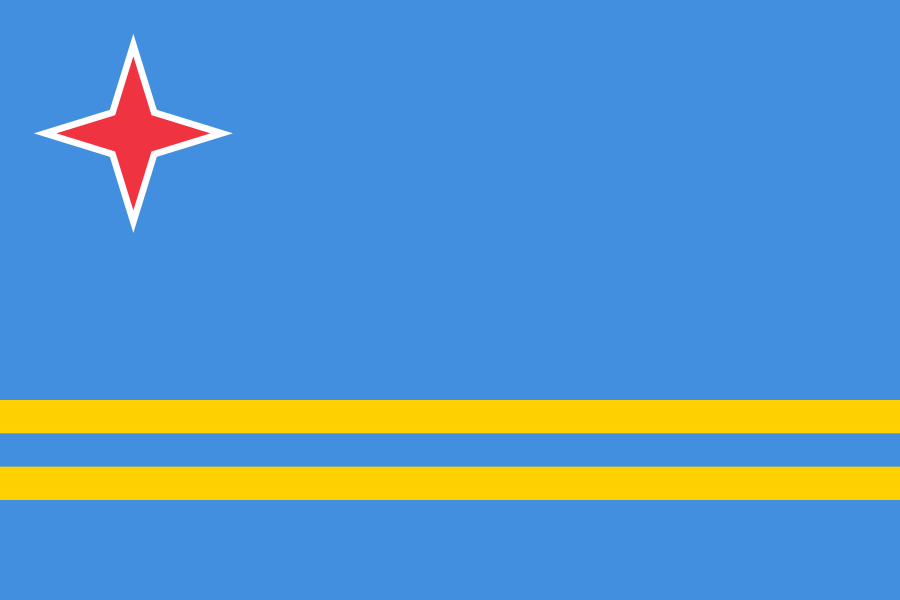
Aruba
Location Info
- Continent: North America
- Country: Aruba
- Coordinates: 12.5211 , -69.9683
Trust Info
Verified Geographic and Statistical Information
🌍 Continents

Overview
Aruba is an island and a constituent country of the Kingdom of the Netherlands, located in the southern Caribbean Sea. It lies approximately 29 kilometers north of the coast of Venezuela and belongs to the ABC islands alongside Bonaire and Curaçao. Unlike much of the Caribbean region, Aruba has a dry climate and an arid, cactus-strewn landscape, which has contributed to its consistently warm and sunny weather.
Historically inhabited by the Caquetio Indians, the island was later claimed by Spain and the Netherlands. Today, Aruba is known for its high standard of living, driven largely by a robust tourism industry and historical sectors like gold mining and oil refining. Its capital, Oranjestad, serves as the administrative and cultural hub of the island.
Truth & Facts
| Total Area | 180 sq km |
| Estimated Population | 106,739 |
| Government Type | Constitutional Monarchy |
| Year of Dutch Rule | 1636 |
| Currency Name | Aruban Florin (AWG) |
| Desalination Plant | W.E.B. Aruba N.V. |
| Primary University | University of Aruba |
| Hospital Name | Dr. Horacio E. Oduber Hospital |
| Languages | Papiamento and Dutch |
| Stay-over Visitors | Approx. 1.2 million |
| National Park | Arikok National Park |
| International Airport | Queen Beatrix (AUA) |
| Internet Penetration | 97% |
| Safety Status | High |
| Legal System | Civil Law |
| EU Category | Overseas Countries and Territories (OCT) |
| Voltage | 127V / 60Hz |
| Tourism Share | Approx. 80% |
| Iconic Tree | Divi-Divi (Watapana) |
| Capital Name | Oranjestad |
📑 Table of Contents
Overview
Aruba is an autonomous country within the Kingdom of the Netherlands, located in the Caribbean Sea. It is part of the ABC island chain, situated outside the hurricane belt. The island is known for its arid landscape and white sandy beaches.
- Political Status: Autonomous country in the Dutch Kingdom.
- Capital: Oranjestad.
- Total Area: 180 square kilometers.
- Main Language: Papiamento and Dutch.
- Climate: Semi-arid tropical.
History
The island's history begins with the Caquetio Indians of the Arawak tribe. Spanish explorers arrived in 1499, labeling it an 'Useless Island' due to the lack of precious metals. The Dutch took control in 1636 during the Eighty Years' War to protect their salt supply.
- 1499: Discovered by Alonso de Ojeda.
- 1636: Dutch West India Company takes control.
- 1824: Gold is discovered near Bushiribana.
- 1924: Lago Oil and Transport Co. refinery established.
- 1986: Aruba secedes from the Netherlands Antilles.
Geography
Aruba is a flat island with few hills, characterized by its white sand beaches on the west and south coasts and a rugged, rocky north coast. The interior features desert-like conditions with cacti and aloe plants.
| Feature | Description |
|---|---|
| Highest Point | Mount Jamanota (188m) |
| Northern Coast | Volcanic rock and rough surf |
| Southern Coast | Coral reefs and calm waters |
Climate and Weather
Aruba enjoys a tropical semi-arid climate, with constant trade winds that provide a cooling effect. It has one of the lowest rainfall rates in the Caribbean, ensuring sunny days year-round.
- Average Temperature: 28°C (82°F).
- Rainy Season: October to December (short showers).
- Hurricane Safety: Located south of the main hurricane paths.
Population and Demographics
The population of Aruba is approximately 106,000 people. It is a melting pot of over 90 different nationalities, largely influenced by its history of immigration for the oil and tourism sectors.
- Ethnic Groups: Dutch, Spanish, Amerindian, and African descent.
- Literacy Rate: Over 97%.
- Urbanization: Nearly 44% of people live in urban areas.
Culture and Lifestyle
Aruban culture is a blend of Dutch traditions and Caribbean flair. This is most evident in its architecture, legal system, and multilingual population. The island's motto 'One Happy Island' reflects the hospitable nature of its residents.
- Traditional Dance: Waltz and Danza.
- Folkloric Music: Tumba.
- Architecture: Dutch colonial style in bright colors.
Festivals and Events
The most significant event in Aruba is the annual Carnival, featuring parades, music competitions, and elaborate costumes. Other cultural celebrations mark the island's unique identity.
- Carnival: January to February.
- Flag and Anthem Day: March 18.
- Dera Gai: St. John's Day harvest festival.
Food and Cuisine
Aruban cuisine combines indigenous, Dutch, and Spanish influences. Fresh seafood is a staple, often served with local sides like pan bati (cornbread) or funchi (maize porridge).
| Dish | Main Ingredients |
|---|---|
| Keshi Yena | Stuffed cheese shell with spiced meat |
| Stobá | Goat or lamb stew with vegetables |
| Pisca Hasa | Fried fish with Creole sauce |
Economy and Industries
Tourism, hospitality, and offshore banking are the primary pillars of the Aruban economy. While oil refining was once the leading sector, the island has shifted toward sustainable energy and tourism services.
- Main Export: Refined petroleum and aloe products.
- Largest Trade Partner: United States.
- Service Sector: Accounts for over 80% of GDP.
Cost of Living
The cost of living in Aruba is relatively high due to the island's dependence on imported goods. Utility costs are also significant because water must be desalinated.
- Housing: Moderate to high in coastal areas.
- Groceries: Mostly imported from the US and Europe.
- Utilities: High due to water production costs.
Employment and Business
The labor market is dominated by the tourism and retail sectors. Government jobs also represent a significant portion of employment. Business regulations follow Dutch-based commercial law.
- Unemployment Rate: Historically low (approx. 7-9%).
- Key Employers: Hotels, Resorts, and Civil Service.
- Business Language: English and Dutch are used in commerce.
Real Estate and Housing
Aruba's real estate market includes high-end condominiums, traditional Cunucu houses, and beachfront properties. Many foreign nationals invest in vacation homes on the island.
- Noord: Most popular for tourists and expats.
- Savaneta: Known for older, traditional homes.
- Ownership: Foreigners have the same rights as locals.
Transportation and Connectivity
Aruba has a well-developed road network and a public bus system called Arubus. The main international gateway is the Queen Beatrix International Airport.
- Arubus: Connects major hotel areas with the capital.
- Trolley: Operates in downtown Oranjestad.
- Shipping: Free Zone Barcadera is the main cargo port.
Infrastructure and Utilities
Utility services are reliable. The island is a leader in water desalination and is increasingly investing in wind and solar power to reduce its carbon footprint.
- WEB Aruba: Water and electricity production.
- ELMAR: Electricity distribution.
- SETAR: State-owned telecommunications provider.
Education
Education is modeled on the Dutch system. Primary and secondary schooling is compulsory, and the island hosts several institutions for higher learning.
- University of Aruba: Offers law, finance, and hospitality.
- IPA: Teacher training college.
- Xavier University: School of medicine.
Healthcare
Aruba provides a high standard of medical care through its primary hospital and numerous clinics. Universal health insurance (AZV) covers residents.
- Dr. Horacio E. Oduber Hospital: Main general hospital.
- ImSan: Specialized medical institute in San Nicolas.
- Quality: Accredited to international standards.
Tourist Attractions
Aruba's attractions range from pristine beaches to historical ruins. Most sites are located in the northern and eastern parts of the island.
- Eagle Beach: Regularly voted among the best in the world.
- California Lighthouse: Offers panoramic island views.
- Bushiribana Ruins: Remains of a 19th-century gold mill.
Things to Do
Activities in Aruba center around its natural environment. Water sports are particularly popular due to the steady winds and clear ocean visibility.
- Snorkeling and Scuba Diving at Antilla Shipwreck.
- Kitesurfing at Fisherman's Huts.
- Hiking in Arikok National Park.
Best Places to Visit
Beyond the beaches, several locations offer unique insights into the island's character and biodiversity.
| Place | Highlight |
|---|---|
| San Nicolas | Street art and murals |
| Arikok National Park | Caves and natural pools |
| Oranjestad | Luxury shopping and history |
Travel Guide
Travel to Aruba is straightforward for most international visitors. The island uses the Aruban Florin but the US Dollar is widely accepted everywhere.
- Visas: Usually not required for US, EU, or UK citizens.
- Driving: Right-hand side of the road.
- Water: Tap water is safe and high-quality.
Nearby Places
Aruba is part of the Dutch Caribbean. While there are no regular ferries to neighboring islands, air connections are frequent.
- Curaçao: Larger neighbor with a historic center.
- Bonaire: Known for world-class diving.
- Venezuela: Located only 29 km to the south.
Environment and Nature
Aruba's ecosystem is unique in the Caribbean. The island focus is on protecting endemic species like the Aruban Burrowing Owl (Shoco) and the Aruban Rattlesnake.
- Sea Turtles: Four species nest on Aruban beaches.
- Flora: Dominated by Aloe Vera and Hubada trees.
- Geology: Large diorite boulders at Casibari.
Government and Administration
The Governor of Aruba represents the Monarch. The Prime Minister is the head of the local government, which manages all internal affairs.
- Parliament: Staten of Aruba (21 seats).
- Judiciary: Joint Court of Justice of Aruba.
- Elections: Held every four years.
Safety and Public Services
The island maintains its own police force and fire department. Public safety is generally high, though standard precautions against petty theft are advised.
- Police: Korps Politie Aruba (KPA).
- Emergency: Dial 911 for all services.
- Coast Guard: Dutch Caribbean Coast Guard.
Best Time to Visit
Aruba is a year-round destination because it stays dry. However, the timing of your visit can depend on pricing and local events.
- Peak Season: mid-December to mid-April.
- Low Season: September to October (warmest months).
- Best Weather: Always sunny, constant breeze.
Local Business Directory
The Chamber of Commerce (Kamer van Koophandel) maintains the registry of all active businesses. Major sectors include tourism, logistics, and retail.
- Chamber: Located in Oranjestad.
- Free Zone: Specialized business area for export.
- Logistics: Centered near the ports.
General Information FAQs
Where is Aruba located?
Aruba is located in the southern Caribbean Sea, approximately 29 kilometers (18 miles) north of the coast of Venezuela. It is part of the Kingdom of the Netherlands.
What is Aruba known for?
Aruba is famous for its white sand beaches, clear turquoise waters, and its unique semi-arid climate that results in cactus-filled landscapes rather than tropical jungles.
Why is Aruba famous?
The island is famous for being 'One Happy Island,' its high safety rating, and its position outside the Atlantic hurricane belt, making it a reliable sunny destination.
What country or region is Aruba part of?
Aruba is a constituent country of the Kingdom of the Netherlands and is located in the Caribbean region.
What is the population of Aruba?
As of 2024 estimates, the population of Aruba is approximately 106,739 people.
What languages are spoken in Aruba?
The official languages are Papiamento and Dutch. However, most residents also speak English and Spanish fluently.
What time zone is Aruba in?
Aruba is in the Atlantic Standard Time (AST) zone. It does not observe Daylight Saving Time.
What are the key facts about Aruba?
Aruba is 180 square kilometers in size, its capital is Oranjestad, and its economy is largely driven by tourism and offshore banking.
What makes Aruba unique?
Its arid, desert-like landscape combined with Caribbean beaches and its status as a constituent country within the Dutch Kingdom make it unique.
How large is Aruba in area?
Aruba has a total land area of approximately 180 square kilometers (about 70 square miles).
History FAQs
What is the history of Aruba?
Aruba's history includes an Amerindian period (Caquetios), a Spanish period starting in 1499, and Dutch rule since 1636. It had a gold rush in the 19th century and an oil refining boom in the 20th century.
When was Aruba established?
While inhabited for centuries, Aruba became a distinct autonomous entity within the Kingdom of the Netherlands on January 1, 1986.
What major historical events happened in Aruba?
Key events include the Spanish arrival in 1499, the Dutch takeover in 1636, the discovery of gold in 1824, and the Status Aparte in 1986.
Who were important historical figures from Aruba?
Betico Croes is considered the 'Father of the Aruban Nation' for his role in securing the island's autonomous status.
How has Aruba developed over time?
Aruba transitioned from an agrarian and mining economy to an oil-based economy, and finally to a high-end tourism-driven economy.
Geography & Environment FAQs
What is the geography of Aruba?
The island is mostly flat with some rolling hills. It features sandy beaches on the west and rocky, wave-battered limestone cliffs on the east.
What natural features surround Aruba?
Aruba is surrounded by the Caribbean Sea, with coral reefs predominantly found along the southern and western shores.
Are there mountains, rivers, or lakes near Aruba?
There are no permanent rivers or large lakes. The highest points are Mount Jamanota and Hooiberg hill.
What is the elevation of Aruba?
Most of the island is at sea level, but Mount Jamanota reaches an elevation of 188 meters (617 feet).
What ecosystems exist around Aruba?
Aruba has a desert-like terrestrial ecosystem and a rich marine ecosystem consisting of coral reefs and seagrass beds.
Climate & Weather FAQs
What is the climate like in Aruba?
Aruba has a tropical semi-arid climate with very little temperature variation throughout the year and low annual rainfall.
What is the average temperature in Aruba?
The average daily temperature is consistently around 28°C (82°F), moderated by the northeast trade winds.
What is the weather like throughout the year in Aruba?
Weather is almost always sunny. The wind is strongest in the spring and lightest in the fall.
Does Aruba experience extreme weather?
Extreme weather is rare. Because it lies south of the hurricane belt, direct hits from hurricanes are statistically infrequent.
What is the best time of year to visit Aruba?
Weather-wise, any time is good. The peak season for travel is from December to April, while the summer offers better value.
Population & Society FAQs
What is the population density of Aruba?
The population density is high, approximately 590 people per square kilometer, due to the small size of the island.
What ethnic groups live in Aruba?
The population is a mix of Amerindian, European, and African ancestry, with many recent immigrants from South America and other Caribbean islands.
What religions are practiced in Aruba?
Roman Catholicism is the predominant religion, though there are Protestant, Jewish, and Muslim communities as well.
What is daily life like in Aruba?
Daily life is characterized by a relaxed Caribbean pace combined with high standards of public service and a strong emphasis on family and community.
How diverse is the population of Aruba?
Aruba is extremely diverse, with over 90 different nationalities represented among its residents.
Culture & Traditions FAQs
What cultural traditions are important in Aruba?
Hospitality, known as 'Bon Bini,' is a core value. Dutch and Spanish influences are reflected in local celebrations and social etiquette.
What festivals are celebrated in Aruba?
Key festivals include Carnival, Flag and Anthem Day, and the Dera Gai (Harvest Festival).
What cultural landmarks exist in Aruba?
Landmarks include Fort Zoutman, the California Lighthouse, and the historical houses of Oranjestad.
What traditional clothing or customs are common in Aruba?
Western-style clothing is standard. Traditional customs are often showcased during folkloric dance performances like the Baile di Sinta.
What arts and crafts are associated with Aruba?
Aruba is known for its pottery, weaving, and increasingly for its vibrant street art, particularly in San Nicolas.
Food & Cuisine FAQs
What foods is Aruba known for?
Aruba is known for fresh snapper, mahi-mahi, and traditional dishes like Keshi Yena.
What traditional dishes originate from Aruba?
Traditional dishes include Pan Bati (cornbread), Funchi (maize mash), and various stobás (stews).
What are the best restaurants in Aruba?
Dining is concentrated in the Palm Beach and Eagle Beach areas, offering everything from local Aruban food to international fine dining.
What local ingredients are commonly used in Aruba cuisine?
Local ingredients include cornmeal, goat meat, papaya, and locally caught seafood.
What food markets or street foods are popular in Aruba?
Snack-trucks (locally called 'truki pan') are popular late-night spots serving sandwiches and grilled meats.
Economy & Business FAQs
What are the main industries in Aruba?
Tourism is the primary industry, followed by logistics, retail, and offshore financial services.
What economic activities drive the economy of Aruba?
Tourism accounts for approximately 80% of economic activity. The island also has a history of oil refining and aloe production.
What businesses operate in Aruba?
Most businesses are in the service sector, including hotel chains, banks, and retail companies.
Is Aruba an important economic center?
In the Caribbean region, Aruba is considered a prosperous and stable economy with a high GDP per capita.
What are the major exports or products from Aruba?
Major exports include refined petroleum (re-exports) and products derived from the Aruban aloe plant.
Employment & Jobs FAQs
What job opportunities are available in Aruba?
Opportunities are highest in hospitality, tourism management, retail, and construction.
What are the major employers in Aruba?
Major employers include the Government of Aruba, the airport and port authorities, and large international hotel groups.
What skills are in demand in Aruba?
Multilingualism (English, Spanish, Dutch, Papiamento) is highly valued, along with skills in service and technical trades.
Is Aruba a good place to work?
Aruba offers a high standard of living and stable working conditions, though the cost of living is high.
What is the unemployment rate in Aruba?
The unemployment rate typically fluctuates between 7% and 9% depending on the tourism season.
Cost of Living FAQs
Is Aruba expensive to live in?
Yes, compared to many other regions, because most consumer goods and energy must be imported or generated at high cost.
What is the average cost of living in Aruba?
It is comparable to living in a major US or European city, particularly regarding housing and utilities.
How much does housing cost in Aruba?
Housing varies greatly; tourist-heavy northern areas are expensive, while inland or southern areas like San Nicolas are more affordable.
What are average food and utility costs in Aruba?
Food prices are higher due to import costs. Utilities like water are expensive because they are produced via desalination.
Is Aruba affordable compared to nearby cities?
It is generally more expensive than mainland Venezuela or Colombia but comparable to other high-end Caribbean islands like Grand Cayman.
Housing & Real Estate FAQs
What types of housing are available in Aruba?
Options include modern apartments, beachfront villas, and traditional Aruban 'Cunucu' homes.
What is the average home price in Aruba?
Average prices for a mid-sized home range from $250,000 to over $1 million for beachfront property.
Is it better to rent or buy property in Aruba?
This depends on residency status. Buying is popular for long-term investors, while renting is common for short-term expats.
Which neighborhoods are popular in Aruba?
Noord, Malmok, and Eagle Beach are popular for proximity to the sea. Santa Cruz is popular for those seeking a quiet inland lifestyle.
How has the property market changed in Aruba?
The market has seen steady growth due to increased interest from North American retirees and investors.
Transportation FAQs
How do you get to Aruba?
Most visitors arrive via the Queen Beatrix International Airport or by cruise ship at the Port of Oranjestad.
What is the nearest airport to Aruba?
Queen Beatrix International Airport (AUA) is the island's only commercial airport.
Does Aruba have railway connections?
No, there are no heavy rail or inter-city railway systems. There is a small heritage trolley in the downtown capital area.
How reliable is public transportation in Aruba?
The Arubus service is very reliable for connecting major towns and the hotel districts.
What major highways or roads connect to Aruba?
Route 1 and Route 4 are the primary arterial roads connecting the north and south of the island.
Education FAQs
What schools are located in Aruba?
Aruba has a comprehensive system of public and private primary and secondary schools following the Dutch curriculum.
Are there universities in Aruba?
Yes, the University of Aruba and several international medical schools are located on the island.
What is the literacy rate in Aruba?
Aruba maintains a very high literacy rate of approximately 97.5%.
What educational opportunities exist in Aruba?
Opportunities range from technical vocational training to professional degrees in law and hospitality.
Is Aruba a good place for students?
It is a safe and quiet environment for study, though many locals go to the Netherlands for specialized university degrees.
Healthcare FAQs
What hospitals are available in Aruba?
The Dr. Horacio E. Oduber Hospital is the main facility. There is also the ImSan institute for specialized treatment.
Are there emergency medical services in Aruba?
Yes, 24-hour emergency services and ambulance coverage are available island-wide.
What healthcare facilities exist in Aruba?
In addition to hospitals, there are numerous government-run clinics and private specialist practices.
Is healthcare affordable in Aruba?
For residents, it is covered by national insurance. For visitors, costs are high, making travel insurance essential.
Are specialized medical services available in Aruba?
Most common specialties are available. For extremely complex cases, patients are sometimes flown to Colombia or the Netherlands.
Tourism & Travel FAQs
What are the top tourist attractions in Aruba?
Top sites include Eagle Beach, Arikok National Park, the Natural Pool (Conchi), and the California Lighthouse.
What are the best things to do in Aruba?
Popular activities include snorkeling, sunset sailing, off-road ATV tours, and duty-free shopping in Oranjestad.
Is Aruba worth visiting?
Yes, it is highly rated for its consistent weather, safety, and high-quality infrastructure.
What landmarks should visitors see in Aruba?
The Alto Vista Chapel, the Casibari Rock Formations, and the Ayo Rock Formations are significant landmarks.
How many days should tourists spend in Aruba?
Most tourists spend between 5 and 7 days to fully enjoy the beaches and explore the island's natural parks.
Nearby Places FAQs
What places are near Aruba worth visiting?
Curaçao and Bonaire are the most logical next steps for travelers in the region.
What cities or towns are close to Aruba?
Willemstad in Curaçao and the Venezuelan cities of Coro and Punto Fijo are geographically closest.
What natural attractions are near Aruba?
The nearby Bonaire National Marine Park is famous for its coral reefs.
What day trips can be taken from Aruba?
Day trips are typically limited to coastal boat tours around the island itself due to the distance from other landmasses.
What famous destinations are within reach of Aruba?
The ABC Islands and the northern coast of South America are within reach by air.
Safety FAQs
Is Aruba safe to live in?
Yes, Aruba is consistently ranked as one of the safest islands in the Caribbean for residents.
Is Aruba safe for tourists?
Yes, crime rates are very low, though standard travel safety practices are encouraged.
What is the crime rate in Aruba?
The crime rate is very low compared to the regional average, with most incidents being petty theft.
What emergency services operate in Aruba?
The island has modern police, fire, and ambulance services, accessible by dialing 911.
What safety tips should visitors follow in Aruba?
Avoid leaving valuables in rental cars and be cautious of strong currents on the north coast beaches.
Lifestyle & Living FAQs
Is Aruba a good place to live?
Yes, it offers a high quality of life, political stability, and a pleasant climate.
What recreational activities are available in Aruba?
Residents enjoy beach activities, tennis, golf, and various community-based festivals.
Is Aruba family-friendly?
Extremely. The calm southern beaches and safe environment make it ideal for families.
What outdoor activities are popular in Aruba?
Hiking in Arikok, mountain biking, and windsurfing are very popular local pastimes.
What makes life enjoyable in Aruba?
The combination of modern Dutch-standard services and a warm Caribbean atmosphere creates a high level of well-being.
Practical Information FAQs
What travel tips should visitors know about Aruba?
The US Dollar is accepted everywhere, and the water is safe to drink directly from the tap.
What local customs should visitors respect in Aruba?
Visitors should dress appropriately when leaving the beach and be respectful of the island's conservation laws.
How accessible is Aruba for international visitors?
Aruba is highly accessible with many direct flights from North America and Europe.
What services are available for tourists in Aruba?
Comprehensive services including extensive car rentals, guided tours, and information centers are available.
What important information should travelers know before visiting Aruba?
The island is outside the hurricane belt, uses 110V power (US standard), and prohibits the use of plastic bags and chemical sunscreens.