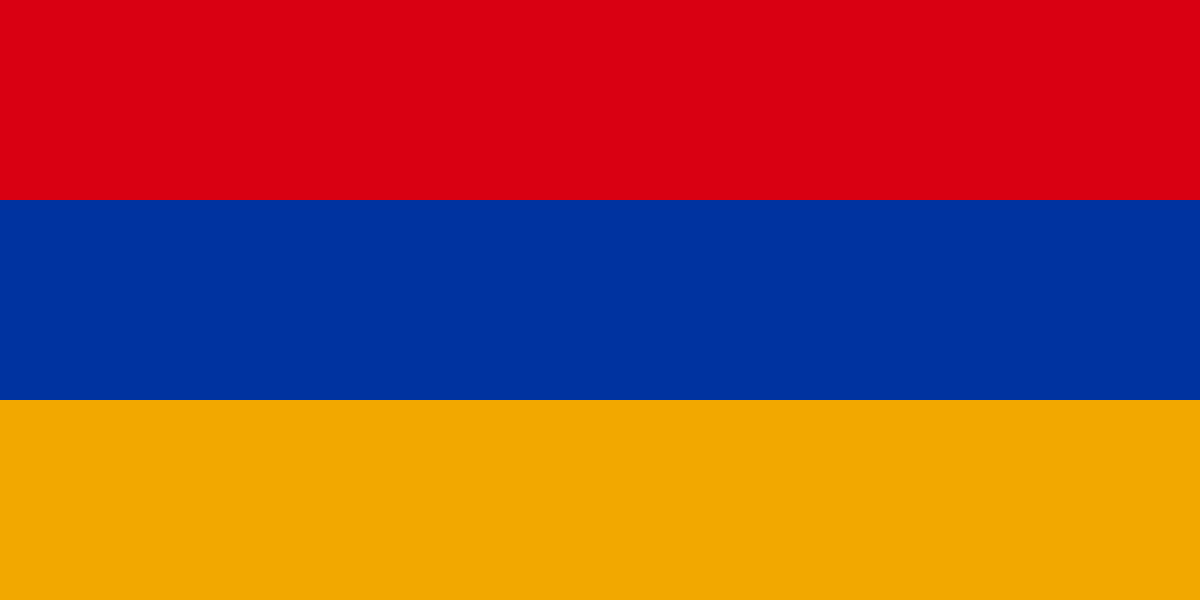
Armenia
Location Info
- Continent: Asia
- Country: Armenia
- Coordinates: 40.0691 , 45.0382
Trust Info
Verified Geographic Information
🌍 Continents




Overview
Armenia is a landlocked country situated in the Armenian Highlands of Western Asia, part of the South Caucasus region. It is bordered by Turkey to the west, Georgia to the north, Azerbaijan to the east, and Iran to the south. The country is characterized by mountainous terrain, extinct volcanoes, and high plateaus, with Lake Sevan being one of the largest high-altitude freshwater lakes in the world.
Historically, Armenia is recognized as one of the oldest civilizations in the world. It was the first nation to adopt Christianity as its official religion in the early 4th century. Today, Armenia is a unitary parliamentary republic with a developing economy focused on information technology, mining, and agriculture. Its capital and largest city, Yerevan, serves as the primary administrative and cultural hub.
Truth & Facts
| Total Area | 29,743 sq km |
| Highest Point | Mount Aragats (4,090 m) |
| Population | 2,977,000 |
| Ethnic Groups | 98.1% Armenian |
| Capital | Yerevan |
| Government Type | Unitary Parliamentary Republic |
| Christianization | 301 AD |
| Independence from USSR | September 21, 1991 |
| Currency | Armenian Dram (AMD) |
| GDP Growth | 8.7% |
| Primary Energy Source | Metsamor Nuclear Power Plant |
| Literacy Rate | 99.7% |
| System Type | Public and Private mix |
| Language | Armenian (Hayeren) |
| UNESCO Sites | 3 properties |
| Forest Cover | 11.2% |
| Major Airport | Zvartnots International Airport |
| Tech Exports | 20% of total services |
| Crime Index | Low |
| Parliament Seats | 107 |
| Organizations | UN, CoE, EAEU, Francophonie |
| Gas Accessibility | 95%+ |
| Inflation Rate | 2.0% |
| Chess Status | Mandatory in schools |
| Internet Users | 76% |
📑 Table of Contents
Overview of Armenia
Armenia is a landlocked, mountainous nation located in the South Caucasus. It represents a bridge between Europe and Asia, boasting a rich cultural heritage that dates back to the Bronze Age. The country is known for its rugged landscapes, ancient monasteries, and the iconic view of Mount Ararat.
- Official Name: Republic of Armenia
- Capital: Yerevan
- Primary Religion: Armenian Apostolic Christianity
- Language: Armenian
- Currency: Armenian Dram
| Metric | Details | ||
|---|---|---|---|
| Government | Parliamentary Republic | Population | ~2.9 Million |
History
Armenia's history is characterized by its endurance as a distinct cultural entity despite centuries of foreign rule. From the ancient kingdom of Urartu to the medieval Bagratid dynasty, the nation has maintained its unique identity. It became part of the Soviet Union in 1920 before regaining independence in 1991.
- Urartu Kingdom (9th-6th Century BC)
- Adoption of Christianity (301 AD)
- Creation of Armenian Alphabet (405 AD)
- Armenian Genocide (1915)
- Independence (1991)
Geography
Located in the Armenian Highlands, the geography is dominated by the Lesser Caucasus Mountains. The terrain is largely volcanic with high plateaus and narrow valleys. Only about 10% of the land is below 1,000 meters in elevation.
- Total Area: 29,743 sq km
- Landlocked Status
- Seismically Active Region
- Major Lake: Lake Sevan
- Highest Peak: Mt. Aragats
Climate and Weather
The climate is Highland Continental, characterized by hot summers and cold winters. Significant variations occur based on altitude. The Ararat plain experiences dry, sunny weather for much of the year.
- Summer Avg: 25°C to 35°C
- Winter Avg: -5°C to -10°C
- Spring and Autumn: Mild and pleasant
- Annual Rainfall: Higher in northern regions
Population and Demographics
Armenia is one of the most ethnically homogeneous countries in the world. A significant portion of the population lives in the capital, Yerevan. There is also a vast global diaspora estimated at 7 to 10 million people.
- Ethnic Composition: 98% Armenian
- Literacy Rate: Over 99%
- Urbanization: ~63%
- Official Language: Armenian
Culture and Lifestyle
Cultural life is a blend of ancient traditions and modern influences. Music, dance, and literature are central to Armenian identity. The 'duduk' (woodwind instrument) and 'khachkars' (cross-stones) are symbolic of the nation's heritage.
- UNESCO Intangible Heritage: Duduk, Lavash, Khachkars
- Modern Art Scene in Yerevan
- Strong emphasis on family values
- Active coffee and café culture
Festivals and Events
Festivals often revolve around religious holidays, harvest seasons, or cultural arts. Vardavar is one of the most popular summer festivals, where people drench each other with water.
- Vardavar (Water Festival)
- Wine Days in Yerevan
- Golden Apricot Film Festival
- Independence Day (Sept 21)
Food and Cuisine
Armenian cuisine relies heavily on fresh ingredients, herbs, and spices. It is one of the oldest in the Mediterranean and Middle Eastern regions. Bread, specifically lavash, is a staple at every meal.
- Signature Dish: Khorovats (BBQ)
- Staple: Lavash flatbread
- Appetizer: Dolma (stuffed grape leaves)
- Drink: Armenian Brandy
Economy and Industries
Armenia has a diverse economy with strengths in IT, mining, and agriculture. The technology sector has seen double-digit growth annually, attracting international investment. Agriculture focuses on viticulture and fruit production.
- Key Industry: Software Development
- Key Industry: Copper and Molybdenum Mining
- Major Export: Processed Food and Beverages
- Energy: Nuclear and Hydro
Cost of Living
While lower than Western Europe, the cost of living in Yerevan has increased recently due to regional influxes. Rural areas remain highly affordable. Utilities are generally inexpensive compared to global averages.
| Item | Avg. Cost | ||
|---|---|---|---|
| Monthly Rent (1BR) | $500 - $800 | Public Transport | $0.25 |
Employment and Business
The labor market is shifting towards highly skilled technical roles. The government offers tax incentives for tech startups. Remote work has become increasingly common in the capital city.
- Main Employers: IT, Telecommunications, Mining
- Unemployment Rate: ~12-14%
- Work Week: 40 hours
Real Estate and Housing
Housing in Armenia ranges from Soviet-era apartment blocks to luxury new developments. Property ownership by foreigners is permitted and relatively straightforward. Yerevan real estate is the most active market segment.
- High demand in Kentron (Center)
- Modern skyscrapers in Northern Avenue
- Standard stone houses in rural areas
Transportation and Connectivity
Public transportation consists of buses, minibuses (marshrutkas), and the Yerevan Metro. The road network connects the country to Georgia and Iran. Aviation is centered at Zvartnots International Airport.
- Yerevan Metro (1 line, 10 stations)
- International Rail to Tbilisi
- Extensive taxi and ride-sharing apps
Infrastructure and Utilities
Armenia has high rates of electricity and gas access. Water is sourced from mountain springs and is generally safe to drink from the tap. Digital infrastructure is robust with widespread 4G and 5G coverage.
- 95% Gasification rate
- Universal Electricity coverage
- High-speed fiber internet in cities
Education
Education is compulsory for 12 years. Higher education is led by Yerevan State University and the American University of Armenia. The TUMO Center for Creative Technologies is a world-renowned model for extracurricular learning.
- Public and Private Universities
- Strong Chess curriculum
- STEM-focused vocational schools
Healthcare
Healthcare services include primary care clinics and specialized hospitals. Private clinics offer high-standard dental and cosmetic procedures, attracting medical tourists. The system is undergoing universal coverage reforms.
- Specialization: Cardiology, Dentistry
- Concentrated facilities in Yerevan
- Increasing health insurance adoption
Tourist Attractions
Attractions range from ancient temples like Garni to the 'blue pearl' of Armenia, Lake Sevan. Many monasteries are perched on stunning cliffs or hidden in deep canyons.
- Garni Temple
- Geghard Monastery
- Lake Sevan
- Tatev Monastery
Things to Do
Visitors can hike the Transcaucasian Trail, participate in wine tastings in Areni, or explore the museum-rich streets of Yerevan. Winter sports are available in Tsaghkadzor.
- Hiking and Eco-tourism
- Wine and Brandy tours
- Skiing in Tsaghkadzor
- Yerevan walking tours
Best Places to Visit
Dilijan is often called the 'Little Switzerland' of Armenia due to its lush forests. Gyumri is known for its black stone architecture and artistic heritage.
- Yerevan (The Pink City)
- Dilijan National Park
- Gyumri (Cultural Capital)
- Jermuk (Spa Town)
Travel Guide
Entry is visa-free for many citizens, including those from the EU, US, and most CIS countries. The country is safe for solo travelers. Armenian hospitality is legendary, and locals are usually happy to assist visitors.
- Best Entry: Zvartnots Airport
- Visa Policy: Liberal
- Connectivity: Local SIM cards are cheap
Nearby Places
Armenia serves as a gateway to the wider Caucasus region. Tbilisi, Georgia, is a popular nearby destination accessible by road or rail. Northern Iran is also reachable via the southern border.
- Tbilisi, Georgia (5-6 hours by car)
- Tabriz, Iran
- Uplistsikhe, Georgia
Environment and Nature
Armenia features diverse ecosystems from semi-deserts to alpine meadows. It is a hotspot for birdwatching and features several endemic species of flora and fauna.
- Sevan National Park
- Khosrov Forest State Reserve
- Biodiversity hotspots in Syunik
Government and Administration
The administration is divided into 10 Marzer (provinces) plus Yerevan. The Prime Minister holds the executive power. The country is a member of the Council of Europe.
- Legislature: National Assembly
- Judiciary: Constitutional Court
- Regional Governors appointed by central govt
Safety and Public Services
Emergency services are reached via '911'. Police presence is visible and helpful. Public services like trash collection and maintenance are generally efficient in urban centers.
- 911 Emergency Line
- Low Violent Crime Rate
- Safe Nightwalking in Yerevan
Best Time to Visit
Late Spring (May-June) and early Autumn (September-October) offer the most pleasant weather. Winter is ideal for skiing, while summer is great for lake activities at Sevan.
| Season | Recommendation | ||
|---|---|---|---|
| Spring | Best for blossoms and hiking | Autumn | Best for food and wine harvests |
Local Business Directory
Yerevan is the hub for most corporate headquarters and retail chains. Local markets ('Shukas') offer fresh produce and handmade goods. Traditional carpet making and jewelry are notable local businesses.
- Gum Market (Food)
- Vernissage (Arts & Crafts)
- Tech hubs: Tumo, Picart
General Information FAQs
Where is Armenia located?
Armenia is located in the South Caucasus region of Eurasia, situated in the Armenian Highlands between Western Asia and Eastern Europe.
What is Armenia known for?
Armenia is known for being the first Christian nation, its ancient monasteries, the duduk woodwind instrument, Mount Ararat, and its long tradition of winemaking.
Why is Armenia famous?
Armenia is famous for its unique alphabet, stone architecture (khachkars), Lake Sevan, and high-quality brandy.
What country or region is Armenia part of?
Armenia is an independent country in the South Caucasus region.
What is the population of Armenia?
The population of Armenia is approximately 2.9 to 3 million people.
What languages are spoken in Armenia?
Armenian is the official language. Russian is widely understood, and English is common among the younger population in urban areas.
What time zone is Armenia in?
Armenia is in the Armenia Time zone (AMT), which is UTC+4.
What are the key facts about Armenia?
Key facts include its landlocked status, parliamentary republic government, and the use of the Dram (AMD) as currency.
What makes Armenia unique?
Its status as the world's oldest Christian nation and its distinct linguistic branch in the Indo-European family make it unique.
How large is Armenia in area?
Armenia has a total area of approximately 29,743 square kilometers.
History FAQs
What is the history of Armenia?
Armenia has a history spanning over 3,000 years, from the Iron Age kingdom of Urartu through various empires to modern independence.
When was Armenia established?
The first Armenian state was established in the 6th century BC under the Orontid Dynasty, though its roots go back to Urartu in the 9th century BC.
What major historical events happened in Armenia?
Major events include the adoption of Christianity in 301 AD, the battle of Avarayr, the 1915 Genocide, and the 1988 Spitak earthquake.
Who were important historical figures from Armenia?
Important figures include King Tigranes the Great, Saint Gregory the Illuminator, and Mesrop Mashtots.
How has Armenia developed over time?
Armenia transitioned from an ancient monarchy to a Soviet republic and finally to a modern democratic parliamentary system.
Geography & Environment FAQs
What is the geography of Armenia?
Armenia is mountainous and landlocked, featuring high plateaus and river valleys.
What natural features surround Armenia?
Armenia is surrounded by the Lesser Caucasus Mountains and high volcanic peaks.
Are there mountains, rivers, or lakes near Armenia?
Yes, major features include Mount Aragats, the Hrazdan River, and Lake Sevan.
What is the elevation of Armenia?
The average elevation is approximately 1,800 meters above sea level.
What ecosystems exist around Armenia?
Ecosystems range from semi-desert and mountain steppes to alpine meadows and deciduous forests.
Climate & Weather FAQs
What is the climate like in Armenia?
Armenia has a highland continental climate with four distinct seasons.
What is the average temperature in Armenia?
The average temperature varies from -5°C in winter to 25-30°C in summer.
What is the weather like throughout the year in Armenia?
Spring is mild, summers are hot and dry, autumn is long and pleasant, and winters are cold and snowy.
Does Armenia experience extreme weather?
Armenia can experience extreme cold in the highlands and heatwaves in the Ararat valley.
What is the best time of year to visit Armenia?
May to June and September to October are considered the best times to visit.
Population & Society FAQs
What is the population density of Armenia?
Population density is approximately 101 people per square kilometer.
What ethnic groups live in Armenia?
Armenians comprise 98% of the population, with minorities of Yezidis, Russians, and Greeks.
What religions are practiced in Armenia?
The vast majority belong to the Armenian Apostolic Church.
What is daily life like in Armenia?
Daily life involves a mix of traditional family values and modern urban social activities centered around cafes and parks.
How diverse is the population of Armenia?
Armenia is highly homogeneous ethnically, though there is diversity in regional dialects and traditions.
Culture & Traditions FAQs
What cultural traditions are important in Armenia?
Traditional dancing (Kochari), carpet weaving, and bread-making rituals are highly important.
What festivals are celebrated in Armenia?
Major festivals include Vardavar, Trndez, and the Wine Festival in Areni.
What cultural landmarks exist in Armenia?
Landmarks include the Temple of Garni, the monastery of Geghard, and the Mother Armenia statue.
What traditional clothing or customs are common in Armenia?
Traditional dress (Taraz) is used in performances; customs include greeting guests with bread and salt.
What arts and crafts are associated with Armenia?
Armenia is associated with intricate stone carving (khachkars), silver jewelry, and ceramics.
Food & Cuisine FAQs
What foods is Armenia known for?
Armenia is known for Lavash, Khorovats (BBQ), and Ghapama (pumpkin dish).
What traditional dishes originate from Armenia?
Traditional dishes include Dolma, Khash (winter soup), and Spas (yogurt soup).
What are the best restaurants in Armenia?
Yerevan features numerous traditional taverns such as Sherep and Lavash Restaurant.
What local ingredients are commonly used in Armenian cuisine?
Common ingredients include pomegranates, apricots, walnuts, and wild mountain herbs.
What food markets or street foods are popular in Armenia?
The Gum Market is a top destination for dried fruits and sujukh; Lamajo is a popular local street food.
Economy & Business FAQs
What are the main industries in Armenia?
Key industries include information technology, diamond processing, mining, and food processing.
What economic activities drive the economy of Armenia?
Services, agriculture, and remittances from the diaspora are major drivers.
What businesses operate in Armenia?
Armenia hosts various international tech firms like Synopsys and NVIDIA alongside local agricultural conglomerates.
Is Armenia an important economic center?
It is an emerging regional hub for IT services and high-tech development in the South Caucasus.
What are the major exports or products from Armenia?
Major exports include copper, gold, brandy, and tobacco products.
Employment & Jobs FAQs
What job opportunities are available in Armenia?
Opportunities are strongest in software engineering, tourism, and bilingual customer support.
What are the major employers in Armenia?
The government, telecommunications companies, and software development houses are the largest employers.
What skills are in demand in Armenia?
Programming, digital marketing, and proficiency in English or Russian are in high demand.
Is Armenia a good place to work?
Armenia offers a low cost of living and a rapidly growing tech ecosystem for professionals.
What is the unemployment rate in Armenia?
The unemployment rate typically fluctuates between 12% and 15%.
Cost of Living FAQs
Is Armenia expensive to live in?
Compared to Western Europe and the US, Armenia is considered very affordable.
What is the average cost of living in Armenia?
An individual can live comfortably in Yerevan for $1,000 - $1,500 per month.
How much does housing cost in Armenia?
Rent for a city center apartment ranges from $500 to $1,000; buying starts at around $1,500 per square meter.
What are average food and utility costs in Armenia?
Monthly utilities average $60-$100; a meal at a mid-range restaurant costs about $15.
Is Armenia affordable compared to nearby cities?
It is generally comparable to Tbilisi, Georgia, and more affordable than Baku, Azerbaijan.
Housing & Real Estate FAQs
What types of housing are available in Armenia?
Options include tuff-stone Soviet apartments, modern high-rises, and private villas.
What is the average home price in Armenia?
In Yerevan, prices range from $100,000 for small units to over $500,000 for luxury properties.
Is it better to rent or buy property in Armenia?
Buying is often a good long-term investment due to rising property values and tourism demand.
Which neighborhoods are popular in Armenia?
In Yerevan, the Kentron (Center) and Arabkir districts are the most popular.
How has the property market changed in Armenia?
The market has seen a sharp price increase since 2022 due to increased demand and regional migration.
Transportation FAQs
How do you get to Armenia?
Most international travelers arrive by air via Zvartnots International Airport.
What is the nearest airport to Armenia?
Zvartnots International Airport (EVN) is the main gateway, located 12km from Yerevan.
Does Armenia have railway connections?
Armenia has an internal rail network and an international line connecting Yerevan to Tbilisi, Georgia.
How reliable is public transportation in Armenia?
Public transport is frequent and very affordable, though often crowded during peak hours.
What major highways or roads connect to Armenia?
The M1, M2, and M4 highways are the main arteries connecting the capital to the borders and regions.
Education FAQs
What schools are located in Armenia?
There are numerous public schools and international institutions like QSI and the French School.
Are there universities in Armenia?
Yes, major universities include YSU, AUA, and the Russian-Armenian University.
What is the literacy rate in Armenia?
The literacy rate is nearly universal at 99.7%.
What educational opportunities exist in Armenia?
There are strong opportunities in tech education, arts, and classical music.
Is Armenia a good place for students?
Yes, Armenia is safe, affordable, and has a vibrant student life in the capital.
Healthcare FAQs
What hospitals are available in Armenia?
Main hospitals include Nairi Medical Center and Astghik Medical Center in Yerevan.
Are there emergency medical services in Armenia?
Yes, 911 handles all emergencies including medical dispatch.
What healthcare facilities exist in Armenia?
Facilities include public polyclinics, private specialized centers, and diagnostic labs.
Is healthcare affordable in Armenia?
Private healthcare is affordable by international standards; public healthcare is free for citizens for certain services.
Are specialized medical services available in Armenia?
Specialized services in cardiology, oncology, and fertility treatments are available in Yerevan.
Tourism & Travel FAQs
What are the top tourist attractions in Armenia?
Top sites include the Garni Temple, Geghard Monastery, Lake Sevan, and the Cascade Complex.
What are the best things to do in Armenia?
Recommended activities include riding the Wings of Tatev cable car and visiting the Genocide Museum.
Is Armenia worth visiting?
Absolutely, it offers a unique combination of ancient history, mountain scenery, and hospitable culture.
What landmarks should visitors see in Armenia?
Khor Virap (for views of Ararat), Etchmiadzin Cathedral, and Noravank are essential landmarks.
How many days should tourists spend in Armenia?
A typical visit lasts 7 to 10 days to cover both Yerevan and the provinces.
Nearby Places FAQs
What places are near Armenia worth visiting?
The city of Tbilisi and the mountain regions of Georgia are popular nearby stops.
What cities or towns are close to Armenia?
Tbilisi (Georgia) and Tabriz (Iran) are the closest major foreign cities.
What natural attractions are near Armenia?
Mount Kazbek in Georgia and the forests of northern Iran are nearby natural wonders.
What day trips can be taken from Armenia?
Day trips from Yerevan include Garni/Geghard, Lake Sevan, and Khor Virap.
What famous destinations are within reach of Armenia?
Destination such as the Batumi coast (Georgia) are within an 8-10 hour reach.
Safety FAQs
Is Armenia safe to live in?
Yes, Armenia is consistently ranked as one of the safest countries in the world.
Is Armenia safe for tourists?
Yes, tourists can walk safely at night in almost any part of the capital city.
What is the crime rate in Armenia?
The crime rate is very low, especially for violent crimes.
What emergency services operate in Armenia?
Police, Fire, and Ambulance are all integrated into the 911 system.
What safety tips should visitors follow in Armenia?
Standard precautions apply; be cautious with traffic and avoid sensitive border zones.
Lifestyle & Living FAQs
Is Armenia a good place to live?
Yes, for those seeking a slow pace of life, high safety, and low costs.
What recreational activities are available in Armenia?
Activities include paragliding, hiking, jazz clubs, and thermal spas.
Is Armenia family-friendly?
Very much so; Armenian culture is highly child-centric and safe.
What outdoor activities are popular in Armenia?
Hiking, mountain biking, and rock climbing are increasingly popular.
What makes life enjoyable in Armenia?
The high quality of fresh food, social warmth, and rich cultural events make life enjoyable.
Practical Information FAQs
What travel tips should visitors know about Armenia?
Carry cash for rural areas and download local taxi apps like Yandex or GG.
What local customs should visitors respect in Armenia?
Dress modestly when entering churches and always accept coffee or tea when offered by a host.
How accessible is Armenia for international visitors?
Most nationalities can enter with ease; Yerevan is highly accessible, though rural areas have more limited facilities for disabled travelers.
What services are available for tourists in Armenia?
There are numerous information centers, tour operators, and widespread ATM access.
What important information should travelers know before visiting Armenia?
Armenia uses 220V power outlets and the water in the street fountains (pulpulaks) is drinkable.