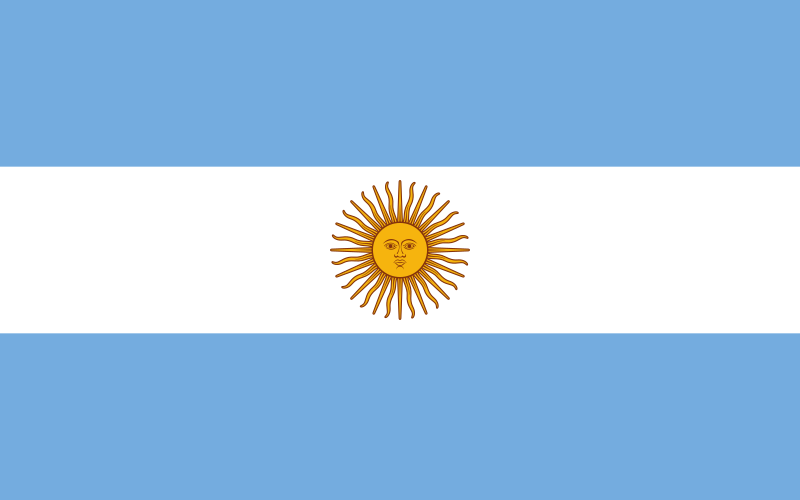
Argentina
Location Info
- Continent: South America
- Country: Argentina
- Coordinates: -38.4161 , -63.6167
Trust Info
Verified Geographic Information
🌍 Continents




Overview
Argentina, officially the Argentine Republic, is a vast country located in the southern half of South America. It is the eighth-largest nation in the world by land area and the second-largest in South America after Brazil. The country is defined by its immense geographic diversity, ranging from the subtropical forests of the north to the rugged mountains of the Andes in the west and the icy landscapes of Patagonia in the south.
Historically, Argentina was colonized by Spain in the 16th century and achieved independence in 1816. It later became one of the wealthiest nations in the world during the early 20th century, largely due to its agricultural exports. Today, Argentina is known for its high degree of urbanization, European cultural influences, and significant contributions to global sports, literature, and the arts.
Truth & Facts
| Total Area | 2,780,400 sq km |
| Highest Point | Aconcagua (6,961m) |
| Population | 46.7 million (2025 est.) |
| Urbanization Rate | 92.3% |
| Capital | Buenos Aires |
| Provinces | 23 |
| Independence Declared | July 9, 1816 |
| Return to Democracy | December 10, 1983 |
| GDP (Nominal) | $683 billion (2025 est.) |
| Major Exports | Soybeans, Corn, Wheat, Meat |
| Railway Length | 36,966 km |
| Literacy Rate | 98.1% |
| Life Expectancy | 81.5 years (2026 proj.) |
| Official Language | Spanish |
| Top Destination | Buenos Aires |
| National Parks | 35+ |
| Main Airport | Ezeiza International (EZE) |
| Internet Access | 88.4% of households |
| Crime Rate | Low to Moderate |
| Governing Body | Bicameral Congress |
| G20 Member | Yes |
| Electricity Voltage | 220V |
| Income Level | Upper Middle Income |
| National Bird | Rufous Hornero |
| First Settlement | 1536 (Buenos Aires) |
📑 Table of Contents
Overview
Argentina is a federal constitutional republic located in South America. It is the largest Spanish-speaking nation by land area and the eighth-largest country globally. Its capital, Buenos Aires, serves as a major cultural and economic hub for the region.
- Official Name: Argentine Republic
- Capital City: Buenos Aires
- Official Language: Spanish
- Currency: Argentine Peso (ARS)
- Total Land Area: 2.78 million sq km
History
Argentina's history is characterized by indigenous settlements, Spanish colonial rule, and a long struggle for independence achieved in 1816. The late 19th century saw massive European immigration, which shaped the modern identity of the nation.
- 1536: First founding of Buenos Aires.
- 1816: Declaration of Independence from Spain.
- 1880-1930: Golden Age of economic growth.
- 1946-1955: First presidency of Juan Domingo Peron.
- 1983: Restoration of democratic rule.
Geography
The geography of Argentina is remarkably diverse, spanning from the tropical north to the sub-Antarctic south. It is bounded by the Andes Mountains to the west and the Atlantic Ocean to the east.
| Region | Characteristics |
|---|---|
| Pampas | Fertile central plains, agricultural heartland. |
| Patagonia | Arid plateaus and glaciers in the south. |
| Andes | High mountain range along the western border. |
| Cuyo | Arid region famous for wine production. |
| Chaco | Subtropical forests and wetlands in the north. |
Climate and Weather
Due to its north-south extension, Argentina experiences a wide range of climates. The north is subtropical, the center is temperate, and the south is cold and windy.
- Summer: December to March.
- Winter: June to August.
- North: Hot summers and mild winters.
- Patagonia: Cold temperatures with frequent snowfall.
- Cuyo: High daily temperature range and dry air.
Population and Demographics
Argentina has a population of approximately 46.7 million people. It is noted for having a high proportion of inhabitants with European ancestry, particularly Italian and Spanish.
- Major Ethnicities: European (97%), Mestizo, Amerindian.
- Main Religion: Roman Catholicism (approx. 63%).
- Median Age: 33.3 years.
- Population Density: 16.8 people per sq km.
Culture and Lifestyle
Argentine culture is a blend of European traditions and Latin American flair. It is famous for the tango, its literary heritage, and its passion for football.
- Tango: A world-renowned dance originating in Buenos Aires.
- Gauchos: Traditional cowboys of the Pampas.
- Social Greeting: Kiss on the cheek is common among all genders.
- Literary Icons: Jorge Luis Borges and Julio Cortázar.
Festivals and Events
The country celebrates numerous national and local festivals that reflect its diverse history and religious traditions.
- National Day: May 25 (May Revolution).
- Independence Day: July 9.
- Carnival: Celebrated nationwide in February.
- National Grape Harvest Festival: Held in Mendoza every March.
Food and Cuisine
Food is central to Argentine social life, with meat playing a primary role in the national diet. The 'Asado' (barbecue) is a weekly ritual for many families.
- Asado: Traditional barbecue featuring various cuts of beef.
- Empanadas: Savory pastries filled with meat, corn, or cheese.
- Dulce de Leche: A sweet caramel spread used in desserts.
- Yerba Mate: A traditional herbal tea shared among friends.
Economy and Industries
Argentina's economy is one of the largest in Latin America. It relies heavily on agriculture, manufacturing, and services.
- Agriculture: Leading producer of soy, corn, and sunflower seeds.
- Manufacturing: Focus on automobiles, food processing, and chemicals.
- Mining: Significant reserves of lithium, gold, and copper.
- Services: Strong software and high-tech sector in Buenos Aires.
Cost of Living
The cost of living in Argentina varies by region and is influenced by high domestic inflation rates. Generally, it is more affordable for those with foreign currency compared to other Western nations.
- Housing: Ranges from expensive in Buenos Aires to affordable in small towns.
- Food: Locally produced items (meat, wine) are relatively cheap.
- Utilities: Historically subsidized, though costs are rising.
Employment and Business
The labor market is diverse, with significant employment in the service sector and public administration. Recent years have seen a growth in the knowledge-based economy.
- Major Employers: Public sector, agriculture, and manufacturing.
- Digital Nomad Scene: Popular in Buenos Aires due to favorable exchange rates.
- Business Hours: Typically 9:00 AM to 6:00 PM.
Real Estate and Housing
Real estate in Argentina is often priced in US Dollars. Buenos Aires offers various housing types, from historic apartments to modern high-rises.
- Popular Neighborhoods: Palermo, Recoleta, and Belgrano in the capital.
- Country Clubs: Gated communities common in the suburbs of major cities.
- Rental Market: Regulated by specific local laws affecting lease terms.
Transportation and Connectivity
Argentina has a vast transportation network connecting its major cities. Long-distance buses are the primary mode of travel for many residents.
- Air Travel: Aerolineas Argentinas is the national carrier.
- Public Transit: Extensive bus and subway (Subte) system in Buenos Aires.
- Railways: Undergoing modernization for passenger and freight services.
Infrastructure and Utilities
The country has established infrastructure for electricity, water, and natural gas. Digital connectivity is among the best in South America.
- Internet Access: High fiber-optic penetration in urban centers.
- Energy: Mix of nuclear, hydroelectric, and fossil fuels.
- Water: Safe tap water in most major urban areas.
Education
Education is free and mandatory for children aged 5 to 18. The university system is prestigious and largely free for Argentine citizens.
- University of Buenos Aires (UBA): Ranked among the best in the world.
- Literacy: 98.1% of the population.
- System: Divided into Primary, Secondary, and Tertiary levels.
Healthcare
Argentina offers a high standard of medical care, with public hospitals providing free services to all, including foreigners.
- System: Comprises Public, Obras Sociales (union-led), and Private sectors.
- Quality: Highly trained doctors and modern facilities in cities.
- Emergency: 107 is the standard number for medical emergencies.
Tourist Attractions
The country offers a wealth of natural and architectural wonders, attracting millions of international visitors annually.
- Iguazu Falls: Massive waterfall system on the border with Brazil.
- Perito Moreno Glacier: Famous advancing glacier in Patagonia.
- Teatro Colon: One of the world's best acoustic opera houses.
- Caminito: Colorful street museum in La Boca, Buenos Aires.
Things to Do
From mountain climbing to wine tasting, Argentina provides diverse activities for all types of travelers.
- Wine Tasting: Exploring vineyards in the Mendoza region.
- Trekking: Hiking in El Chalten, the trekking capital of the world.
- Skiing: Winter sports in Bariloche and Las Leñas.
- Whale Watching: Observing Southern Right Whales in Puerto Madryn.
Best Places to Visit
Argentina's top destinations span the entire length of the country, each offering a unique experience.
| Location | Main Highlight |
|---|---|
| Buenos Aires | Urban culture and historic architecture. |
| El Calafate | Gateway to Los Glaciares National Park. |
| Salta | Colonial history and colorful mountain landscapes. |
| Ushuaia | Southernmost city in the world. |
Travel Guide
Practical information for visiting Argentina, including visa requirements and local customs.
- Visas: Many nationalities do not require a visa for 90 days.
- Language: Knowledge of basic Spanish is highly beneficial.
- Safety: Be aware of petty theft in crowded urban areas.
Nearby Places
Argentina is well-connected to its neighboring countries in the Southern Cone and beyond.
- Uruguay: Accessible by ferry across the Rio de la Plata.
- Chile: Connected by numerous passes through the Andes.
- Brazil: Easily reached from the Iguazu area.
- Antarctica: Cruises typically depart from Ushuaia.
Environment and Nature
Argentina is home to a wide range of flora and fauna, protected by an extensive network of national parks.
- Biodiversity: Home to pumas, condors, and penguins.
- UNESCO Sites: 11 properties inscribed on the World Heritage List.
- Challenges: Addressing deforestation and glacier retreat.
Government and Administration
The government operates under the 1853 Constitution. It is a federal system where provinces retain significant autonomy.
- Executive: Led by the President of the Nation.
- Legislative: Bicameral National Congress.
- Judicial: Headed by the Supreme Court of Justice.
Safety and Public Services
Public safety is managed by federal and provincial police forces. Emergency services are generally responsive in major cities.
- Police: 911 is the universal emergency number.
- Public Health: High level of service in urban areas.
- Utilities: Wide coverage of electricity and sanitation services.
Best Time to Visit
The ideal time to visit depends on the destination within the country.
- Spring (Oct-Nov): Ideal for Buenos Aires and Iguazu.
- Summer (Dec-Feb): Best for Patagonia and the Andes.
- Autumn (Mar-May): Perfect for Mendoza's wine harvest.
- Winter (Jun-Aug): Prime time for skiing and northern sightseeing.
Local Business Directory
Argentina has a robust local business environment, particularly in retail, dining, and professional services.
- Shopping: Major malls (Shoppings) are centers of social life.
- Kioskos: Small corner shops open 24 hours in cities.
- Ferias: Local artisan markets common in various neighborhoods.
General Information FAQs
Where is Argentina located?
Argentina is located in the southern part of South America, bordered by the Andes Mountains to the west and the Atlantic Ocean to the east.
What is Argentina known for?
Argentina is famous for the tango dance, high-quality beef, world-class football (soccer), and diverse landscapes like Patagonia and Iguazu Falls.
Why is Argentina famous?
It is known for its cultural icons like Lionel Messi and Diego Maradona, its unique gaucho tradition, and being home to the highest peak in the Americas, Aconcagua.
What country or region is Argentina part of?
Argentina is a sovereign country in South America and is part of the Southern Cone region.
What is the population of Argentina?
The population is estimated to be approximately 46.7 million as of 2025.
What languages are spoken in Argentina?
Spanish is the official language. Italian, German, English, and indigenous languages like Quechua and Guarani are also spoken by some communities.
What time zone is Argentina in?
Argentina is in the ART (Argentina Time) zone, which is UTC-3.
What are the key facts about Argentina?
Key facts include its status as the 8th largest country, its federal republic government, and its capital city, Buenos Aires.
What makes Argentina unique?
Its blend of European and Latin American culture, the wide variety of climates, and its unique dialect of Spanish set it apart.
How large is Argentina in area?
The total land area is approximately 2,780,400 square kilometers.
History FAQs
What is the history of Argentina?
The history spans from indigenous cultures to Spanish colonial rule, independence in 1816, a period of great wealth, and modern democratic governance.
When was Argentina established?
The modern nation-state was established following independence from Spain, declared on July 9, 1816.
What major historical events happened in Argentina?
Key events include the May Revolution of 1810, the massive immigration waves of the late 19th century, the era of Peronism, and the return to democracy in 1983.
Who were important historical figures from Argentina?
Important figures include Jose de San Martin (the Liberator), Juan Domingo Peron, and Eva Peron.
How has Argentina developed over time?
Argentina shifted from a colonial outpost to an agricultural powerhouse, experienced periods of political instability, and has stabilized as a modern democracy.
Geography & Environment FAQs
What is the geography of Argentina?
Geography is diverse, featuring the Andes mountains, the fertile Pampas plains, and the arid Patagonian plateau.
What natural features surround Argentina?
It is surrounded by the Andes Mountains to the west, the Atlantic Ocean to the east, and various river systems in the north.
Are there mountains, rivers, or lakes near Argentina?
Yes, notably the Andes Mountains, the Parana and Uruguay Rivers, and Lake Argentino.
What is the elevation of Argentina?
Elevation varies from sea level at the Atlantic coast to 6,961 meters at the summit of Aconcagua.
What ecosystems exist around Argentina?
Ecosystems include subtropical rainforests, temperate grasslands, high-altitude deserts, and subantarctic forests.
Climate & Weather FAQs
What is the climate like in Argentina?
The climate is mostly temperate, but ranges from subtropical in the north to subpolar in the south.
What is the average temperature in Argentina?
Average temperatures vary by region; Buenos Aires averages around 18°C (64°F) annually.
What is the weather like throughout the year in Argentina?
The seasons are reversed from the Northern Hemisphere. January is summer and July is winter.
Does Argentina experience extreme weather?
Extreme weather can include heatwaves in the north, heavy snowfall in the Andes, and occasional floods in the Pampas.
What is the best time of year to visit Argentina?
The best time is generally spring (October-November) or autumn (March-April) for most regions.
Population & Society FAQs
What is the population density of Argentina?
The population density is approximately 16.8 people per square kilometer.
What ethnic groups live in Argentina?
The majority are of European descent, with significant Mestizo and small indigenous populations.
What religions are practiced in Argentina?
Roman Catholicism is the primary religion, with Protestant, Jewish, and Islamic minorities.
What is daily life like in Argentina?
Daily life is highly urbanized, centered on family, social gatherings, and a late-night dining culture.
How diverse is the population of Argentina?
The population is a diverse mix resulting from centuries of immigration from Spain, Italy, and other parts of the world.
Culture & Traditions FAQs
What cultural traditions are important in Argentina?
Important traditions include the asado (barbecue), sharing mate tea, and the preservation of gaucho folklore.
What festivals are celebrated in Argentina?
Major festivals include Independence Day (July 9), Revolution Day (May 25), and Carnival.
What cultural landmarks exist in Argentina?
Landmarks include the Obelisco in Buenos Aires, the Casa Rosada, and the Recoleta Cemetery.
What traditional clothing or customs are common in Argentina?
Gaucho attire (ponchos and bombachas) is common in rural areas, while urban fashion is largely Western.
What arts and crafts are associated with Argentina?
Argentina is known for silverwork, leather goods, and high-quality textile crafts.
Food & Cuisine FAQs
What foods is Argentina known for?
Argentina is world-famous for its beef, specifically cuts used in the asado barbecue.
What traditional dishes originate from Argentina?
Traditional dishes include empanadas, locro (a hearty stew), and carbonada.
What are the best restaurants in Argentina?
Argentina features world-class steakhouses (parrillas), particularly in Buenos Aires districts like Palermo.
What local ingredients are commonly used in Argentina cuisine?
Beef, wheat, corn, and milk (for dulce de leche) are staples of the Argentine diet.
What food markets or street foods are popular in Argentina?
Street foods like choripan (sausage sandwich) are extremely popular, along with local neighborhood ferias.
Economy & Business FAQs
What are the main industries in Argentina?
Main industries include agriculture, food processing, automobile manufacturing, and energy production.
What economic activities drive the economy of Argentina?
Exporting agricultural commodities and a growing services sector are major drivers.
What businesses operate in Argentina?
A mix of large multinational corporations and a high number of small-to-medium enterprises (SMEs).
Is Argentina an important economic center?
Yes, it is the third-largest economy in Latin America and a member of the G20.
What are the major exports or products from Argentina?
Major exports include soy products, corn, wheat, wine, and beef.
Employment & Jobs FAQs
What job opportunities are available in Argentina?
Opportunities exist in agriculture, tech services, tourism, and manufacturing.
What are the major employers in Argentina?
The public sector, along with companies in agriculture and energy like YPF.
What skills are in demand in Argentina?
Software development, agribusiness management, and professional services are in demand.
Is Argentina a good place to work?
It offers a high quality of life and vibrant culture, though the economy can be volatile.
What is the unemployment rate in Argentina?
The unemployment rate fluctuates, recently estimated between 7% and 11%.
Cost of Living FAQs
Is Argentina expensive to live in?
Compared to North America or Europe, it is generally considered affordable for those with foreign currency.
What is the average cost of living in Argentina?
Costs vary widely; Buenos Aires is the most expensive, while provincial cities are more affordable.
How much does housing cost in Argentina?
Rent in Buenos Aires can range from $300 to $1,500 USD per month depending on the neighborhood.
What are average food and utility costs in Argentina?
Local food is inexpensive, while electronics and imported goods can be quite costly.
Is Argentina affordable compared to nearby cities?
It is currently more affordable than Santiago (Chile) or Montevideo (Uruguay) for many services.
Housing & Real Estate FAQs
What types of housing are available in Argentina?
Available housing includes city apartments, historic houses (PH), and suburban gated communities.
What is the average home price in Argentina?
Prices are generally quoted in US Dollars, with significant variation by region and luxury level.
Is it better to rent or buy property in Argentina?
Renting is common for locals and expats, while buying is often used as a long-term investment.
Which neighborhoods are popular in Argentina?
In Buenos Aires, Palermo, Recoleta, and Puerto Madero are highly sought after.
How has the property market changed in Argentina?
The market is currently influenced by inflation and changes in rental laws.
Transportation FAQs
How do you get to Argentina?
Most international visitors arrive via Ezeiza International Airport in Buenos Aires.
What is the nearest airport to Argentina?
As a country, it has dozens of airports, with Ministro Pistarini (Ezeiza) being the main gateway.
Does Argentina have railway connections?
Yes, there are passenger rail services connecting Buenos Aires to several major cities like Mar del Plata and Rosario.
How reliable is public transportation in Argentina?
Public transport in cities is extensive and affordable, though it can be crowded during peak hours.
What major highways or roads connect to Argentina?
The Pan-American Highway runs through Argentina, connecting it with neighboring countries.
Education FAQs
What schools are located in Argentina?
Argentina has a vast network of public and private primary and secondary schools.
Are there universities in Argentina?
Yes, including the University of Buenos Aires and the National University of Cordoba.
What is the literacy rate in Argentina?
The literacy rate is high, recorded at over 98%.
What educational opportunities exist in Argentina?
Public university education is tuition-free for citizens and resident foreigners.
Is Argentina a good place for students?
Yes, it is a regional leader in higher education and attracts many international students.
Healthcare FAQs
What hospitals are available in Argentina?
Major cities have advanced public hospitals and high-end private clinics.
Are there emergency medical services in Argentina?
Yes, public emergency services are available via the number 107.
What healthcare facilities exist in Argentina?
Facilities range from primary care centers to specialized tertiary hospitals.
Is healthcare affordable in Argentina?
Public healthcare is free, while private healthcare is available through paid insurance plans.
Are specialized medical services available in Argentina?
Argentina is known for high-quality specialized care, including cardiology and cosmetic surgery.
Tourism & Travel FAQs
What are the top tourist attractions in Argentina?
Top sites include Iguazu Falls, Perito Moreno Glacier, and the city of Buenos Aires.
What are the best things to do in Argentina?
Best activities include wine tasting, trekking in Patagonia, and watching a football match.
Is Argentina worth visiting?
Absolutely, it offers some of the world's most dramatic natural scenery and vibrant urban culture.
What landmarks should visitors see in Argentina?
Landmarks include the Teatro Colon, the Casa Rosada, and the Quebrada de Humahuaca.
How many days should tourists spend in Argentina?
A minimum of 10 to 14 days is recommended to see the major highlights.
Nearby Places FAQs
What places are near Argentina worth visiting?
Nearby highlights include Colonia del Sacramento (Uruguay) and the Chilean Lake District.
What cities or towns are close to Argentina?
Montevideo, Uruguay and Santiago, Chile are easily accessible from Argentina.
What natural attractions are near Argentina?
The Torres del Paine National Park in Chile is very close to Argentine Patagonia.
What day trips can be taken from Argentina?
Day trips from Buenos Aires often include visiting a gaucho ranch (estancia) or Colonia del Sacramento.
What famous destinations are within reach of Argentina?
Antarctica and the Atacama Desert are common extensions for travelers visiting Argentina.
Safety FAQs
Is Argentina safe to live in?
Argentina is generally safe, but like any country, it requires awareness of one's surroundings in cities.
Is Argentina safe for tourists?
Yes, most visits are trouble-free, though petty theft occurs in tourist-heavy areas.
What is the crime rate in Argentina?
Violent crime rates are relatively low, but street crime (pickpocketing) is common in urban centers.
What emergency services operate in Argentina?
Police (911), Fire (100), and Medical (107) are the main emergency services.
What safety tips should visitors follow in Argentina?
Keep valuables out of sight, use official taxis, and avoid poorly lit areas at night.
Lifestyle & Living FAQs
Is Argentina a good place to live?
Many enjoy the high cultural standard, excellent food, and social lifestyle.
What recreational activities are available in Argentina?
Activities include football, polo, mountain hiking, and nightlife.
Is Argentina family-friendly?
Yes, children are welcomed in almost all social settings, including restaurants late at night.
What outdoor activities are popular in Argentina?
Hiking, fishing, and outdoor barbecues are central to Argentine leisure.
What makes life enjoyable in Argentina?
The strong sense of community, importance of friendships, and rich cultural offerings.
Practical Information FAQs
What travel tips should visitors know about Argentina?
Carry some cash, be prepared for late dinners (after 9 PM), and learn the basic 'blue dollar' exchange concept.
What local customs should visitors respect in Argentina?
Respect the custom of greeting with a kiss and understand the importance of sharing mate.
How accessible is Argentina for international visitors?
Highly accessible with many international flights and a developed tourism infrastructure.
What services are available for tourists in Argentina?
Services include extensive guided tours, tourist information centers, and varied accommodation.
What important information should travelers know before visiting Argentina?
Check current exchange rate practices and seasonal weather for the specific regions you plan to visit.