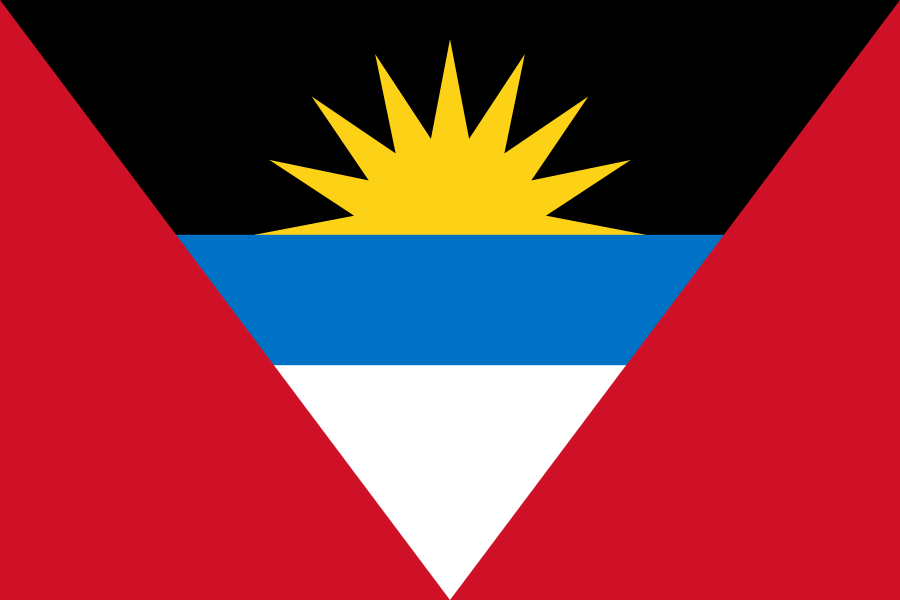
Antigua and Barbuda
Location Info
- Continent: North America
- Country: Antigua and Barbuda
- Coordinates: 17.0608 , -61.7964
Trust Info
Verified Geographic Information
🌍 Continents

Overview
Antigua and Barbuda is a sovereign island nation located in the West Indies, lying between the Caribbean Sea and the Atlantic Ocean. It consists of two major inhabited islands, Antigua and Barbuda, along with several smaller islands including the uninhabited Redonda. The nation is part of the Leeward Islands chain in the Lesser Antilles and is characterized by its coral limestone formations and volcanic landscapes.
Historically, the islands were a British colony until achieving full independence in 1981. Today, the country is a constitutional monarchy and a member of the Commonwealth. Its economy is heavily driven by tourism and financial services, supported by a stable parliamentary democracy and a population centered largely in the capital city of St. John's.
Truth & Facts
| Total Area | 442.6 sq km |
| Highest Point | Mount Obama (402m) |
| Population | Approx. 100,000 |
| Official Language | English |
| Capital | St. John's |
| Government Type | Parliamentary Democracy |
| Independence | November 1, 1981 |
| Currency | Eastern Caribbean Dollar (XCD) |
| GDP Primary Sector | Tourism |
| Main Port | St. John's Deep Water Harbour |
| Literacy Rate | 99% |
| Main Hospital | Sir Lester Bird Medical Centre |
| National Sport | Cricket |
| Famous Motto | The beach is just the beginning |
| Notable Bird | Magnificent Frigatebird |
| International Airport | V.C. Bird International |
| TLD | .ag |
| Police Force | Royal Antigua and Barbuda Police |
| Legal System | English Common Law |
| Member of | UN, Commonwealth, OECS, CARICOM |
| Water Source | Desalination |
| Human Development Index | High |
| Major Religion | Christianity (Protestant) |
| Climate Type | Tropical Maritime |
📑 Table of Contents
Overview
Antigua and Barbuda is an independent state located at the northern end of the Leeward Islands in the East Caribbean. The country consists of two main islands, Antigua and Barbuda, and several smaller ones like Redonda. It is known for its extensive coastline, which features hundreds of white sand beaches and coral reefs.
- Capital: St. John's
- Official Language: English
- Currency: Eastern Caribbean Dollar
- Total Land Area: 442 square kilometers
- Member of the Commonwealth
History
The islands were originally inhabited by the Siboney, Arawak, and Carib peoples. Christopher Columbus sighted Antigua in 1493, naming it after Santa Maria de la Antigua. British colonization began in 1632, leading to the establishment of a sugar-based economy dependent on enslaved labor from Africa.
- 1632: English settlement begins on Antigua.
- 1834: Slavery is abolished in the islands.
- 1967: Becomes an Associated State of the UK.
- 1981: Gains full independence on November 1.
- 2017: Hurricane Irma causes massive evacuation of Barbuda.
Geography
Antigua is mostly composed of limestone and volcanic rock, with a varied landscape of rolling hills and flat plains. Barbuda is a flat coral island with a large lagoon on its western side. The islands lack significant rivers, making groundwater and desalination essential for the population.
| Feature | Antigua | Barbuda |
|---|---|---|
| Topography | Volcanic/Limestone | Flat Coral |
| Highest Point | 402 m | 38 m |
| Main Town | St. John's | Codrington |
Climate and Weather
The islands enjoy a tropical maritime climate with pleasant temperatures year-round. Rainfall is generally low compared to other Caribbean islands, leading to occasional droughts. The hurricane season officially runs from June to November, which can bring significant storms.
- Average Temp: 25°C to 30°C
- Dry Season: January to April
- Wet Season: August to November
- Average Annual Rainfall: 1,000 mm
Population and Demographics
The population is predominantly of African descent, a legacy of the colonial plantation era. There are also significant minorities of European, Levantine Arab, and East Asian descent. Most citizens live on Antigua, specifically in the capital city and surrounding urban areas.
- Estimated Population: 100,000
- Ethnic Groups: 91% Black, 4% Mixed
- Urban Population: Approx. 25%
- Religion: 76% Protestant Christian
Culture and Lifestyle
The culture is a blend of African and British influences. Cricket is the most popular sport and a central part of national identity. Music, including Calypso and Soca, plays a vital role in social life, particularly during festive seasons.
- National Sport: Cricket
- Musical Genres: Calypso, Soca, Reggae
- Cultural Heritage: British naval history
Festivals and Events
Antigua's Carnival is the most significant annual event, celebrating the abolition of slavery with parades, music, and dance. Barbuda celebrates 'Caribana' in June. Sailing Week is another major international event that attracts yachting enthusiasts from around the globe.
- Antigua Carnival: July/August
- Antigua Sailing Week: April/May
- Independence Day: November 1
- Barbuda Caribana: June
Food and Cuisine
The local cuisine is flavorful and utilizes fresh seafood and tropical produce. The national dish is fungee (cornmeal dumplings) and pepperpot (a rich meat stew). Sweet potatoes, plantains, and the famous Antigua Black Pineapple are staples.
- National Dish: Fungee and Pepperpot
- Key Ingredients: Saltfish, Lobster, Cornmeal
- Local Fruit: Black Pineapple
- Popular Drinks: Rum, Ginger Beer
Economy and Industries
Tourism is the pillar of the economy, accounting for more than half of the GDP. The government has also promoted offshore banking and financial services. Agriculture exists on a small scale, focusing on domestic consumption.
- Primary Industry: Tourism
- Secondary Industry: Financial Services
- Agricultural Products: Pineapples, Cotton, Vegetables
Cost of Living
The cost of living is relatively high as many goods and food items must be imported. Housing costs vary significantly between local neighborhoods and luxury tourist developments. Utilities like water and electricity can be expensive due to the lack of natural fresh water.
- Currency: XCD (Fixed to USD)
- Import Reliance: High
- Utilities: High cost due to desalination
Employment and Business
The majority of the workforce is employed in the service sector, particularly in hotels, restaurants, and transport. The government is also a major employer. Investment is encouraged through the Citizenship by Investment Program (CIP).
- Largest Sector: Services (Tourism)
- Business Incentive: Citizenship by Investment
- Unemployment Rate: Variable (Seasonal)
Real Estate and Housing
The real estate market is bifurcated into local residential housing and high-end villas for international investors. Popular areas for investment include Jolly Harbour and English Harbour. Foreigners typically require a license to purchase land.
- Investment Hubs: English Harbour, Jolly Harbour
- Regulation: Non-Citizen Land Holding License required
Transportation and Connectivity
V.C. Bird International Airport serves as a major regional hub. On land, transportation consists of a network of roads, though many are narrow. Public buses and taxis are the primary modes of transport for locals and visitors.
- Main Airport: V.C. Bird International
- Inter-island: Ferry and air service between islands
- Driving: Left-hand side
Infrastructure and Utilities
Infrastructure is well-developed on Antigua, featuring a modern airport terminal and a deep-water harbor. Power is provided by the Antigua Public Utilities Authority (APUA). Water supply is heavily reliant on reverse osmosis desalination plants.
- Electricity: 230V/110V
- Water: Predominantly Desalinated
- Telecommunications: Modern 4G/LTE networks
Education
Education is compulsory for children between the ages of 5 and 16. The country has a high literacy rate and hosts several higher education institutions, including the University of the West Indies (Five Islands Campus).
- Literacy Rate: 99%
- University: UWI Five Islands
- Medical School: American University of Antigua (AUA)
Healthcare
The healthcare system includes public and private facilities. Sir Lester Bird Medical Centre is the primary public hospital. Specialized care may require medical evacuation to nearby islands or the United States.
- Public Hospital: Sir Lester Bird Medical Centre
- Clinics: Community health centers in every parish
Tourist Attractions
The nation is famous for Nelson's Dockyard, a UNESCO World Heritage site. Other attractions include the dramatic cliffs of Devil's Bridge and the white sands of Dickenson Bay. Barbuda's Pink Sand Beach is a major natural draw.
- UNESCO Site: Nelson's Dockyard
- Natural Landmark: Devil's Bridge
- Beaches: Dickenson Bay, Half Moon Bay
Things to Do
Activities revolve around the coast, including sailing, snorkeling, and diving. Hiking to Shirley Heights for the Sunday sunset party is a popular tradition. In Barbuda, visiting the Frigate Bird Sanctuary is a unique experience.
- Sailing: World-class conditions
- Hiking: Mount Obama, Shirley Heights
- Bird Watching: Barbuda Lagoon
Best Places to Visit
English Harbour is essential for history buffs, while St. John's offers vibrant markets and cathedrals. For seclusion, the western coast of Barbuda provides untouched natural beauty and the famous pink sand beaches.
- Historic: English Harbour
- Urban: St. John's City
- Nature: Codrington Lagoon
Travel Guide
Visitors generally arrive at V.C. Bird International Airport. Entry requirements vary by country, but many Western citizens do not require a visa for short stays. Taxis have fixed rates, and car rentals require a local temporary license.
- Entry: Passport required
- Local License: Needed for car rentals
- Currency: US Dollars widely accepted
Nearby Places
The islands are centrally located in the Caribbean, making them a gateway to nearby territories. Montserrat, known for its volcanic activity, and the French island of Guadeloupe are within reach by air or sea.
- Montserrat: Volcanic neighbor
- St. Kitts and Nevis: Nearby twin-island state
- Guadeloupe: French territory to the south
Environment and Nature
The islands feature diverse marine ecosystems, including mangroves and coral reefs. Barbuda is home to one of the largest Frigate Bird sanctuaries in the world. Environmental challenges include coastal erosion and hurricane impact management.
- Sanctuary: Codrington Lagoon (Birds)
- Marine Life: Sea turtles, coral reefs
Government and Administration
The country is divided into six parishes on Antigua and the dependency of Barbuda. It follows the Westminster system of government with a Prime Minister as the head of government and a Governor-General representing the monarch.
- Parishes: St. George, St. John, St. Mary, St. Paul, St. Peter, St. Philip
- Dependency: Barbuda
Safety and Public Services
Antigua and Barbuda is generally considered safe for residents and tourists. Standard precautions should be taken in urban areas at night. Public services include a national police force, fire department, and coast guard.
- Emergency Number: 999 or 911
- Police: Royal Antigua and Barbuda Police Force
Best Time to Visit
The peak travel season is from mid-December to mid-April when the weather is coolest and driest. May and June are transitional months with lower prices. The low season coincides with the hurricane risk months from July to October.
- Peak Season: December - April
- Shoulder Season: May - June
- Low Season: July - October
Local Business Directory
St. John's is the commercial heart, housing banks, international retailers, and local markets. English Harbour and Jolly Harbour are hubs for marine-related businesses and hospitality services.
- Commercial Center: St. John's
- Marine Services: English Harbour
- Hospitality: Coastline resorts
General Information FAQs
Where is Antigua and Barbuda located?
Antigua and Barbuda is located in the Eastern Caribbean Sea, specifically in the Leeward Islands of the Lesser Antilles, north of Guadeloupe and east of St. Kitts and Nevis.
What is Antigua and Barbuda known for?
It is famously known for having 365 distinct white sand beaches, its historic Nelson's Dockyard, and its prominent role in international yachting and sailing.
Why is Antigua and Barbuda famous?
It is famous for its naval history, vibrant carnival, world-class cricket players, and as a luxury tourism destination in the West Indies.
What country or region is Antigua and Barbuda part of?
It is an independent sovereign nation in the Caribbean region and a member of the Commonwealth of Nations.
What is the population of Antigua and Barbuda?
The estimated population is approximately 100,000 people, with the vast majority living on the island of Antigua.
What languages are spoken in Antigua and Barbuda?
English is the official language. Antiguan Creole is also widely spoken by the local population in daily life.
What time zone is Antigua and Barbuda in?
It is in the Atlantic Standard Time (AST) zone, which is four hours behind Greenwich Mean Time (GMT-4). It does not observe Daylight Saving Time.
What are the key facts about Antigua and Barbuda?
Key facts include its independence in 1981, its capital St. John's, its use of the Eastern Caribbean Dollar, and its twin-island geography.
What makes Antigua and Barbuda unique?
The unique combination of a flat coral island (Barbuda) and a volcanic/limestone island (Antigua), along with its colonial naval heritage, sets it apart.
How large is Antigua and Barbuda in area?
The total land area is approximately 442 square kilometers (171 square miles).
History FAQs
What is the history of Antigua and Barbuda?
The history involves indigenous habitation, followed by British colonization in 1632, the establishment of sugar plantations using enslaved Africans, and eventual independence in 1981.
When was Antigua and Barbuda established?
As an independent nation, it was established on November 1, 1981. British settlement dates back to 1632.
What major historical events happened in Antigua and Barbuda?
Major events include the abolition of slavery in 1834, the opening of the naval dockyard in the 1700s, and the damage caused by Hurricane Irma in 2017.
Who were important historical figures from Antigua and Barbuda?
Sir Vere Cornwall Bird is considered the father of the nation. Sir Isaac Vivian Alexander Richards is a globally recognized cricket legend from the islands.
How has Antigua and Barbuda developed over time?
It has transitioned from a colonial sugar-based economy to an independent service-oriented economy focused on tourism and finance.
Geography & Environment FAQs
What is the geography of Antigua and Barbuda?
Antigua has a varied terrain of volcanic and limestone hills, while Barbuda is almost entirely flat coral limestone with a large lagoon.
What natural features surround Antigua and Barbuda?
The islands are surrounded by the Caribbean Sea and the Atlantic Ocean, featuring coral reefs and clear coastal waters.
Are there mountains, rivers, or lakes near Antigua and Barbuda?
There are no permanent rivers and few natural lakes. The highest point is Mount Obama at 402 meters above sea level.
What is the elevation of Antigua and Barbuda?
The elevation ranges from sea level to 402 meters at Mount Obama on Antigua.
What ecosystems exist around Antigua and Barbuda?
Ecosystems include coral reefs, mangrove swamps, scrub forests, and salt ponds.
Climate & Weather FAQs
What is the climate like in Antigua and Barbuda?
It is a tropical maritime climate with steady trade winds and little seasonal variation in temperature.
What is the average temperature in Antigua and Barbuda?
The average temperature ranges from 25°C (77°F) in winter to 30°C (86°F) in summer.
What is the weather like throughout the year in Antigua and Barbuda?
The weather is sunny most of the year, with a dry season from January to April and a wetter, more humid season from August to November.
Does Antigua and Barbuda experience extreme weather?
Yes, the islands are located in the Atlantic hurricane belt and are subject to tropical storms and hurricanes, especially from June to November.
What is the best time of year to visit Antigua and Barbuda?
The peak time is during the dry season from December to April when humidity is lower and temperatures are comfortable.
Population & Society FAQs
What is the population density of Antigua and Barbuda?
The population density is approximately 220 people per square kilometer, with most concentration in St. John's.
What ethnic groups live in Antigua and Barbuda?
The majority (over 90%) are of African descent. Other groups include those of European, Indian, and Levantine descent.
What religions are practiced in Antigua and Barbuda?
Christianity is the dominant religion, with Anglicanism, Catholicism, and various Protestant denominations being most common.
What is daily life like in Antigua and Barbuda?
Daily life is centered around community, church, and outdoor activities, with a relaxed pace influenced by the Caribbean island setting.
How diverse is the population of Antigua and Barbuda?
While ethnically homogeneous in majority, the population is socially diverse with expatriate communities and regional Caribbean immigrants.
Culture & Traditions FAQs
What cultural traditions are important in Antigua and Barbuda?
Important traditions include Carnival, tea parties, and community 'cook-ups' featuring traditional foods.
What festivals are celebrated in Antigua and Barbuda?
Key festivals include the summer Carnival, Independence Day (Nov 1), and Barbuda Caribana.
What cultural landmarks exist in Antigua and Barbuda?
Landmarks include Nelson's Dockyard, Betty's Hope (sugar plantation), and St. John's Cathedral.
What traditional clothing or customs are common in Antigua and Barbuda?
The 'National Dress' featuring madras fabric is used during official cultural events. Sunday church attendance is a widespread custom.
What arts and crafts are associated with Antigua and Barbuda?
Pottery, straw weaving, and wood carving are significant local crafts often sold in markets.
Food & Cuisine FAQs
What foods is Antigua and Barbuda known for?
It is known for fungee, pepperpot, saltfish, and the sweet Antigua Black Pineapple.
What traditional dishes originate from Antigua and Barbuda?
Fungee (cornmeal dumplings) and pepperpot (meat and vegetable stew) are the most traditional dishes.
What are the best restaurants in Antigua and Barbuda?
Dining ranges from high-end international cuisine in English Harbour to local eateries in St. John's serving traditional fish and rice.
What local ingredients are commonly used in Antigua and Barbuda cuisine?
Common ingredients include seafood (lobster, conch), cornmeal, sweet potatoes, okra, and hot peppers.
What food markets or street foods are popular in Antigua and Barbuda?
The St. John's Public Market is the main hub. Street foods include grilled corn and seasoned rotis.
Economy & Business FAQs
What are the main industries in Antigua and Barbuda?
The main industries are tourism, financial services (offshore banking), and government services.
What economic activities drive the economy of Antigua and Barbuda?
Tourism-related construction and services drive the majority of economic activity.
What businesses operate in Antigua and Barbuda?
Businesses include international hotel chains, local retail banks, and maritime service companies.
Is Antigua and Barbuda an important economic center?
It is a regional hub for aviation and yachting in the Eastern Caribbean.
What are the major exports or products from Antigua and Barbuda?
Exports include petroleum products (re-exports), machinery, and small amounts of cotton and fruit.
Employment & Jobs FAQs
What job opportunities are available in Antigua and Barbuda?
Jobs are primarily in the hospitality, retail, construction, and public service sectors.
What are the major employers in Antigua and Barbuda?
The Government of Antigua and Barbuda and large resort groups like Sandals are the primary employers.
What skills are in demand in Antigua and Barbuda?
Skills in hospitality management, healthcare, construction, and accounting are frequently in demand.
Is Antigua and Barbuda a good place to work?
It offers a high quality of life, though the job market is small and can be competitive for specialized roles.
What is the unemployment rate in Antigua and Barbuda?
The rate fluctuates based on the tourism season, generally ranging between 8% and 11%.
Cost of Living FAQs
Is Antigua and Barbuda expensive to live in?
Yes, it is considered one of the more expensive Caribbean islands due to the high cost of imported goods.
What is the average cost of living in Antigua and Barbuda?
The cost varies, but groceries and utilities are significantly higher than in mainland North America or Europe.
How much does housing cost in Antigua and Barbuda?
Rental prices range from $800 USD for basic apartments to over $5,000 USD for luxury waterfront villas.
What are average food and utility costs in Antigua and Barbuda?
Monthly utilities for a standard home can exceed $300 USD. Food costs are high as 80% is imported.
Is Antigua and Barbuda affordable compared to nearby cities?
It is comparable to other high-end tourism hubs like Barbados or St. Kitts, but more expensive than Dominica or Grenada.
Housing & Real Estate FAQs
What types of housing are available in Antigua and Barbuda?
Housing includes traditional stone or wood houses, modern suburban developments, and luxury gated villa communities.
What is the average home price in Antigua and Barbuda?
Average prices for family homes start around $350,000 USD, while luxury properties can reach several million.
Is it better to rent or buy property in Antigua and Barbuda?
Buying is often preferred for long-term residents, while expatriates often rent initially due to the license requirements for purchasing.
Which neighborhoods are popular in Antigua and Barbuda?
Popular areas include Hodges Bay, Jolly Harbour, English Harbour, and Cedar Grove.
How has the property market changed in Antigua and Barbuda?
The market has seen growth driven by the Citizenship by Investment Program, leading to more luxury developments.
Transportation FAQs
How do you get to Antigua and Barbuda?
Most international travelers arrive by air at V.C. Bird International Airport or by cruise ship at St. John's.
What is the nearest airport to Antigua and Barbuda?
V.C. Bird International Airport (ANU) is the main gateway on Antigua.
Does Antigua and Barbuda have railway connections?
No, there are no passenger or freight railway systems on the islands. A former sugar railway exists but is not in use.
How reliable is public transportation in Antigua and Barbuda?
Public buses are frequent and affordable on Antigua, though they do not follow a strict timed schedule.
What major highways or roads connect to Antigua and Barbuda?
Major roads include the Sir Sydney Walling Highway and the Valley Road, which connect the capital to major resorts and villages.
Education FAQs
What schools are located in Antigua and Barbuda?
There are numerous public primary and secondary schools, along with private institutions like St. Anthony's Secondary.
Are there universities in Antigua and Barbuda?
Yes, including the University of the West Indies Five Islands Campus and the Antigua State College.
What is the literacy rate in Antigua and Barbuda?
The literacy rate is exceptionally high at approximately 99%.
What educational opportunities exist in Antigua and Barbuda?
Opportunities exist in vocational training, medical education (AUA), and standard academic degrees through UWI.
Is Antigua and Barbuda a good place for students?
Yes, particularly for medical students, given the presence of established international medical schools.
Healthcare FAQs
What hospitals are available in Antigua and Barbuda?
The main facility is Sir Lester Bird Medical Centre. There is also the Adelin Medical Centre (private).
Are there emergency medical services in Antigua and Barbuda?
Yes, emergency services are available via 911 or 999, though response times can vary in rural areas.
What healthcare facilities exist in Antigua and Barbuda?
Facilities include a main hospital, community clinics in every parish, and various private specialist offices.
Is healthcare affordable in Antigua and Barbuda?
Public healthcare is subsidized for citizens, but private care and specialized treatments can be expensive.
Are specialized medical services available in Antigua and Barbuda?
Basic specialties are available, but complex surgeries or oncology may require travel abroad.
Tourism & Travel FAQs
What are the top tourist attractions in Antigua and Barbuda?
Top sites include Nelson’s Dockyard, Shirley Heights, Devil’s Bridge, and Fig Tree Drive.
What are the best things to do in Antigua and Barbuda?
Activities include snorkeling at Cades Reef, hiking Mount Obama, and visiting the Frigate Bird Sanctuary on Barbuda.
Is Antigua and Barbuda worth visiting?
Yes, it is highly regarded for its safety, beaches, historic colonial architecture, and world-class sailing.
What landmarks should visitors see in Antigua and Barbuda?
Don't miss the St. John's Cathedral, the Pillars of Hercules, and the Pink Sand Beach in Barbuda.
How many days should tourists spend in Antigua and Barbuda?
A typical visit is 7 to 10 days to experience both islands and major attractions.
Nearby Places FAQs
What places are near Antigua and Barbuda worth visiting?
Montserrat and the island of St. Kitts are very close and offer different Caribbean experiences.
What cities or towns are close to Antigua and Barbuda?
Plymouth (Montserrat) and Basseterre (St. Kitts) are the nearest regional urban centers.
What natural attractions are near Antigua and Barbuda?
The Soufrière Hills volcano in Montserrat is a significant nearby natural attraction visible from the south of Antigua.
What day trips can be taken from Antigua and Barbuda?
Day trips by small plane or ferry to Barbuda are common, as are boat charters to uninhabited islands like Prickly Pear.
What famous destinations are within reach of Antigua and Barbuda?
St. Barts and Anguilla are within a short flight distance for luxury travelers.
Safety FAQs
Is Antigua and Barbuda safe to live in?
Yes, it is one of the safer nations in the Caribbean with a stable social environment.
Is Antigua and Barbuda safe for tourists?
Yes, though tourists should use hotel safes and avoid walking alone in secluded areas at night.
What is the crime rate in Antigua and Barbuda?
The crime rate is relatively low compared to many other Caribbean nations, mostly consisting of petty theft.
What emergency services operate in Antigua and Barbuda?
Services include the Royal Antigua and Barbuda Police Force, fire services, and ambulance units.
What safety tips should visitors follow in Antigua and Barbuda?
Lock vehicles, avoid carrying large amounts of cash, and use licensed taxis for transportation.
Lifestyle & Living FAQs
Is Antigua and Barbuda a good place to live?
It offers a tranquil, scenic lifestyle with modern amenities and a friendly community.
What recreational activities are available in Antigua and Barbuda?
Recreation includes yachting, golf, tennis, and a wide variety of water sports.
Is Antigua and Barbuda family-friendly?
Yes, the islands are safe with good schools and many outdoor activities for children.
What outdoor activities are popular in Antigua and Barbuda?
Sailing, kiteboarding, hiking, and reef diving are extremely popular.
What makes life enjoyable in Antigua and Barbuda?
The combination of year-round sunshine, vibrant local culture, and high-quality beaches makes life enjoyable.
Practical Information FAQs
What travel tips should visitors know about Antigua and Barbuda?
Camouflage clothing is illegal, and most businesses close early on Sundays.
What local customs should visitors respect in Antigua and Barbuda?
Dress modestly when away from the beach, and it is polite to greet people with 'Good Morning' or 'Good Afternoon'.
How accessible is Antigua and Barbuda for international visitors?
It is highly accessible with direct flights from London, New York, Miami, and Toronto.
What services are available for tourists in Antigua and Barbuda?
Services include extensive tour operators, luxury car rentals, and professional yacht provisioning.
What important information should travelers know before visiting?
The currency is the EC Dollar, but US Dollars are widely accepted. Electricity is a mix of 110v and 220v.