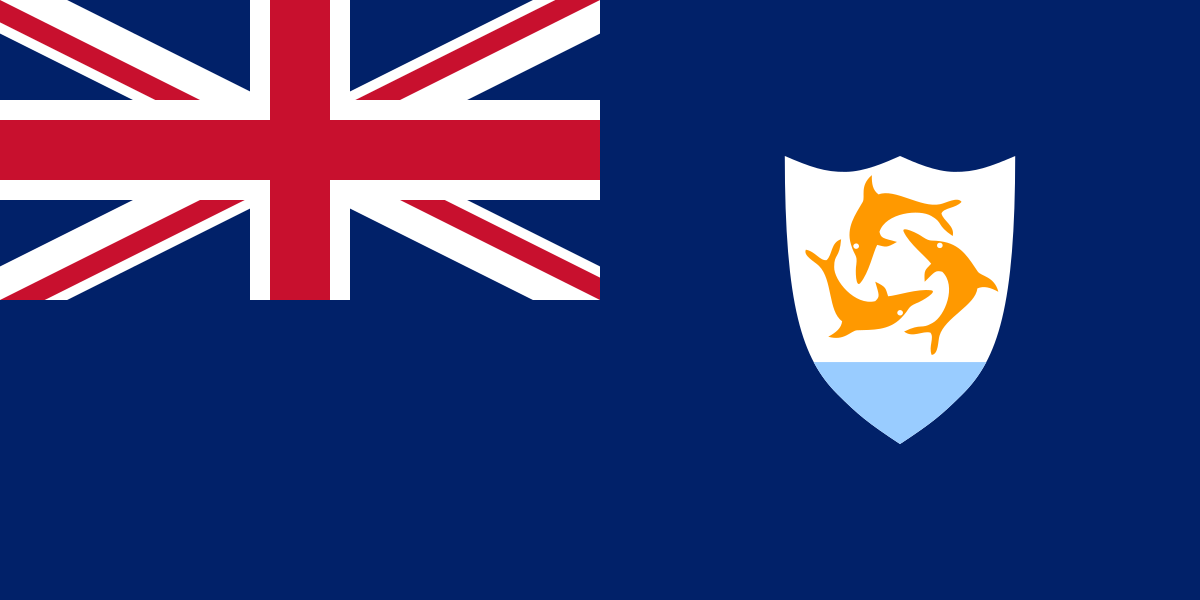
Anguilla
Location Info
- Continent: North America
- Country: Anguilla
- Coordinates: 18.2206 , -63.0686
Trust Info
Verified Geographic Data
🌍 Continents



Overview
Anguilla is a British Overseas Territory located in the eastern Caribbean Sea. It is the most northerly of the Leeward Islands in the Lesser Antilles. The territory consists of the main island of Anguilla and several smaller uninhabited islands and cays. The capital and administrative center is The Valley, located in the central part of the main island.
Geographically, Anguilla is a flat, low-lying island composed of limestone and coral. Historically, the island transitioned from a plantation-based economy to a focus on high-end tourism and offshore financial services. Its political status remains a self-governing overseas territory of the United Kingdom, maintaining a unique cultural identity characterized by maritime traditions and community festivals.
Truth & Facts
| Total Area | 91 square kilometers |
| Highest Point | Crocus Hill (65 meters) |
| Political Status | British Overseas Territory |
| Capital | The Valley |
| Estimated Population | 15,800 |
| Official Language | English |
| Currency | East Caribbean Dollar (XCD) |
| Primary Industries | Tourism, Financial Services, Fishing |
| British Colonization | 1650 |
| Anguilla Revolution | 1967 |
| Power Supply | 110V / 60Hz |
| Main Airport | Clayton J. Lloyd International Airport |
| National Sport | Boat Racing |
| Protected Areas | Marine Parks, Heritage Sites |
| Primary Hospital | Princess Alexandra Hospital |
| Internet TLD | .ai |
| Literacy Rate | 95% |
| Police Agency | Royal Anguilla Police Force |
| Calling Code | +1-264 |
| Predominant Religion | Christianity (Anglican, Methodist) |
| Basis of Law | English Common Law |
| Regional Memberships | CARICOM (Associate), OECS |
| Water Source | Desalination and Rainwater |
| Assembly Name | House of Assembly |
| Notable Species | Anguilla Bank Anole |
📑 Table of Contents
Overview
Anguilla is an archipelago and British Overseas Territory in the Caribbean. It is located east of the Virgin Islands and north of Saint Martin. The main island measures roughly 26 kilometers in length and 5 kilometers in width at its widest point.
The territory is known for its ecological preservation and high-income economy. It remains under the jurisdiction of the United Kingdom but manages its internal affairs through a locally elected government.
- Official Name: Anguilla
- Status: British Overseas Territory
- Capital: The Valley
- Primary Currency: East Caribbean Dollar
- Language: English
History
Anguilla was originally inhabited by Arawak-speaking peoples who called the island Malliouhana. European colonization began in 1650 when English settlers arrived from Saint Kitts. The island faced several invasions from the French in the 18th century but remained under British control.
In 1824, the British government placed Anguilla under the administrative control of Saint Kitts. This arrangement led to decades of tension, culminating in the 1967 Anguilla Revolution. The islanders successfully sought a separate status, which was formally granted in 1980.
| Year | Event |
|---|---|
| 1650 | English settlement established |
| 1967 | Anguilla Revolution begins |
| 1980 | Formal separation from Saint Kitts and Nevis |
Geography
The geography of Anguilla is defined by its low-lying limestone and coral formation. Unlike many neighboring Caribbean islands, Anguilla lacks significant volcanic activity or mountainous regions. This results in a predominantly flat landscape with sparse vegetation.
The coastline features numerous white-sand beaches and coral reefs. Offshore territories include Scrub Island, Dog Island, and the Prickly Pear Cays. These areas are vital for marine biodiversity and ecological research.
- Total Land Area: 91 sq km
- Coastline: 61 km
- Terrain: Flat, low-lying limestone
- Key Features: Coral reefs, salt ponds
Climate and Weather
Anguilla features a tropical maritime climate characterized by consistent temperatures throughout the year. The island experiences a dry season and a wet season, though rainfall is generally lower than on more mountainous islands in the region.
The hurricane season typically runs from June to November. Trade winds provide a cooling effect, maintaining average temperatures between 25°C and 30°C.
| Metric | Average Value |
|---|---|
| Annual Temperature | 27°C |
| Wettest Month | October |
| Driest Month | February |
Population and Demographics
The population of Anguilla is approximately 15,800 residents. The majority of the population is of African descent, following the historical period of plantation labor. There are also significant minorities of European and mixed ancestry.
The demographic distribution is centered around The Valley and various coastal villages. The territory maintains a high literacy rate and a stable population growth rate.
- Median Age: 35 years
- Urban Population: 100% (territory defined as urban)
- Religious Affiliation: Protestantism (majority)
- Ethic Groups: Black 85%, Mixed 10%, White 5%
Culture and Lifestyle
Anguillian culture is deeply rooted in maritime traditions, including fishing and boat building. Lifestyle on the island is generally relaxed, with a strong emphasis on community and church activities. The local dialect is a form of Caribbean English Creole.
Artistic expression is found in local music, particularly reggae and calypso, and traditional crafts. Boat racing is the most significant cultural sport, drawing participants from across the island.
Festivals and Events
The Anguilla Summer Festival is the territory's primary cultural celebration, held annually in August. It commemorates the emancipation of enslaved people and features parades, boat races, and musical competitions.
Other notable events include Moonsplash, a popular music festival held at Rendezvous Bay, and Festival Del Mar, which celebrates the island's connection to the sea.
- Anguilla Day (May 30)
- Summer Festival (August)
- Festival Del Mar (Easter Weekend)
- Moonsplash Music Festival
Food and Cuisine
The cuisine of Anguilla is centered on fresh seafood and locally grown produce. Traditional dishes often feature lobster, conch, and various species of reef fish. Salted fish and dumplings are common staples in the Anguillian diet.
Influences from British and other Caribbean cultures are evident in the preparation of soups and stews. Barbecue is also a popular method of cooking, particularly during community gatherings.
Economy and Industries
Anguilla's economy is driven by two main sectors: high-end tourism and financial services. The territory has no income, capital gains, or corporate taxes, making it an attractive center for offshore banking and company registration.
The tourism industry focuses on the luxury market, with numerous five-star resorts and private villas. Fishing remains a secondary but culturally important economic activity.
- Key Export: Lobster
- Financial Center: The Valley
- Main Partners: USA, UK
Cost of Living
The cost of living in Anguilla is relatively high compared to many other Caribbean islands. Most goods, including food and fuel, must be imported, which increases retail prices. Housing costs are also high due to the island's popularity as a luxury destination.
Electricity and water services are modern but can be expensive. Residents often rely on rainwater cisterns to supplement the public water supply.
Employment and Business
The largest employer in Anguilla is the government, followed by the tourism sector. Business opportunities are often centered around hospitality, real estate, and professional financial services. The workweek typically follows the standard 40-hour format.
Non-nationals require work permits to be employed on the island. The government encourages investment in sustainable industries and technology.
Real Estate and Housing
Real estate in Anguilla is dominated by luxury properties and vacation rentals. Foreigners wishing to purchase land or property must obtain an Alien Land Holding License from the government. Property values have remained stable due to strict building codes and limited land availability.
Housing for locals typically consists of independent concrete structures built to withstand tropical storms.
Transportation and Connectivity
Anguilla is accessible by air and sea. Clayton J. Lloyd International Airport handles regional flights and private charters. The primary gateway for many travelers is the ferry service from Marigot, Saint Martin, which arrives at Blowing Point.
There is no public bus system on the island. Residents and visitors typically use private vehicles or taxis to travel between the various villages and beaches.
- Main Port: Road Bay
- Ferry Terminal: Blowing Point
- Driving Side: Left
Infrastructure and Utilities
The Anguilla Electricity Company (ANGLEC) provides power across the island. The territory has seen an increase in solar energy projects to reduce dependence on imported fuel. Water is managed through desalination plants and individual cisterns.
Telecommunications are provided by regional carriers, offering 4G and 5G mobile connectivity. Fiber optic internet is increasingly available in commercial and residential areas.
Education
Education is mandatory for children between the ages of 5 and 17. The system is based on the British model, with several primary schools and one comprehensive secondary school, the Albena Lake-Hodge Comprehensive School.
Tertiary education is provided through the Anguilla campus of the University of the West Indies (UWI) and the Anguilla Community College.
Healthcare
Healthcare services are overseen by the Health Authority of Anguilla. The Princess Alexandra Hospital in The Valley is the island's main medical facility, providing emergency and specialized care. There are also several community health clinics located throughout the island.
Complex medical cases often require medical evacuation to nearby islands such as Saint Martin or Puerto Rico.
Tourist Attractions
Anguilla is primarily known for its pristine beaches. Shoal Bay East is frequently cited as one of the best beaches in the world. Other significant attractions include the historical Heritage Collection Museum and the Fountain Cavern National Park.
The offshore cays, such as Sandy Island and Prickly Pear, are popular for day trips involving snorkeling and bird watching.
Things to Do
Activities in Anguilla focus on the marine environment. Snorkeling, diving, and sailing are among the most popular pursuits. Visitors can also explore the island's salt ponds for birdwatching or engage in guided tours of historical sites.
Golfing is available at the island's championship course, and local boat races offer a unique spectator experience during the summer months.
Best Places to Visit
Key locations include The Valley for administrative and historical insights, and Sandy Ground for its vibrant maritime atmosphere. Meads Bay and Rendezvous Bay are notable for their expansive beaches and dining options.
Island Harbour, a traditional fishing village on the eastern end, provides a view into the island's traditional way of life.
Travel Guide
Visitors to Anguilla typically require a valid passport and, depending on their nationality, a visa. Most travelers arrive via ferry from Saint Martin. The official currency is the East Caribbean Dollar, though US Dollars are widely accepted.
Health insurance covering international travel is recommended. Tipping is customary in restaurants and for service providers at a rate of 10-15%.
Nearby Places
Anguilla is located near several other Caribbean territories. Saint Martin is the closest neighbor, situated approximately 7 kilometers to the south. Saint Barthélemy and Saba are also within reachable distance for regional travel.
These nearby islands offer different cultural experiences, ranging from French and Dutch influences to volcanic landscapes.
Environment and Nature
Anguilla's environment is fragile due to its limestone base and limited fresh water. The Anguilla National Trust works to protect the island's biodiversity, including its nesting sea turtles and various species of iguanas.
The island's salt ponds serve as critical habitats for migratory birds. Conservation efforts focus on reef protection and managing the impact of invasive species.
Government and Administration
The government of Anguilla operates under a parliamentary representative democratic framework. The British monarch is the head of state, represented by a Governor. Internal government is led by the Premier and the Executive Council.
The judiciary is part of the Eastern Caribbean Supreme Court system. The territory maintains its own laws while being subject to certain UK international treaties.
Safety and Public Services
Anguilla is considered one of the safest destinations in the Caribbean. Crime rates are low, and the Royal Anguilla Police Force maintains a visible presence. Public services, including fire and emergency response, are centralized in The Valley.
Standard safety precautions are advised, such as securing personal belongings and being mindful of weather alerts during the hurricane season.
Best Time to Visit
The peak period for visiting Anguilla is from December to April when the weather is driest and coolest. This coincides with the major tourism season in the Caribbean.
The months of May to August offer warmer temperatures and fewer crowds, though there is a higher chance of tropical rainfall. Many resorts close for maintenance during the peak hurricane months of September and October.
Local Business Directory
Local businesses in Anguilla range from boutique hotels and restaurants to specialized financial firms. Most businesses are concentrated in The Valley, George Hill, and the main tourism hubs along the western coast.
The Anguilla Chamber of Commerce and Industry supports local entrepreneurs and fosters economic development across the territory.
General Information FAQs
Where is Anguilla located?
Anguilla is located in the Eastern Caribbean Sea. It is the northernmost island of the Leeward Islands in the Lesser Antilles.
What is Anguilla known for?
Anguilla is known for its extensive white-sand beaches, high-end tourism, and its status as a British Overseas Territory with a significant offshore financial sector.
Why is Anguilla famous?
The island is famous for Shoal Bay East, often ranked as a top beach globally, and its unique 1967 revolution that led to its separation from Saint Kitts.
What country or region is Anguilla part of?
Anguilla is a British Overseas Territory and is part of the Caribbean region, specifically the Leeward Islands.
What is the population of Anguilla?
The estimated population of Anguilla is approximately 15,800 people as of 2026 data.
What languages are spoken in Anguilla?
English is the official language. Anguillian Creole, an English-based dialect, is spoken in daily life.
What time zone is Anguilla in?
Anguilla is in the Atlantic Standard Time (AST) zone, which is UTC-4. It does not observe Daylight Saving Time.
What are the key facts about Anguilla?
Key facts include its capital (The Valley), its currency (East Caribbean Dollar), and its total land area of 91 square kilometers.
What makes Anguilla unique?
Anguilla is unique for its flat, limestone geography which differs from the volcanic mountains found on neighboring Caribbean islands.
How large is Anguilla in area?
The total land area of Anguilla is 91 square kilometers (35 square miles).
History FAQs
What is the history of Anguilla?
The island's history includes indigenous Arawak settlement, English colonization in 1650, and a long struggle for administrative independence from Saint Kitts, achieved in the late 20th century.
When was Anguilla established?
The first permanent English settlement was established in 1650, although the island had been inhabited by indigenous groups for centuries prior.
What major historical events happened in Anguilla?
Major events include the 1967 Anguilla Revolution and the formal establishment of its own constitution as a British Overseas Territory in 1980.
Who were important historical figures from Anguilla?
Ronald Webster is a key figure, often called the 'Father of the Nation' for leading the 1967 revolution.
How has Anguilla developed over time?
Anguilla moved from a salt-production and plantation economy to one based on luxury tourism and international financial services.
Geography & Environment FAQs
What is the geography of Anguilla?
The island is a flat, low-lying limestone and coral formation in the Caribbean Sea.
What natural features surround Anguilla?
Anguilla is surrounded by coral reefs, sandy beaches, and several small uninhabited cays like Dog Island and Scrub Island.
Are there mountains, rivers, or lakes near Anguilla?
Anguilla has no mountains or permanent rivers; however, it has several salt ponds such as the Road Salt Pond.
What is the elevation of Anguilla?
The elevation is mostly near sea level, with the highest point, Crocus Hill, reaching 65 meters (213 feet).
What ecosystems exist around Anguilla?
Ecosystems include coral reefs, seagrass beds, dry scrubland, and salt pond wetlands.
Climate & Weather FAQs
What is the climate like in Anguilla?
Anguilla has a tropical maritime climate with relatively constant temperatures and moderated by trade winds.
What is the average temperature in Anguilla?
The average temperature is around 27°C (80°F), with little seasonal variation.
What is the weather like throughout the year in Anguilla?
The weather is generally sunny and dry from December to April, with higher humidity and rain chances from June to November.
Does Anguilla experience extreme weather?
Yes, Anguilla is susceptible to tropical storms and hurricanes during the Atlantic hurricane season (June to November).
What is the best time of year to visit Anguilla?
The best time to visit is during the dry season, from mid-December to mid-April.
Population & Society FAQs
What is the population density of Anguilla?
The population density is approximately 174 people per square kilometer.
What ethnic groups live in Anguilla?
The majority are of African descent (over 85%), with minority groups of European, mixed, and Hispanic ancestry.
What religions are practiced in Anguilla?
Christianity is predominant, with Anglican, Methodist, and Seventh-day Adventist denominations having the largest followings.
What is daily life like in Anguilla?
Daily life is centered on community, church, and maritime activities, reflecting a peaceful and slow-paced lifestyle.
How diverse is the population of Anguilla?
While historically African-Caribbean, the population has become more diverse with expatriates from the US, UK, and other Caribbean islands.
Culture & Traditions FAQs
What cultural traditions are important in Anguilla?
Boat racing, fishing, and choral singing are deeply ingrained traditions in Anguillian culture.
What festivals are celebrated in Anguilla?
The Summer Festival (Carnival) in August and Anguilla Day in May are the most significant celebrations.
What cultural landmarks exist in Anguilla?
Landmarks include the Wallblake House, the Heritage Collection Museum, and various historical salt ponds.
What traditional clothing or customs are common in Anguilla?
Traditional dress is often seen during festivals, featuring colorful Caribbean patterns and historical colonial influences.
What arts and crafts are associated with [Location]?
Anguilla is associated with model boat building, basket weaving, and shell jewelry.
Food & Cuisine FAQs
What foods is Anguilla known for?
Anguilla is known for spiny lobster, crayfish, salt fish, and pigeon peas and rice.
What traditional dishes originate from Anguilla?
Traditional dishes include cornmeal fungi, goat water (a hearty stew), and Johnny cakes.
What are the best restaurants in Anguilla?
Anguilla is home to many world-class fine dining establishments in the West End and local beach shacks in Sandy Ground.
What local ingredients are commonly used in Anguilla cuisine?
Common ingredients include seafood, peppers, limes, and locally grown peas.
What food markets or street foods are popular in Anguilla?
The Valley Market is popular for local produce, and barbecue stands in The Valley are common on weekends.
Economy & Business FAQs
What are the main industries in Anguilla?
The primary industries are tourism, offshore financial services, and commercial fishing.
What economic activities drive the economy of Anguilla?
Luxury hotel stays, company registrations, and the export of lobsters are key drivers.
What businesses operate in Anguilla?
Businesses include international banks, legal firms, luxury resorts, and small-scale retail.
Is Anguilla an important economic center?
It is a significant regional center for offshore finance and a leading destination for luxury Caribbean travel.
What are the major exports or products from Anguilla?
The main physical export is lobster. Financial services represent a major service export.
Employment & Jobs FAQs
What job opportunities are available in Anguilla?
Jobs are primarily found in hospitality, construction, government administration, and financial services.
What are the major employers in Anguilla?
Major employers include the Government of Anguilla and large resorts such as Four Seasons and Cap Juluca.
What skills are in demand in Anguilla?
Skills in hospitality management, accounting, law, and specialized construction are in high demand.
Is Anguilla a good place to work?
It offers a high quality of life, though work permits are strictly regulated for non-nationals.
What is the unemployment rate in [Location]?
The unemployment rate fluctuates around 7-8%, largely depending on the tourism season.
Cost of Living FAQs
Is Anguilla expensive to live in?
Yes, Anguilla is considered one of the more expensive Caribbean islands due to the high cost of imported goods.
What is the average cost of living in Anguilla?
Costs are comparable to major US cities, particularly for housing and utilities.
How much does housing cost in Anguilla?
Rents and property prices are high, especially for properties with ocean views or in the West End.
What are average food and utility costs in Anguilla?
Food costs are high due to imports; utilities like electricity are among the most expensive in the region.
Is Anguilla affordable compared to nearby cities?
It is generally more expensive than Saint Martin or Saint Kitts but similar to Saint Barthélemy.
Housing & Real Estate FAQs
What types of housing are available in Anguilla?
Housing ranges from traditional concrete houses to luxury villas and apartment complexes.
What is the average home price in Anguilla?
Home prices vary widely, starting from $300,000 for small local homes to several million for beachfront villas.
Is it better to rent or buy property in Anguilla?
Buying is common for long-term residents and investors, while renting is preferred by short-term contract workers.
Which neighborhoods are popular in Anguilla?
Popular areas include the West End, Sandy Hill, and Island Harbour.
How has the property market changed in Anguilla?
The market has seen increased demand for luxury remote-work properties and eco-friendly villa designs.
Transportation FAQs
How do you get to Anguilla?
Travelers usually fly into Saint Martin (SXM) and take a 20-minute ferry, or fly directly to Anguilla (AXA) from regional hubs.
What is the nearest airport to Anguilla?
The island's airport is Clayton J. Lloyd International Airport (AXA).
Does Anguilla have railway connections?
No, there are no railways in Anguilla.
How reliable is public transportation in Anguilla?
There is no formal public bus system; residents rely on taxis and private vehicles.
What major highways or roads connect to Anguilla?
A single main road runs the length of the island from West End to Island Harbour.
Education FAQs
What schools are located in Anguilla?
There are six public primary schools and one public secondary school, Albena Lake-Hodge Comprehensive School.
Are there universities in Anguilla?
The University of the West Indies has an Open Campus site on the island, and there is the Anguilla Community College.
What is the literacy rate in Anguilla?
The literacy rate is high, estimated at approximately 95%.
What educational opportunities exist in Anguilla?
Opportunities include primary and secondary education, as well as vocational training and adult education programs.
Is Anguilla a good place for students?
It offers a safe environment for primary and secondary students, though many pursue higher education abroad.
Healthcare FAQs
What hospitals are available in Anguilla?
The main hospital is the Princess Alexandra Hospital in The Valley.
Are there emergency medical services in Anguilla?
Yes, there are 24-hour emergency services at the main hospital and an ambulance service.
What healthcare facilities exist in Anguilla?
Facilities include several public health centers and private medical practices.
Is healthcare affordable in Anguilla?
Public healthcare is subsidized for residents, but private care and specialized treatments can be expensive.
Are specialized medical services available in Anguilla?
Basic specialties are available, but major surgeries or intensive care often require transfer to neighboring islands.
Tourism & Travel FAQs
What are the top tourist attractions in Anguilla?
The top attractions are the island's 33 beaches, including Shoal Bay East and Maundays Bay.
What are the best things to do in Anguilla?
Best activities include snorkeling, sailing to offshore cays, and dining at world-class restaurants.
Is Anguilla worth visiting?
Yes, for travelers seeking high-end relaxation, pristine beaches, and exceptional culinary experiences.
What landmarks should visitors see in Anguilla?
Visitors should see the Old Salt Factory and Pumphouse and the Fountain Cavern.
How many days should tourists spend in Anguilla?
Most tourists find 5 to 7 days sufficient to experience the island's main highlights.
Nearby Places FAQs
What places are near Anguilla worth visiting?
Saint Martin and Saint Barthélemy are nearby and popular for day trips.
What cities or towns are close to Anguilla?
Marigot (Saint Martin) and Philipsburg (Sint Maarten) are the closest major towns.
What natural attractions are near Anguilla?
The Prickly Pear Cays and Sandy Island are excellent offshore natural attractions.
What day trips can be taken from Anguilla?
Day trips to Saint Martin for shopping or to Scrub Island for hiking are popular.
What famous destinations are within reach of Anguilla?
The Virgin Islands and Saint Kitts are reachable via regional air carriers.
Safety FAQs
Is Anguilla safe to live in?
Yes, Anguilla consistently ranks as one of the safest islands in the Caribbean for residents.
Is Anguilla safe for tourists?
Yes, the island has a very low crime rate regarding visitors.
What is the crime rate in Anguilla?
The crime rate is very low compared to international and regional averages.
What emergency services operate in Anguilla?
Police, fire, and ambulance services are all active and accessible via emergency dispatch.
What safety tips should visitors follow in Anguilla?
Standard safety practices such as locking cars and not leaving valuables unattended on the beach are recommended.
Lifestyle & Living FAQs
Is Anguilla a good place to live?
It is excellent for those seeking a quiet, safe, and beautiful environment, provided they can manage the higher cost of living.
What recreational activities are available in Anguilla?
Recreation includes tennis, golf, swimming, and attending community festivals.
Is Anguilla family-friendly?
Yes, its safety and calm waters make it highly suitable for families with children.
What outdoor activities are popular in Anguilla?
Birdwatching, kayaking, and hiking to coastal cliffs are popular outdoor activities.
What makes life enjoyable in Anguilla?
The combination of natural beauty, a close-knit community, and high-quality dining makes life enjoyable.
Practical Information FAQs
What travel tips should visitors know about Anguilla?
Bring US Dollars, rent a car to explore, and remember to drive on the left side of the road.
What local customs should visitors respect in Anguilla?
Modest dress is expected when not on the beach, and it is polite to greet people with 'Good Morning' or 'Good Afternoon'.
How accessible is Anguilla for international visitors?
It is very accessible via Saint Martin's international airport, which serves many major global cities.
What services are available for tourists in Anguilla?
Tourist services include car rentals, guided boat tours, concierge services, and information centers.
What important information should travelers know before visiting Anguilla?
A $28 exit fee is often applicable when departing the island by ferry or air, and the voltage is 110V.