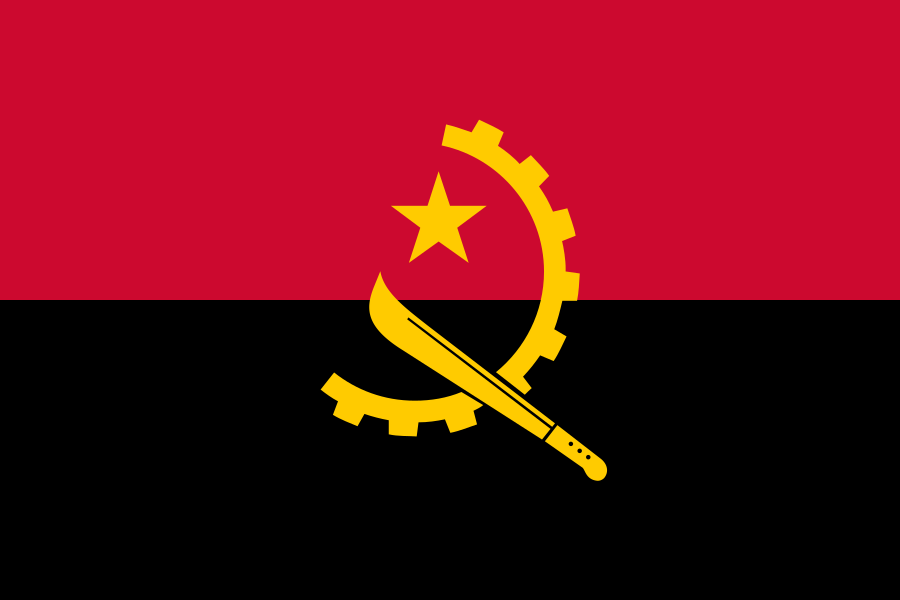
Angola
Location Info
- Continent: Africa
- Country: Angola
- Coordinates: -12.3333 , 18
Trust Info
Verified Geographic Information
🌍 Continents

Overview
Angola, officially the Republic of Angola, is located on the western coast of Southern Africa. It is the seventh-largest country on the continent and the second-largest Portuguese-speaking nation in the world. The geography is diverse, ranging from the tropical rainforests of the north and the central highlands to the arid Namib Desert in the south. The country features a significant Atlantic coastline stretching over 1,600 kilometers.
Historically, Angola was the site of powerful ancient entities like the Kingdom of Kongo before becoming a Portuguese colony for several centuries. Since gaining independence in 1975 and concluding a long civil war in 2002, the nation has focused on rebuilding. It is a major global producer of oil and diamonds, which form the backbone of its developing economy. The capital, Luanda, serves as the primary economic and administrative hub.
Truth & Facts
| Total Area | 1,246,700 sq km |
| Coastline | 1,600 km |
| Highest Point | Mount Moco (2,620 m) |
| Estimated Population | 37.8 million |
| Official Language | Portuguese |
| Capital City | Luanda |
| Currency | Kwanza (AOA) |
| Main Exports | Crude Oil, Diamonds |
| Independence Date | November 11, 1975 |
| End of Civil War | 2002 |
📑 Table of Contents
Overview
Angola is a sovereign state located on the southwestern coast of Africa. It shares borders with Namibia to the south, the Democratic Republic of the Congo to the north, Zambia to the east, and the Atlantic Ocean to the west. The province of Cabinda exists as an exclave, separated from the rest of the country by a narrow strip of territory belonging to the DRC.
As a member of the United Nations, African Union, and SADC, Angola plays a strategic role in regional politics and energy security. The nation is currently undergoing a period of economic transition aimed at diversifying its industries beyond petroleum.
- Official Name: Republic of Angola
- Government: Unitary Presidential Republic
- Time Zone: UTC+1 (WAT)
- Calling Code: +244
- ISO Code: AO / AGO
History
The early history of Angola is marked by the migrations of Bantu-speaking peoples who established several powerful kingdoms, including the Kongo, Ndongo, and Lunda. Portuguese explorers arrived in the late 15th century, leading to a long period of colonial influence centered on the slave trade and resource extraction.
In the 20th century, nationalist movements led to the Angolan War of Independence (1961–1974). Following the Carnation Revolution in Portugal, Angola achieved sovereignty in 1975. However, the country immediately entered a multi-decade civil war between the MPLA and UNITA, which severely impacted infrastructure and development until peace was established in 2002.
| Period | Key Event |
|---|---|
| 14th Century | Rise of the Kingdom of Kongo |
| 1575 | Founding of Luanda by Portuguese |
| 1975 | Proclamation of Independence |
| 2002 | Luena Memorandum (End of Civil War) |
Geography
Angola's geography is defined by a narrow coastal plain that rises sharply to a vast interior plateau. The central highlands, or Bié Plateau, contain the country's highest peaks and serve as the source for many major rivers, including the Kwanza and the Cunene.
The northern regions are characterized by dense tropical forests, while the south transitions into the semi-arid bush and the Namib Desert. The country is divided into 18 provinces, each with distinct environmental characteristics.
- Total Land Area: 1,246,700 km²
- Longest River: Kwanza River (960 km)
- Largest Province: Cuando Cubango
- Major Coastal Cities: Luanda, Lobito, Namibe
Climate and Weather
Angola experiences two distinct seasons: the rainy season and the dry season (known as Cacimbo). The rainy season typically runs from October to May, characterized by high humidity and frequent tropical downpours. The dry season, from June to September, is generally cooler and lacks significant precipitation.
Temperatures vary by altitude and proximity to the ocean. The coastal areas are influenced by the cool Benguela Current, which moderates temperatures but also creates arid conditions in the south. Interior regions can experience more extreme temperature fluctuations.
| Month | Avg. High (°C) | Avg. Low (°C) |
|---|---|---|
| January | 28 | 22 |
| July | 23 | 15 |
| October | 27 | 21 |
Population and Demographics
Angola has one of the youngest and fastest-growing populations in the world. As of 2026, the population is estimated to be approximately 37.8 million. The majority of citizens reside in the western half of the country, with Luanda alone housing nearly 10 million people.
The population is ethnically diverse, with the Ovimbundu, Ambundu, and Bakongo representing the largest groups. While Portuguese is the official language, several national Bantu languages are widely spoken, including Umbundu and Kimbundu.
- Median Age: ~17 years
- Urban Population: ~67%
- Dominant Religion: Roman Catholicism
- Growth Rate: ~3.1% annually
Culture and Lifestyle
Angolan culture is a blend of indigenous African traditions and Portuguese influences. This is most evident in the country's music and dance, which have gained international recognition. Genres like Semba, Kizomba, and Kuduro are central to social life and national identity.
Traditional arts, such as Chokwe wood carving and mask-making, remain significant in rural areas. In urban centers, the lifestyle is increasingly modern, though deeply rooted in community and family structures.
- Core Music: Semba and Kizomba
- Traditional Art: Mwana Pwo Masks
- National Sport: Basketball and Football
Festivals and Events
Festivals in Angola often coincide with religious holidays or significant historical dates. The Carnival of Luanda is the most prominent cultural event, featuring vibrant parades, music, and dance competitions that reflect the history of the capital.
In 2026, Angola gained international attention as the host country for ITB Berlin, showcasing its tourism potential. Regional festivals also celebrate harvests and local ethnic traditions throughout the 18 provinces.
- Luanda Carnival: February/March
- Independence Day: November 11
- Muxima Pilgrimage: August/September
Food and Cuisine
Angolan cuisine is noted for its rich flavors and the use of local staples such as cassava, corn, and sweet potatoes. Funge, a thick porridge made from cassava or corn flour, is the essential accompaniment to most meals. Seafood is highly popular along the coast, while meat dishes predominate in the interior.
Muamba de galinha (chicken stew) is often considered the national dish, prepared with palm oil, garlic, and okra. Portuguese influence is seen in the prevalence of olive oil and the availability of pastries like Pastel de Nata.
| Dish | Main Ingredients |
|---|---|
| Funge | Cassava or Corn Flour |
| Muamba de Galinha | Chicken, Palm Oil, Okra |
| Calulu | Dried Fish, Greens, Tomatoes |
| Catatos | Fried Caterpillars (Delicacy) |
Economy and Industries
Angola's economy is one of the largest in Sub-Saharan Africa, primarily driven by the oil and gas sector. The country is a prominent member of OPEC and typically ranks as Africa's second-largest oil producer. Diamond mining is the second most important industry, providing a significant portion of the global gemstone supply.
The government is currently implementing reforms to encourage growth in agriculture, manufacturing, and tourism. These efforts aim to reduce the nation's vulnerability to fluctuations in global oil prices.
- Primary Sector: Petroleum and Natural Gas
- Secondary Sector: Mining (Diamonds, Iron Ore)
- Emerging Sector: Commercial Agriculture
Cost of Living
Luanda has historically been ranked as one of the most expensive cities for expatriates due to the high cost of imported goods and secure housing. However, the cost of living for locals varies significantly, with basic staples being more affordable in rural areas.
Recent economic adjustments have led to fluctuations in the value of the Kwanza, impacting the price of consumer goods and fuel. Infrastructure costs, such as electricity and internet, remain relatively high compared to regional averages.
| Item | Relative Cost |
|---|---|
| Housing (Urban) | High |
| Local Produce | Moderate |
| Imported Electronics | Very High |
| Public Transport | Low |
Employment and Business
The oil and gas industry remains the most lucrative source of employment for skilled professionals. However, the majority of the Angolan workforce is engaged in subsistence agriculture and the informal trading sector. The government is actively promoting 'Angolanization'—a policy designed to increase the participation of local citizens in high-level management and technical roles.
Business opportunities are expanding in logistics, telecommunications, and banking. China remains the largest trading partner and a key investor in national infrastructure projects.
- Major Employer: Sonangol (State Oil Company)
- Unemployment Rate: ~14% (formal sector)
- Business Hub: Luanda Special Economic Zone
Real Estate and Housing
Real estate in Angola is characterized by a stark contrast between modern luxury developments and informal settlements known as musseques. In Luanda, large-scale projects like Kilamba New City have been built to address the housing deficit, providing thousands of apartment units for the middle class.
Property prices in premium areas of Luanda remain high, though there has been a stabilization in rental rates recently. Land ownership laws are complex, often involving long-term state concessions.
- Major Projects: Kilamba, Camama, Zango
- Housing Type: Modern Apartments & Traditional Dwellings
Transportation and Connectivity
Angola's transportation network was heavily damaged during the civil war but has seen massive investment in the last two decades. The country is served by three main railway lines: the Luanda Railway (North), the Benguela Railway (Center), and the Moçâmedes Railway (South). The Benguela Railway is particularly vital as it connects the port of Lobito to the copper-rich regions of the DRC and Zambia.
Air travel is essential for long-distance domestic travel. The new António Agostinho Neto International Airport in Luanda, fully operational as of 2026, serves as a major regional hub for Southern Africa.
- Flag Carrier: TAAG Angola Airlines
- Main Port: Port of Luanda
- Strategic Link: Lobito Corridor
Infrastructure and Utilities
Access to reliable electricity and clean water is a priority for the Angolan government. Massive hydroelectric projects, such as the Laúca and Cambambe dams, have significantly increased the national power generation capacity. However, distribution networks in rural areas are still being developed.
Telecommunications have expanded rapidly, with mobile phone penetration reaching high levels across the country. Internet connectivity is primarily provided via fiber optics and satellite in remote regions.
- Main Power Source: Hydroelectric Power
- Telecom Operators: Unitel, Movicel
Education
The Angolan education system consists of primary, secondary, and higher education. Primary education is compulsory and free, though challenges remain regarding classroom availability and teacher training. The literacy rate has improved steadily since the end of the conflict.
Agostinho Neto University is the country's premier public institution of higher learning. There has also been a rise in private universities and vocational training centers focused on technical skills for the oil and mining sectors.
- Primary Language: Portuguese
- Top University: Universidade Agostinho Neto
Healthcare
The healthcare system in Angola includes public hospitals, health centers, and a growing private sector. Major investments have been made in Luanda to build modern specialized hospitals, but rural healthcare delivery remains dependent on mobile clinics and international NGOs.
Malaria remains the primary public health challenge, followed by waterborne diseases. The government has increased its health budget to focus on immunization and maternal health services.
- Public Health Focus: Malaria prevention, Vaccinations
- Major Facility: Hospital Josina Machel (Luanda)
Tourist Attractions
Angola offers diverse natural attractions for adventurous travelers. The Kalandula Falls in Malanje Province are among the largest by volume in Africa. The Tundavala Gap provides spectacular views from the edge of the Huíla plateau, dropping over 1,000 meters to the plains below.
Historical sites include the Fortaleza de São Miguel in Luanda and the Church of Our Lady of Pópulo in Benguela. The Miradouro da Lua (Moon Viewpoint) offers unique lunar-like rock formations along the coast.
- Kalandula Falls: One of Africa's largest waterfalls
- Tundavala Gap: Scenic mountain pass
- Fortaleza de São Miguel: 16th-century fortress
Things to Do
Visitors to Angola can engage in a variety of activities ranging from coastal recreation to inland expeditions. Surfing is popular in Cabo Ledo, known for its consistent waves and sandy beaches. Deep-sea fishing is a major activity in the waters of Luanda and Namibe.
For cultural immersion, attending a live Kizomba performance or visiting local craft markets in Luanda provides a deep look into the contemporary Angolan lifestyle.
- Surfing: Cabo Ledo
- Cultural Experience: Luanda Island (Ilha do Cabo)
- Nature Observation: Bird watching in Kissama
Best Places to Visit
While Luanda is the most accessible destination, many of Angola's best sites are located in the southern and central provinces. Lubango is famous for its cool climate and the Christ the King statue. Benguela offers some of the most beautiful colonial architecture and pristine beaches in the country.
The Namib Desert in the south is home to the rare Welwitschia mirabilis plant and the nomadic Mucubal people, offering a starkly beautiful landscape for desert tourism.
| Destination | Known For |
|---|---|
| Lubango | Tundavala Gap, Serra da Leba |
| Benguela | Baía Azul, Colonial History |
| Malanje | Kalandula Falls, Pungo Andongo |
Travel Guide
Entering Angola requires a valid passport and, for most nationalities, a visa. The government recently introduced an e-visa system to simplify the process. Yellow fever vaccination is mandatory for all visitors, and malaria prophylaxis is strongly recommended.
The primary point of entry is Luanda. Travelers should be aware that infrastructure outside major cities is still developing, and a 4x4 vehicle is often necessary for rural exploration.
- Visa: E-visa available for many countries
- Health: Yellow Fever certificate required
- Currency: Kwanza is the only legal tender
Nearby Places
Angola is bordered by several other notable African destinations. To the south, Namibia offers well-developed safari tourism. To the east, Zambia provides access to the Victoria Falls. The Democratic Republic of the Congo to the north is a gateway to Central Africa’s rainforests.
Cross-border connectivity is improving with the development of the Lobito Corridor, facilitating easier travel between Angola and its eastern neighbors.
- Namibia: South border
- Zambia: East border
- DRC: North border
Environment and Nature
Angola possesses incredible biodiversity, with ecosystems ranging from equatorial forests to desert dunes. The Giant Sable Antelope, found only in Angola, is a national symbol and is protected within the Cangandala National Park and Luando Nature Reserve.
The Maiombe Forest in Cabinda is one of Africa’s largest rainforests and is home to gorillas and chimpanzees. Iona National Park, the country's largest, is where the desert meets the ocean, supporting unique flora and fauna.
- National Symbol: Giant Sable Antelope
- Largest Park: Iona National Park
- Unique Flora: Welwitschia Mirabilis
Government and Administration
The Republic of Angola is a presidential republic where the President serves as both head of state and head of government. The National Assembly is the legislative body, consisting of 220 members. The country is administratively divided into 18 provinces, which are further subdivided into municipalities.
The ruling party, the MPLA, has been in power since independence. The current administration has focused on anti-corruption measures and attracting foreign direct investment.
- Executive: President João Lourenço
- Legislature: National Assembly (Assembleia Nacional)
- Provinces: 18
Safety and Public Services
Safety in Angola varies between regions. While major cities have visible police presence, standard safety precautions are advised for travelers. Landmines from the civil war era have been largely cleared from major roads and cities, but caution is still necessary when traveling off-road in remote areas.
Emergency services are available in urban centers but may be limited in rural locations. Public utilities are improving but subject to occasional outages.
- Emergency Number: 113 (Police)
- Service: National Civil Protection Service
Best Time to Visit
The best time to visit Angola is during the dry season (Cacimbo), which lasts from June to September. During this period, the weather is pleasant with cooler temperatures and minimal rainfall, making it ideal for wildlife viewing and road travel.
The rainy season (October to May) can make some rural roads impassable due to mud, though the landscape becomes lush and green. Coastal areas are enjoyable year-round, though the heat peaks in March and April.
| Season | Months | Condition |
|---|---|---|
| Dry Season | June - Sept | Best for travel and wildlife |
| Rainy Season | Oct - May | Hot, humid, lush scenery |
Local Business Directory
The business landscape is dominated by Luanda, where most international companies and government agencies are headquartered. Major sectors for local enterprise include retail, construction, and hospitality.
Industrial activity is concentrated in the Viana and Luanda-Bengo Special Economic Zones. Regional capitals like Huambo and Lubango serve as hubs for the agricultural and livestock trade.
- Key Hub: Luanda-Bengo Special Economic Zone (ZEE)
- Retail Centers: Belas Shopping, Xyami Malls
General Information FAQs
Where is Angola located?
Angola is located on the western coast of Southern Africa. It shares borders with the Democratic Republic of the Congo, Zambia, Namibia, and the Atlantic Ocean.
What is Angola known for?
Angola is primarily known for its vast natural resources, particularly oil and diamonds. Culturally, it is famous for the Kizomba and Semba music genres.
Why is Angola famous?
It is famous for being one of the largest oil producers in Africa and for its unique landscape that includes the Kalandula Falls and the Tundavala Gap.
What country or region is Angola part of?
Angola is an independent country located in the Southern African region of the African continent.
What is the population of Angola?
As of 2026, the estimated population of Angola is approximately 37.8 million people.
What languages are spoken in Angola?
Portuguese is the official language. Indigenous languages such as Umbundu, Kimbundu, Bakongo, and Chokwe are also widely spoken.
What time zone is Angola in?
Angola is in the West Africa Time (WAT) zone, which is UTC+1.
What are the key facts about Angola?
Key facts include its status as a former Portuguese colony, its large land area (1.2 million sq km), and its capital city, Luanda.
What makes Angola unique?
Its blend of Portuguese and African cultures, its unique wildlife like the Giant Sable Antelope, and its diverse geography from desert to rainforest make it unique.
How large is Angola in area?
Angola covers an area of approximately 1,246,700 square kilometers, making it the seventh-largest country in Africa.
History FAQs
What is the history of Angola?
Angola's history involves ancient African kingdoms, centuries of Portuguese colonial rule, a war for independence, and a 27-year civil war that ended in 2002.
When was Angola established?
Modern Angola gained its independence and was established as a sovereign state on November 11, 1975.
What major historical events happened in Angola?
Key events include the arrival of Portuguese in 1483, the start of the independence war in 1961, and the signing of the Luena Memorandum in 2002.
Who were important historical figures from Angola?
Important figures include Queen Nzinga of Ndongo and Matamba, and Agostinho Neto, the country's first president.
How has Angola developed over time?
Since 2002, Angola has moved from a war-torn state to a rapidly developing economy with significant urban modernization and infrastructure growth.
Geography & Environment FAQs
What is the geography of Angola?
The geography includes a coastal plain, a large central plateau, and varied vegetation from tropical forests to deserts.
What natural features surround Angola?
It is bounded by the Atlantic Ocean to the west and the desert and savannah regions of neighboring countries to the north, east, and south.
Are there mountains, rivers, or lakes near Angola?
Yes, major rivers include the Kwanza, Cunene, and Cubango. The highest mountain is Mount Moco.
What is the elevation of Angola?
Most of the country sits on a plateau between 1,000 and 1,500 meters above sea level.
What ecosystems exist around Angola?
Ecosystems include the Namib Desert, the Miombo woodlands, and the tropical rainforests of the Congo Basin edge.
Climate & Weather FAQs
What is the climate like in Angola?
Angola has a tropical climate with a distinct rainy season and a dry season known as the Cacimbo.
What is the average temperature in Angola?
Coastal temperatures average around 23-28°C, while the highlands are cooler, averaging 19-22°C.
What is the weather like throughout the year in Angola?
It is warm and humid from October to May, and cooler and dry from June to September.
Does Angola experience extreme weather?
The country can experience heavy tropical flooding during the rainy season and prolonged droughts in the southern regions.
What is the best time of year to visit Angola?
The dry season, from June to September, is the best time for travel and outdoor exploration.
Population & Society FAQs
What is the population density of Angola?
The average density is about 30 people per square kilometer, though it is much higher in urban Luanda.
What ethnic groups live in Angola?
The main groups are the Ovimbundu (37%), Ambundu (25%), and Bakongo (13%).
What religions are practiced in Angola?
Christianity is the predominant religion, with Roman Catholicism being the largest denomination.
What is daily life like in Angola?
Life revolves around community and family, with music, street markets, and social gatherings playing a large role in both urban and rural settings.
How diverse is the population of Angola?
It is highly diverse, consisting of over 90 different ethnic subgroups and a small percentage of European and Chinese residents.
Culture & Traditions FAQs
What cultural traditions are important in Angola?
Oral storytelling, wood carving, and traditional dance forms remain vital parts of the cultural fabric.
What festivals are celebrated in Angola?
The Luanda Carnival and Independence Day are the most significant national celebrations.
What cultural landmarks exist in Angola?
Key landmarks include the Iron House in Luanda and the historic churches of Benguela and Malanje.
What traditional clothing or customs are common in Angola?
Brightly colored fabrics (Samakaka) are common for festive attire, and customs often involve elaborate music and communal meals.
What arts and crafts are associated with Angola?
Angola is famous for the 'Thinker' (O Pensador) statue and intricate Chokwe basketry.
Food & Cuisine FAQs
What foods is Angola known for?
It is known for Funge (cassava porridge), Muamba de Galinha (chicken stew), and fresh Atlantic seafood.
What traditional dishes originate from Angola?
Traditional dishes include Calulu (fish or meat with vegetables) and Pirão.
What are the best restaurants in Angola?
Most high-end restaurants are located on the Ilha de Luanda, offering a mix of Angolan and international cuisine.
What local ingredients are commonly used in Angola cuisine?
Cassava, palm oil, okra, corn, beans, and sweet potatoes are staples.
What food markets or street foods are popular in Angola?
Magoga (street sandwiches) and grilled fish at beachside stalls are popular street foods.
Economy & Business FAQs
What are the main industries in Angola?
The economy is dominated by the oil and gas industry, followed by diamond mining and telecommunications.
What economic activities drive the economy of Angola?
Resource extraction (petroleum) provides the vast majority of government revenue and export earnings.
What businesses operate in Angola?
Major international oil companies (Total, Chevron, BP) and local firms like Sonangol and Unitel are prominent.
Is Angola an important economic center?
Yes, it is one of the leading economies in Sub-Saharan Africa and a key energy provider globally.
What are the major exports or products from Angola?
Crude oil, diamonds, refined petroleum products, and natural gas are the primary exports.
Employment & Jobs FAQs
What job opportunities are available in Angola?
Opportunities are most abundant in energy, construction, logistics, and the emerging financial services sector.
What are the major employers in Angola?
The government and state-owned oil company Sonangol are the largest employers.
What skills are in demand in Angola?
Engineering, geology, project management, and specialized technical skills in mining and energy are highly sought after.
Is Angola a good place to work?
It offers high compensation in the oil and gas sector but presents challenges regarding the cost of living and infrastructure.
What is the unemployment rate in Angola?
The formal unemployment rate fluctuates around 14-15%, though underemployment in the informal sector is much higher.
Cost of Living FAQs
Is Angola expensive to live in?
Luanda is considered one of the most expensive cities in the world for expatriates, though local living costs are lower.
What is the average cost of living in Angola?
For an average professional, costs are high due to expensive secure housing and the price of imported consumer goods.
How much does housing cost in Angola?
Premium apartment rentals in Luanda can range from $2,500 to $5,000 per month.
What are average food and utility costs in Angola?
Utilities are costly if private generators are needed; food costs depend heavily on whether products are local or imported.
Is Angola affordable compared to nearby cities?
Luanda is generally more expensive than Windhoek or Lusaka but comparable to other major oil-rich African capitals.
Housing & Real Estate FAQs
What types of housing are available in Angola?
Options range from high-rise modern apartments in Luanda to sprawling suburban villas and traditional rural dwellings.
What is the average home price in Angola?
Prices vary wildly; modern 3-bedroom apartments in Luanda can cost upwards of $300,000.
Is it better to rent or buy property in Angola?
Most expatriates and international firms prefer to rent due to the complexities of land ownership laws.
Which neighborhoods are popular in Angola?
In Luanda, popular areas include Miramar, Talatona, and the Ilha de Luanda.
How has the property market changed in Angola?
The market has shifted from a massive boom in the 2010s to a more stable environment with increased focus on middle-class housing projects.
Transportation FAQs
How do you get to Angola?
Most international travelers arrive via the Agostinho Neto International Airport in Luanda.
What is the nearest airport to Angola?
The primary gateway is the Agostinho Neto International Airport (AIAAN) in Luanda.
Does Angola have railway connections?
Yes, it has three separate rail systems, with the Benguela Railway connecting to the DRC and Zambia border.
How reliable is public transportation in Angola?
Within Luanda, 'Candongueiros' (blue and white minibuses) are the most common but can be crowded. Rail services are improving but limited.
What major highways or roads connect to Angola?
The Trans-African Highway network connects Angola to Namibia and the DRC, though road quality varies.
Education FAQs
What schools are located in Angola?
Angola has a mix of public state schools and private international schools, mostly located in Luanda.
Are there universities in Angola?
Yes, Agostinho Neto University is the largest public university, along with several private institutions like Catholic University of Angola.
What is the literacy rate in Angola?
The literacy rate is approximately 71%, with significantly higher rates among the younger population.
What educational opportunities exist in Angola?
There is an increasing focus on technical and vocational training for the industrial and energy sectors.
Is Angola a good place for students?
It offers unique research opportunities in geology and African history, though language (Portuguese) is a factor for international students.
Healthcare FAQs
What hospitals are available in Angola?
Major hospitals include the Josina Machel Hospital and various private clinics like Girassol in Luanda.
Are there emergency medical services in Angola?
Yes, though response times and equipment levels are much better in Luanda than in rural provinces.
What healthcare facilities exist in Angola?
Facilities range from modern specialized clinics in the capital to basic health posts in remote villages.
Is healthcare affordable in Angola?
Public healthcare is theoretically low-cost, but many residents and all expats rely on private insurance and clinics.
Are specialized medical services available in Angola?
Most specialized services are only available in Luanda; complex cases are often referred abroad.
Tourism & Travel FAQs
What are the top tourist attractions in Angola?
The Kalandula Waterfalls, Tundavala Gap, and Iona National Park are top destinations.
What are the best things to do in Angola?
Top activities include surfing in Cabo Ledo, birdwatching in Kissama, and exploring the colonial history of Benguela.
Is Angola worth visiting?
Yes, for travelers seeking off-the-beaten-path adventures and untouched natural beauty, Angola is an exceptional destination.
What landmarks should visitors see in Angola?
Don't miss the Serra da Leba pass and the Pungo Andongo Black Rocks.
How many days should tourists spend in Angola?
A minimum of 10-14 days is recommended to see both the capital and the scenic southern provinces.
Nearby Places FAQs
What places are near Angola worth visiting?
Etosha National Park in Namibia and the Victoria Falls in Zambia are within regional reach.
What cities or towns are close to Angola?
Windhoek (Namibia) and Kinshasa (DRC) are the closest major international cities.
What natural attractions are near Angola?
The Okavango Delta region sits near the southeastern border with Namibia and Botswana.
What day trips can be taken from Angola?
From Luanda, day trips to Kissama National Park or Cabo Ledo are popular.
What famous destinations are within reach of Angola?
The Cape Cross seal colony in Namibia is accessible by road from southern Angola.
Safety FAQs
Is Angola safe to live in?
Many expatriates live safely in Luanda, though it requires staying in secure housing and awareness of urban crime.
Is Angola safe for tourists?
Yes, provided tourists stick to known routes, avoid nighttime travel in unfamiliar areas, and follow local advice.
What is the crime rate in Angola?
Crime is primarily an issue in dense urban areas like Luanda, involving petty theft and occasionally more serious incidents.
What emergency services operate in Angola?
The police (113) and fire services operate nationally, though efficiency varies by province.
What safety tips should visitors follow in Angola?
Avoid displaying wealth, use registered transport, and always carry identification copies.
Lifestyle & Living FAQs
Is Angola a good place to live?
It offers a vibrant cultural scene and a warm climate, though it requires adapting to developing infrastructure.
What recreational activities are available in Angola?
Water sports, deep-sea fishing, and social dancing (Kizomba) are very popular.
Is Angola family-friendly?
Yes, family is central to Angolan culture, and there are many family-oriented social clubs in the capital.
What outdoor activities are popular in Angola?
Hiking in the Huíla highlands and beach activities along the Luanda coastline are favorites.
What makes life enjoyable in Angola?
The rhythm of the music, the hospitality of the people, and the stunning sunsets over the Atlantic Ocean.
Practical Information FAQs
What travel tips should visitors know about Angola?
Learn basic Portuguese phrases, carry cash (Kwanza), and ensure all health vaccinations are up to date.
What local customs should visitors respect in Angola?
Always ask before taking photos of people or government buildings and respect elders in social settings.
How accessible is Angola for international visitors?
Accessibility is improving with more direct flights from Europe, Brazil, and other African nations.
What services are available for tourists in Angola?
Tour operators in Luanda offer guided trips to national parks and historical sites.
What important information should travelers know before visiting Angola?
Internet and electricity can be inconsistent outside Luanda, and credit cards are only accepted in major hotels.