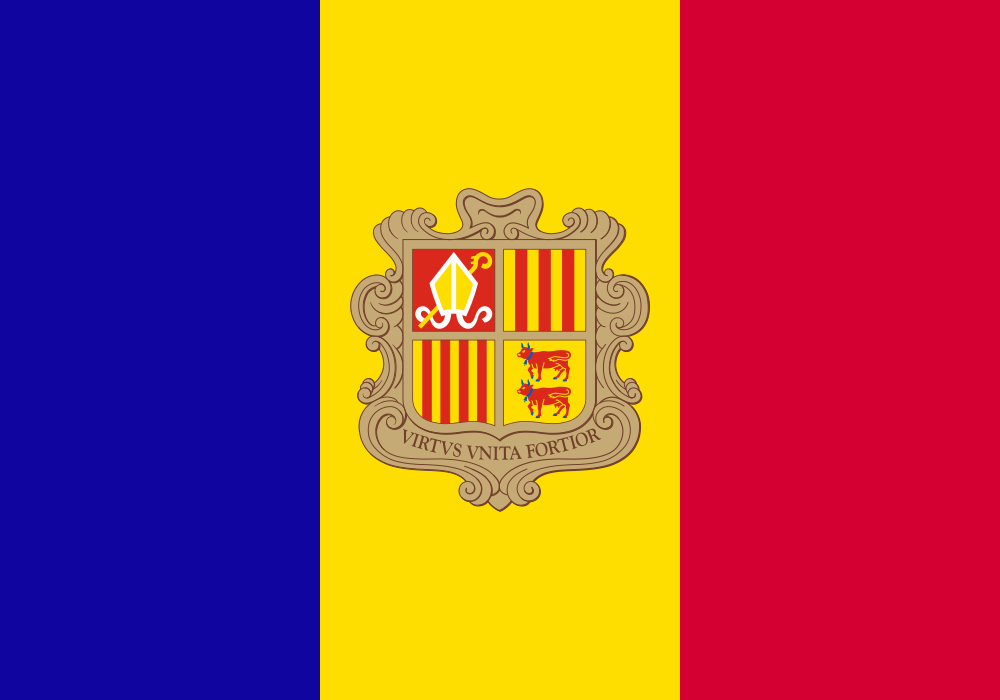
Andorra
Location Info
- Continent: Europe
- Country: Andorra
- Coordinates: 42.5063 , 1.5218
Trust Info
Verified Geographic Information
🌍 Continents
Overview
Andorra is a small, landlocked sovereign principality located in the eastern Pyrenees mountain range, bordered by France to the north and Spain to the south. It is the sixth-smallest nation in Europe and is uniquely governed by two co-princes: the President of France and the Bishop of Urgell in Catalonia, Spain. The country is characterized by its rugged mountainous terrain, narrow valleys, and an average elevation of 1,996 meters, making it one of the highest nations in Europe.
Historically, Andorra transitioned from a feudal society to a modern parliamentary democracy in 1993. Its economy, once dependent on agriculture and iron smelting, now thrives on tourism, retail, and financial services, supported by its status as a low-tax jurisdiction. With Catalan as its official language, Andorra maintains deep cultural ties to its neighbors while hosting a diverse population of residents from across the Iberian Peninsula and France.
Truth & Facts
| Total Area | 468 sq km |
| Highest Point | Pic de Coma Pedrosa (2,946 m) |
| Lowest Point | Riu Runer (840 m) |
| Estimated Population | 80,000 - 85,000 |
| Official Language | Catalan |
| Life Expectancy | 84.6 years |
| Capital | Andorra la Vella |
| Parishes | 7 |
| Established | 1278 |
| Constitutional Change | 1993 |
| Currency | Euro (€) |
| Main Industries | Tourism, Banking, Retail |
| Electricity Source | Hydroelectric & Imports |
| Internet Connectivity | High-speed Fiber |
| Railways | 0 km |
| Total Road Length | 269 km |
| Literacy Rate | 100% |
| Systems | Andorran, French, Spanish |
| Public Hospital | Hospital Nostra Senyora de Meritxell |
| Health Centers | 12 primary care centers |
| National Dish | Escudella |
| National Day | September 8 |
| Annual Visitors | Approx. 8 million |
| Ski Slopes | 300+ km |
| UNESCO Sites | 1 (Madriu-Perafita-Claror) |
| Forest Coverage | 34% |
| Cybersecurity Rank | 76.5 (0-100 scale) |
| Crime Rate | Very Low |
| Voting Age | 18 |
| UN Entry | 1993 |
| Drinking Water | 100% Access |
| Real GDP Growth (2026) | 1.6% |
| Sunny Days | 300 per year |
| Predominant Religion | Roman Catholic |
📑 Table of Contents
Overview of Andorra
Andorra is a landlocked sovereign microstate in southwestern Europe, situated in the eastern Pyrenees. It is bordered by Spain and France and is the largest of the European microstates. The nation is known for its co-principality status and its rugged, narrow-valley landscape.
The capital, Andorra la Vella, is the highest capital city in Europe. The country is not a member of the European Union but uses the Euro as its official currency. Key geographic features include:
- High average elevation of 1,996 meters.
- Extensive mountainous terrain with 65 peaks.
- Rich cultural heritage with Catalan as the official language.
- High concentration of urban population in glacial valleys.
- Renowned destination for shopping and winter sports.
Historical Development
Andorra's origins are traditionally attributed to Charlemagne, though its formal existence was established in 1278. The Paréages signed between the Bishop of Urgell and the Count of Foix created a unique co-principality that lasted for centuries. This feudal arrangement provided Andorra with stability and neutrality.
Significant modernization began in the 20th century, particularly after World War II. In 1993, a new constitution was adopted, establishing Andorra as a parliamentary democracy. Key dates include:
- 1278: Signing of the first Paréage.
- 1580: Construction of the Casa de la Vall.
- 1934: Opening of the first hydroelectric plant.
- 1993: Adoption of the first written Constitution.
- 1993: Entry into the United Nations.
Geography and Landscape
Andorra's geography is defined by the Pyrenees mountains. The terrain consists of three Y-shaped valleys through which the Gran Valira river flows towards Spain. The country lacks a coastline but has numerous glacial lakes and mountain streams.
| Feature | Name |
|---|---|
| Highest Mountain | Pic de Coma Pedrosa |
| Longest River | Gran Valira |
| Largest Lake | Estany de Juclar |
| Average Altitude | 1,996 m |
Climate and Weather
The climate in Andorra is primarily temperate but varies significantly with altitude. Lower valleys experience a Mediterranean-influenced climate, while higher elevations have an alpine climate with frequent snowfall. The country enjoys approximately 300 days of sunshine annually.
- January: Cold and snowy, ideal for winter sports.
- July: Warm and dry with occasional thunderstorms.
- Precipitation: Averages 700 to 1,100 mm annually.
- Snow cover: Lasts up to six months in northern valleys.
Population and Demographics
Andorra has a unique demographic profile where native Andorrans are a minority in their own country. The population includes significant numbers of Spanish, French, and Portuguese residents. This creates a multicultural environment within the small nation.
- Official Language: Catalan.
- Common Languages: Spanish, French, Portuguese.
- Main Religion: Roman Catholicism.
- Urbanization: Over 95% of residents live in urban centers.
- Life Expectancy: High, averaging over 84 years.
Culture and Lifestyle
Andorran culture is deeply rooted in Catalan traditions. Folklore, traditional music, and dance are integral to local celebrations. The lifestyle is heavily influenced by the mountain environment, with outdoor activities being a primary pastime for residents.
- Sardana: The traditional dance performed at festivals.
- Romanesque Art: Visible in numerous medieval churches.
- Mushroom Foraging: A popular local hobby in autumn.
- Contraband History: Museums showcase the legacy of tobacco smuggling.
Festivals and Events
Religious and seasonal festivals form the backbone of the Andorran social calendar. Major events often involve community meals and folk dancing. The Parishes celebrate their own 'Festes Majors' during the summer months.
- September 8: National Day (Our Lady of Meritxell).
- Escudella Festivals: Community stews served in winter.
- Jazz Festival: Held in Escaldes-Engordany.
- Christmas Markets: Popular in Andorra la Vella.
Food and Cuisine
The cuisine of Andorra is mountainous and hearty, based on locally sourced ingredients like meat, freshwater trout, and seasonal mushrooms. It shares many characteristics with Catalan and French mountain cooking. Traditional 'bordes' (stone houses) now serve as high-quality restaurants.
| Dish | Type | Key Ingredients |
|---|---|---|
| Escudella | Stew | Pork, sausage, beans, pasta |
| Trinxat | Hash | Cabbage, potatoes, bacon |
| Trucha a la Andorrana | Fish | River trout, ham, almonds |
Economy and Industries
Andorra's economy has transformed from an agrarian base to a flourishing service hub. Tourism and retail are the primary drivers, attracting millions of visitors seeking duty-free goods and leisure activities. Banking and finance also play a significant role due to the country's low-tax environment.
- Tourism: Represents nearly 80% of the national GDP.
- Retail: Known for luxury goods, electronics, and alcohol.
- Finance: A well-established private banking sector.
- Tobacco: A traditional industry still producing for export.
Cost of Living
Living costs in Andorra are generally higher than in surrounding rural areas of Spain but lower than in major French cities. Housing is the most significant expense due to limited land availability. Basic commodities are often cheaper due to low indirect taxes.
- Taxation: Indirect taxes (VAT/IGI) are low, capped at 4.5%.
- Groceries: Import costs can affect prices of fresh produce.
- Utilities: Electricity is relatively affordable due to domestic hydro power.
- Luxury Items: Electronics and fuel are often cheaper than in neighbors.
Employment and Business
The labor market is heavily seasonal, peaking during the winter ski season and summer holiday months. The unemployment rate is historically one of the lowest in Europe. Most businesses are in the service, hospitality, and retail sectors.
- Major Employer: The tourism and retail service industry.
- Work Permits: Strict regulations for non-residents.
- Sectors: Growing focus on digital business and tech startups.
- Work Ethic: Multilingualism is a critical requirement for most jobs.
Real Estate and Housing
Real estate in Andorra is characterized by apartments and townhouses concentrated in the valleys. Due to the rugged topography, buildable land is scarce and expensive. The market is popular with foreign investors seeking residency or vacation homes.
- Demand: High in Andorra la Vella and Escaldes-Engordany.
- Rentals: Seasonal demand fluctuates heavily.
- Architecture: Modern styles mixed with traditional stone 'Bordes'.
- Property Taxes: Generally lower than in EU countries.
Transportation and Connectivity
Andorra lacks its own train station and commercial airport within its borders. Transport is primarily road-based, with efficient bus services connecting the parishes. International travelers typically arrive via airports in Spain or France.
- Roads: 269 km network, including the Envalira Tunnel.
- Public Bus: Regular service within parishes and to neighboring countries.
- Airports: Nearest are Barcelona (BCN), Toulouse (TLS), and La Seu d’Urgell (LEU).
- Rail: Nearest SNCF station is L'Hospitalet-près-l'Andorre in France.
Infrastructure and Utilities
Andorra possesses highly developed infrastructure. It was one of the first countries in the world to offer 100% fiber-optic internet coverage to its residents. Water is sourced from mountain springs, and energy is managed through a mix of domestic production and imports.
- Telecommunications: Managed by the state-owned Andorra Telecom.
- Electricity: FEDA manages production and distribution.
- Sanitation: Modern systems in all major urban valleys.
- Winter Maintenance: High efficiency in snow clearing from roads.
Education System
Andorra offers a unique educational landscape with three parallel systems: Andorran, Spanish, and French. All three are free and funded by the respective governments or the Principality. This ensures a high level of trilingualism among the youth.
- University: Universitat d'Andorra (UdA) in Sant Julia de Loria.
- Compulsory: Education is mandatory from age 6 to 16.
- Medium of Instruction: Varies by system (Catalan, Spanish, or French).
- Literacy: Among the highest in the world at nearly 100%.
Healthcare Services
The healthcare system in Andorra is consistently ranked among the best in the world. It is managed by the Servei Andorrà d'Atenció Sanitària (SAAS). Funding is provided through the CASS (social security) which covers most residents.
- Hospital: One major facility, Nostra Senyora de Meritxell.
- Primary Care: 12 local centers distributed across parishes.
- Pharmacy: High density of pharmacies in commercial areas.
- Agreements: Health agreements exist with France and Spain for specialized care.
Top Tourist Attractions
Andorra's attractions range from historic Romanesque churches to ultra-modern spa complexes. The Madriu-Perafita-Claror Valley is a notable UNESCO World Heritage site representing an ancient mountain landscape. Shopping in the capital also remains a top draw.
- Caldea: One of the largest thermal spa centers in Europe.
- Casa de la Vall: Historical seat of the General Council.
- Meritxell Sanctuary: The national shrine dedicated to the patron saint.
- Grandvalira: The largest ski resort in the Pyrenees.
Things to Do
Activities in Andorra are seasonally driven. Winter is dominated by skiing and snowboarding, while summer offers world-class hiking, mountain biking, and rock climbing. Year-round shopping and spa visits are also popular.
- Skiing: Over 300 km of slopes across several resorts.
- Hiking: Well-marked trails including the GRP (Great Route of the Principality).
- Shopping: Tax-free retail in Andorra la Vella and Pas de la Casa.
- Gastronomy: Dining in traditional mountain 'bordes'.
Best Places to Visit
Each parish in Andorra offers a different character. The capital is the commercial heart, while Ordino is known as the cultural center with preserved architecture. Pal and Arinsal are favored for family-friendly outdoor sports.
- Andorra la Vella: For shopping and historic buildings.
- Ordino: For picturesque stone houses and museums.
- Canillo: For mountain scenery and Romanesque churches.
- Pas de la Casa: For high-altitude skiing and French border trade.
Travel Information
Visitors to Andorra must enter via Spain or France. While Andorra is not part of the Schengen Area, it maintains an open border policy with its neighbors. A valid passport or national ID is usually sufficient for EU citizens.
- Currency: Euro is used everywhere.
- Voltage: 230V, Type F (European standard).
- Customs: Duty-free limits apply when leaving the country.
- Transport: Car rental or bus transfer are the best options.
Nearby Destinations
Andorra's location makes it a great base for exploring the Pyrenees. Major cities like Barcelona and Toulouse are within a three-hour drive. Nearby Spanish and French towns offer additional historical and natural interest.
- La Seu d'Urgell (Spain): Nearest Spanish town with a historic cathedral.
- Foix (France): Known for its impressive medieval castle.
- Ax-les-Thermes (France): A popular ski and spa town.
- Puigcerdà (Spain): A charming Catalan border town.
Environment and Nature
Andorra is a biodiversity hotspot in the Pyrenees. The landscape ranges from river valleys to alpine tundra. Conservation efforts are high, particularly within the designated natural parks. Fauna include chamois, eagles, and vultures.
- Natural Parks: Madriu-Perafita-Claror, Sorteny, and Comapedrosa.
- Flora: Pine, fir, and birch forests dominate the mid-altitudes.
- Fauna: Home to the Pyrenean chamois (isard) and bearded vulture.
- Hazards: Avalanches and landslides are natural risks in winter.
Government and Administration
The political system is a unique parliamentary co-principality. The heads of state are the Bishop of Urgell and the President of France. Executive power is held by the Head of Government, elected by the General Council (Parliament).
- General Council: Consists of 28 members.
- Local Government: Seven Parishes with significant administrative autonomy.
- Constitution: Adopted in 1993, separating church and state.
- Foreign Policy: Focused on cooperation with the EU and international bodies.
Safety and Public Services
Andorra is exceptionally safe for both residents and tourists. The 'Police d'Andorra' maintains a visible presence. Emergency services are well-equipped for mountain rescues and general medical emergencies.
- Crime: Very low rates of theft or violent crime.
- Emergency Number: 112 is the standard for all emergencies.
- Fire Service: Highly trained for forest fires and mountain rescue.
- Road Safety: Strict enforcement of traffic and winter driving laws.
Best Time to Visit
The best time to visit Andorra depends on the desired activities. Winter (December to March) is peak season for snow sports. Summer (June to September) is ideal for hiking and exploring the high mountain trails.
- Winter: For world-class skiing and snowboarding.
- Spring: For lower-altitude hiking and seeing wildflowers.
- Summer: For mountain biking, festivals, and cool mountain air.
- Autumn: For duty-free shopping and viewing fall foliage.
Local Business and Trade
Andorra's business landscape is dominated by family-owned retail groups, hospitality chains, and banking institutions. In recent years, there has been a push to diversify into technology and green energy.
- Banking: Major banks include Andbank and MoraBanc.
- Retail: Pyrenees Andorra is one of the largest department stores.
- Telecom: Andorra Telecom provides national communications.
- SMEs: Many small businesses operate in the tourism and local service sectors.
General Information FAQs
Where is Andorra located?
Andorra is located in the eastern Pyrenees mountain range in southwestern Europe. It is landlocked between France to the north and Spain to the south.
What is Andorra known for?
Andorra is primarily known for its world-class ski resorts, duty-free shopping, and its status as a microstate with a unique co-principality governance system.
Why is Andorra famous?
It is famous for being one of the smallest countries in Europe, its low taxation, and for having the President of France and the Bishop of Urgell as its co-princes.
What country or region is Andorra part of?
Andorra is an independent sovereign state. It is part of the geographic region of the Pyrenees and has strong cultural ties to Catalonia.
What is the population of Andorra?
The population is estimated to be between 80,000 and 85,000 people as of 2026, with most inhabitants living in the urbanized valleys.
What languages are spoken in Andorra?
Catalan is the official language. However, Spanish, French, and Portuguese are also widely spoken due to the diverse resident population.
What time zone is Andorra in?
Andorra is in the Central European Time (CET) zone, which is UTC+1. It observes Daylight Saving Time (CEST, UTC+2) during the summer.
What are the key facts about Andorra?
Key facts include its area of 468 sq km, its capital Andorra la Vella, its use of the Euro, and its high average elevation of nearly 2,000 meters.
What makes Andorra unique?
Its dual-monarchy (co-principality) system, its 100% fiber-optic coverage, and the fact that it has no national bank or its own military make it unique.
How large is Andorra in area?
Andorra covers an area of approximately 468 square kilometers (181 square miles).
History FAQs
What is the history of Andorra?
Andorra's history dates back to 1278 when a Paréage agreement settled a dispute between the Bishop of Urgell and the Count of Foix. It remained a feudal state until modernizing in the late 20th century.
When was Andorra established?
The Principality was formally established in 1278 through the signing of the first Paréage.
What major historical events happened in Andorra?
Key events include the 1278 Paréage, the 1934 Boris Skossyreff 'king' incident, the construction of modern roads in the 1930s, and the 1993 democratic constitution.
Who were important historical figures from Andorra?
Important figures include Antoni Fiter i Rossell, who wrote the 'Manual Digest' in 1748, and the various co-princes who have shaped its political history.
How has Andorra developed over time?
Andorra moved from an isolated, poor agricultural and iron-smelting region to a wealthy service-based economy focused on tourism and banking after WWII.
Geography & Environment FAQs
What is the geography of Andorra?
The geography is defined by rugged mountains, narrow glacial valleys, and several rivers including the Gran Valira. It is situated entirely within the Pyrenees.
What natural features surround Andorra?
It is surrounded by the peaks of the Pyrenees. High mountain passes like the Port d'Envalira connect it to its neighbors.
Are there mountains, rivers, or lakes near Andorra?
Yes, the country has 65 mountain peaks, three main rivers, and about 60 glacial lakes, with Lake Juclar being the largest.
What is the elevation of Andorra?
The average elevation is 1,996 meters. The highest point is Pic de Coma Pedrosa at 2,946 meters.
What ecosystems exist around Andorra?
Ecosystems include conifer and mixed forests in the mid-altitudes and alpine tundra and meadowlands at higher elevations.
Climate & Weather FAQs
What is the climate like in Andorra?
Andorra has a mountain climate with Mediterranean influences. Winters are cold and snowy, while summers are warm and dry.
What is the average temperature in Andorra?
In the capital, winter temperatures range from -2°C to 6°C, while summer temperatures average between 15°C and 26°C.
What is the weather like throughout the year in Andorra?
Spring and autumn are mild but can be wet. Winter brings significant snow to the mountains, and summer is characterized by sunny days and afternoon thunderstorms.
Does Andorra experience extreme weather?
Heavy snowfall and avalanches are common in winter. Summer can occasionally bring intense thunderstorms and localized flooding.
What is the best time of year to visit Andorra?
For skiing, visit between December and March. For hiking and outdoor activities, the best months are June through September.
Population & Society FAQs
What is the population density of Andorra?
The population density is approximately 170 inhabitants per square kilometer, though people are concentrated in the urban valley floors.
What ethnic groups live in Andorra?
The main groups are Andorrans, Spaniards, Portuguese, and French. Smaller communities of British and other Europeans also reside there.
What religions are practiced in Andorra?
Roman Catholicism is the predominant religion, followed by smaller groups of other Christian denominations and non-religious individuals.
What is daily life like in Andorra?
Daily life is influenced by the mountains and the tourism-driven economy. It is characterized by high safety, trilingualism, and an active outdoor lifestyle.
How diverse is the population of Andorra?
It is very diverse for its size, with nearly two-thirds of the population being foreign-born residents.
Culture & Traditions FAQs
What cultural traditions are important in Andorra?
Catalan traditions like the 'Sardana' dance and the celebration of parish festivals (Festes Majors) are highly valued.
What festivals are celebrated in Andorra?
Key festivals include Meritxell Day (Sept 8), the Canillo and Encamp carnivals, and the winter Escudella stews.
What cultural landmarks exist in Andorra?
Landmarks include the Casa de la Vall, the Meritxell Sanctuary, and numerous 12th-century Romanesque churches.
What traditional clothing or customs are common in Andorra?
Traditional attire is mostly seen during folk dances. Customs include gathering for community meals and mountain-themed festivals.
What arts and crafts are associated with Andorra?
Andorra is known for traditional woodcarvings, ironwork, and the preservation of mountain architecture through dry-stone building.
Food & Cuisine FAQs
What foods is Andorra known for?
It is known for mountain cuisine, including 'Escudella' (stew), 'Trinxat' (potato and cabbage), and wild mushrooms.
What traditional dishes originate from Andorra?
'Trucha a la Andorrana' (trout with ham) and 'Cunillo' (rabbit) dishes are staples of traditional mountain life.
What are the best restaurants in Andorra?
The best traditional dining experiences are found in 'Bordes', which are old stone barns converted into high-end restaurants.
What local ingredients are commonly used in Andorra cuisine?
Pork, game meats, river trout, forest mushrooms, and local mountain cheeses are standard ingredients.
What food markets or street foods are popular in Andorra?
Open-air markets in Andorra la Vella and Encamp offer local cured meats (embotits) and cheeses.
Economy & Business FAQs
What are the main industries in Andorra?
The economy is led by tourism, retail (shopping), banking, and real estate. Tobacco production is also a traditional industry.
What economic activities drive the economy of Andorra?
The duty-free status and extensive ski infrastructure drive the massive tourism sector, which is the country's primary economic engine.
What businesses operate in Andorra?
Businesses range from international retail brands and private banks to local hospitality and mountain sport companies.
Is Andorra an important economic center?
It is a regional economic center for the Pyrenees, especially for banking and cross-border retail trade.
What are the major exports or products from Andorra?
Exports include tobacco products, furniture, and electricity, though the economy is mostly import-reliant and service-driven.
Employment & Jobs FAQs
What job opportunities are available in Andorra?
Jobs are primarily in the tourism, hospitality, retail, and financial sectors. There is also a growing tech and digital nomad community.
What are the major employers in Andorra?
Major employers include the government (SAAS, Andorra Telecom), large retail groups (Pyrenees), and the ski resort operators (Grandvalira).
What skills are in demand in Andorra?
Multilingualism (Catalan, Spanish, French, English) and experience in luxury retail or mountain hospitality are highly valued.
Is Andorra a good place to work?
It offers high safety, good salaries compared to some neighbors, and a beautiful natural environment, but has a high cost of housing.
What is the unemployment rate in Andorra?
The unemployment rate is exceptionally low, often staying below 2%, due to the dynamic tourism sector.
Cost of Living FAQs
Is Andorra expensive to live in?
Housing and certain services can be expensive, but low taxes on fuel, alcohol, and luxury goods can offset some costs.
What is the average cost of living in Andorra?
A single person may need between €1,500 and €2,000 per month for a comfortable lifestyle, depending on rent.
How much does housing cost in Andorra?
Rents for small apartments in urban centers typically start at €800–€1,000, with prices being higher in luxury mountain areas.
What are average food and utility costs in Andorra?
Utility costs for a small apartment are usually around €100–€150. Food costs are comparable to Spain or southern France.
Is Andorra affordable compared to nearby cities?
It is more expensive than rural Spanish towns but generally more affordable than major hubs like Barcelona or Paris for high-earning residents.
Housing & Real Estate FAQs
What types of housing are available in Andorra?
Most housing consists of modern apartments and semi-detached townhouses, with traditional stone 'bordes' available in rural areas.
What is the average home price in Andorra?
Prices vary wildly, with small apartments starting around €250,000 and luxury chalets reaching several million euros.
Is it better to rent or buy property in Andorra?
Buying is often seen as a stable long-term investment due to limited land, while renting is common for seasonal workers.
Which neighborhoods are popular in Andorra?
Escaldes-Engordany is popular for luxury, Ordino for nature and tradition, and Andorra la Vella for urban convenience.
How has the property market changed in Andorra?
It has seen consistent growth due to high demand from foreign residents and limited development space in the valleys.
Transportation FAQs
How do you get to Andorra?
By car or bus from either Barcelona, Spain (approx. 3 hours) or Toulouse, France (approx. 2.5 hours).
What is the nearest airport to Andorra?
Andorra-La Seu d'Urgell (LEU) in Spain is the closest, though major international flights use Barcelona (BCN) or Toulouse (TLS).
Does Andorra have railway connections?
No, there are no railways in Andorra. The nearest stations are L'Hospitalet (France) and Lleida (Spain).
How reliable is public transportation in Andorra?
The bus network is very reliable and covers all major towns and ski resorts within the country.
What major highways or roads connect to Andorra?
The CG-1 connects to Spain at the southern border, and the CG-2 connects to France via the Envalira Tunnel.
Education FAQs
What schools are located in Andorra?
There are primary and secondary schools within the three national systems (Andorran, French, and Spanish) in almost every parish.
Are there universities in Andorra?
Yes, the Universitat d'Andorra (UdA) offers undergraduate and graduate programs in several fields.
What is the literacy rate in Andorra?
The literacy rate is virtually 100%.
What educational opportunities exist in Andorra?
Residents benefit from a multilingual education and can pursue specialized vocational training or university degrees locally or in neighboring countries.
Is Andorra a good place for students?
It is safe and multilingual, though the small size means many students go to Spain or France for specialized higher education.
Healthcare FAQs
What hospitals are available in Andorra?
The major facility is the Hospital Nostra Senyora de Meritxell in Escaldes-Engordany.
Are there emergency medical services in Andorra?
Yes, there are comprehensive emergency services including ambulance and mountain rescue teams.
What healthcare facilities exist in Andorra?
In addition to the main hospital, there are 12 primary health centers (Centres de Salut) and numerous private clinics.
Is healthcare affordable in Andorra?
For residents, the CASS system provides high reimbursement rates (75-90%). For tourists, insurance is highly recommended as costs can be high.
Are specialized medical services available in Andorra?
Most common specialties are available, but highly specialized treatments may be referred to centers in Barcelona or Toulouse via reciprocal agreements.
Tourism & Travel FAQs
What are the top tourist attractions in Andorra?
The Caldea Spa, Grandvalira ski resort, the Madriu-Perafita-Claror valley, and the historic Casa de la Vall are the top attractions.
What are the best things to do in Andorra?
Skiing, duty-free shopping, visiting Romanesque churches, and hiking the high Pyrenean trails are the most popular activities.
Is Andorra worth visiting?
Yes, especially for those who enjoy mountain scenery, winter sports, high-end retail, and thermal relaxation.
What landmarks should visitors see in Andorra?
The Basilica Sanctuary of Meritxell, the church of Sant Joan de Caselles, and the iron sculpture at the Nobility of Time in the capital.
How many days should tourists spend in Andorra?
A 2 to 3-day trip is sufficient for seeing the main towns and shopping, while a week is ideal for a full skiing or hiking vacation.
Nearby Places FAQs
What places are near Andorra worth visiting?
The Cadí-Moixeró Natural Park in Spain and the medieval city of Carcassonne in France are excellent nearby trips.
What cities or towns are close to Andorra?
La Seu d'Urgell (Spain), Puigcerdà (Spain), and Ax-les-Thermes (France) are all very close.
What natural attractions are near Andorra?
The entire Pyrenean range, including the Ordesa y Monte Perdido National Park in Spain, is within a reasonable distance.
What day trips can be taken from Andorra?
Day trips to the Dali Museum in Figueres (Spain) or the historic castles of the Cathar country in France are popular.
What famous destinations are within reach of Andorra?
Barcelona, the Costa Brava, and Toulouse are all within reach for a weekend trip.
Safety FAQs
Is Andorra safe to live in?
Yes, it is consistently ranked as one of the safest countries in the world with almost zero street crime.
Is Andorra safe for tourists?
It is very safe for tourists, even at night. The main safety concerns are mountain-related (avalanches or hiking accidents).
What is the crime rate in Andorra?
The crime rate is very low, among the lowest in Europe.
What emergency services operate in Andorra?
Police (Cos de Policia), Fire (Bombers d'Andorra), and medical emergency services (SAMU) are all active.
What safety tips should visitors follow in Andorra?
Always check weather and avalanche risks before mountain activities and ensure your car is equipped with snow chains in winter.
Lifestyle & Living FAQs
Is Andorra a good place to live?
It is ideal for families and individuals who value safety, nature, and a quiet but high-quality lifestyle.
What recreational activities are available in Andorra?
The country offers skiing, mountain biking, padel, swimming in thermal waters, and extensive cultural festivals.
Is Andorra family-friendly?
Highly so. The schools are excellent, the safety is unparalleled, and there are many family-oriented parks and activities.
What outdoor activities are popular in Andorra?
Hiking, trail running, snowshoeing, and via ferrata climbing are extremely popular.
What makes life enjoyable in Andorra?
The combination of modern amenities, tax efficiency, and immediate access to pristine mountain wilderness makes life there very attractive.
Practical Information FAQs
What travel tips should visitors know about Andorra?
There is no VAT, but a low indirect tax (IGI). Roaming charges for mobile data can be very high as it is not in the EU.
What local customs should visitors respect in Andorra?
Respect for the environment and mountain safety is paramount. Quietness in mountain villages is also appreciated.
How accessible is Andorra for international visitors?
Accessible via road from major European transport hubs. International visitors need a double-entry Schengen visa if their home country requires one for Spain or France.
What services are available for tourists in Andorra?
Tourist offices are located in every parish capital, offering maps, activity guides, and historical information.
What important information should travelers know before visiting Andorra?
Ensure your mobile phone provider doesn't charge excessive roaming rates, and always have physical identification for border checks.
Miscellaneous FAQs
Does Andorra have a military?
No, Andorra has no standing army. Defense is the responsibility of France and Spain.
Is Andorra in the EU?
No, Andorra is not a member of the European Union, but it has a special agreement and uses the Euro.
What is the capital of Andorra?
Andorra la Vella is the capital and largest city.
What is the internet quality in Andorra?
It is excellent, with 100% fiber optic coverage across the country.
Can you drink tap water in Andorra?
Yes, the tap water is high-quality mountain water and perfectly safe to drink.