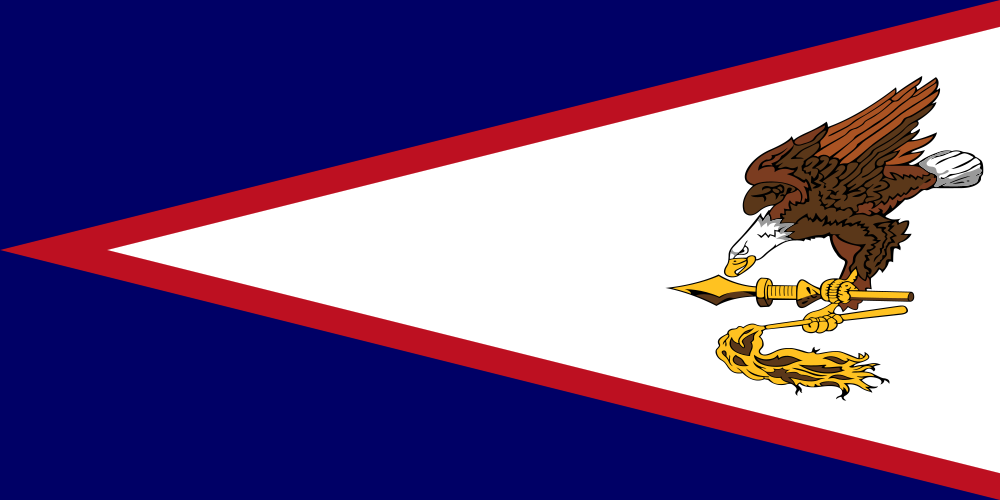
American Samoa
Location Info
- Continent: Oceania
- Country: American Samoa
- Coordinates: -14.271 , -170.702
Trust Info
Verified Information
🌍 Continents


Overview
American Samoa is an unincorporated territory of the United States located in the South Pacific Ocean, approximately halfway between Hawaii and New Zealand. It consists of five rugged, volcanic islands and two coral atolls: Tutuila, Aunu'u, Ofu, Olosega, Ta'u, Rose Atoll, and Swains Island. The capital, Pago Pago, is situated on Tutuila and features one of the deepest natural harbors in the South Pacific, sheltered by high volcanic peaks.
The territory is known for its deeply rooted Polynesian traditions, guided by the 'Fa'a Samoa' or the Samoan Way. Historically, the islands were inhabited by Lapita-descendant Polynesians for over 3,000 years before becoming a US territory in 1900. Today, the economy is primarily driven by the tuna canning industry and financial support from the US federal government, while the local population maintains a unique status as US nationals.
Truth & Facts
| Total Area | 199 square kilometers |
| Coastline | 116 kilometers |
| Total Population | 49,710 (2020 Census) |
| Ethnic Groups | Pacific Islander 92.6% (Samoan 88.9%), Asian 3.6%, Mixed 2.7% |
| Political Status | Unincorporated Unorganized Territory |
| Capital | Pago Pago |
| Settlement | Circa 1000 BCE |
| Cession to USA | April 17, 1900 (Tutuila); 1904 (Manu'a) |
| Primary Industry | Tuna Canning |
| Currency | US Dollar (USD) |
| Main Roads | 150 kilometers of paved roads |
| Literacy Rate | 97% |
| Higher Education | American Samoa Community College (ASCC) |
| Main Hospital | LBJ Tropical Medical Center |
| Social System | Matai (Chieftain) System |
| Major Park | National Park of American Samoa |
| Marine Sanctuary | National Marine Sanctuary of American Samoa |
| International Airport | Pago Pago International Airport (PPG) |
| Submarine Cable | Hawaiki Cable |
| Law Enforcement | American Samoa Department of Public Safety |
| Legislature | Fono (Bicameral) |
| Regional Membership | Pacific Community (SPC) |
| Utility Provider | American Samoa Power Authority (ASPA) |
| GDP (PPP) | $658 million (2020 est.) |
| Official Languages | Samoan and English |
| Predominant Religion | Christianity (98%) |
📑 Table of Contents
Overview
American Samoa is a South Pacific territory consisting of seven islands and atolls. It is the only United States territory located south of the Equator. The main island of Tutuila is the center of government and commerce, while the Manu'a islands retain a more traditional agrarian lifestyle. The territory is defined by its dramatic volcanic landscape and deep cultural heritage.
- Capital: Pago Pago
- Status: Unincorporated US Territory
- Region: Polynesia
- Main Islands: Tutuila, Ofu, Olosega, Ta'u
- Total Land Area: 199 km²
History
The history of American Samoa began with the arrival of Polynesian settlers around 1000 BCE. These early inhabitants developed a complex social structure known as the Matai system. European contact began in the 18th century, but the islands remained largely independent until the late 19th century when international interests in the harbor of Pago Pago grew.
- 1899: Tripartite Convention divides the Samoan islands between the US and Germany.
- 1900: Local chiefs of Tutuila sign the Deed of Cession.
- 1904: Chiefs of Manu'a formally cede their islands to the US.
- 1900-1951: The US Navy administers the territory.
- 1951: Administration transferred to the Department of the Interior.
Geography
The geography of American Samoa is characterized by steep volcanic peaks rising sharply from the ocean. Tutuila is the largest island, featuring the distinctive Rainmaker Mountain. The Manu'a group includes the islands of Ofu and Olosega, which are connected by a bridge over a shallow coral reef. Rose Atoll is an uninhabited wildlife refuge at the easternmost point of the territory.
| Island | Type | Key Feature |
|---|---|---|
| Tutuila | Volcanic | Pago Pago Harbor |
| Ofu | Volcanic | Pristine Coral Reefs |
| Rose Atoll | Coral Atoll | Marine Wildlife Refuge |
Climate & Weather
The territory experiences a tropical rainforest climate, with high humidity and consistent temperatures throughout the year. There are two distinct seasons: the wet season from October to May and the slightly cooler dry season from June to September. Heavy rainfall is common, particularly in the mountainous regions near Pago Pago.
- Average Temp: 24°C to 30°C
- Annual Rainfall: Over 3,000 mm in some areas
- Cyclone Season: November to April
Population & Demographics
As of the 2020 Census, the population of American Samoa is approximately 49,710. The population has seen a decline due to migration to the mainland United States for employment and education. The vast majority of the population is ethnically Samoan and identifies as Pacific Islander. Most residents are bilingual in Samoan and English.
- Ethnic Samoan: ~89%
- US Nationals: ~90%
- Urban Population: 87% (primarily around Tutuila)
Culture & Lifestyle
Culture in American Samoa is centered on 'Fa'a Samoa' (the Samoan Way), which emphasizes respect for elders, community cooperation, and the Matai system of chieftainship. Family life is focused on the 'Aiga' (extended family), and communal land ownership is a critical aspect of social stability. Religion plays a major role in daily life, with most villages observing evening prayers.
- Matai: Traditional family leaders
- Ava Ceremony: Formal ritual with a traditional beverage
- Siva: Traditional Samoan dance
Festivals & Events
Public holidays and festivals often blend American traditions with Samoan culture. Flag Day, celebrated on April 17, is the most significant event, commemorating the first raising of the US flag in the territory. The event features Fautasi (longboat) racing, traditional dancing, and choral singing competitions.
- Flag Day (April 17)
- Manu'a Day (July 16)
- Teuila Festival
Food & Cuisine
Traditional Samoan cuisine relies heavily on local ingredients like coconut, taro, bananas, and seafood. Food is traditionally prepared in an 'Umu' (above-ground earth oven). Modern diets also include imported American processed foods, contributing to high rates of obesity in the territory. Fresh fish, particularly tuna, is a staple.
- Palusami: Taro leaves with coconut cream
- Oka: Raw fish marinated in citrus and coconut
- Taro: Main carbohydrate staple
Economy & Industries
The economy of American Samoa is highly specialized, with the tuna canning industry serving as the primary private-sector driver. The territory's status as a US jurisdiction provides trade advantages for exports to the mainland. Government employment is the other major pillar of the economy, supported by federal grants and local taxes.
| Industry | Status |
|---|---|
| Tuna Canning | Primary Export |
| Government | Largest Employer |
| Tourism | Emerging Sector |
Cost of Living
The cost of living is generally lower than on the US mainland for local products, but imported goods are significantly more expensive due to shipping costs. Housing is often communal and tied to family land, though modern rental housing is available in urban areas. Utilities like electricity can be costly as they are primarily generated from imported fuel.
- Currency: US Dollar
- Import reliance: High for food and fuel
- Sales Tax: No general sales tax
Employment & Business
The American Samoa Government and the StarKist tuna cannery are the two largest employers in the territory. Small businesses operate primarily in the retail and service sectors. The business environment is influenced by communal land laws, which generally prohibit the sale of land to non-Samoans, impacting commercial development.
- Unemployment: Varies (approx. 9-11%)
- Minimum Wage: Determined by US federal law
Real Estate & Housing
Real estate in American Samoa is unique because about 90% of the land is communally owned by Aigas (extended families). This land cannot be sold but can be leased with the consent of the Matai. Private individual ownership is limited and concentrated in certain parts of Tutuila. Homes are typically built as 'Fales' or modern concrete structures.
- Land Tenure: Communal ownership
- Restrictions: Limited non-Samoan land acquisition
Transportation & Connectivity
Public transportation on Tutuila is provided by 'aiga buses'—privately owned, brightly decorated trucks with wooden seating. Pago Pago Harbor serves as a major hub for international shipping. Pago Pago International Airport provides air links to Honolulu and Apia, Samoa. Inter-island transport to Manu'a is conducted via small aircraft and government-run ferries.
- Airport: Pago Pago International (Tafuna)
- Transport: Aiga buses, taxis
- Seaport: Pago Pago Harbor
Infrastructure & Utilities
The American Samoa Power Authority (ASPA) manages electricity, water, and solid waste services. Most electricity is diesel-generated, though there are ongoing efforts to integrate solar energy, particularly on the Manu'a islands. Telecommunications are modern, with 4G LTE and fiber-optic connectivity provided through the Hawaiki submarine cable.
- Power: 110V/60Hz (US Standard)
- Water: Sourced from groundwater wells
Education
The territory has a public school system based on the US model, including elementary, middle, and high schools. American Samoa Community College (ASCC) provides vocational and associate degree programs. Many students seek higher education at universities in Hawaii or the US mainland.
- Compulsory Education: Age 6 to 18
- Higher Ed: ASCC in Mapusaga
Healthcare
The primary healthcare provider is the LBJ Tropical Medical Center, a government-operated hospital in Faga'alu. There are also several community health centers located across Tutuila and the Manu'a islands. For specialized care, residents are often referred to medical facilities in Hawaii or New Zealand.
- Main Hospital: LBJ Tropical Medical Center
- Health Issues: High rates of non-communicable diseases
Tourist Attractions
Tourism is a developing sector, with natural beauty and culture being the main draws. The National Park of American Samoa is a highlight, offering tropical rainforest hikes and coral reef diving. Pago Pago Harbor is famous for its scenic mountain backdrop, including the jagged peaks of Mount Alava.
- National Park of American Samoa
- Two Dollar Beach
- Rainmaker Mountain
Things to Do
Outdoor activities dominate the itinerary for visitors. Hiking trails in the National Park lead to secluded beaches and archaeological sites. Snorkeling and diving are popular due to the pristine coral reefs in the Manu'a islands. Cultural experiences, such as visiting traditional villages and watching dance performances, provide insight into local life.
- Hiking Mount Alava
- Snorkeling at Ofu Beach
- Visiting Leone village historic sites
Best Places to Visit
Tutuila is the most accessible island, offering the best infrastructure and scenic drives. For those seeking seclusion, the Manu'a islands (Ofu, Olosega, and Ta'u) offer some of the most beautiful and untouched beaches in the world. The village of Vaitogi is known for its dramatic sea cliffs and local legends.
| Place | Highlight |
|---|---|
| Ofu Beach | White Sand & Coral |
| Pago Pago | Deep Harbor & Markets |
| Tula | Easternmost Point |
Travel Guide
Traveling to American Samoa requires preparation, as flights are limited. US citizens do not need a passport to enter, but some form of official government ID is required; however, a passport is recommended for transit through other countries. The territory uses the US dollar and standard US power outlets.
- Visa: US citizens don't need visa; others check requirements
- Language: English is widely understood
Nearby Places
The closest neighbor is the independent nation of Samoa (Western Samoa), located just 80 kilometers to the west. Other nearby island nations include Tonga, Niue, and the Cook Islands. Fiji and Hawaii are the nearest major hubs for international travel and commerce.
- Samoa (Independent)
- Tokelau
- Tonga
Environment & Nature
The islands are home to unique flora and fauna, including the Samoan flying fox and various endemic bird species. The marine environment is highly diverse, featuring over 900 species of fish and 250 species of coral. Protection efforts are managed through the National Park and various marine sanctuaries.
- Wildlife: Flying foxes, sea turtles
- Protections: Rose Atoll Marine National Monument
Government & Administration
The government is a presidential representative democratic dependency. The Governor is the head of government, and the legislature (Fono) follows a bicameral system. While the territory is under the jurisdiction of the US Department of the Interior, it maintains its own customs and immigration system.
- Governor: Locally elected
- Representation: One non-voting delegate in US Congress
Safety & Public Services
American Samoa is generally safe for residents and visitors, with low violent crime rates. Safety concerns are primarily environmental, including the risk of tsunamis and tropical cyclones. Public services like the police and fire departments are modeled after US systems.
- Emergency: Dial 911
- Water Safety: Boil water notices occur occasionally
Best Time to Visit
The best time to visit is during the dry season, from June to September, when rainfall is lower and humidity is more manageable. This period also coincides with several cultural festivals. Avoid the peak of cyclone season from December to March if possible.
- Peak Season: June - August
- Off-Peak: December - February
Local Business Directory
Most local businesses are concentrated in the Tafuna and Pago Pago areas on Tutuila. This includes retail stores, car rentals, and tour operators. The hospitality sector consists of a few hotels and several smaller guest houses, particularly in the more remote islands.
- Hotels: Located primarily in Pago Pago and Tafuna
- Markets: Fagatogo Square Market
General Information FAQs
Where is American Samoa located?
American Samoa is located in the South Pacific Ocean, about 4,180 kilometers southwest of Hawaii and 1,200 kilometers northeast of Fiji.
What is American Samoa known for?
It is known for its deep-water harbor at Pago Pago, its significant tuna canning industry, and its well-preserved Polynesian culture known as Fa'a Samoa.
Why is American Samoa famous?
It is famous for being the only US territory south of the Equator and for the high number of NFL players per capita produced by the islands.
What country or region is American Samoa part of?
It is an unincorporated territory of the United States, located in the Polynesia region of Oceania.
What is the population of American Samoa?
According to the 2020 US Census, the population is approximately 49,710.
What languages are spoken in American Samoa?
The official languages are Samoan and English. Most residents are bilingual.
What time zone is American Samoa in?
It is in the Samoa Time Zone (SST), which is UTC-11. It does not observe Daylight Saving Time.
What are the key facts about American Samoa?
Key facts include its status as a US territory, its reliance on the tuna industry, and its volcanic geography dominated by the island of Tutuila.
What makes American Samoa unique?
Its unique status allows residents to be US nationals but not necessarily US citizens unless they apply for naturalization or have a parent who is a citizen.
How large is American Samoa in area?
The total land area is approximately 199 square kilometers (about 76 square miles).
History FAQs
What is the history of American Samoa?
It was settled by Polynesians 3,000 years ago, became a US territory in 1900 through deeds of cession by local chiefs, and was managed by the US Navy until 1951.
When was American Samoa established?
As a US territory, it was established in 1900 following the 1899 Tripartite Convention between the US, Germany, and Great Britain.
What major historical events happened in American Samoa?
Major events include the signing of the Deeds of Cession (1900, 1904), the use of the islands as a naval base in WWII, and the transition to civil government in 1951.
Who were important historical figures from American Samoa?
Important figures include the high chiefs who signed the Deeds of Cession, such as Tuitele of Leone and Mauga of Pago Pago.
How has American Samoa developed over time?
It has moved from a subsistence agrarian society to an economy based on industrial tuna processing and government services, while maintaining communal land traditions.
Geography & Environment FAQs
What is the geography of American Samoa?
The islands are mostly volcanic in origin with rugged peaks and narrow coastal plains. Tutuila is the largest island and the site of the capital.
What natural features surround American Samoa?
It is surrounded by coral reefs and deep ocean trenches. The harbor at Pago Pago is a flooded volcanic caldera.
Are there mountains, rivers, or lakes near American Samoa?
Yes, Tutuila has several mountains, the highest being Lata Mountain at 966 meters on Ta'u island. Rivers are mostly small perennial streams.
What is the elevation of American Samoa?
Elevation ranges from sea level to 966 meters at the summit of Lata Mountain on Ta'u island.
What ecosystems exist around American Samoa?
Ecosystems include tropical rainforests, coral reefs, and mangrove swamps.
Climate & Weather FAQs
What is the climate like in American Samoa?
The climate is tropical, hot, and humid with little seasonal temperature variation.
What is the average temperature in American Samoa?
The average year-round temperature is approximately 28°C (82°F).
What is the weather like throughout the year in American Samoa?
Weather is consistently warm. Rainfall is frequent, with the heaviest rains occurring between October and May.
Does American Samoa experience extreme weather?
Yes, it is subject to tropical cyclones (hurricanes) and occasional tsunamis due to tectonic activity in the region.
What is the best time of year to visit American Samoa?
The dry season from June through September is typically considered the best time to visit.
Population & Society FAQs
What is the population density of American Samoa?
Population density is roughly 250 people per square kilometer, though most are concentrated on Tutuila.
What ethnic groups live in American Samoa?
The majority (over 90%) are native Pacific Islanders, predominantly Samoan. There are small minorities of Asians and Caucasians.
What religions are practiced in American Samoa?
The population is predominantly Christian, with large numbers of Congregationalists, Catholics, and Mormons.
What is daily life like in American Samoa?
Daily life revolves around work, church, and extended family commitments. Traditional customs are integrated into modern living.
How diverse is the population of American Samoa?
It is relatively homogeneous ethnically, though there is some diversity among foreign workers in the tuna and retail sectors.
Culture & Traditions FAQs
What cultural traditions are important in American Samoa?
Fa'a Samoa is the core tradition, emphasizing respect for authority and the Matai (chief) leadership system.
What festivals are celebrated in American Samoa?
Major celebrations include Flag Day (April 17), White Sunday, and Christmas.
What cultural landmarks exist in American Samoa?
Landmarks include the traditional 'Fales' (houses) and communal gathering places called 'Malas' in every village.
What traditional clothing or customs are common in American Samoa?
Common clothing includes the 'Lavalava' (sarong) and 'Puletasi' (traditional women's dress).
What arts and crafts are associated with American Samoa?
The islands are known for 'Siapo' (tapa cloth) made from mulberry bark and traditional tattooing called 'Pe'a' for men and 'Malu' for women.
Food & Cuisine FAQs
What foods is American Samoa known for?
It is known for seafood, taro, breadfruit, and dishes cooked in an earth oven (Umu).
What traditional dishes originate from American Samoa?
Dishes include Palusami (taro leaves with coconut cream) and Oka (raw fish salad).
What are the best restaurants in American Samoa?
Popular local eateries are found in Pago Pago and Tafuna, focusing on seafood and American diner-style food.
What local ingredients are commonly used in American Samoa cuisine?
Taro, green bananas, coconut, and fresh ocean fish are staple ingredients.
What food markets or street foods are popular in American Samoa?
The Fagatogo Square Market is the primary place for local produce and street foods like BBQ skewers.
Economy & Business FAQs
What are the main industries in American Samoa?
The main industries are tuna canning (primarily StarKist) and government services.
What economic activities drive the economy of American Samoa?
Exporting canned tuna to the US and federal financial assistance are the primary drivers.
What businesses operate in American Samoa?
Major businesses include the StarKist cannery, telecommunications firms like BlueSky, and local retail and transport companies.
Is American Samoa an important economic center?
It is a regional center for the tuna industry but remains relatively isolated from larger global financial markets.
What are the major exports or products from American Samoa?
Over 90% of exports consist of canned tuna and fish products.
Employment & Jobs FAQs
What job opportunities are available in American Samoa?
Jobs are primarily found in the public sector, the tuna industry, and various service/retail roles.
What are the major employers in American Samoa?
The American Samoa Government (ASG) and StarKist Samoa are the largest employers.
What skills are in demand in American Samoa?
Healthcare professionals, educators, and technicians in the utility and infrastructure sectors are in demand.
Is American Samoa a good place to work?
It offers a unique cultural environment but has a limited job market compared to the US mainland.
What is the unemployment rate in American Samoa?
The unemployment rate historically fluctuates between 9% and 12%.
Cost of Living FAQs
Is American Samoa expensive to live in?
Imported goods are expensive, but housing and local food can be more affordable than in the US mainland.
What is the average cost of living in American Samoa?
It is generally moderate, though electricity costs are significantly higher than the US average.
How much does housing cost in American Samoa?
Most housing is family-owned on communal land; commercial rentals range from $600 to $1,500 per month depending on location.
What are average food and utility costs in American Samoa?
Electricity and water can cost $200-$400 monthly for a household due to fuel imports.
Is American Samoa affordable compared to nearby cities?
It is comparable to Apia, Samoa, but more expensive due to the use of the US dollar and reliance on US-grade imports.
Housing & Real Estate FAQs
What types of housing are available in American Samoa?
Types include modern concrete homes, traditional open-air Fales, and apartment units in urban centers.
What is the average home price in American Samoa?
Home prices are difficult to average due to the communal nature of land; most costs are for construction rather than land purchase.
Is it better to rent or buy property in American Samoa?
Renting is more common for outsiders, as purchasing land is restricted by law to those with at least 50% Samoan blood.
Which neighborhoods are popular in American Samoa?
Tafuna, Leone, and Pago Pago are the most populated and popular areas for residents.
How has the property market changed in American Samoa?
The market has remained stable but faces challenges due to restrictions on land ownership and the lack of traditional mortgages.
Transportation FAQs
How do you get to American Samoa?
Access is primarily via Pago Pago International Airport, with regular flights from Honolulu via Hawaiian Airlines.
What is the nearest airport to American Samoa?
The primary airport is Pago Pago International Airport (PPG).
Does American Samoa have railway connections?
No, there are no railways in American Samoa.
How reliable is public transportation in American Samoa?
Public transport via aiga buses is frequent during the day on Tutuila but limited in the evenings and on weekends.
What major highways or roads connect to American Samoa?
Route 1 is the primary paved road running the length of Tutuila island.
Education FAQs
What schools are located in American Samoa?
There are numerous public and private elementary and high schools throughout the islands.
Are there universities in American Samoa?
The American Samoa Community College is the only institution of higher learning in the territory.
What is the literacy rate in American Samoa?
The literacy rate is high, estimated at approximately 97%.
What educational opportunities exist in American Samoa?
Opportunities include vocational training at the community college and basic K-12 education based on US standards.
Is American Samoa a good place for students?
It offers a safe environment for primary and secondary education, though specialized higher education requires travel to the US mainland.
Healthcare FAQs
What hospitals are available in American Samoa?
The LBJ Tropical Medical Center is the only full-service hospital.
Are there emergency medical services in American Samoa?
Yes, emergency services are available through the hospital and the Department of Public Safety (911).
What healthcare facilities exist in American Samoa?
Facilities include the main hospital and several village-based community health centers.
Is healthcare affordable in American Samoa?
Public healthcare is subsidized by the government for local residents.
Are specialized medical services available in American Samoa?
Specialized services are limited; serious cases are often evacuated to Honolulu or New Zealand.
Tourism & Travel FAQs
What are the top tourist attractions in American Samoa?
Top attractions include the National Park of American Samoa, Ofu Beach, and Mount Alava.
What are the best things to do in American Samoa?
Best activities include hiking, snorkeling, and learning about Samoan culture in local villages.
Is American Samoa worth visiting?
Yes, for travelers seeking untouched natural beauty and an authentic Polynesian experience away from mass tourism.
What landmarks should visitors see in American Samoa?
Visitors should see the Leone church, the historic court building in Fagatogo, and Rainmaker Mountain.
How many days should tourists spend in American Samoa?
Typically, 4 to 7 days is enough to see the main sights of Tutuila and visit the Manu'a islands.
Nearby Places FAQs
What places are near American Samoa worth visiting?
Independent Samoa is the most popular nearby destination.
What cities or towns are close to American Samoa?
Apia, the capital of independent Samoa, is the closest city.
What natural attractions are near American Samoa?
The islands of independent Samoa, such as Savai'i and Upolu, offer more volcanic landscapes and beaches.
What day trips can be taken from American Samoa?
Day trips can be taken to Aunu'u island from Tutuila via a short boat ride.
What famous destinations are within reach of American Samoa?
Fiji and Hawaii are accessible via major flight routes.
Safety FAQs
Is American Samoa safe to live in?
Yes, it is considered very safe with a strong community focus on order and respect.
Is American Samoa safe for tourists?
Yes, tourists generally experience very little crime. Normal precautions should be taken with valuables.
What is the crime rate in American Samoa?
The crime rate is lower than in many similarly sized areas of the US mainland.
What emergency services operate in American Samoa?
The Department of Public Safety (Police) and EMS (Ambulance) are the primary emergency services.
What safety tips should visitors follow in American Samoa?
Respect local customs, stay informed about weather warnings, and be cautious of stray dogs in villages.
Lifestyle & Living FAQs
Is American Samoa a good place to live?
It is ideal for those who enjoy a slow pace of life, strong community ties, and a tropical environment.
What recreational activities are available in American Samoa?
Recreation includes fishing, hiking, rugby, and local village sports.
Is American Samoa family-friendly?
Extremely family-friendly; children are central to Samoan culture.
What outdoor activities are popular in American Samoa?
Hiking, swimming, and boating are the most popular activities.
What makes life enjoyable in American Samoa?
The combination of a relaxed island lifestyle and a unique cultural identity makes life there distinct.
Practical Information FAQs
What travel tips should visitors know about American Samoa?
Dress modestly when visiting villages and always ask permission before taking photos of people or homes.
What local customs should visitors respect in American Samoa?
Observe 'Sā' (evening prayer time) in villages, which usually lasts about 10-20 minutes around sunset.
How accessible is American Samoa for international visitors?
Accessibility is low due to limited flight schedules and distance from major hubs.
What services are available for tourists in American Samoa?
Services include a tourist information center in Pago Pago, several car rental agencies, and local guides.
What important information should travelers know before visiting American Samoa?
Sundays are strictly for church and rest; most businesses are closed, and activities are limited.
Additional Facts FAQs
What is the currency of American Samoa?
The official currency is the US Dollar (USD).
What is the internet quality in American Samoa?
Internet quality has improved significantly with fiber optic cables, though speeds can vary by village.
Are there many hotels in American Samoa?
There are only a handful of hotels, primarily on Tutuila island.
Does American Samoa have many cars?
Most families on Tutuila own a vehicle, leading to significant traffic in the Pago Pago area during peak hours.
Is American Samoa a tax haven?
No, it has its own tax system and is under US federal oversight for many financial regulations.