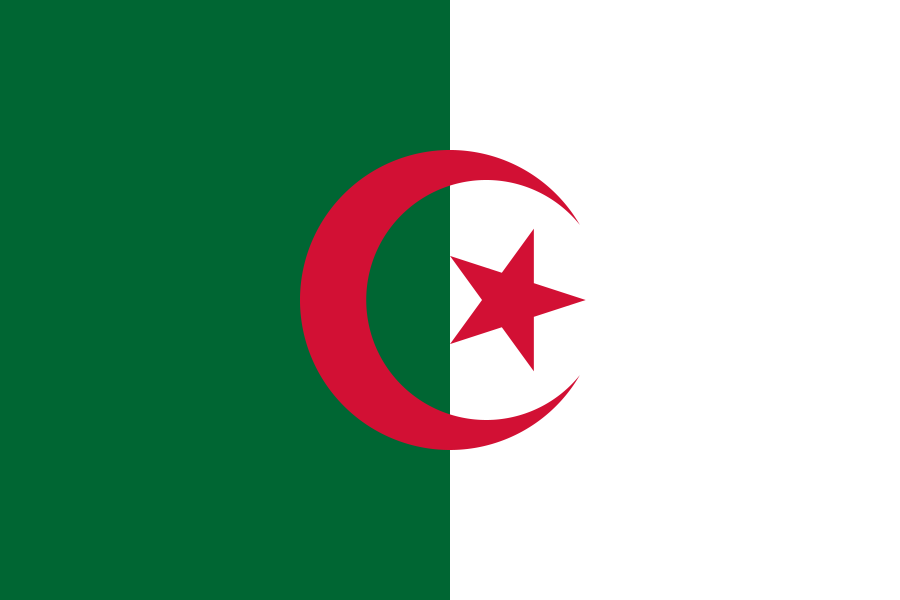
Algeria
Location Info
- Continent: Africa
- Country: Algeria
- Coordinates: 28.0339 , 1.6596
Trust Info
Verified Geographic and Statistical Data 2026
🌍 Continents
Overview
Algeria, officially the People's Democratic Republic of Algeria, is the largest country in Africa and the Mediterranean basin. Located in North Africa, it features a diverse landscape ranging from the fertile coastal plains and Atlas Mountains in the north to the vast expanse of the Sahara Desert, which covers over 80% of its territory. The nation serves as a strategic bridge between Africa, Europe, and the Arab world, with its capital, Algiers, acting as a major Mediterranean hub.
Historically, Algeria has been a crossroads of civilizations, including the Numidians, Romans, Ottomans, and French. After a long struggle for independence that ended in 1962, the country established itself as a major regional power. Today, its economy is significantly driven by hydrocarbons, while recent state-led initiatives focus on infrastructure expansion and economic diversification to support its growing population of over 48 million people.
Truth & Facts
| Total Area | 2,381,741 sq km |
| Coastline Length | 1,200 km |
| Estimated Population | 48,472,000 |
| Median Age | 28.8 years |
| Capital City | Algiers |
| Official Languages | Arabic, Tamazight |
| Independence Date | July 5, 1962 |
| GDP (PPP) 2026 Estimate | $915.79 billion |
| Hydrocarbon Share of Exports | >90% |
| Railway Expansion 2026 | $10 billion allocation |
| Student Enrollment | 13 million |
| Life Expectancy | 78.6 years |
| Primary Religion | Sunni Islam (99%) |
| Number of Sites | 7 |
| Sahara Coverage | 80% of territory |
| East-West Highway | 1,216 km |
| Internet Users | Over 27 million |
| Emergency Number | 14 (Fire), 17 (Police) |
| Voting Age | 18 years |
| OPEC Entry | 1969 |
| Desalination Plants | 11 large-scale stations |
| Nominal GDP Rank | 45th Globally |
| National Park count | 11 |
| Main International Airport | Houari Boumédiene Airport |
📑 Table of Contents
Overview of Algeria
Algeria is the largest sovereign state in Africa, situated on the Mediterranean coast. It shares borders with Tunisia, Libya, Niger, Mali, Mauritania, and Morocco. The nation is characterized by its dual identity as a Mediterranean coastal power and a vast Saharan territory.
The country is a key player in the global energy market due to its significant oil and natural gas reserves. It has a youthful population and is undergoing a period of infrastructure modernization as of 2026.
- Official Name: People's Democratic Republic of Algeria
- Capital: Algiers
- Largest Country in Africa and the Arab World
- Strategic Mediterranean location
- Member of OPEC and the African Union
History of the Nation
Algeria has a long history dating back to the Berbers and Numidians. It was a significant part of the Roman Empire, evident in well-preserved ruins like Timgad. Following the 7th-century Islamic conquest, it became a center of Islamic scholarship and trade under various dynasties.
The 19th and 20th centuries were marked by French colonization and a brutal eight-year war for independence. Since 1962, Algeria has functioned as a sovereign republic, overcoming internal conflicts in the 1990s to achieve regional stability.
| Era | Key Event |
|---|---|
| Ancient | Kingdom of Numidia |
| 16th Century | Ottoman Regency of Algiers |
| 1830 | Beginning of French Occupation |
| 1954-1962 | War of Independence |
| 1962 | Sovereignty Proclaimed |
Geography and Landscape
The geography of Algeria is divided into three main zones: the northern coastal plains, the Atlas Mountains, and the Saharan interior. The Tell Atlas range runs parallel to the coast, providing fertile land for agriculture.
The Sahara Desert occupies more than four-fifths of the country's land area. This region includes the Ahaggar (Hoggar) Mountains and the Tassili n'Ajjer plateau, known for its unique rock formations and prehistoric art.
- Highest Peak: Mount Tahat (2,908 m)
- Main River: Chelif River
- Major Ranges: Tell Atlas, Saharan Atlas
- Desert Coverage: ~80%
- Arable Land: Mostly in the northern Mitidja plain
Climate and Weather
Algeria experiences two primary climate types. The northern coastal region has a Mediterranean climate with mild, wet winters and hot, dry summers. Average temperatures in Algiers range from 15°C in January to 30°C in August.
The interior Saharan region has an arid desert climate. It experiences extreme temperature fluctuations, with daytime highs often exceeding 45°C in summer and nighttime lows dropping significantly in winter. Precipitation is scarce in the south.
| Region | Climate Type | Avg Summer Temp |
|---|---|---|
| North (Coastal) | Mediterranean | 25°C - 32°C |
| High Plateaus | Semi-Arid | 28°C - 38°C |
| South (Sahara) | Arid Desert | 40°C - 50°C |
Population and Demographics
Algeria's population is estimated at 48.4 million in 2026. About 90% of the population lives in the northern third of the country. The ethnic makeup is predominantly Arab-Berber, with a significant minority identifying primarily as Amazigh (Berber).
The population is young, with a median age under 30. Urbanization is high, with over 75% of people living in cities like Algiers, Oran, and Constantine.
- Official Languages: Arabic, Tamazight
- Secondary Language: French
- Religion: 99% Sunni Islam
- Urban Population: 75%
- Population Growth: ~1.5% annually
Culture and Lifestyle
Algerian culture is a rich tapestry of Berber, Arab, and French influences. This is reflected in the country's music, particularly Raï, which originated in Oran and gained global popularity. Traditional crafts like carpet weaving and pottery remain vital in rural areas.
Hospitality is a core cultural value, and social life often revolves around family gatherings and coffee houses. The traditional dress includes the Burnous for men and various regional Amazigh garments for women.
Festivals and National Events
National holidays in Algeria celebrate historical milestones and religious events. Independence Day on July 5th is the most significant civil holiday, marked by parades and cultural displays.
Religious festivals follow the Islamic calendar, including Eid al-Fitr and Eid al-Adha. Regional festivals like the Sbeiba in Djanet celebrate local Amazigh heritage and history.
- Independence Day (July 5)
- Revolution Day (November 1)
- Eid al-Fitr
- Eid al-Adha
- Mouloud (Prophet's Birthday)
Food and Cuisine
Algerian cuisine is Mediterranean at its core, with heavy use of grains, vegetables, and spices. Couscous is the national dish, typically served with lamb or chicken and a variety of vegetables. Spices like cumin, coriander, and cinnamon are staples.
Street food is popular in urban centers, featuring items like Burek (savory pastry) and Mechoui (roasted lamb). Mint tea is the most common beverage, served throughout the day.
- National Dish: Couscous
- Popular Pastry: Burek
- Traditional Bread: Kesra
- Signature Sauce: Harissa
- Common Dessert: Baklawa
Economy and Industries
The Algerian economy is dominated by the hydrocarbon sector, which accounts for roughly 95% of export earnings. Algeria is the largest natural gas producer in Africa and a major supplier to the European Union via subsea pipelines.
The government is currently prioritizing diversification into agriculture, mining (phosphate and iron ore), and renewable energy. Large-scale solar projects are underway in the Saharan region to capitalize on high solar irradiance.
| Sector | Contribution to GDP |
|---|---|
| Hydrocarbons | ~20% |
| Agriculture | ~12% |
| Services | ~45% |
| Industry | ~23% |
Cost of Living
The cost of living in Algeria is generally lower than in European and North American countries. Basic necessities like bread, milk, and fuel are subsidized by the government, making them highly affordable for residents.
Housing costs vary significantly between the capital Algiers and smaller cities. Import goods and electronics can be expensive due to tariffs and currency exchange rates.
- Subsidized Items: Fuel, Bread, Electricity
- Affordability: High for local products
- Housing: Moderate in urban centers
- Import Goods: Higher cost
Employment and Business
The state remains the largest employer in Algeria, particularly in administration and the energy sector. However, there is a growing push to support private entrepreneurship and small businesses to address youth unemployment.
Key business opportunities exist in telecommunications, construction, and agricultural technology. Foreign investment is governed by specific regulations, though recent reforms have aimed to ease these for non-strategic sectors.
Real Estate and Housing
Real estate in Algeria has seen significant government intervention, with large-scale social housing programs (AADL) designed to provide affordable apartments to middle-income families. Modern high-rise developments are common in Algiers.
Private luxury real estate is concentrated in neighborhoods like Hydra and El Biar in the capital. Land ownership in rural areas is often agricultural and subject to different zoning laws.
Transportation and Connectivity
Algeria possesses a well-developed transportation network in the north. The East-West Highway connects major cities from the border of Tunisia to Morocco. The national rail network (SNTF) is currently being expanded with high-speed and mining-focused lines.
Algiers is the primary air hub, with Houari Boumédiene Airport offering extensive international connections. Domestic flights are crucial for reaching remote Saharan oases and industrial sites.
- East-West Highway: 1,200+ km
- National Rail: Extensive expansion in 2026
- Main Airport: Algiers Houari Boumédiene
- Public Transit: Metro and Tramways in Algiers
Infrastructure and Utilities
Algeria has invested heavily in water security through one of the world's largest desalination programs, addressing the challenges of aridity. Electricity is primarily generated from natural gas, with almost 100% national coverage.
Internet and mobile connectivity are widespread, with 4G/LTE available in most urban areas and ongoing 5G trials in major commercial hubs as of 2026.
Education System
Education is a high priority, with the state providing free schooling from primary level through university. The system is modeled on the French structure, though Arabic is the primary language of instruction at the lower levels.
Major universities include the University of Algiers and the University of Science and Technology Houari Boumediene (USTHB). There is an increasing focus on technical and vocational training.
- Literacy Rate: ~80%
- Free Education: Primary to University
- Language: Arabic (National), French (Higher Ed)
- Major Hub: Algiers
Healthcare Services
Algeria provides a public healthcare system that is accessible to all citizens for free or at a low cost. Major public hospitals (CHU) are located in all provincial capitals. The private medical sector is growing rapidly, offering specialized services.
Healthcare indicators like infant mortality and life expectancy have improved significantly over the last two decades due to expanded vaccination programs and rural health clinics.
Top Tourist Attractions
Algeria offers diverse attractions ranging from Roman ruins to Saharan landscapes. The ruins of Timgad and Djémila are among the best-preserved Roman cities in the world. The Casbah of Algiers provides a glimpse into Ottoman urban planning.
The Tassili n'Ajjer National Park is a highlight for desert enthusiasts, featuring thousands of prehistoric rock carvings and dramatic sandstone arches.
- Casbah of Algiers (UNESCO)
- Roman City of Timgad
- Roman City of Djémila
- M'Zab Valley Oases
- Tipasa Archaeological Site
Things to Do
Visitors can engage in a variety of activities depending on the region. In the north, Mediterranean beaches and coastal hiking are popular. The mountainous Kabylie region offers trekking and traditional village experiences.
In the south, Saharan expeditions and camping in the desert are primary draws. Cultural enthusiasts can explore traditional markets (souks) and attend music festivals.
Best Places to Visit
Algiers, the capital, is a must-visit for its blend of colonial and traditional architecture. Constantine, the 'City of Bridges,' offers dramatic views over the Rhumel River gorge. Ghardaïa in the M'Zab valley is famous for its unique architecture.
Oran, known as the 'Radiant City,' is a hub for culture and night life. Djanet serves as the gateway to the deep Sahara and the rock art of Tassili.
| City | Best For |
|---|---|
| Algiers | History & Museums |
| Constantine | Dramatic Scenery |
| Ghardaïa | Unique Architecture |
| Oran | Music & Coastline |
| Djanet | Sahara Trekking |
General Travel Information
Traveling to Algeria requires a visa for most foreign nationals. International flights arrive primarily in Algiers. Within the country, Air Algérie operates a frequent domestic network connecting the north to the Saharan oases.
It is important to respect local customs, particularly regarding dress in rural and religious areas. French is the most useful foreign language for visitors.
Nearby Regions
Algeria is centrally located in North Africa. To the east lie Tunisia and Libya, while Morocco is to the west. To the south, the country borders the Sahel region, including Niger and Mali.
The close proximity to Southern Europe makes Algiers a short flight from cities like Marseille, Barcelona, and Rome, facilitating strong cultural and economic ties across the Mediterranean.
Environment and Nature
Despite the dominance of the desert, northern Algeria contains diverse ecosystems. The Mediterranean forests house the endangered Barbary macaque. The country has 11 national parks protecting these habitats.
Environmental challenges include desertification, where the Sahara expands northward, and limited freshwater resources. The 'Green Dam' project is a major initiative to plant trees and halt sand encroachment.
Government and Administration
Algeria is divided into 58 provinces (wilayas), each led by a Wali (governor). The President is the head of state, while the Prime Minister manages the government. The legal system is based on French and Islamic law.
The administrative structure is centralized in Algiers, though recent years have seen efforts to decentralize and grant more power to provincial authorities to manage local development.
Safety and Public Services
Safety in major cities is comparable to other Mediterranean hubs, with a strong police presence. For travel into remote Saharan regions, specialized permits and local guides are often required for security and navigation.
Public services like electricity, water, and trash collection are managed by state-owned companies such as Sonelgaz and Seaal.
Best Time to Visit
The best time to visit northern Algeria is during the spring (March to May) and autumn (September to October) when temperatures are mild and the landscape is green. Summers can be quite hot and humid along the coast.
For the Sahara, winter (November to February) is the ideal time, as daytime temperatures are comfortable, although nights can be freezing. Summer in the desert should be avoided by most travelers.
Local Business and Industry
Business activity is centered in Algiers and the port cities of Oran and Skikda. Sonatrach, the state-owned oil and gas company, is the largest enterprise in Africa and the backbone of the national economy.
The retail sector is transitioning from traditional markets to modern shopping centers, while the tech sector is seeing growth in Algiers' Sidi Abdellah technology park.
General Information FAQs
Where is Algeria located?
Algeria is located in North Africa. It borders the Mediterranean Sea to the north, Tunisia and Libya to the east, Niger to the southeast, Mali and Mauritania to the southwest, and Morocco to the west.
What is Algeria known for?
Algeria is known for being the largest country in Africa, its vast Saharan landscape, significant oil and gas reserves, and its ancient Roman ruins like Timgad and Djémila.
Why is Algeria famous?
It is famous for its long struggle for independence from France, its unique Raï music, and UNESCO heritage sites including the rock art of Tassili n'Ajjer.
What country or region is Algeria part of?
Algeria is part of the Maghreb region of North Africa and is a member of the African Union and the Arab League.
What is the population of Algeria?
As of 2026, the estimated population of Algeria is approximately 48.4 million people.
What languages are spoken in Algeria?
Arabic and Tamazight are the official languages. French is also widely spoken and used in business, administration, and higher education.
What time zone is Algeria in?
Algeria operates on Central European Time (CET), which is UTC+1.
What are the key facts about Algeria?
Key facts include its status as Africa's largest country, its reliance on hydrocarbons, its capital Algiers, and its 58 administrative provinces.
What makes Algeria unique?
Algeria is unique due to its combination of Mediterranean coastal culture and deep Saharan traditions, along with some of the best-preserved Roman architecture outside of Italy.
How large is Algeria in area?
Algeria covers an area of approximately 2,381,741 square kilometers (919,595 square miles).
History FAQs
What is the history of Algeria?
Algeria's history spans from ancient Berber kingdoms and Roman rule to the Islamic conquest, Ottoman period, French colonization, and the modern independent republic established in 1962.
When was Algeria established?
The modern People's Democratic Republic of Algeria was established on July 5, 1962, following its independence from France.
What major historical events happened in Algeria?
Major events include the Numidian Wars, the founding of the Regency of Algiers in the 16th century, the French invasion of 1830, and the Algerian War of Independence (1954–1962).
Who were important historical figures from Algeria?
Key figures include the Berber king Massinissa, the anti-colonial leader Emir Abd el-Kader, and independence leaders such as Ahmed Ben Bella and Houari Boumédiene.
How has Algeria developed over time?
Algeria has transitioned from a colonial territory to a leading regional power, nationalizing its energy resources in the 1970s and modernizing its infrastructure in the 21st century.
Geography & Environment FAQs
What is the geography of Algeria?
The geography features coastal plains, the Tell and Saharan Atlas mountain ranges, and the vast Sahara Desert interior.
What natural features surround Algeria?
It is bounded by the Mediterranean Sea to the north and the Sahara Desert to the south, with various mountain ranges forming natural barriers.
Are there mountains, rivers, or lakes near Algeria?
Yes, the Atlas Mountains run through the north, and the Ahaggar Mountains are in the south. The Chelif is the longest river. Seasonal salt lakes called 'chotts' are common in the high plateaus.
What is the elevation of Algeria?
Elevation varies from below sea level in certain chotts to 2,908 meters at Mount Tahat in the Ahaggar Mountains.
What ecosystems exist around Algeria?
Ecosystems include Mediterranean forests and scrublands, semi-arid steppes, and hyper-arid desert environments.
Climate & Weather FAQs
What is the climate like in Algeria?
The north has a Mediterranean climate (warm summers, mild winters), while the south is hot and arid desert.
What is the average temperature in Algeria?
In the north, averages are around 15°C in winter and 30°C in summer. In the Sahara, summer averages can exceed 40°C.
What is the weather like throughout the year in Algeria?
Winters in the north are cool and rainy, sometimes with snow in the mountains. Summers are dry and hot nationwide.
Does Algeria experience extreme weather?
Yes, the Sahara experiences extreme heat and sandstorms (sirocco). The north can occasionally experience flooding or drought.
What is the best time of year to visit Algeria?
Spring (March-May) and Autumn (September-October) are best for the north. Winter is ideal for visiting the Sahara.
Population & Society FAQs
What is the population density of Algeria?
The average density is low (~20 people per km²), but it is very high in the north and very low in the Sahara.
What ethnic groups live in Algeria?
The vast majority are Arab-Berber. Major Berber subgroups include the Kabyles, Chaouis, Mozabites, and Tuaregs.
What religions are practiced in Algeria?
Sunni Islam is practiced by 99% of the population. There are small Christian and Jewish minorities.
What is daily life like in Algeria?
Daily life blends traditional family-centric values with modern urban living. Coffee culture, football, and religious observances are central.
How diverse is the population of Algeria?
The population is linguistically and culturally diverse, with a mix of Mediterranean and Saharan influences across various regions.
Culture & Traditions FAQs
What cultural traditions are important in Algeria?
Hospitality, traditional music (Raï and Chaabi), and craftsmanship in textiles and jewelry are highly valued.
What festivals are celebrated in Algeria?
Major festivals include Independence Day, the start of the Revolution, and Islamic holidays like Eid al-Fitr and Mouloud.
What cultural landmarks exist in Algeria?
The Casbah of Algiers, the monument to the martyrs (Maqam Echahid), and the ancient mosques of Tlemcen and Algiers.
What traditional clothing or customs are common in Algeria?
Common garments include the Burnous, Karakou, and the Djellaba. Customs include the tea ceremony and communal dining.
What arts and crafts are associated with Algeria?
Algeria is known for Berber rugs, ceramics, silver jewelry from Kabylie, and intricate leatherwork.
Food & Cuisine FAQs
What foods is Algeria known for?
It is best known for Couscous, Tajines, and various honey-based pastries like Baklawa and Makroudh.
What traditional dishes originate from Algeria?
Dishes include Chorba (soup), Chakchouka, Burek, and Rechta (noodles with chicken).
What are the best restaurants in Algeria?
The best traditional dining is often found in Algiers' Casbah or upscale districts like Hydra, focusing on authentic grilled meats and couscous.
What local ingredients are commonly used in Algeria cuisine?
Common ingredients include semolina, chickpeas, lamb, dates, olive oil, and various spices like ras el hanout.
What food markets or street foods are popular in Algeria?
Marantz (merguez sausages), frites-omelette sandwiches, and 'Karantika' (chickpea cake) are popular street foods.
Economy & Business FAQs
What are the main industries in Algeria?
The primary industry is oil and gas, followed by mining, agriculture, and cement manufacturing.
What economic activities drive the economy of Algeria?
Energy exports are the main driver, but there is increasing activity in agricultural exports and public infrastructure construction.
What businesses operate in Algeria?
Large state-owned firms like Sonatrach (energy) and Sonelgaz (utilities) dominate, alongside increasing private firms in food processing and telecom.
Is Algeria an important economic center?
Yes, it is one of the largest economies in Africa and a vital energy supplier to Southern Europe.
What are the major exports or products from Algeria?
Crude oil, natural gas, refined petroleum products, fertilizers, and dates.
Employment & Jobs FAQs
What job opportunities are available in Algeria?
Opportunities are strongest in the energy sector, engineering, construction, and public administration.
What are the major employers in Algeria?
The Algerian state, Sonatrach, and large construction companies are the primary employers.
What skills are in demand in Algeria?
Technical skills in petroleum engineering, IT, renewable energy, and agricultural technology are increasingly in demand.
Is Algeria a good place to work?
It offers stability and strong compensation in the energy sector, though the labor market for general youth remains competitive.
What is the unemployment rate in Algeria?
The unemployment rate has hovered around 10-12%, with higher rates among the youth population.
Cost of Living FAQs
Is Algeria expensive to live in?
Generally no; it is considered affordable due to high government subsidies on energy and food.
What is the average cost of living in Algeria?
The cost is low for local goods, though imported luxury items and electronics can be expensive.
How much does housing cost in Algeria?
Rent for a standard apartment in Algiers can range from 30,000 to 70,000 DZD depending on the area.
What are average food and utility costs in Algeria?
Utilities are very cheap due to subsidies. Monthly food costs for a family are relatively low compared to global averages.
Is Algeria affordable compared to nearby cities?
It is significantly more affordable than cities in Southern Europe or the Gulf states.
Housing & Real Estate FAQs
What types of housing are available in Algeria?
Available housing ranges from state-built apartment complexes to private villas and traditional homes in the Casbah.
What is the average home price in Algeria?
Prices vary widely, with prime real estate in Algiers being quite costly, while rural properties are very affordable.
Is it better to rent or buy property in Algeria?
Many locals prefer to buy through government housing programs, while expats and mobile professionals typically rent.
Which neighborhoods are popular in Algeria?
In Algiers, popular areas include Hydra, El Biar, and the newer developments in Sidi Abdellah.
How has the property market changed in Algeria?
The market has seen an increase in modern residential towers and integrated 'new cities' to manage urban growth.
Transportation FAQs
How do you get to Algeria?
Most international visitors arrive via Houari Boumédiene Airport in Algiers. Ferries also connect Algiers and Oran to ports in France and Spain.
What is the nearest airport to Algeria?
As a country, its primary hub is Algiers Houari Boumédiene Airport (ALG).
Does Algeria have railway connections?
Yes, SNTF operates a passenger and freight rail network connecting major northern cities.
How reliable is public transportation in Algeria?
In Algiers, the metro and tramways are very reliable. In other areas, buses and collective taxis (inter-wilaya) are common.
What major highways or roads connect to Algeria?
The East-West Highway and the Trans-Saharan Highway are the most critical road links.
Education FAQs
What schools are located in Algeria?
There is an extensive network of public primary, middle, and high schools throughout all 58 provinces.
Are there universities in Algeria?
Yes, major universities exist in Algiers, Oran, Constantine, and Sétif, focusing on medicine, law, and engineering.
What is the literacy rate in Algeria?
The literacy rate is approximately 80%, with higher rates among the younger generations.
What educational opportunities exist in Algeria?
Free higher education and increasing technical training programs in sectors like energy and agriculture.
Is Algeria a good place for students?
It offers a stable environment and free education, making it a hub for students from across the Maghreb and Sub-Saharan Africa.
Healthcare FAQs
What hospitals are available in Algeria?
Major public university hospitals (CHU) and an increasing number of private clinics in urban areas.
Are there emergency medical services in Algeria?
Yes, public emergency services are accessible by dialing 14 or 17, and private ambulances are also available.
What healthcare facilities exist in Algeria?
Facilities include specialized heart and cancer centers, general public hospitals, and local health clinics (polycliniques).
Is healthcare affordable in Algeria?
Public healthcare is free or heavily subsidized for citizens. Private care is paid out-of-pocket or via insurance.
Are specialized medical services available in Algeria?
Yes, specialized care is available in major cities, though some complex cases may still seek treatment abroad.
Tourism & Travel FAQs
What are the top tourist attractions in Algeria?
Top attractions include the Roman ruins of Timgad, the Casbah of Algiers, the M'Zab Valley, and Tassili n'Ajjer National Park.
What are the best things to do in Algeria?
Explore ancient history, go on Saharan desert treks, visit Mediterranean beaches, and enjoy traditional culinary tours.
Is Algeria worth visiting?
Yes, for travelers interested in history, unique architecture, and untouched desert landscapes, it is one of the most rewarding destinations in Africa.
What landmarks should visitors see in Algeria?
The Maqam Echahid (Martyr's Memorial), the Great Mosque of Algiers, and the Arch of Trajan in Timgad.
How many days should tourists spend in Algeria?
A typical tour takes 10-14 days to see the major northern cities and spend a few days in the Sahara.
Nearby Places FAQs
What places are near Algeria worth visiting?
Tunisia's coastal resorts and Morocco's historic cities are nearby, though land borders with Morocco are currently closed.
What cities or towns are close to Algeria?
Tunis and Casablanca are the closest major regional hubs, and Marseille is just across the Mediterranean.
What natural attractions are near Algeria?
The wider Sahara Desert spans into neighboring Libya and Niger, and the Mediterranean Sea is shared with Southern Europe.
What day trips can be taken from Algeria?
From Algiers, one can take day trips to the ruins of Tipaza or the mountains of Chréa.
What famous destinations are within reach of Algeria?
The historic cities of Southern Europe and the other Maghreb nations are within a 1-2 hour flight.
Safety FAQs
Is Algeria safe to live in?
Major cities are safe with low rates of violent crime, though standard urban precautions should be taken.
Is Algeria safe for tourists?
Yes, tourists are generally well-received. Travel to the deep south usually requires accompaniment by authorized guides for safety.
What is the crime rate in Algeria?
The crime rate is relatively low compared to many other large nations, with a heavy security presence in public areas.
What emergency services operate in Algeria?
The Police, Gendarmerie, and Civil Protection (Fire/Ambulance) are the primary emergency responders.
What safety tips should visitors follow in Algeria?
Stay informed on local news, dress modestly in traditional areas, and use registered tour operators for desert travel.
Lifestyle & Living FAQs
Is Algeria a good place to live?
It offers a low cost of living, rich culture, and beautiful geography, though it can have bureaucratic hurdles for expats.
What recreational activities are available in Algeria?
Football (the national sport), hiking in the Atlas mountains, and enjoying the Mediterranean coastline.
Is Algeria family-friendly?
Yes, Algerian culture is very family-oriented, with many parks and public spaces designed for families.
What outdoor activities are popular in Algeria?
Trekking, beach sports, and desert camping are high on the list for outdoor enthusiasts.
What makes life enjoyable in Algeria?
The combination of a relaxed Mediterranean pace, warm social connections, and affordable fresh food.
Practical Information FAQs
What travel tips should visitors know about Algeria?
Carry cash (Dinars), as card acceptance is limited outside major hotels, and learn basic French or Arabic phrases.
What local customs should visitors respect in Algeria?
Respect Islamic traditions, dress conservatively in rural areas, and ask before taking photos of people.
How accessible is Algeria for international visitors?
Accessible via several European hubs, though the visa process can take time and requires planning.
What services are available for tourists in Algeria?
Services include guided historical tours, desert logistics, and increasing numbers of boutique hotels in Algiers.
What important information should travelers know before visiting Algeria?
Ensure your visa is in order, be prepared for limited ATM access in small towns, and expect warm hospitality.