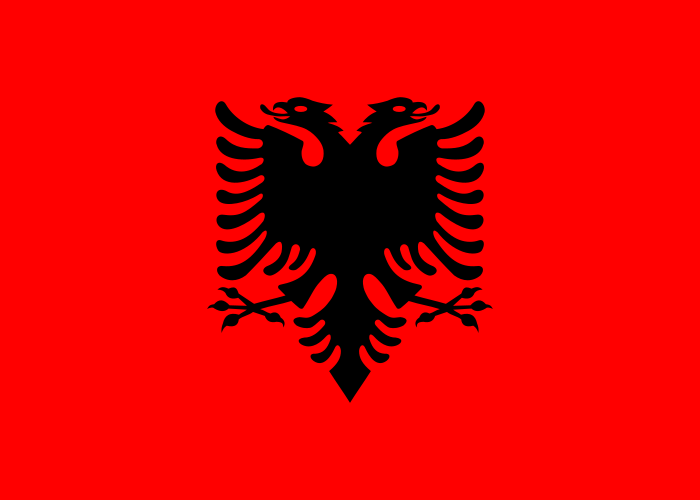
Albania
Location Info
- Continent: Europe
- Country: Albania
- Coordinates: 41.3275 , 19.8189
Trust Info
Verified Geographic and Statistical Information
🌍 Continents
Overview
Albania, officially the Republic of Albania, is a sovereign state located in Southeast Europe on the Balkan Peninsula. It is bordered by Montenegro, Kosovo, North Macedonia, and Greece, featuring an extensive coastline along the Adriatic and Ionian Seas. The country is characterized by a rugged mountainous interior, particularly the Albanian Alps in the north, and fertile coastal plains that support a Mediterranean climate. Tirana serves as the nation's capital and its primary economic, political, and cultural hub.
Historically, Albania has been shaped by various civilizations, including the Illyrians, Romans, Byzantines, and Ottomans. After nearly five decades of isolationist communist rule ending in 1991, the country transitioned to a multi-party democracy and a market-oriented economy. Today, Albania is a member of NATO and an official candidate for European Union membership. Its economy is driven by services, agriculture, and energy, with a rapidly expanding tourism sector focused on its pristine riviera and UNESCO-listed historical sites.
Truth & Facts
| Area | 28,748 sq km |
| Population | 2,363,314 |
| Capital | Tirana |
| Independence Day | November 28, 1912 |
| Official Currency | Albanian Lek (ALL) |
| Total Roadways | 18,000 km |
| Literacy | 98.1% |
| Average Life Expectancy | 79.7 years |
| Language | Albanian (Shqip) |
| Number of Sites | 4 |
| Forest Area | 36% |
| Primary Airport | Tirana International Airport Nënë Tereza |
| Internet Users | 79.3% |
| Rate | 2.1 per 100,000 |
| System | Unitary Parliamentary Republic |
| Status | Candidate Country |
| Main Source | 100% Hydropower |
| GDP (PPP) | $19,500 |
| Islam | 50.67% |
| Country Code | +355 |
📑 Table of Contents
Overview
Albania is a Mediterranean country located in the Balkan Peninsula of Southeast Europe. It is known for its rugged mountains, archaeological ruins, and extensive coastline. The nation serves as a strategic gateway between Western Europe and the Balkans.
- Official Name: Republic of Albania
- Capital: Tirana
- Coastline: 476 km
- Official Language: Albanian
- Member of NATO: Since 2009
| Region | Primary Landscape |
|---|---|
| North | Albanian Alps |
| South | Ionian Riviera |
| Central | Coastal Plains |
History
The history of Albania spans from ancient Illyrian tribes to the modern republic. It was part of the Roman and Byzantine Empires before the Ottoman conquest in the 15th century. National hero Skanderbeg led a 25-year resistance against the Ottomans.
- Illyrian Origins: Circa 1000 BC
- Ottoman Rule: 1478–1912
- Declaration of Independence: 1912
- Communist Era: 1944–1991
- Democratic Transition: 1992–Present
Geography
Albania's geography is dominated by mountains, covering nearly 70% of the territory. The highest peak is Mount Korab at 2,764 meters. The country borders the Adriatic Sea to the west and the Ionian Sea to the southwest.
- Highest Peak: Mt. Korab (2,764m)
- Major River: Drin River
- Largest Lake: Lake Shkodër
- Climate Zones: Mediterranean and Continental
Climate and Weather
The coastal areas experience a classic Mediterranean climate with hot, dry summers and mild, wet winters. The interior and mountainous regions have a more continental climate with significant snowfall in winter. Precipitation is heavy, particularly in the northern highlands.
| Season | Coastal Temp (°C) | Mountain Temp (°C) |
|---|---|---|
| Summer | 25 - 32 | 15 - 25 |
| Winter | 5 - 15 | -10 - 5 |
Population and Demographics
The population of Albania is approximately 2.4 million people. It is a fairly homogeneous country with ethnic Albanians making up the vast majority. There is a significant diaspora, with millions of Albanians living in neighboring countries and Western Europe.
- Median Age: 44.3 years
- Urban Population: 53.4%
- Largest Ethnic Group: Albanians (91%)
- Minorities: Greeks, Macedonians, Vlachs
Culture and Lifestyle
Albanian culture is rooted in ancient traditions and a strong code of hospitality known as 'Besa'. Modern lifestyle in cities like Tirana is vibrant, blending traditional coffee culture with European fashion and nightlife. Folk music and dance remain vital parts of national identity.
- Hospitality Code: Besa
- Traditional Dress: Fustanella and Xhubleta
- Music: Iso-Polyphony (UNESCO listed)
- Evening Walk: Xhiro culture
Festivals and Events
Annual events celebrate national history, religious diversity, and the arts. Dita e Verës (Summer Day) is a popular pagan-rooted spring festival celebrated nationwide on March 14. Independence Day on November 28 is the most significant national holiday.
- Dita e Verës: March 14
- Independence Day: November 28
- Tirana International Film Festival
- Kala Festival (Dhërmi)
Food and Cuisine
Albanian cuisine is Mediterranean, heavily influenced by Italian, Greek, and Turkish traditions. It features fresh vegetables, olive oil, lamb, and seafood. Byrek, a savory phyllo pastry, is a staple found in almost every bakery.
- National Dish: Tavë Kosi (Baked Lamb with Yogurt)
- Breakfast Staple: Byrek
- Popular Drink: Raki (Grape Brandy)
- Sweet Treat: Baklava and Trilece
Economy and Industries
Albania has transitioned from a centrally planned economy to an open-market system. The services sector, including tourism, is the largest contributor to GDP. Agriculture remains a significant employer, particularly in rural regions.
- Major Exports: Crude oil, textiles, minerals
- Energy: 100% Hydroelectric
- Key Industry: Mining (Chrome, Copper)
- Growing Sector: Tourism and Hospitality
Cost of Living
Compared to Western Europe, Albania offers a relatively low cost of living. Housing and dining are affordable, though imported goods and electronics are priced similarly to other European markets. Tirana is the most expensive city in the country.
| Item | Avg. Cost (LEK) |
|---|---|
| Apartment Rent (1-bed) | 35,000 - 50,000 |
| Local Meal | 600 - 1,200 |
| Loaf of Bread | 80 - 100 |
Employment and Business
The labor market is dominated by small and medium-sized enterprises. There is a growing focus on the ICT (Information and Communication Technology) sector and business process outsourcing (BPO). Foreign investment is encouraged through favorable tax policies in specific sectors.
- Main Employers: Agriculture, Construction, Services
- Official Work Week: 40 hours
- Business Language: Albanian, English, Italian
Real Estate and Housing
Real estate has seen significant development, particularly along the Riviera and in the capital. Foreigners are permitted to purchase property, leading to a surge in coastal holiday home construction. Urban centers feature a mix of socialist-era apartments and modern high-rises.
- Popular Coastal Areas: Saranda, Vlora, Durrës
- Real Estate Growth: 5-8% annually in Tirana
- Ownership: Freehold allowed for foreigners
Transportation and Connectivity
Transportation is primarily road-based, as the rail network is currently limited. Tirana International Airport is the main air hub, with a second airport recently opened in Kukës. Ferries connect the ports of Durrës and Vlorë to Italy and Greece.
- Primary Port: Durrës
- Air Hub: Tirana (TIA)
- Public Transport: Furgons (Minibuses) and Buses
- Direct Ferries: Brindisi, Bari, Ancona, Trieste
Infrastructure and Utilities
The country has invested heavily in hydroelectric dams, making it a leader in renewable energy. Water supply systems in major cities have been modernized, though rural areas may still experience limitations. Telecommunications are advanced with 4G/5G coverage in urban areas.
- Electricity: Hydropower based
- Water: Improved urban supply
- Telecoms: Multiple private GSM providers
Education
Education is compulsory for children aged 6 to 14. The system includes public and private institutions at all levels. Higher education is provided by several universities, with the University of Tirana being the oldest and largest.
- Compulsory Years: 9 years
- Primary University: University of Tirana
- Literacy Rate: Over 98%
Healthcare
Albania operates a universal healthcare system funded by compulsory contributions. Major hospitals are located in Tirana, including the Mother Teresa University Hospital. Private clinics have expanded significantly to offer specialized services and shorter wait times.
- System: Public and Private
- Life Expectancy: ~80 years
- Key Facility: Mother Teresa Hospital Center
Tourist Attractions
Albania offers a blend of natural beauty and historical depth. The UNESCO sites of Berat and Gjirokastër showcase Ottoman architecture, while the ruins of Butrint reflect ancient Greek and Roman history. The Riviera provides Mediterranean beach experiences.
- Butrint National Park
- Krujë Castle
- The Blue Eye (Syri i Kaltër)
- Bunk'Art 1 and 2
Things to Do
Outdoor enthusiasts can find numerous activities from hiking the Accursed Mountains to paragliding in Llogara. Cultural exploration involves visiting ancient amphitheaters, Ottoman-era bazaars, and contemporary art galleries in Tirana.
- Hiking: Theth to Valbona Trail
- Relaxing: Thermal Baths of Permet
- Exploring: Skanderbeg Square
- Swimming: Ksamil Islands
Best Places to Visit
Key destinations include the capital for its museums and nightlife, the coastal towns for summer relaxation, and the mountain villages for traditional culture and nature. The south is famous for its turquoise waters and historical depth.
| Place | Type |
|---|---|
| Saranda | Coastal Resort |
| Berat | Historic City |
| Theth | Mountain Village |
| Tirana | Capital / Culture |
Travel Guide
Travelers can enter Albania via Tirana International Airport or through land borders with neighboring countries. EU, US, and many other citizens do not require a visa for short stays. The local currency is the Lek, but Euros are widely accepted in tourist areas.
- Visa Policy: Liberal / Visa-free for many
- Currency: Lek (ALL)
- Plug Type: Type C and F
- Drive Side: Right
Nearby Places
Albania's central location in the Balkans makes it a great starting point for regional travel. Neighboring countries offer diverse cultural experiences within a few hours' drive. The island of Corfu, Greece, is just a short ferry ride from Saranda.
- Corfu, Greece: 30-min ferry
- Ohrid, North Macedonia
- Ulcinj, Montenegro
- Prizren, Kosovo
Environment and Nature
Albania is home to high biodiversity and several unique ecosystems. National parks protect about 13% of the land. The Vjosa River is recognized as Europe's last wild river, recently declared a National Park to protect its natural flow.
- Wild River: Vjosa National Park
- Alpine Lakes: Prespa and Ohrid
- Fauna: Golden Eagle, Balkan Lynx
Government and Administration
The government is a parliamentary republic with a president as the head of state and a prime minister as the head of government. Administratively, the country is divided into 12 counties (qark) and 61 municipalities. The judicial system is undergoing reform to align with EU standards.
- Legislature: Unicameral Parliament
- Administrative Units: 61 Municipalities
- Voting Age: 18
Safety and Public Services
Albania is generally safe for visitors, with low levels of violent crime. Public services include the State Police and national emergency medical services. Petty theft can occur in crowded urban centers or tourist spots, so standard precautions are advised.
- Police Emergency: 129
- Medical Emergency: 127
- Safety Level: High / Peaceful
Best Time to Visit
The ideal time to visit depends on the planned activities. For beach holidays, June to September is perfect. For hiking and cultural exploration, the shoulder seasons of spring and autumn offer pleasant temperatures and fewer crowds.
| Season | Best For |
|---|---|
| Spring | Hiking / Sightseeing |
| Summer | Beaches / Festivals |
| Autumn | Harvest / Culture |
| Winter | Skiing / Quiet |
Local Business Directory
Small businesses are the backbone of the economy, including family-run guesthouses, local artisanal shops, and traditional restaurants. Major commercial centers and international retailers are primarily concentrated in Tirana and Durrës.
- Hospitality: Guesthouses (Bujtina)
- Retail: TEG and QTU Malls (Tirana)
- Banking: BKT, Raiffeisen, Credins
General Information FAQs
Where is Albania located?
Albania is located in Southeast Europe on the Balkan Peninsula, bordering the Adriatic and Ionian Seas.
What is Albania known for?
Albania is known for its beautiful Mediterranean coastline, rugged mountains, unique language, and hospitality (Besa).
Why is Albania famous?
It is famous for its UNESCO heritage cities like Berat and Gjirokastër, its history of cold-war bunkers, and its position as the 'Land of the Eagles'.
What country or region is Albania part of?
Albania is an independent country in the Balkan region of Europe.
What is the population of Albania?
The population is approximately 2.36 million as of 2025 estimates.
What languages are spoken in Albania?
Albanian is the official language. Italian and English are also widely spoken, especially by younger generations.
What time zone is Albania in?
Albania is in Central European Time (CET), which is UTC+1.
What are the key facts about Albania?
Key facts include its capital Tirana, its currency the Lek, and its status as a NATO member and EU candidate.
What makes Albania unique?
Its language is a unique branch of Indo-European, it has over 170,000 bunkers, and it has a high level of religious harmony.
How large is Albania in area?
Albania covers an area of 28,748 square kilometers.
History FAQs
What is the history of Albania?
Albania has a long history starting with the Illyrians, followed by Roman, Byzantine, and Ottoman rule, and a long period of isolationist communism in the 20th century.
When was Albania established?
Modern Albania declared its independence from the Ottoman Empire on November 28, 1912.
What major historical events happened in Albania?
Key events include the 15th-century resistance led by Skanderbeg and the 1991 fall of communism.
Who were important historical figures from Albania?
Important figures include the national hero Gjergj Kastrioti (Skanderbeg) and the humanitarian Mother Teresa, who was ethnically Albanian.
How has Albania developed over time?
Albania has moved from an Ottoman province to a socialist state, and finally into a democratic nation seeking EU membership.
Geography & Environment FAQs
What is the geography of Albania?
The geography consists of a mountainous north and east, fertile central plains, and a rocky, sandy coastline in the west.
What natural features surround Albania?
It is surrounded by the Adriatic and Ionian Seas, the Albanian Alps, and large lakes like Ohrid and Shkodër.
Are there mountains, rivers, or lakes near Albania?
Yes, major features include the Korab mountain range, the Drin and Vjosa rivers, and Lake Ohrid.
What is the elevation of Albania?
The elevation ranges from sea level to 2,764 meters at the summit of Mount Korab.
What ecosystems exist around Albania?
Albania has Mediterranean shrublands, alpine forests, and significant wetlands along the coast.
Climate & Weather FAQs
What is the climate like in Albania?
Albania has a Mediterranean climate on the coast and a more continental climate in the interior highlands.
What is the average temperature in Albania?
The average temperature is around 15°C, but summer can exceed 30°C and winter can drop below 0°C in the mountains.
What is the weather like throughout the year in Albania?
Summers are typically sunny and dry, while winters are cool and wet, with snow common in the highlands.
Does Albania experience extreme weather?
It can experience heavy rainfall and occasional flooding in winter, and heatwaves during the summer months.
What is the best time of year to visit Albania?
The best time to visit is from May to September for the coast, and spring or fall for hiking and sightseeing.
Population & Society FAQs
What is the population density of Albania?
The population density is approximately 82 people per square kilometer.
What ethnic groups live in Albania?
The majority are ethnic Albanians, with small minorities of Greeks, Macedonians, and Montenegrins.
What religions are practiced in Albania?
The main religions are Islam, Eastern Orthodoxy, and Roman Catholicism, living in documented harmony.
What is daily life like in Albania?
Daily life involves a strong focus on family, social coffee culture, and an active evening walk called the 'Xhiro'.
How diverse is the population of Albania?
While ethnically homogeneous, there is religious diversity and a blend of cultural influences from surrounding Balkan and Mediterranean cultures.
Culture & Traditions FAQs
What cultural traditions are important in Albania?
The concept of 'Besa' (honor/oath) and traditional hospitality are the cornerstones of Albanian culture.
What festivals are celebrated in Albania?
Major festivals include Summer Day (March 14), Independence Day (November 28), and various religious holidays.
What cultural landmarks exist in Albania?
Landmarks include the ancient city of Butrint, the Gjirokastër Castle, and the Et'hem Bey Mosque in Tirana.
What traditional clothing or customs are common in Albania?
Traditional dress includes the pleated Fustanella for men and the bell-shaped Xhubleta for women.
What arts and crafts are associated with Albania?
Albania is known for its filigree silverwork, carpet weaving, and traditional wood carving.
Food & Cuisine FAQs
What foods is Albania known for?
Albania is known for Byrek (phyllo pie), Tavë Kosi (lamb with yogurt), and fresh seafood on the coast.
What traditional dishes originate from Albania?
Tavë Kosi is considered the national dish, along with Fergesë and various types of Byrek.
What are the best restaurants in Albania?
Highly-regarded dining can be found in Tirana's Blloku area and along the Saranda promenade.
What local ingredients are commonly used in Albania cuisine?
Common ingredients include olive oil, feta cheese, lamb, tomatoes, and peppers.
What food markets or street foods are popular in Albania?
Street vendors often sell Byrek, roasted corn, and Qofte (grilled meatballs).
Economy & Business FAQs
What are the main industries in Albania?
The main industries include mining, textiles, petroleum, and tourism.
What economic activities drive the economy of Albania?
The economy is driven by the service sector, agriculture, and remittances from Albanians living abroad.
What businesses operate in Albania?
A mix of local SMEs and international companies in banking, telecommunications, and energy operate in Albania.
Is Albania an important economic center?
It is a developing market and an important regional hub for energy through its hydroelectric capacity.
What are the major exports or products from Albania?
Major exports include minerals, footwear, textiles, and agricultural products like chromium.
Employment & Jobs FAQs
What job opportunities are available in Albania?
Opportunities are growing in tourism, IT services, and construction.
What are the major employers in Albania?
The government, telecommunications firms, and the tourism sector are among the largest employers.
What skills are in demand in Albania?
Skills in foreign languages (English, Italian), digital technology, and hospitality management are in demand.
Is Albania a good place to work?
It offers a low cost of living, though wages are lower than the EU average.
What is the unemployment rate in Albania?
The unemployment rate has hovered around 10-12% in recent years.
Cost of Living FAQs
Is Albania expensive to live in?
No, Albania is one of the most affordable countries in Europe for both residents and visitors.
What is the average cost of living in Albania?
An individual can live comfortably on roughly $600 to $900 per month including rent.
How much does housing cost in Albania?
Rents in Tirana range from $300 to $600 for a city-center apartment.
What are average food and utility costs in Albania?
Utilities average around $80-$100 per month, and groceries are relatively inexpensive.
Is Albania affordable compared to nearby cities?
Yes, it is generally cheaper than neighboring Montenegro, Greece, or Italy.
Housing & Real Estate FAQs
What types of housing are available in Albania?
Housing includes modern high-rise apartments, socialist-era blocks, and traditional village houses.
What is the average home price in Albania?
Prices vary, with Tirana apartments costing roughly $1,200 to $2,500 per square meter.
Is it better to rent or buy property in Albania?
Renting is flexible and cheap, but buying can be a good long-term investment in coastal areas.
Which neighborhoods are popular in Albania?
In Tirana, Blloku is popular for nightlife, while the Riviera towns like Saranda are top for coastal living.
How has the property market changed in Albania?
The market has seen rapid growth due to increased tourism and infrastructure improvements.
Transportation FAQs
How do you get to Albania?
Most visitors arrive by air at Tirana International Airport or by ferry from Italy and Greece.
What is the nearest airport to Albania?
Tirana International Airport (TIA) is the primary gateway, with Kukës serving as a secondary airport.
Does Albania have railway connections?
Albania has a very limited internal railway system with no current international connections.
How reliable is public transportation in Albania?
Buses and 'furgons' (minibuses) are the main public transport; they are affordable but may not always follow strict schedules.
What major highways or roads connect to Albania?
The SH1 connects to Montenegro, and the Rruga e Kombit highway connects Albania with Kosovo.
Education FAQs
What schools are located in Albania?
Albania has a network of public primary and secondary schools, along with increasing private options.
Are there universities in Albania?
Yes, the University of Tirana, the Polytechnic University, and several private universities are available.
What is the literacy rate in Albania?
The literacy rate is high, estimated at approximately 98.1%.
What educational opportunities exist in Albania?
Opportunities exist in vocational training, medical sciences, and arts at the university level.
Is Albania a good place for students?
It is affordable, though many Albanian students seek master's degrees in Western Europe.
Healthcare FAQs
What hospitals are available in Albania?
Main facilities include the Mother Teresa University Hospital Center and various private hospitals like American Hospital.
Are there emergency medical services in Albania?
Yes, the national emergency number for medical assistance is 127.
What healthcare facilities exist in Albania?
Facilities range from regional clinics to specialized diagnostic centers in the capital.
Is healthcare affordable in Albania?
Public healthcare is free/low-cost for residents, while private care is reasonably priced by international standards.
Are specialized medical services available in Albania?
Most specialized services are concentrated in Tirana's public and private hospitals.
Tourism & Travel FAQs
What are the top tourist attractions in Albania?
Top spots include the Butrint ruins, the beaches of Ksamil, and the historic town of Berat.
What are the best things to do in Albania?
Visitors enjoy hiking the Accursed Mountains, exploring Tirana's Bunk'Art museums, and swimming in the Ionian Sea.
Is Albania worth visiting?
Yes, it offers stunning scenery, a rich history, and low prices compared to other Mediterranean destinations.
What landmarks should visitors see in Albania?
Key landmarks include Skanderbeg Square, Rozafa Castle, and the Ottoman bridges of Berat.
How many days should tourists spend in Albania?
A stay of 7 to 10 days is recommended to see the capital and either the northern mountains or southern coast.
Nearby Places FAQs
What places are near Albania worth visiting?
Nearby attractions include Lake Ohrid in North Macedonia and the coastal town of Budva in Montenegro.
What cities or towns are close to Albania?
Prizren in Kosovo and Janina in Greece are easily accessible by road.
What natural attractions are near Albania?
The Accursed Mountains span into Montenegro and Kosovo, offering vast cross-border hiking.
What day trips can be taken from Albania?
Day trips to the Greek island of Corfu are common via ferry from Saranda.
What famous destinations are within reach of Albania?
Dubrovnik, Croatia, is reachable within a half-day drive through Montenegro.
Safety FAQs
Is Albania safe to live in?
Yes, Albania is generally peaceful with low rates of violent crime against residents.
Is Albania safe for tourists?
Albania is considered very safe for tourists, with locals being very welcoming to foreigners.
What is the crime rate in Albania?
The crime rate is relatively low, particularly in terms of safety for visitors.
What emergency services operate in Albania?
Police (129), Fire (128), and Ambulance (127) are the primary emergency services.
What safety tips should visitors follow in Albania?
Follow standard precautions: watch for pickpockets in crowded areas and exercise caution when driving on mountain roads.
Lifestyle & Living FAQs
Is Albania a good place to live?
It offers a high quality of life for those who enjoy the outdoors, good food, and a slow pace of life.
What recreational activities are available in Albania?
Activities include hiking, mountain biking, sailing, and cultural festivals.
Is Albania family-friendly?
Yes, the culture is very family-oriented and children are welcomed in almost all public spaces.
What outdoor activities are popular in Albania?
Beach-going, hiking in national parks, and river rafting are very popular.
What makes life enjoyable in Albania?
The combination of affordable living, beautiful landscapes, and a warm, social culture makes life enjoyable.
Practical Information FAQs
What travel tips should visitors know about Albania?
Carry some cash (Lek) as smaller shops may not accept cards, and learn a few basic Albanian phrases.
What local customs should visitors respect in Albania?
Respect religious sites by dressing modestly, and understand that 'yes' and 'no' head gestures can sometimes be reversed.
How accessible is Albania for international visitors?
Accessibility is improving with more direct flights and improved roads, though remote areas remain rugged.
What services are available for tourists in Albania?
Tourist information centers, guided tours, and car rental services are available in major cities.
What important information should travelers know before visiting Albania?
Driving can be chaotic, tap water is not always recommended for drinking, and hospitality is taken very seriously.